One scratch can ruin a perfect sofa finish, and it often happens in seconds. Between kids, pets, and quick room resets, keeping furniture safe can feel like a full-time job. And if you own premium or vintage pieces, the stress is real.
Plastic wrap may seem easy, but it traps heat, slips, and looks anything but chic. The good news: reusable moving blankets offer dependable furniture protection without plastic, at home or on the go. In this guide, you will learn how to choose, use, and wash the right covers for sofas, chairs, and more, with tips that suit families and small businesses alike. Think eco friendly moving supplies that still feel polished, plus smart ways to use a sofa protection cover every day.
First, let’s look at what makes a moving blanket truly reusable and furniture-safe.
What Reusable Moving Blankets Are (and Why They Beat Plastic Wrap)
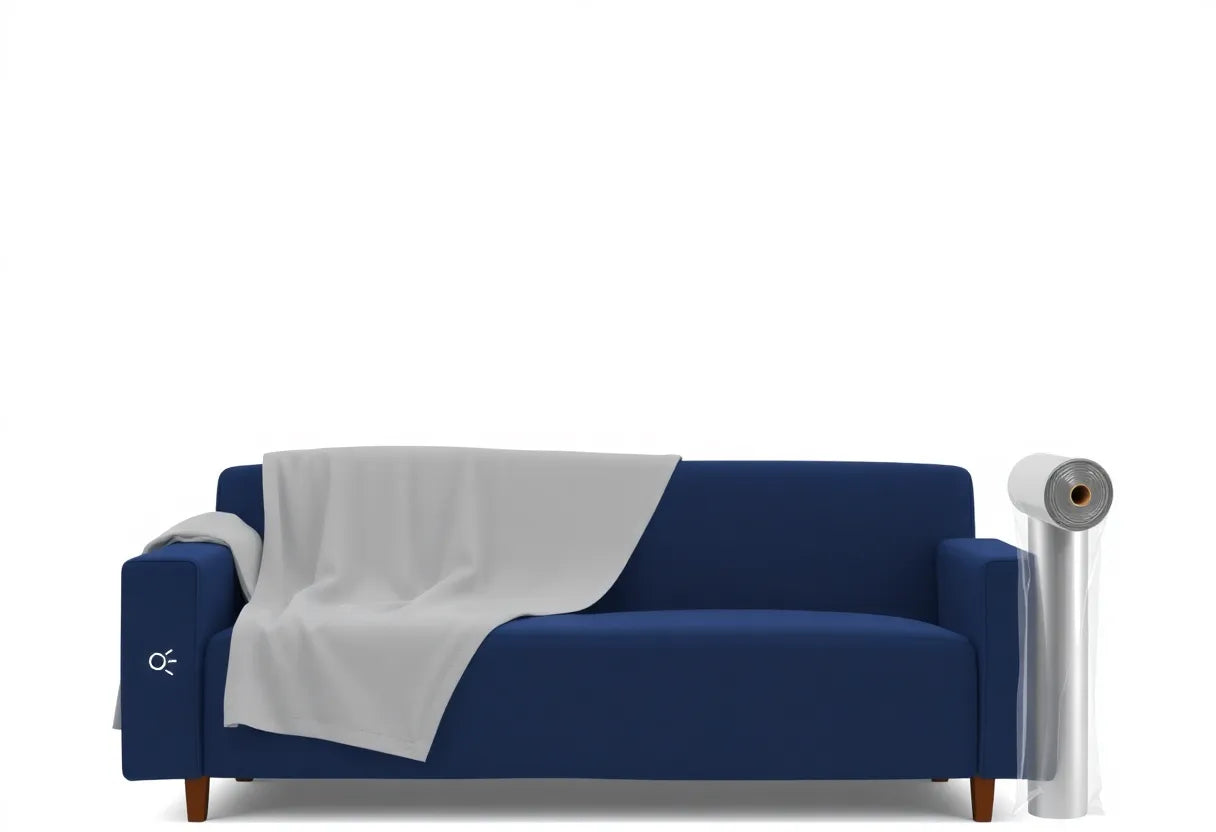
Reusable moving blankets are padded, durable textiles made to shield furniture surfaces from the real causes of damage during moving and storage: impact, friction, and abrasion. Think of them as a soft, protective buffer that takes the hit so your furniture does not have to.
Unlike thin pads that tear or slide, quality reusable moving blankets are designed for repeat use, which is exactly why they fit so well into a lifestyle that includes kids, pets, last-minute room resets, and small-business wear and tear. If your goal is furniture protection without plastic, this is your workhorse solution.
What “reusable moving blankets” really means (in practical terms)
A true moving blanket is built to handle three common threats:
- Impact protection (bumps and drops): Padding absorbs knocks when a sofa brushes a door frame or a table corner taps a stair rail.
- Friction reduction (drag and rub): Fabric reduces scuffing when pieces slide in a truck or shift while being carried.
- Surface scratch prevention (abrasion): A soft layer between furniture and the world helps prevent micro-scratches, especially on finished wood, lacquer, and delicate upholstery.
These blankets are particularly helpful on the most common damage points movers see in real homes and workspaces:
- Chair arms (constant hand contact plus doorway scrapes)
- Sofa corners (the first thing to hit door frames, elevator walls, or banisters)
- Table edges and corners (prone to chips and finish wear during loading)
In other words, reusable moving blankets protect what you actually look at every day: the edges, arms, and corners that make a piece feel “pristine” or painfully worn.
Plastic wrap vs. reusable blankets: what each one is actually good at
Plastic stretch wrap is often used because it is quick and familiar. But it is important to understand what it does well, and what it does not.
Plastic wrap is mainly a holding tool.
It can keep drawers from sliding open, hold a blanket in place temporarily, or bundle loose parts together. What it does not do well is protect finishes from bumps, dents, and abrasion. A wrapped chair can still get scuffed when it rubs against a truck wall, because the plastic film provides almost no padding.
Reusable moving blankets are mainly a protection tool.
They cushion corners, reduce rubbing, and protect surfaces when navigating tight spots like:
- apartment staircases
- narrow hallways
- door frames (the classic “one second” scratch)
- truck loading and unloading where items shift and tap
For premium or vintage furniture owners, that difference matters. Plastic can look like coverage, but blankets deliver the kind of real-world protection your furniture needs.
Better for real life: cleaner, calmer, and easier to reuse
If you have pets or little ones, you already know the annoying side of film: it clings, it crinkles, and it can make your home feel like a construction zone.
Reusable moving blankets tend to be more “livable”:
- Less clingy with pet hair: Film can grab and trap hair in a way that feels messy fast, especially during a move when you are already vacuuming constantly.
- Less industrial in appearance: Draped textiles look more natural in a home, especially if you are living among packed boxes for a week.
- Made for repeat projects: Fold them, store them, and pull them out again for the next delivery, renovation weekend, or coworking space refresh. This is the heart of choosing eco friendly moving supplies without sacrificing performance.
For ongoing, everyday protection once the move is done, a dedicated, washable sofa protection cover can be even easier than blankets for daily life. You can explore options for Everyday furniture protection for high-traffic homes if your living room sees constant action from kids, pets, or clients.
Where plastic still helps (use it sparingly and strategically)
Going plastic-free does not have to be all-or-nothing. A smart, minimal approach is often the most practical:
Use small amounts of plastic wrap only when it prevents a specific problem, such as:
- securing drawers and cabinet doors shut during carrying
- bundling removable shelves or hardware (with labeled bags) to the inside of a piece
- holding a blanket temporarily until you can strap it properly
If reducing single-use waste is part of your goal, the EPA encourages choosing reusables when possible. See EPA: tips to reduce waste and choose reusables for general guidance that supports this lighter-plastic approach.
Transition to the next step: choosing the right blanket
Now that you know why reusable moving blankets outperform plastic for true surface protection, the next decision is choosing the right one for your furniture and your move. Thickness, material, and fit can make the difference between a blanket that stays put and one that slides at the worst moment.
Next up: how to choose the right blanket by material, weight, and sizing, with a fast checklist you can use immediately.

Choosing the Right Blanket: Materials, Thickness, and Fit (Fast Checklist)
If Section 1 convinced you that reusable moving blankets deliver real furniture protection without plastic, the next step is choosing the right blanket for your specific surfaces. A good match prevents the two biggest moving-day heartbreaks: abrasion (tiny rub marks that show up later) and shifting (blankets that slide, bunch, and expose corners at the worst moment).
Use this fast checklist to choose materials, thickness, and sizing that work for busy homes, pet households, and small businesses that need protection that looks tidy and performs all day.
1) Pick the right material for your furniture surface
Different textiles behave very differently against wood finishes, leather, velvet, and performance fabrics. Here is the practical breakdown:
-
Cotton blends (classic moving pad feel)
- Best for: finished wood, painted furniture, most upholstery
- Why it works: breathable, generally gentle, good friction control (less slipping than slick synthetics)
- Watch-outs: lower-quality cotton blends can have coarse binding or rough stitching at the edges. Keep those edges away from delicate surfaces (more on that below).
-
Quilted microfiber (smooth, tidy, “sofa-friendly”)
- Best for: leather, velvet, performance fabrics, and any piece you want to look presentable while protected (renovation week, hosting, client-facing lounges)
- Why it works: smooth face reduces snag risk on velvet and helps avoid scuffing on leather. Also reads more “home chic” than industrial pads.
- Watch-outs: microfiber can be slightly more slippery on some finishes, so plan to secure it well (straps or bands in the next section).
-
Felted pads (dense, protective, mover-style)
- Best for: table tops, case goods, cabinet corners, chair backs, and items with edges that take impacts
- Why it works: dense fiber structure helps absorb bumps and protects against corner dings.
- Watch-outs: felt can grab lint and pet hair, and some felt surfaces can abrade delicate high-gloss finishes if dragged or rubbed. Lift and reposition rather than sliding.
Quick matching guide (save this for moving day):
- Wood (especially glossy or vintage): cotton blend or soft-inner-layer + padded outer layer
- Leather: quilted microfiber or very smooth cotton blend (no rough seams touching)
- Velvet: quilted microfiber (smooth) with minimal friction
- Performance fabric: microfiber or cotton blend, secured firmly to prevent shifting
If you are protecting a favorite armchair that gets daily use and still needs to look pulled together, start here: If you’re protecting a favorite armchair, start here.
2) Choose thickness and weight based on risk and space
Not every move needs the heaviest pad you can find. The goal is “enough cushion to prevent damage” without creating a bulky bundle that catches on door frames.
-
Use heavier pads when:
- You are protecting fragile wood finishes, veneer, or lacquer
- You have vintage pieces or heirlooms where even light abrasion matters
- The item has sharp corners (console tables, coffee tables, dressers)
- You expect truck loading, tight stacking, or longer transport
-
Use lighter layers when:
- You are doing a quick in-home reset (room swap, paint day, delivery day)
- You have tight hallways or narrow stair turns and need better grip and visibility
- You are protecting upholstery from dust and paws more than impact
A practical rule: if you can easily feel a table edge through the blanket with light pressure, add another layer to that edge. Corners and arms are where damage happens first.
3) Non-slip and gentle-contact tips (the “no surprise scratches” rules)
Reusable moving blankets are an excellent part of eco friendly moving supplies, but the way they touch the furniture matters just as much as the fabric itself.
-
Keep rough stitching and binding away from delicate finishes
- Rotate the blanket so the smoothest face touches the furniture.
- If the blanket has a coarse edge, fold it inward so only soft fabric meets the surface.
-
Use the two-layer method for antiques and high-gloss finishes
- Layer 1 (inside): a soft, clean textile (think smooth cotton sheet or a soft liner) to prevent micro-abrasion
- Layer 2 (outside): a thicker padded blanket to absorb bumps
This mirrors conservation best practices: reduce abrasion by using a softer contact layer, then add cushioning on top.
-
Prevent sliding before it starts
- Tuck excess fabric underneath the piece rather than leaving it loose at the sides.
- Secure around the blanket (not directly on furniture). In the next section, we will cover straps and tape rules that keep everything stable without plastic wrap.
4) Sizing rules of thumb (to reduce shifting and re-taping)
Most movers rely on a few “standard pad” sizes: small, medium, and large. You can do the same at home to build a simple kit that covers nearly everything.
Use these quick fit guidelines:
-
Dining chairs (seat + back): Small pads, or one medium cut/folded into two
Tip: wrap the back and top rail first, then the legs (legs get chipped during carry-outs). -
Armchairs: Medium to large, depending on arm width and back height
Goal: cover arms and corners in one continuous wrap to reduce seams and slipping.
Need an everyday-ready option that fits cleanly like a sofa protection cover but still works for moving and rearranging? Start with armchair-specific sizing here: If you’re protecting a favorite armchair, start here. -
Loveseats (2-seaters): Large pad, or two medium layered
Tip: protect arms first, then the back, then the front rail. -
Sectionals: Treat as separate pieces
Use one large per section, plus an extra small or medium just for the corners and any exposed feet.
Simple sizing principle: choose a blanket that can wrap the item with enough overlap to tuck underneath. Too small shifts and needs constant re-taping. Too big creates bulky folds that snag in doorways.
With the right material, thickness, and fit, your reusable moving blankets stop acting like “loose throws” and start performing like a real protection system. Next, we will walk through the exact step-by-step method to wrap and secure furniture without plastic, including the tools that keep blankets tight, neat, and carry-friendly.
Step-by-Step: How to Wrap and Secure Furniture Without Plastic
You already know the goal from the introduction: real protection that does not slip, scuff, or trap grime like film can. Here is the practical method movers use, adapted for everyday homes, premium pieces, and small business spaces. Think reusable moving blankets plus smart securing tools for true furniture protection without plastic.
Your no-plastic toolkit (what to grab before you start)
These tools replace stretch wrap while staying gentle on finishes:
- Reusable straps with buckles or cam locks (2 to 6): Fast, adjustable tension, and they do not leave residue.
- Wide moving bands (rubberized or fabric): Helpful for holding folded pads in place while you position straps.
- Soft cotton twine (backup): For awkward shapes or temporary bundling (avoid thin string that can bite into fabric).
- Corner padding (extra blanket strips, foam corners, or folded towels): Crucial for table edges and sharp chair rails.
- Removable painter’s tape: Use it only on the blanket, never directly on wood, leather, velvet, or painted surfaces.
Practical rule: if a tool can dent or stick, it never touches the furniture. It only touches the blanket.
Optional safety reference: For general lifting and load securing basics, OSHA’s material handling guidance is a solid starting point: https://www.osha.gov/
Step 1: Prep your “load path” (the pet and kid reality check)
Before you wrap a single piece, do a two minute walkthrough:
- Clear the route from room to door to vehicle, including rugs that catch corners.
- Assign a clean zone for blankets (bed, clean sheet on the floor, or a folding table). This prevents blankets from collecting hair or grit that can act like sandpaper.
- Plan the carry points: identify where hands will grip so straps do not land exactly where people hold.
If you have pets: keep one blanket reserved as the “floor runner” so your furniture blankets stay clean and chic.
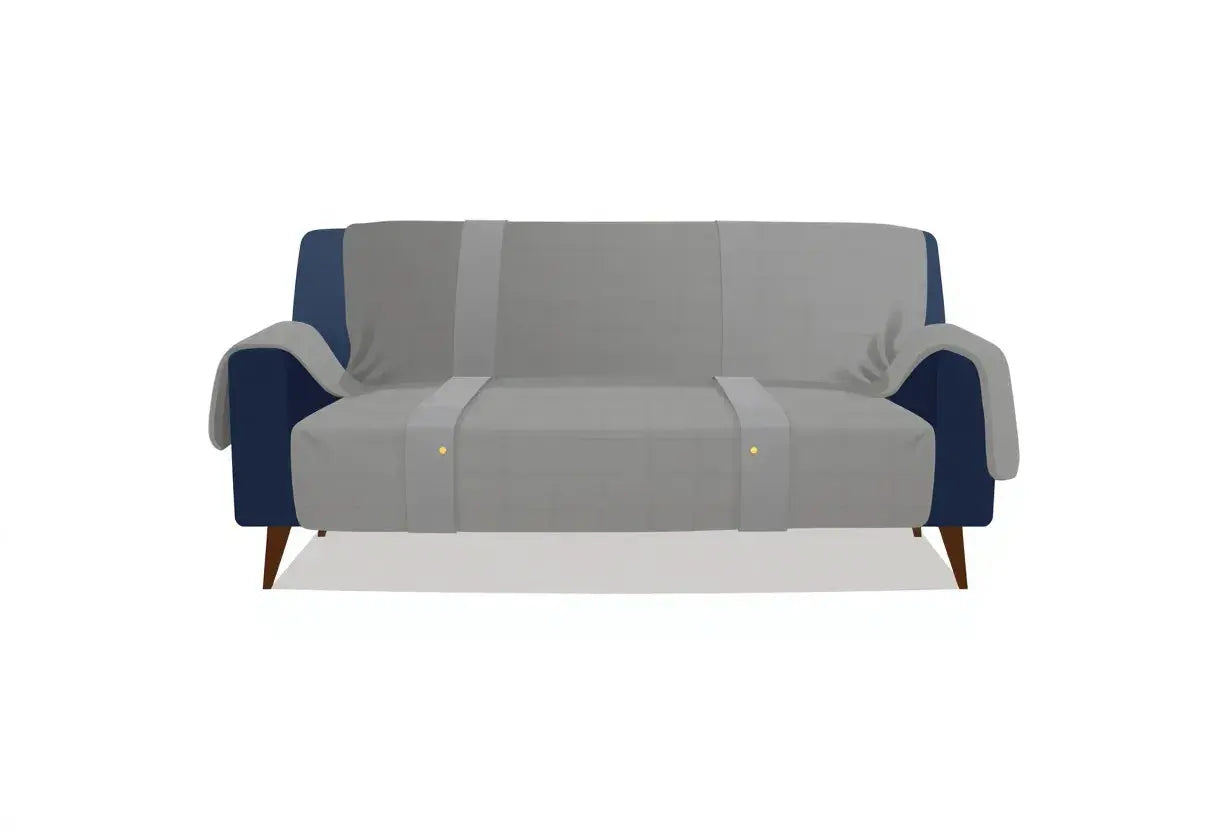
Step 2: 3-seat sofa wrapping sequence (arms → back → seat)
This is the simplest reliable sequence for a standard 3-seat sofa and it also works as a sofa protection cover approach during renovations.
What you need: 2 to 3 reusable moving blankets, 2 straps (3 if the sofa is long), plus painter’s tape for the blanket edges.
-
Protect the arms first
- Fold a blanket into long panels.
- Drape one panel over each arm, padding the front corners and outer edges.
- Use a small piece of painter’s tape to tack the blanket to itself underneath the arm area so it does not slide while you work.
-
Cover the back
- Throw the second blanket over the backrest so it hangs evenly on both sides.
- If the sofa has tufting or delicate trim, add a softer inner layer (a thin cotton sheet) under the blanket on contact points.
-
Cover the seat last
- Lay the third blanket across the seat and front rail. This is the high impact zone when passing through door frames.
- Tuck excess fabric into the gap between seat and back cushions only if it does not stress seams.
-
Secure underneath so it cannot creep
- Run strap #1 under the sofa front to back and tighten until snug, not crushing.
- Run strap #2 around the sofa side to side, also tightening underneath.
- Check that buckles sit against the blanket, not rubbing a visible surface.
Quick test: push the blanket at the arm corner. If it slides more than an inch, add a third strap or a moving band around that section.
Step 3: Dining chairs and table legs (corners, sleeves, and hardware)
Chairs and tables get damaged at legs, corners, and joinery. The fix is simple: pad sharp points and stop the blanket from unraveling.
Dining chair stack method (4 chairs)
What you need: 1 to 2 blankets, twine or 1 strap, labeled baggies.
- Remove cushions if possible and stack them separately (they wrap easily and stay cleaner).
- Pad the top rails and corners with folded blanket strips.
- Nest chairs seat to seat (or back to back if that fits better), then wrap the whole stack like a burrito.
- Secure with one strap around the middle, then tie twine lightly near the legs to prevent swinging.
Table leg protection with “leg sleeves”
For coffee tables, consoles, and dining tables:
- Tear off long folded strips of blanket (about forearm width).
- Wrap each leg and fold the strip back on itself to create a sleeve.
- Use painter’s tape on the sleeve itself so it stays wrapped.
- Add a full blanket over the tabletop and edges, then strap around the apron area.
Hardware tip (especially for small businesses with frequent resets): put screws, brackets, and Allen keys in labeled zip bags like “Dining table, left side.” Tape the bag to the underside of the tabletop, not to finished surfaces.
Step 4: Coffee table quick wrap (fast, stable, corner-safe)
What you need: 1 blanket, 2 corner pads (or folded towel corners), 1 strap.
- Place corner pads on all four table corners.
- Drape blanket centered over the top.
- Fold excess down the sides like wrapping a gift box.
- Strap once around the width, positioning the strap over folded edges so it locks them in place.
- If the table has a delicate veneer edge, add a soft inner layer before the padded blanket.
This prevents the most common scuff: edge rub when the table bumps a door frame.
Step 5: Mattress and cushions (keep them breathable and dry)
Plastic film is tempting here, but it is also where moisture gets trapped and odors start.
- Use breathable mattress bags or fabric covers so air can move.
- Keep mattresses upright only briefly and avoid rain exposure.
- For sofa cushions, wrap in a clean cotton sheet or breathable cover, then place inside a bin or carton if transporting in a dusty vehicle.
- If anything is even slightly damp (steam cleaned, rainy day, basement storage), do not seal it. Dry first, then pack.
This is where eco friendly moving supplies shine: breathable, reusable, and far less likely to create that musty “stored in plastic” smell.
Step 6: Final checks before you lift and load
Use this 30 second checklist:
- Buckles and knots are on blanket layers, not touching furniture.
- Corners are padded (especially arms, table edges, chair tops).
- Blankets do not drag on floors or stairs.
- Straps are snug enough to stop slipping, but not compressing cushions or leaving lines.
If your household is high impact (pets, claws, daily mess), you may want protection that is designed for living, not just moving. Need scratch-resistant help for high-impact households? https://frenchcovers.com/collections/anti-scratch-couch-covers
In the next section, we will make this practical protection look intentional: how to keep your home or workspace feeling pulled together during moves, renovations, or hosting, with a touch of French-chic calm instead of visible chaos.

Style Matters: Keeping Your Home Looking Good During Moves, Renovations, or Hosting
When your space is mid move or mid project, it is easy for it to feel like temporary chaos. The goal is to keep protecting your pieces with reusable moving blankets while still letting your home look like a home. That is the sweet spot of furniture protection without plastic: you get real impact and scratch protection, plus textiles that can blend into your décor instead of shouting “packing day.”
Below are practical, style-forward ways to make protective layers feel intentional, not improvised.
1) Choose calm, French-inspired neutrals (so protection looks “styled”)
A simple palette does most of the work. Think of the tones you would happily leave visible for a week:
- Warm ivory, oatmeal, and flax for a soft, airy look (especially pretty with light oak and brass)
- Greige and stone for modern classic interiors (plays nicely with black metal, walnut, and crisp whites)
- Soft charcoal for high-traffic zones (for families, pets, and small businesses it hides daily dust better)
Tip for premium and vintage furniture: if your blanket has visible stitching or a textured underside, add a smooth inner layer (a soft throw or a clean cotton sheet) on delicate finishes. It keeps the look elevated and helps avoid abrasion during frequent repositioning.
If you like trend validation, Sherwin Williams publishes an annual color forecast that is great for confirming which neutrals and grounding shades feel current: Color trend inspiration from a major paint brand
2) Seasonal refresh idea: coordinated “project week” textiles
Renovation weeks are when most people give up on aesthetics. Instead, treat it like a mini seasonal reset:
- Pick two coordinating covers or throws (example: flax + stone)
- Keep one “clean set” folded in a basket for evenings or guests
- Use the other set as the working layer during the day (painting, deliveries, contractors)
This works beautifully as eco friendly moving supplies in disguise: you are using washable, breathable textiles that you can rotate and reuse rather than wrapping everything in film and tossing it.
3) Texture pairing for décor lovers (linen-look, boucle-look, matte weaves)
Texture is the quickest way to make a protective layer feel like part of the room.
- Warm neutrals (beige, camel, clay): pair a linen-look blanket with a matte weave pillow for a relaxed, French-chic calm.
- Coastal (sand, white, pale gray, light blue): use a light matte weave cover plus a simple cotton throw so the space stays bright, not bulky.
- Modern classic (black, white, walnut, greige): a boucle-look layer reads intentionally luxe and softens hard edges in the room.
Design rule that keeps it from feeling messy: one texture statement at a time. If your protective layer is nubby (boucle-look), keep the rest smoother. If the blanket is smooth, add one tactile accent (like a chunky knit pillow).
Mini before/after styling scenarios (real life, not showroom life)
These are fast setups you can do with reusable moving blankets and a few normal home items.
Scenario A: Family home playroom night (10 minutes to “company ready”)
- Before: Toys everywhere, sofa exposed to sticky hands, and you are about to do a quick tidy before bedtime.
-
After: Drape a neutral reusable moving blanket over the seat and arms like a relaxed sofa protection cover, then tuck the excess into the seat crease so it does not slide. Add two matching pillows back on top.
Practical win: you protect against crumbs, markers, and surprise spills, then shake it out later without reaching for plastic.
Scenario B: Living room repaint week (keep it bright, not chaotic)
- Before: Drop cloths and random sheets make the room feel temporary, and furniture edges get bumped during ladder moves.
-
After: Use two blankets per large piece: one smooth inner layer against the sofa back and arms, one padded outer layer on high-impact zones (arms, corners). Choose light neutrals so the room still reads calm in daylight.
Practical win: breathable coverage helps avoid moisture being trapped against upholstery, which is a common downside of plastic wrap.
Scenario C: Coworking lounge refresh (polished while under heavy use)
- Before: Seating looks tired by midday, and client-facing areas pick up scuffs, lint, and snack crumbs fast.
-
After: Use coordinated, clean-looking protective layers in a consistent color family across the lounge. Keep an extra folded set on-site for quick swaps.
Practical win: a cohesive look signals care and professionalism, while washable protection reduces deep cleans and downtime.
4) For small businesses: “clean layers” are part of the brand experience
If clients or members see your furniture daily, protection should look intentional. A consistent protective setup helps you:
- Maintain a uniform look across seating (no mismatched towels or visible plastic)
- Reduce the visual noise of active maintenance (repairs, deliveries, rearranging)
- Extend the life of premium seating without making the space feel temporary
In other words, furniture protection without plastic is not only about sustainability. It is also about presentation.
Bridge to the next section
Once your space looks pulled together, the next question is the practical one: how do you keep these blankets fresh, odor-free, and ready for the next move, renovation day, or hosting weekend? Up next, we will cover care, storage, and reuse routines so one set lasts for years.
Care, Storage, and Reuse: Make One Set Last for Years
Reusable moving blankets are at their best when they become part of your home routine, not a one time purchase. With a little maintenance and a simple storage system, you get reliable furniture protection without plastic for moves, messy weekends, and everything in between. This is also where your investment really pays off: clean blankets grip better, protect more gently, and look far more polished when you are using them as an everyday sofa protection cover.
1) Cleaning basics (fast, realistic, and furniture safe)
Think of this as a four step refresh cycle. It keeps blankets soft, low lint, and ready for the next job.
-
Shake out outdoors first
- Do this before vacuuming. It removes grit that can act like sandpaper on lacquered wood or delicate fabric.
- Tip for families: shake them over a driveway or balcony, not your patio furniture.
-
Vacuum both sides
- Use an upholstery attachment and slow passes.
- For pet homes, vacuuming is often more effective than washing for hair removal because it pulls hair from the fibers without setting it deeper.
-
Spot-clean immediately
- Blot, do not rub, especially on quilted or microfiber styles.
- Use a fabric-safe cleaner and test on a corner first.
- If the blanket was used on the floor during the move, spot-clean the “floor edge” zones (usually corners and hems) before folding. That is where grime transfers back onto sofas and chairs later.
-
Wash only when needed, and follow fabric guidance
- If your reusable moving blankets are machine washable, use a gentle cycle and mild detergent.
- Avoid heavy fragrance boosters if you plan to use the blankets on upholstered pieces. They can transfer scent to cushions, which is not ideal in small spaces or client facing rooms.
- Dry thoroughly (more on that next), and avoid high heat if the blanket has stitched padding that could warp.
Practical rule: if a blanket will touch premium leather, velvet, or vintage wood, treat it like a garment, not a garage rag. Clean equals kinder contact.
2) Odor and allergen control (the “fully dry” rule)
Most “mystery smell” problems come from storing even slightly damp textiles. If you want eco friendly moving supplies that stay fresh between uses, moisture control is the non-negotiable habit.
-
Always dry completely before storage
- If you washed them, air-dry until there is zero coolness in the padding (that lingering cool feel often means trapped moisture).
- If they were used in a rainy move or on a humid day, hang them for a few hours before folding.
-
Use breathable storage, not sealed plastic
- Choose fabric bags or breathable bins. If you use a hard tote, avoid making it airtight.
- This supports true furniture protection without plastic because you are not trapping humidity the way plastic bags or wrap can.
-
Prevent mildew by managing moisture
- General public health guidance consistently emphasizes moisture control to reduce mold and mildew risk in indoor environments. In plain terms: dry items plus airflow equals fewer problems later. (Optional reading: CDC resources on mold and moisture control.)
If anyone in the family has allergies, consider assigning one “clean indoor” blanket set that never touches the ground. That set becomes your go-to sofa protection cover for movie nights, renovations, or delivery days.
3) A simple storage system that saves time next move (or next spill)
Your future self will thank you for this. The goal is to make blankets easy to grab in 30 seconds, not 30 minutes.
The 3-bin method (works for homes and small businesses):
-
Bin 1: “Sofa and large upholstery”
- Large pads, straps, and any soft inner layers you use for delicate fabrics.
-
Bin 2: “Chairs and dining”
- Medium pads, corner protection pieces, and extra bands for stacking chairs.
-
Bin 3: “Fragile wood and vintage”
- The gentlest blankets plus a dedicated soft liner layer (the “two-layer method” from earlier sections: soft inner layer + padded outer layer).
Label by room or category
- Labels like “Sofa,” “Accent chairs,” “Coffee table,” and “Fragile wood” make it almost impossible to wrap the wrong piece in a hurry.
- Small business tip: add a simple inventory count on the label (example: “Chair pads x6”). It helps staff return everything after events or maintenance.
Mini storage checklist (printable-style)
- Blankets: cleaned or vacuumed
- Completely dry
- Straps and bands returned
- Painter’s tape stored separately (so it does not stick to fabric)
- One “quick grab” blanket on top for emergencies
4) Reuse beyond moving: a reuse calendar for real life
This is where reusable moving blankets shine compared to disposable wrap. They are not just for relocation day, they are year-round protection that still feels presentable.
A simple “reuse calendar” you can follow:
-
Weekly
- Kids’ craft day: lay one blanket under paints, slime, or bead kits.
- Pet season: use as a temporary barrier on favorite cushion zones during shedding weeks.
-
Monthly
- Delivery or repair day: drape over sofa arms and corners before contractors carry tools through the room.
- Quick refresh: vacuum and refold so the set stays ready.
-
Seasonal
- Holiday hosting: protect dining chairs and bench seating from snagging bags, heavy coats, and extra traffic.
- Renovation weekends: cover sofas and accent chairs while painting or installing shelves. This keeps your home looking calm and intentional, not like a plastic-wrapped storage unit.
For coworking spaces or studios, assign “event blankets” that come out for workshops and heavier-use days, then go straight into a refresh routine. It is one of the easiest ways to keep client areas looking premium while still being practical.
Bringing it together (and what comes next)
When your reusable moving blankets are clean, dry, and organized, they become a dependable toolkit for furniture protection without plastic, not a clutter problem. In the next section, we will pull everything together with quick answers and best practices so you can choose the right setup for your space, your furniture, and your schedule.

Your sofa, side table, or cherished vintage armchair deserves more than a quick fix like plastic wrap that can trap moisture, slip, and scratch. By choosing reusable moving blankets, you are investing in true furniture protection without plastic, safeguarding the vulnerable arms, corners, and edges that define your favorite pieces. You now have a clear, no-guesswork method for choosing the right materials, wrapping with precision, and even keeping your home looking effortlessly chic during a renovation.
Whether you are defending premium upholstery from muddy paws or maintaining a polished look in a busy coworking space, this approach to eco friendly moving supplies puts you in control. Your furniture is safer, your space stays calm, and your routine is simpler. Ready to protect your furniture in real life—kids, pets, and all? Choose a durable cover option today so your sofa stays clean and camera-ready this week, not “after things calm down.” Because peace of mind should be beautiful, durable, and always within reach.
FAQ: Reusable Moving Blankets and Everyday Furniture Protection
Moving day and real life at home can be tough on cherished pieces. In this guide, we shared how reusable moving blankets deliver furniture protection without plastic, plus practical tips for families, pet owners, and small businesses who want eco friendly moving supplies that still look premium and feel effortless.
Q: Can reusable moving blankets scratch wood or leather furniture?
A: In the article, we recommend choosing clean, soft reusable moving blankets and placing the smoother side against delicate finishes to avoid rubbing. For premium wood or leather, add a thin cotton layer beneath high contact areas for extra peace of mind. See tips in Choosing the Right Blanket Material and How to Wrap Delicate Furniture.
Q: What can I use instead of plastic wrap to secure moving blankets?
A: For furniture protection without plastic, the article suggests reusable options like hook and loop straps, moving bands, or soft cotton rope that won’t leave sticky residue. You can also use a fitted sofa protection cover for bulky pieces so the blanket stays in place. See Plastic Free Securing Methods and Eco Friendly Moving Supplies Checklist.
Q: How many moving blankets do I need for a one-bedroom or two-bedroom home?
A: Our guide recommends planning by “big surfaces” first: sofas, mattresses, dressers, tables, and TV consoles, then add a buffer for stairs and door frames. As a simple start, plan 8 to 12 reusable moving blankets for a one-bedroom, and 12 to 20 for a two-bedroom depending on furniture density. See Blanket Quantity Planner and Room by Room Coverage.
Q: Are reusable moving blankets washable, and how do I remove pet hair?
A: Yes, reusable moving blankets are designed for repeat use, and the article highlights washing and air drying to keep them looking fresh. For pet hair, shake outdoors first, then use a lint roller or rubber brush before washing for best results. See Cleaning and Care and Pet Friendly Prep Tips.
Q: What’s the best way to protect a sofa from claws, spills, and heavy daily use after the move?
A: After the move, transition from blankets to a dedicated sofa protection cover that is washable, grippy, and tailored to daily life, especially with kids, pets, or coworking traffic. The article recommends layering high wear zones like arms and seat cushions and choosing durable fabrics that still suit your decor. See After the Move: Everyday Protection and Sofa Protection Cover Guide.