Moving day can feel like a magic trick. One minute your sofa looks perfect, the next it is threatened by scuffs, dust, pet hair, and mystery stains. If you own premium or vintage furniture, that stress hits even harder.
Busy families, pet owners, and small business spaces need couch protection during moving that is fast, reliable, and still looks chic. But most options create piles of plastic and disposable wraps.
This guide shows how a reusable sofa cover can be the heart of a zero waste moving kit. You will learn how to protect your couch in style, choose a washable couch cover that fits real life, and keep your space looking polished from packing to settling in.
First, let’s look at what makes a sofa cover truly move-ready.
What a “Zero-Waste Moving Kit” Really Means (and What It Doesn’t)
A zero waste moving kit is not about being perfect. It is about being prepared, making calmer choices, and protecting the pieces you already love. Think of it as a simple system that helps you create less trash and less damage on moving day, especially for high-stress items like a sofa.
The practical definition: reduce, reuse, then recycle (in that order)
If you are aiming for zero waste moving, the most realistic path looks like this:
-
Reduce single-use items first
Skip products designed to be thrown away after one use. The goal is fewer “just for moving day” purchases that become instant garbage. -
Reuse what you already own
Before buying anything new, check what you can repurpose: washable throws, old sheets (for light dust only), moving blankets, or a sturdy cover you already use. -
Recycle as a last step
Recycling is helpful, but it is not a free pass. Many moving day materials are hard to recycle (and some get rejected when dirty or mixed). The easiest win is preventing the waste in the first place.
Common waste traps that feel helpful (but add up fast)
On paper, many moving “protections” sound smart. In real life, they often create more mess and still do not fully protect upholstery.
- Plastic stretch wrap: It is quick, but usually single-use and easy to overdo. It can also trap moisture and dust against fabric if you wrap too early or store items overnight.
- Disposable drop cloths: Thin plastic sheets slide around, tear at corners, and often end up in the trash after one move.
- One-time furniture bags: They can split while lifting and rarely fit well, which means exposed arms, corners, and cushion edges right where scuffs happen.
If your goal is couch protection during moving, fit and coverage matter just as much as the material. That is where a reusable sofa cover becomes the “centerpiece” item: it is designed for contact, movement, and real life handling.
A better benchmark: “less waste and less damage,” not perfection
Here is a reassuring truth: you can cut your moving day trash significantly without making your move complicated.
Try a simple before-and-after tracking method:
- Before: estimate how many trash bags you usually create during a move (packing tape backings, plastic wrap, torn coverings). Many households end up with multiple bags just from protective materials and packing clean-up alone.
- After: set a target for this move, like “one bag less” or “half a bag less,” and count it at the end of the day.
This is the kind of progress you can see, measure, and repeat next time.
Quick checklist: your reusable essentials for a calmer move
A zero-waste moving kit does not need to be a closet full of gear. Start with a small set of repeat-use items:
- A washable couch cover (the workhorse for moving day and everyday life)
- Washable throws (for quick top-layer protection during snack breaks or pet pauses)
- Reusable moving straps (helps reduce dragging, bumping, and corner scuffs)
- Microfiber cloths (for dust, smudges, and quick wipe-downs)
- Lint roller (especially if pets “help” with packing)
- Stain spray in a refillable bottle (small, practical, and easy to keep using after the move)
If you want to explore covers that are made for real homes and daily wear, see Everyday couch protection options here: https://frenchcovers.com/collections/sofa-couch-covers
Why this matters most for sofas
Your couch is large, soft, and constantly in the way of door frames, boxes, shoes, and last-minute sitting. A fitted, reusable cover reduces the need for layers of plastic and makes cleanup simple: remove it, wash it, and your upholstery is still itself underneath.
Next, let’s get specific about what actually damages couches during moving, and how the right reusable cover prevents it.
Why Couches Get Damaged During Moving (and How Reusable Covers Prevent It)
Even when you are careful, moving day has a way of turning a beautiful sofa into the “workbench” of the house. People sit, rest boxes, slide furniture past door frames, and dash in and out with shoes that were just on the sidewalk. The result is usually not one dramatic accident, but lots of small damage that adds up fast.
Here are the most common couch risks during moving, plus exactly how a reusable sofa cover helps prevent each one.
The top moving-day risks (and what they look like in real life)
1) Dirt and grit abrasion
- What happens: Tiny particles from shoes, driveway dust, and cardboard grit act like sandpaper when people sit, slide cushions, or drag the sofa a few inches.
- Why it matters: Abrasion dulls fabric, roughens velvet or linen-like textures, and can permanently “gray” light upholstery.
How a cover helps: A washable couch cover takes the friction instead of your upholstery. After the move, you wash the cover, not your sofa.
Concrete scenario (busy family): Someone runs in with muddy sneakers to grab “one last thing,” then the kids flop onto the couch during a snack break. That grit gets pressed in. With a fitted cover on, it stays on the outer layer and goes straight to the wash.
2) Corner scuffs and armrest wear
- What happens: Corners bump walls, arms scrape door frames, and the sofa rubs against moving straps or blankets.
- Why it matters: Arms and corners are the first places that show wear. They are also the most expensive zones to repair or reupholster.
How a cover helps: A snug reusable cover reduces direct contact and adds a buffer against scuffs. If you have pets or a high-traffic home, consider tougher daily-use options like scratch-resistant protection for pets and daily wear: https://frenchcovers.com/collections/anti-scratch-couch-covers
Concrete scenario (pet owner): Your dog gets nervous and jumps up, nails catching the fabric right as you are carrying a cushion past the doorway. A scratch-resistant layer helps prevent snagging at the worst possible moment.
3) Pet hair transfer and “moving day fuzz”
- What happens: Hair clings to upholstery, then gets rubbed in by people sitting or by moving blankets.
- Why it matters: Pet hair can weave into textured fabrics and become harder to remove once it is pressed and warmed by friction.
How a cover helps: Hair collects on the cover surface and lifts off more easily. Post-move, you can shake it out outdoors and wash. This is especially helpful for light-colored or plush fabrics that love to hold onto fur.
Concrete scenario (decor lover): You are trying to keep that clean, curated look even while packing. Then a friend sits down in a dark hoodie covered in lint and pet hair. A cover acts like a reset button: remove, wash, and your sofa still looks polished.
4) Food and coffee spills
- What happens: People take “just one sip” while label-checking boxes. Kids snack on the couch because the table is packed. A cup gets bumped.
- Why it matters: Fresh spills are manageable. Dried sugar, milk, or coffee can set into fibers and leave lasting discoloration and odor.
How a cover helps: A reusable cover gives you precious time. Instead of panicking about the upholstery, you can focus on blotting the outer layer, then laundering it properly after the chaos.
Concrete scenario (family): The moving truck is late, everyone is hungry, and the couch becomes the break zone. A washable cover keeps sticky fingerprints and snack crumbs from settling into the fabric.
5) Rain during curbside loading
- What happens: A drizzle hits while the sofa waits near the door, or a damp blanket gets thrown on top “for protection.”
- Why it matters: Moisture can leave water rings, encourage odors, and in some cases affect internal cushion fill.
How a cover helps: Even when it is not fully waterproof, a cover reduces direct contact and buys time to get the sofa inside the truck. It also keeps damp hands and wet sleeves from transferring moisture onto upholstery.
Concrete scenario (vintage owner): You have a heritage sofa with delicate fabric, and the forecast changes last minute. A cover creates a safer outer layer so you are not relying on plastic wrap or tape that can tug at fibers or finishes.
6) Friction from door frames, stair rails, and tight turns
- What happens: The sofa shifts, fabric rubs, and seams catch while maneuvering through narrow spaces.
- Why it matters: Snags often happen in one second, and repairs rarely match perfectly.
How a cover helps: A fitted layer reduces snag points and helps the sofa slide more smoothly through tight spots. Think of it as soft armor for your upholstery.
Concrete scenario (office or coworking space): You are moving furniture after hours with a small team. Someone pivots too fast at the hallway corner, and the sofa scrapes the wall. A cover takes the brunt, helping your lounge area stay client-ready.
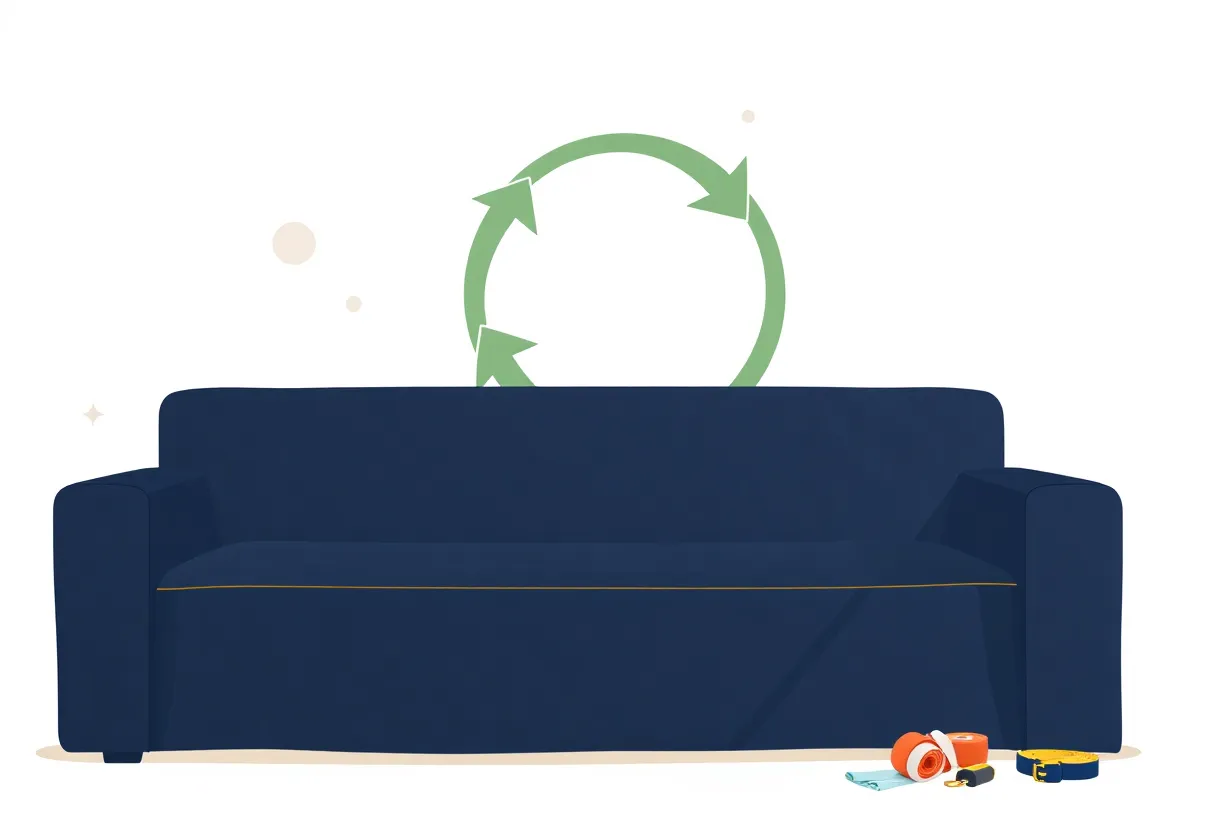
How a reusable sofa cover supports zero waste moving
In a zero waste moving mindset, the goal is to reduce single-use materials without increasing your stress. Plastic wrap and disposable sheets often tear, slip, and still let grime through. A reusable sofa cover is different because it is designed to:
- Create a washable barrier between your sofa and moving-day mess
- Reduce snagging and surface friction during carries and tight turns
- Keep cushions together so they do not slide off and expose unprotected areas
- Speed up post-move cleanup with one simple laundry cycle instead of upholstery scrubbing
In other words, it supports both priorities at once: less waste, less damage.
Fit matters more than people think (for safety and full coverage)
A cover that slides around is not just annoying. It can expose fabric right where hands and boxes land, and it can create a bunching effect that is easy to trip on when you are carrying something heavy.
A better fit helps you:
- Keep high-contact zones covered (arms, seat, front edge)
- Prevent shifting when people sit “just for a minute”
- Maintain a clean silhouette, even in the middle of packing chaos
If you are planning couch protection during moving, prioritize a cover style that is made for your couch shape (standard, sectional, chaise) and can be tucked securely.
Moving-day damage is common, but it is also predictable, which is good news. Once you know the risks, you can choose protection that matches your home, your pets, and your pace.
Next, we will make it simple to pick the right reusable sofa cover for moving by focusing on materials, fit, and an easy care routine so you are protected before, during, and after the truck pulls away.
How to Choose a Reusable Sofa Cover for Moving (Materials, Fit, and Care)
If Section 2 helped you spot the real threats to your upholstery, this is where you choose the right protection with confidence. The best reusable sofa cover for a zero waste moving kit is not just “any slipcover.” It is one that fits well, washes easily, and shields the areas that take the most hits when people, pets, and boxes are in constant motion.
1) Start with the right material: durable, flexible, and machine-washable
For couch protection during moving, your cover needs to handle friction, quick cleanups, and repeated handling.
Look for these material cues:
- Durable weaves: Tighter, more substantial fabrics resist snags from zippers, belt buckles, and cardboard edges. If it feels thin like a bedsheet, it will behave like one on moving day.
- Stretch blends for fit: A little stretch helps the cover hug the arms and seat so it does not slide when the sofa is lifted or pivoted through doorways. Better fit also means fewer exposed upholstery “gaps.”
- Machine-washable fabrics: A washable couch cover is your secret weapon when the move is done and you want the living room to feel calm again fast.
Tip for busy households: if you have kids or pets, choose a fabric you would feel comfortable washing twice in one week without stress. Because you probably will.
2) Choose protection features based on your real risks (not worst-case panic)
Not every home needs the same level of liquid defense. Think about what is most likely to happen during your move.
-
Spill resistance vs full waterproofing
- Spill-resistant is great for light mess, fingerprints, coffee drips during a packing break, and everyday use after the move.
- Full waterproofing is ideal if you expect rain during loading, snow, or soggy boxes near the sofa. It is also helpful for households managing pet accidents or frequent drink spills.
If water and weather are a real concern, explore Water-ready protection for spills and wet weather: https://frenchcovers.com/collections/waterproof-sofa-covers
-
Anti-slip design
- Look for designs that include tuck-in pieces, elastic edges, or grippy backing. This reduces shifting, which reduces exposed upholstery and makes the sofa easier to handle.
-
Separate cushion coverage for high-contact zones
- The seat cushions and armrests take the brunt of moving day. Separate cushion pieces help keep protection in place where people grab, sit, and rest boxes.
A simple rule: protect what gets touched. Arms, seats, and front edges usually get “handled” the most.
3) Sizing in plain English: a quick 3-point measuring method
A cover only protects well if it fits. You do not need fancy tools, just a flexible measuring tape (or a phone measuring app in a pinch).
Use this 3-point measuring to narrow your size and style:
- Back width: Measure across the back of the sofa from left outer edge to right outer edge.
- Seat width: Measure the sitting area across the front (not counting the arms).
- Arm height: Measure from the floor to the top of the arm (or from the seat to the top, if the brand sizes that way).
Then add these two quick checks:
- Cushion count: 2 cushions, 3 cushions, or one long bench cushion? This affects how neatly the cover lays and whether separate cushion covers will fit best.
- Shape callout: Standard sofa, loveseat, sectional, or chaise. A chaise needs coverage that follows the longer extension, otherwise the cover will pull and slip right where feet and boxes land.
If you are between sizes, lean toward the option designed for your exact couch type (standard, loveseat, sectional) rather than “one size fits all.” Moving day is not the moment you want to be re-tucking fabric every five minutes.
4) Care routine: a simple timeline that keeps your home feeling fresh
A reusable cover earns its place in a zero waste moving plan when it helps you reset quickly after the chaos. Here is a practical care schedule you can actually follow.
48 hours before the move
- Wash and dry the cover so you start with a clean layer.
- Check the care label and do a quick fit test. Better to adjust now than while the movers are waiting.
Moving day
- Keep a lint roller or microfiber cloth nearby for quick touch-ups.
- If something spills, blot first and spot-clean if needed. Save the full wash for after the move.
24 hours after the move
- Remove the cover, shake it out outside (or over a tub), then wash.
- Air-dry when possible to help maintain shape and elasticity for the next busy season.
This routine keeps your sofa protected during the move and helps your new space feel settled faster. Clean cover, clean start.
5) If your sofa is premium or vintage: protect the fabric and the finish
For heirloom pieces and high-end upholstery, “strong” should also mean “gentle.”
- Choose soft, non-abrasive fabrics that will not rub the upholstery like sandpaper when the couch is carried.
- Avoid harsh adhesives, sticky tapes, or aggressive fasteners on wood trim or delicate finishes. They can leave marks that are harder to fix than a scuff.
- Prioritize a secure fit using tuck-in supports or tailored shapes, not tape.
A good cover should feel like a glove, not a temporary construction wrap.
With your material, fit, and care plan sorted, you are ready for the fast part: putting it on quickly and correctly. Next up is the 10-minute moving-day method so your couch stays protected from door frames to delivery trucks to that first well-earned sit in your new place.

Step-by-Step: Protect Your Couch in 10 Minutes on Moving Day
Moving day is busy, loud, and full of quick decisions. The goal here is simple: keep your couch clean and unscuffed with a reusable sofa cover, without adding a pile of single-use plastic to your zero waste moving plan. Set a timer for 10 minutes and follow this checklist.
Step 1: Quick vacuum (2 minutes) to remove grit that can scratch fabric under pressure
Before anything goes on your sofa, remove the tiny stuff. Grit, sand, and crumbs act like sandpaper when the couch gets lifted, pressed through doorways, or strapped in a truck.
Action tips:
- Vacuum the seat, seams, and the crease where cushions meet the frame.
- If you are short on time, prioritize the seat and armrests. That is where weight and hands create the most pressure.
Time estimate: 2 minutes for a standard 3-seater if you keep it quick and focused.
Step 2: Remove décor pillows and pack separately; keep one washable throw for breaks
Decor pillows are magnets for dust, shoe prints, and snack smudges. Pop them into a labeled bag or box so they stay fresh for the new place.
Action tips:
- Pack décor pillows separately to prevent squashing and fabric transfer.
- Keep one washable throw accessible. It becomes your designated “moving break blanket” for kids, pets, or a quick sit down without sacrificing couch protection during moving.
Time estimate: 1 minute.
Step 3: Install the reusable sofa cover tightly; tuck and secure stress points (arms, seat corners)
A cover only protects well if it stays put. Loose fabric shifts during lifting and creates exposed edges right where scuffs happen.
Action tips:
- Start at the back, then pull down over the seat.
- Tuck deeply at stress points: arm fronts, seat corners, and between seat and back cushions.
- Smooth the surface so movers are not catching fingers or box corners in extra folds.
Time estimate: 3 minutes.
Step 4: Cover high-contact zones first: armrests and seat cushions (where hands and boxes land)
If you do only one thing beyond the main cover, do this. The “moving-day risk map” is very consistent across homes and offices:
- Arms: highest hand contact (grabs, leaning, steering through doorways)
- Seat: highest load contact (boxes set down “for one second,” tool bags, tired humans)
- Back: lower transfer risk, unless items slide or people push from behind
Action tips:
- Treat armrests and seat cushions as priority zones.
- Consider adding targeted pieces designed for those areas, especially if your sofa is vintage, light-colored, or extra precious.
Internal link for targeted help: Targeted protection for arms and cushions
Time estimate: 2 minutes.
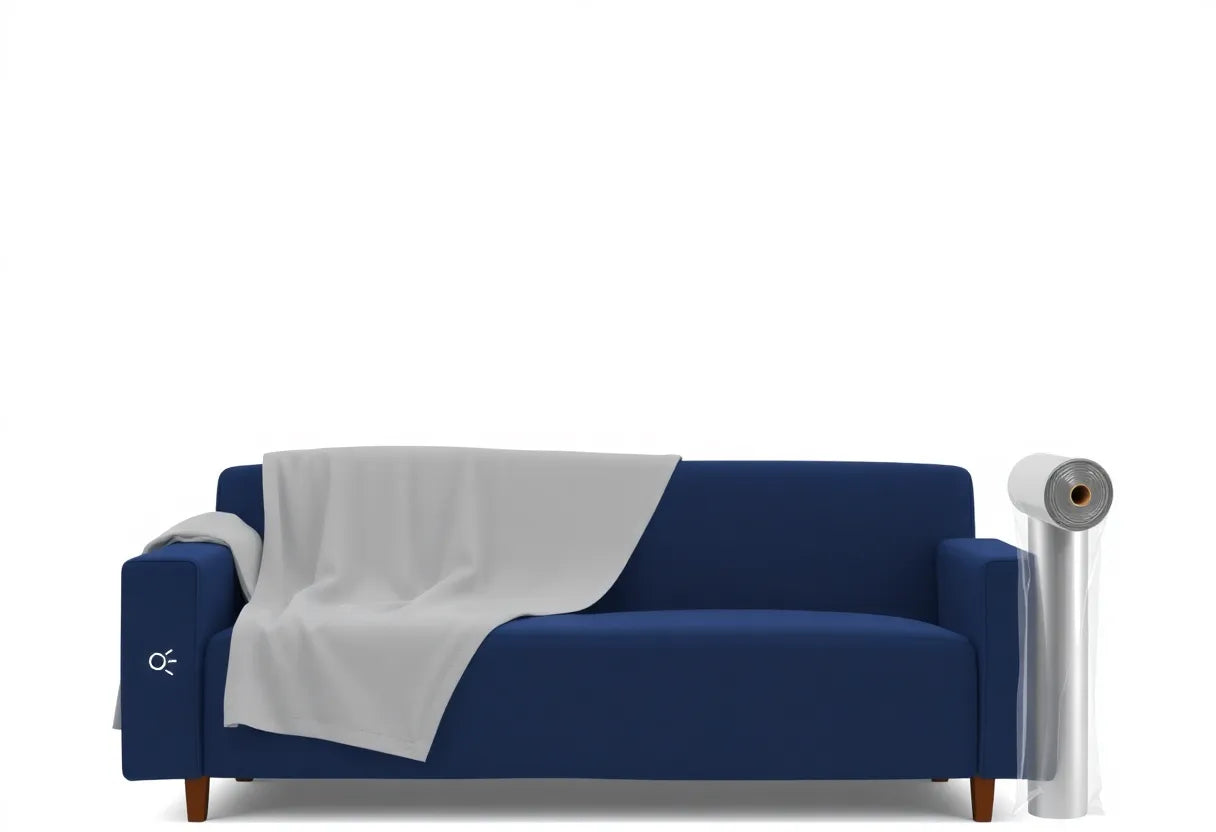
Step 5: Add a washable top layer (optional) for extreme mess (kids, pets, heavy traffic)
If your moving day includes snacks, pets, or a rainy forecast, add one more layer on top of the fitted cover. Think of it like an apron for your sofa.
Action tips:
- Use a washable couch cover layer like a throw that you can pull off fast if something spills.
- Drape it over the seat and arms first, then tuck the ends so it does not slide.
- This top layer is also great in a coworking space where lots of people will “just sit for a moment” during setup.
Time estimate: 1 minute.
Step 6: Post-move reset: remove cover, shake outside, launder, and reinstall for everyday protection
This is where reusable really shines. Instead of peeling off plastic wrap and throwing it away, you reset your living room with a clean cover and a calm mind.
Action tips:
- Take the cover outside and shake it out before bringing dust into your new space.
- Wash according to the care label, then reinstall for daily life. It keeps protecting from pet hair, sticky fingers, and the lingering dust that tends to settle after moving.
Time estimate: 1 minute now, then laundry time while you unpack.
With your couch protected and your zero waste moving kit doing its job, you can focus on the fun part: making the new space feel like home. Next, we will style your sofa so it looks designed, not covered, with easy, French-inspired touches that still work for real family life.
Style After the Move: Make Your Couch Look “Designed,” Not “Covered”
You did the hard part: couch protection during moving that did not rely on clingy plastic and disposable wrap. Now let your reusable sofa cover earn its second job, making your space feel finished while you are still unpacking.
Think of it as the most practical kind of French inspired elegance: calm, tidy, and intentionally simple.
Quick Win 1: Choose a Color Strategy That Works With Real Life
After a move, life is messy for a week or two. Mid tones are your best friend because they hide “stress” like light dust, pet hair, and little scuffs from boxes brushing by.
Use one of these easy palettes to get a polished look fast:
-
Warm Neutral (soft, welcoming, family-proof)
- Cover color: oatmeal, sand, warm taupe
- Pillows: cream + terracotta (or caramel)
- Throw: warm charcoal or cocoa knit
-
Cool Modern (clean lines, airy, great with light walls)
- Cover color: dove gray, stone, greige
- Pillows: white + deep teal (or slate blue)
- Throw: graphite or icy gray
-
Classic Dark (best at hiding wear, great for pets and kids)
- Cover color: navy, espresso, charcoal
- Pillows: beige + olive (or ivory + camel)
- Throw: cream or medium gray for contrast
If your goal is “looks expensive without trying,” start neutral on the sofa, then add personality with pillows. It keeps the room flexible if your rug, art, or curtains change later.
Quick Win 2: French Inspired Styling on a Budget (One Texture + Simple Pairing)
A cover can look intentional when you follow one rule: pick one statement texture, then keep everything else quiet.
- If your cover has a linen look, go simple and crisp with pillow shapes.
- If your cover has a velvet look, keep pillows matte (cotton, woven) so the sofa stays the star.
Try these foolproof formulas (fast, balanced, and family friendly):
-
“2 pillows + 1 throw” Formula A (hotel calm)
- 2 matching pillows (20x20 or similar)
- 1 throw folded on one armrest
-
“2 pillows + 1 throw” Formula B (cozy but tidy)
- 1 solid pillow + 1 subtle pattern pillow (same color family)
- 1 throw draped in a clean diagonal line across one corner
This is also a quiet win for zero waste moving: you are not buying new furniture or “temporary” decor just to make the room feel done. You are styling what you already protected.
Quick Win 3: Seasonal Refresh Without Replacing Furniture
Instead of replacing a sofa (or buying a new one after a stressful move), rotate covers like you would rotate bedding.
A simple rotation plan:
- Spring and summer: lighter neutrals, breathable textures
- Fall and winter: deeper tones, cozier textures
- High traffic periods (holidays, house guests, renovations): your most durable, easiest-care option
Because a washable couch cover can go straight into the wash, you can refresh the whole room in one laundry cycle. That is a practical, budget friendly way to keep premium or vintage furniture looking loved, not worn.
Quick Win 4: Offices and Coworking Spaces: Keep It Professional and Easy to Maintain
If clients, members, or coworkers use your seating, choose covers the way you choose a brand palette: clean, consistent, low maintenance.
- Pick solid colors like charcoal, navy, or medium gray for a polished look.
- Prioritize easy-wash materials so your seating stays photo-ready with minimal downtime.
- Keep one backup cover on hand so you can swap quickly while the other is washing.
If your space has multiple seating types, coordinating matters. You can extend the same neat, cohesive look beyond the sofa with matching seat protection here: coordinate seating beyond the sofa.
Tie-In to What’s Next
Now that your couch looks “designed,” the final step is keeping that calm, clean look long after moving week. Next, we will wrap up with a simple take-home plan and a quick reminder of how to make your reusable setup the easiest part of zero waste moving.
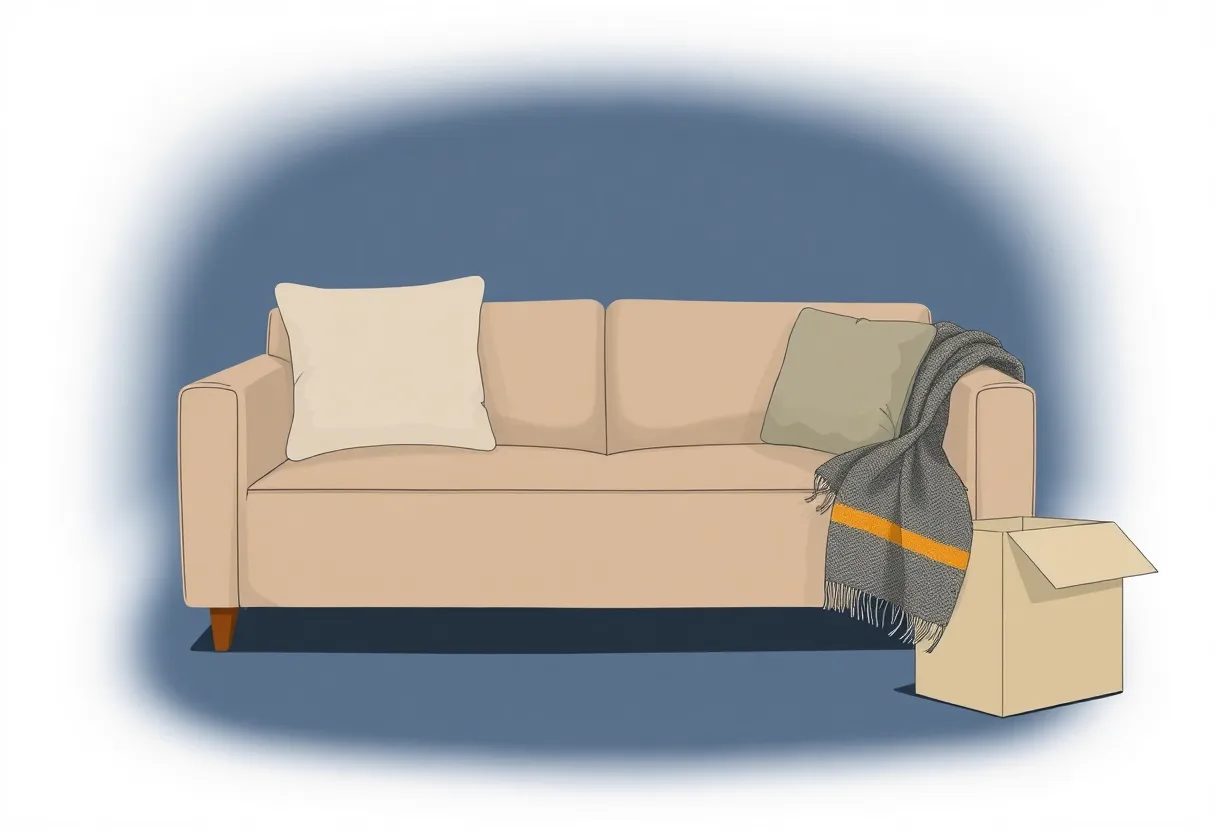
The secret to a stress-free move isn’t more plastic wrap—it’s smarter preparation. By choosing a reusable sofa cover, you’ve already cut waste, prevented scuffs, and protected your family’s favorite gathering spot. From gritty shoes to snack breaks, your couch stayed clean and calm. Now, as you settle into your new home, that same washable couch cover keeps working: shielding against everyday spills, pet hair, and the beautiful chaos of real life. You don’t have to choose between elegance and practicality. Moving soon? Measure your couch today and set up a reusable cover before moving week—so your sofa stays clean, calm, and ready for real life the moment you arrive. Whether you’re protecting heirlooms or just making life easier, small choices create a home that feels both polished and lived-in. After all, zero waste moving isn’t just about what you leave behind—it’s about how beautifully you move forward.
FAQ: Zero-Waste Moving and Sofa Protection, Made Simple
Moving day can feel chaotic, especially with kids, pets, or cherished vintage pieces in the mix. Below are quick, practical answers pulled straight from our Zero-Waste Moving Kit guide, so you can choose a reusable sofa cover that looks beautiful, stays put, and delivers real couch protection during moving without the plastic-waste guilt.
Q: Are reusable sofa covers actually better than plastic wrap for moving?
A: Yes, for most homes they are. The article highlights that a reusable sofa cover supports zero waste moving, breathes better than plastic, and still offers reliable couch protection during moving against scuffs and dust. See our tips in Why Plastic Wrap Falls Short and The Zero-Waste Moving Kit Checklist.
Q: How do I measure my couch to get a cover that won’t slip during moving?
A: Measure the sofa width (arm to arm), seat depth, and back height, then choose a fit that matches the article’s “snug plus tuck” approach so it grips during lifting and loading. A well-fitted reusable sofa cover paired with securing straps reduces shifting. Follow How to Measure for the Right Fit and Keep It Secure During Transit.
Q: What’s the best option for pets, anti-scratch, waterproof, or both?
A: For most pet households, the article recommends prioritizing both: anti-scratch for claws and waterproof for accidents and muddy paws. Look for a washable couch cover so cleanup stays simple after move-in day. Start with Pet Friendly Protection and Fabric and Finish Guide.
Q: Can I use the same couch cover for daily life after moving?
A: Absolutely, that is the beauty of a reusable sofa cover: the article positions it as part of a zero waste moving plan and a stylish everyday layer once you are settled. Choose a washable couch cover you will actually keep on for movie nights, guests, and daily wear. See From Moving Day to Everyday Living and Care and Washing Tips.
Q: How do I protect armrests and seat cushions from the most wear?
A: The article calls out armrests and seat fronts as the highest-friction zones, so add extra layers there: tuck fabric tightly, use separate cushion covers, and consider corner guards for moves. This targeted approach improves couch protection during moving and extends daily life durability. Use High Wear Areas to Cover First and Layering for Extra Protection.