Ever moved a sofa and arrived to find a new scratch, a mystery stain, or pet hair pressed into the fabric? It happens fast, even when you plan ahead.
Busy families, pet owners, and anyone who loves premium or vintage pieces need protection that is tough, simple, and still looks chic. Cardboard and plastic wrap can slip, tear, and create a pile of trash you do not want.
In this guide, you will learn how reusable sofa covers and the right furniture covers for moving can keep your couch safe, clean, and stylish. You will also get zero waste moving tips and see why a washable couch cover is a smart choice for homes and shared spaces.
First, let’s look at what actually damages sofas during a move, and how to prevent it.
Why “Zero-Waste Moving” Starts With Sofa Protection (Not More Plastic Wrap)
If you are trying to move with less waste, your sofa is the perfect place to start. It is large, hard to maneuver, and it is usually the first thing to get bumped, brushed, or set down in the wrong spot for just a second. The result is often a sofa that arrives looking a little more “lived-in” than you planned, plus a trash bag full of plastic wrap and tape.
The good news: choosing reusable sofa covers and the right furniture covers for moving is one of the simplest swaps you can make. It protects what your family uses every day, and it keeps your moving setup cleaner, calmer, and far less disposable.
What actually damages a sofa during a move (and why it happens so fast)
Most moving day damage is not dramatic. It is quick, repeated contact in all the tight places: door frames, stair rails, truck walls, even your own hands.
Here are the most common culprits movers warn about, and what they do to upholstery:
-
Abrasion on corners and edges
The arms and front corners rub against door frames and hallways. In a truck, they can scrape against blankets, straps, or other items. This is how you get fuzzy patches on fabric and scuffed-looking edges on leather or faux leather. -
Dirt and oils from hands
Even clean hands transfer oils, sunscreen, lotion, and everyday grime. During a move, people grab the same spots repeatedly (arms, seat edge), which is why those areas often look darker afterward. -
Pet hair transfer and “packed-in” fur
If you have pets, hair that is already on the sofa can get pressed deeper into the weave as the couch is lifted and set down. Hair also transfers from moving blankets and clothing, then clings stubbornly once static builds up in the truck. -
Moisture during loading and unloading
A light drizzle, damp sidewalks, morning dew, or a wet truck ramp can wick moisture into fabric quickly. Once moisture mixes with dust, it can leave marks that are annoyingly visible when you finally settle in. -
Friction inside the truck
Even when the sofa is strapped, tiny vibrations during driving create steady rubbing. That friction is what makes fabric pill, pulls threads, and leaves “mystery wear” on one side.
This is why protection that stays put matters. A fitted, reusable cover is less likely to shift than a loose layer, so it actually shields the contact points that take the hit.
The waste problem with plastic wrap (and why it often is not recycled)
Stretch film and tape feel convenient because they are fast, but they are also a classic single-use moving habit. From a waste perspective, they are tough to justify:
- The EPA emphasizes source reduction and reuse as the most effective way to prevent waste in the first place, before you even get to recycling. Reuse is higher on the “preferred actions” ladder than disposal because it avoids creating trash altogether. (Source: EPA guidance on reducing waste through reuse: https://www.epa.gov/recycle)
- Plastic film recycling rules vary widely, and many municipal programs do not accept film in curbside bins. Even when drop-off options exist, used moving wrap is often contaminated with dust, tape residue, or mixed materials, which can make it unacceptable for recycling streams. (A practical place to check local rules: https://earth911.com/)
In real life, that means a lot of moving wrap goes straight to the bin, even when you had good intentions.
A practical swap: reusable covers that protect now and keep working after the move
For busy households, “eco-friendly” needs to also mean “easier.” Reusable covers can reduce waste while making moving day more efficient:
- Less trash: no layers of wrap to cut off and throw away.
- Faster setup and removal: slip on, smooth, and go. No stopping to rewrap torn sections.
- Ongoing value: the same cover becomes your everyday washable couch cover for snack spills, muddy paws, and daily wear, or for keeping a premium piece pristine when company comes.
If you want to browse baseline options designed for daily life and moving-day protection, start here: Sofa and Couch Covers.
Quick checklist: cover these sofa zones first (for the most visible protection)
When time is tight, focus on the areas that show damage the most once you are in your new living room:
-
Sofa arms (outside and top)
Highest contact with hands, door frames, and stair rails. -
Seat cushions (top and front edge)
Where people grip to lift and where dirt transfers during loading. -
Back cushions (especially the top edge)
Often drags against walls or the truck as you angle the sofa through tight spaces.
These are simple, high-impact zero waste moving tips because they reduce both cleaning time and the temptation to overuse disposable wrap “just in case.”
Next up: choosing a reusable cover that will not slip mid-move
Protection only works if it fits well and stays in place when you pivot through a doorway or hit a bump in the truck. In the next section, we will walk through how to choose reusable covers for moving day based on fit, fabric, and grip, with a quick measuring guide and an easy at-home fit test.

How to Choose Reusable Covers That Work for Moving Day (Fit, Fabric, and Grip)
In the last section, we talked about why plastic wrap is not the hero it pretends to be, and how a reuse-first approach keeps both waste and stress low. Now let’s get practical: the best reusable sofa covers and furniture covers for moving are the ones that actually stay on, protect high-contact areas, and clean up easily after the chaos.
Think of this as your calm, confident buyer checklist for moving day.
1) Fit first: measure for a snug, no-slip move
A cover that is even slightly too large tends to “walk” as you lift, pivot, and squeeze through doorways. Too small, and it will pop off corners right when you need it most.
Grab a tape measure and note three basics: width, depth, and height. Then identify your sofa type (standard, loveseat, sectional) and whether you want separate cushion pieces for a tighter hold.
Here is a simple measuring table you can screenshot:
| What to measure | Where to measure | Why it matters on moving day |
|---|---|---|
| Width | Arm to arm across the front | Prevents sagging fabric that catches on door frames |
| Depth | Front edge of seat to back | Helps the cover stay anchored when carrying |
| Height | Floor to top of backrest | Stops the cover from creeping upward while lifting |
| Cushion count (optional but helpful) | Seat cushions and back cushions | Separate cushion coverage grips better and shifts less |
Practical tip: If your sofa is a sectional, measure each section like it is its own small sofa. A better fit on each piece usually beats one oversized cover that twists during transport.
2) Do the 60-second fit test before you commit
Once the cover is on, you can quickly predict how it will behave in a moving truck.
Set a timer for one minute and do this “fit test”:
- Tug the cover corners down and smooth the fabric along the arms and back.
- Sit normally, then stand up.
- Run your hand along the armrests and seat edge to see if fabric is rolling or loosening.
- Give one gentle sideways pull at the seat area.
If it stays smooth and re-centers itself after you sit and stand, you are in good shape. If it slides easily or bunches at the arms, choose a more fitted option or add separate armrest and cushion pieces for stability.
3) Fabric priorities for moving: stretch, thicker weave, easy wash
Moving is not a “light-duty” moment. You want a cover that handles abrasion (hello, stairwell walls), dirty hands, and mystery dust from the truck.
Look for these fabric traits:
- Stretch for a snug fit: Stretch helps the cover hug curves and corners, which reduces slipping during lifts and turns.
- A thicker weave for abrasion: Thicker, tightly woven fabric generally holds up better against rubbing on door frames and truck surfaces.
- Easy wash for post-move cleanup: A washable couch cover is a true sanity-saver after moving day. Dust, pet hair, and snack smudges happen even in the best-planned moves, so choose something you can confidently launder.
This is one of those underrated zero waste moving tips: if it is easy to wash, you will actually reuse it, not replace it.
4) Grip and stability: your cover should “lock in” where motion is highest
The hardest-working areas during a move are the seat edge, arms, and corners. That is where you want the most grip.
Features that help:
- Elastic edges: Helps the cover stay tucked under the frame instead of riding up.
- Non-slip design: Look for built-in grip elements or constructions designed to reduce sliding.
- Separate pieces for high-motion zones: A fitted base plus separate seat or armrest pieces often stays put better than one single piece, especially when rotating through narrow halls.
If your household includes pets or energetic kids, this matters even more. A jumping dog can shift a loose cover in seconds, and then claws meet upholstery.
For extra durability in busy homes, you can explore options made specifically for scratch-prone situations here: Anti-Scratch Couch Covers.
5) Match protection to your household (and your sofa)
Not every move has the same risks. Choose based on who lives with you and what your sofa needs.
- Kids and snack spills: Prioritize easy-clean fabric and coverage that wraps the seat and arms well. Spills tend to happen during the “last sit” before loading and the “first sit” after unloading.
- Pets (claws and hair): Look for durable, surface-protective fabric and a secure fit that resists shifting when pets hop up. Pet hair pressed into upholstery during a move is frustrating, but a washable cover lets you shake it out and wash it later.
- Premium or vintage upholstery: Choose covers that feel smooth against the surface and fit snugly without rough friction. The goal is protection without abrasive contact, especially on delicate fabrics and detailed arms.
Quick real-life scenarios (so you can choose confidently)
- Rainy move: You want a snug cover that stays on during quick loading, plus something you can wash after water spots and street grime transfer. Even if your cover is not fully waterproof, it can reduce direct contact and keep dirt off the upholstery until you get indoors.
- Narrow stairwell: A fitted, stretch cover reduces snagging. Loose fabric acts like a handle for door frames to grab.
- Pet jumping on the covered sofa while you pack: A grippy, well-fitted cover is the difference between “no problem” and “the cover slid off and now the sofa is exposed.”
Buyer checklist (save this for moving week)
Before you click “buy” or pack what you already own, confirm:
- You measured width, depth, and height
- The cover matches your sofa type (standard, loveseat, sectional pieces)
- You have separate cushion coverage if you need a tighter hold
- Fabric is stretchy enough to fit snugly and thick enough to resist rubbing
- It is a washable couch cover you can clean right after the move
- Grip features are present: elastic edges, non-slip design, or both
Next up, we’ll put your covers to work with a simple, low-waste packing plan for before, during, and after the move so everything stays clean, secure, and ready for real life in your new space.
A Simple Zero-Waste Packing Plan for Sofas (Before, During, After the Move)
You already know what can go wrong from the moment a sofa heads toward the doorway: dusty hands on light upholstery, a sharp corner brushing a door frame, cushions sliding in the truck. The good news is you can prevent most of it with a repeatable routine and the right reusable sofa covers and furniture covers for moving. Here is a simple plan that works for real life families, pets included.
Before the move (30 to 45 minutes that saves hours later)
-
Vacuum like you mean it (including creases).
Focus on the “crumb zones” where grit hides: between seat cushions, along piping, and under the front edge. Dirt acts like sandpaper during transport, especially when the sofa rubs against blankets or straps. -
Spot-clean only what needs it.
Skip soaking the fabric right before moving day. A slightly damp area can attract more dirt or transfer onto covers. If you do spot-clean, give it enough time to fully dry. -
Remove legs if needed (tight stairwells, narrow doors, low clearance).
Many professional movers recommend reducing snag points and preventing torque on joints when navigating turns and thresholds. If legs come off easily, you lower the chance of bumps that chip wood or tear fabric around the base. -
Bag hardware in a reusable pouch and label it.
Put screws, washers, and any tools in a small fabric zip pouch and label it “SOFA LEGS.” Then place it in the same “first open” box as your bed tools and coffee maker. This is one of those zero waste moving tips that also prevents the classic “where did the screws go?” moment. -
Cover high-contact areas first (the places hands grab).
If you do nothing else, protect:- Armrests (most touched, most scraped through doorways)
- Front edges of seats (where people lift and pivot)
- Cushion faces (where dust and fingerprints show)
Separate pieces for these zones tend to stay tighter during carrying and loading. If you want a targeted option, consider Armrest and Cushion Covers: https://frenchcovers.com/collections/armrest-cushion-covers
Practical note: If your fitted cover is in the wash the day before, this is where a dedicated, clean set of smaller covers for arms and cushions saves the day.
During the move (protect the corners, secure without sticky tape)
-
Reinforce corners before you go through the door.
Corners take the first hit on door frames, railings, and truck walls. Pro movers often call corner protection a must because a single scrape can permanently roughen fabric or crush cushioning. Use folded moving blankets or thick fabric pads at each corner, then place your cover over them for a cleaner, more secure wrap. -
Keep cushions covered separately.
Even if your sofa body is protected, loose cushions love to fall, pick up dust, or get pressed against dirty surfaces. Cover each cushion (or bundle them in a clean fabric bag) so they arrive as “living-room ready,” not “laundry first.” -
Use reusable straps or blankets to secure, not tape on upholstery.
Tape can leave residue, pull fibers, or catch on textured weaves when removed. Instead:- Wrap a moving blanket around the covered sofa
- Use reusable straps to hold the blanket snug
The goal is stability without adhesives touching your fabric. Your furniture covers for moving should be doing the surface protection job, while straps handle the load security job.
-
Keep a “clean hands” rule for one person.
Assign one adult as the clean handler: opening doors, holding elevator buttons, guiding the path. Everyone else lifts. This single habit dramatically reduces mystery smudges on light colored textiles.
After the move (reset fast, clean easily, store for next time)
-
Shake out dust outside before you bring covers deeper into the home.
This is especially helpful if you moved in rain, through a dusty hallway, or into a truck with grit on the floor. -
Wash on a gentle cycle, air-dry when possible.
A washable couch cover is only truly low-stress if it stays in good shape after cleaning. For longevity, follow textile care best practices like using mild detergent, cool to lukewarm water, and avoiding high heat when you can. For consumer-friendly care guidance, see textile care basics from Good Housekeeping: https://www.goodhousekeeping.com/home/cleaning/
If you must tumble dry, use low heat and remove promptly to reduce wrinkles and wear. -
Store covers like a pro (so you actually reuse them).
Fold, then place them in a labeled fabric bag: “SOFA MOVE KIT.” Add your reusable straps and the hardware pouch. Next time, you will not scramble for supplies or default back to single-use wrap.
Time-saving tips for busy families (because moving day is already a lot)
- The one-laundry-load plan: Wash all sofa and cushion covers together in one planned load the day after the move (or the same night if you need your living room functional fast).
- Quick lint removal in 2 minutes: Keep a reusable lint brush or washable lint tool in your “open first” box. Pet hair loves to cling during transport, especially in dry weather.
- Make a “clean zone” in the new home: Choose one corner of the living room and keep it off-limits to boxes. That is where the freshly covered sofa and clean cushions go first. It creates a calm landing spot for kids, tired adults, and pets while everything else is still chaos.
Once your sofa is protected and your routine is set, you can think about the fun part: making those moving-day covers look intentional and chic, not temporary. Next, we will talk color, texture, and how to keep a French-inspired look even mid-move.

Style Still Matters: Make Your Moving Covers Look Intentional (Not Temporary)
You already know protection is non negotiable on moving day. The good news is that furniture covers for moving do not have to look like a last-minute patch. With the right color, texture, and coordination, reusable sofa covers can feel like a design choice now, and a living-room upgrade later.
Here is a simple style playbook that works for busy homes, pet households, vintage pieces, and even client-facing spaces.
1) Color strategy: mid-tones for moving day, lighter tones for move-in week
Moving creates a predictable mix of dust, fingerprints, and “where did that smudge come from?” moments. Mid-tones hide that reality better than very light or very dark colors.
- For moving day: choose mid-tones like taupe, camel, stone, warm gray, or soft olive. They disguise dust from hallways and truck interiors and are more forgiving if someone grabs the armrest with less-than-clean hands.
- After move-in: switch to lighter tones like ivory, sand, or pale gray for that fresh, airy reset. (Or keep your mid-tone on and brighten with pillows and throws.)
Practical tip: if you are packing by zones, label one cover set “Moving Day” and one set “Fresh Start.” That is one of those zero waste moving tips that also saves time because you are not panic-washing at midnight.
2) Texture ideas: choose subtle weaves that read “decor,” not “packing gear”
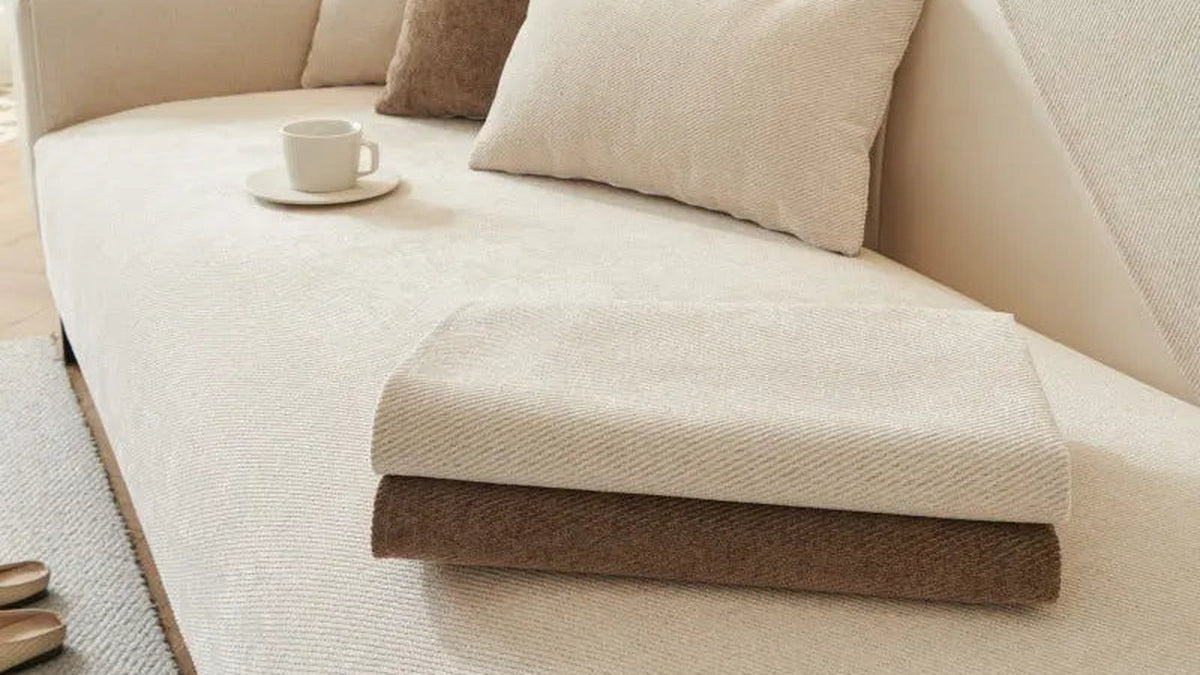
The easiest way to make a cover look intentional is texture. Instead of shiny or crinkly materials, look for a soft hand-feel and a visible weave that looks like upholstery.
- Subtle basketweave or micro-herringbone: adds depth and a French-inspired, tailored look without shouting for attention.
- Matte finishes: photograph better (helpful for home listings, family photos, and business spaces).
- Stretch with structure: a fitted, stable cover looks more “styled” and less “temporary,” especially when the fabric has a slightly thicker knit.
Bonus: a textured, washable couch cover tends to hide minor lint and pet hair between washes, which is helpful when your lint roller is buried in a box labeled “misc.”
3) Room coordination: pull the look together with what you already own
A cover can do more than protect. It can unify a room quickly, especially when everything feels in flux during a move.
Try this quick coordination formula:
- Match your cover to one large stable element (rug, curtains, or wall color).
- Repeat that tone in two small accents (pillows, a throw, or a lamp shade).
- Keep one contrasting color for life and warmth (a rust pillow, a deep blue throw, or a green plant).
If you want the fastest upgrade with the smallest purchase, pillows do the heavy lifting. Pair your cover with Decorative Pillow Covers to make the sofa look finished even while boxes are still stacked nearby:
Decorative Pillow Covers
4) Small business and coworking spaces: stay neutral, professional, and photo-ready
If your seating is client-facing, you need protection that does not scream “we are under construction.” Reusable covers are ideal for renovations, layout changes, and high-traffic weeks because they keep furniture looking consistent.
Go for:
- Professional neutrals: charcoal, warm gray, greige, navy, or camel
- Low-contrast textures: they read polished on camera and hide daily dust
- Cohesive palette across seating: even mismatched sofas look intentional when covered in the same tone family
This is also where reusable sofa covers shine long-term: you can remove them for events, wash them after heavy weeks, and put them back on without buying disposable protection each time you reconfigure the space.
Three mini mood boards (easy inspiration you can copy)
Use these as “grab and go” style directions while choosing furniture covers for moving that you will actually want to keep using.
Mood board 1: Family-proof warm neutrals (cozy, forgiving, inviting)
- Cover color: taupe, oatmeal, or camel (mid-tone)
- Texture: soft knit or subtle weave
- Accents: terracotta or muted mustard pillows, cream throw
-
Works best for: kids, pets, snack nights, open-plan living rooms
Why it works: warm neutrals hide dust during the move and still feel welcoming once you unpack.
Mood board 2: Modern monochrome (clean lines, minimal visual noise)
- Cover color: warm gray or charcoal (mid to deep tone)
- Texture: fine ribbed or tight weave for a sleek finish
- Accents: black and white pillow covers, a single green plant, matte metal lamp
-
Works best for: modern homes, apartments, coworking lounges
Why it works: it looks intentional immediately, even if the room is not fully set up yet.
Mood board 3: Vintage-friendly classic tones (protects heirlooms with respect)
- Cover color: stone, olive, or deep linen-beige (mid-tone)
- Texture: refined weave that resembles upholstery
- Accents: soft blue, cream, or burgundy pillows; wood and brass details
-
Works best for: vintage and premium furniture owners, traditional interiors
Why it works: the palette complements older woods and classic decor, so your cover feels like a curated layer, not a compromise.
Style is not just vanity. When your protection looks good, you are more likely to keep it on through the messy parts of moving day, which means fewer scuffs, fewer stains, and less stress.
Next, we will talk about how to get even more value after the truck is unloaded: how the same covers can protect your sofa year-round and help you refresh your space without replacing furniture.
Reuse Beyond Moving: Get Year-Round Value From the Same Covers
If you are already investing in reusable sofa covers and furniture covers for moving, the best part is what happens after the boxes are unpacked: you can keep using the same protection in real life, not just on moving day. That is the heart of smart, low-stress, zero waste moving tips: choose items that keep earning their place in your home.
A quick rule of thumb many sustainability organizations emphasize in circular economy guidance is simple: prioritize reuse first because it prevents waste at the source, before you even need recycling. In other words, buying once and using often is usually the most practical, planet-friendly move.
Everyday protection that fits real family life (spills, pet hair, sun)
High-use seating takes the hit daily: snack spills, sticky fingers, muddy paws, and that slow sun-fading near the window. Keeping a washable couch cover on your main sofa can help you:
- Reduce deep cleaning and protect upholstery fibers from abrasion
- Catch stains before they sink in, especially on light fabrics
- Cut down pet hair build-up so your sofa stays “guest-ready” with less effort
Mini snapshot: Movie night with kids
Friday night, popcorn bowl tips, juice splashes, and someone wipes hands on the armrest. Instead of panic scrubbing the upholstery, you remove the cover and run a quick wash cycle. Your sofa stays protected, and you do not add another roll of disposable plastic to the trash.
Tip: If pet hair is the daily battle in your home, pair your fitted cover with a top layer throw that is designed to release hair easily. See Pet Hair Resistant Throws for a simple add-on that makes cleanup faster.
Seasonal refresh without replacing furniture (or your whole décor)
Moving often sparks a decorating reset, but that does not mean you need a new sofa. Rotating covers can give you the “new room” feeling with far less cost and waste.
How to make it work:
- Keep one mid-tone cover for high-traffic months (it hides dust and daily life beautifully)
- Swap to lighter tones in spring and summer for an airy look
- Store the off-season cover clean and folded in a labeled fabric bag so it is ready in minutes
Mini snapshot: Hosting guests
You are hosting family for the weekend and want the living room to feel polished. You switch to a fresh cover, add two pillow covers, and your space looks intentionally styled. After guests leave, you wash and store it, no single-use “party protection” needed.
Premium and vintage care when life gets unpredictable
If you own a premium or vintage sofa, you already know the real risk is not just moving day. It is the surprise moments: a friend’s dog visiting, a paint touch-up project nearby, or a crowded celebration where people perch on the arms.
Reusable covers are a gentle, practical shield for those situations, especially when you choose a fabric that is surface-safe and fits snugly (less rubbing, less shifting).
Mini snapshot: Pet-sitting weekend
You are watching a relative’s dog for two nights. Instead of blocking off the living room, you cover the sofa, enjoy your weekend, then remove the cover to reveal your original upholstery exactly as it was.
Small business and coworking seating that stays photo-ready
Waiting areas and shared lounges see constant turnover: jackets with metal zippers, coffee cups, rolling bags, and frequent cleaning. Reusable covers help keep seating looking consistent, which matters for client impressions and online photos.
Mini snapshot: Office waiting area
You are repainting the lobby wall and moving chairs around all week. Covers protect from dust and scuffs, then wash up easily when the project ends. That is protection you can schedule, not stress about.
The cost-and-waste mindset: buy once, reuse often (and avoid last-minute stress)
Disposable wraps and flimsy covers create the same problem every time: a rushed run to the store, extra waste, and protection that still slips or tears. With reusable sofa covers, you are building a small “moving and life” kit you can rely on.
Here is the simple checklist that keeps it truly reusable:
- Wash after messy use (so stains do not set)
- Air-dry when possible to extend fabric life
- Store clean covers together so you can grab them quickly for the next move, party, or project
This is where your zero-waste plan becomes easy: you are not trying to be perfect, you are just choosing protection that works again and again.
Next, we will bring it all together with a quick wrap-up and a practical nudge for planning ahead so your next move feels calmer, cleaner, and more stylish from day one.

Moving day is full of little moments that can leave your sofa scratched, stained, or covered in mystery grime. But you already know the secret: the right protection changes everything. By swapping plastic wrap for reusable sofa covers, you are not just preventing moving day damage. You are choosing furniture covers for moving that become a stylish, washable couch cover for the messy, beautiful life you live every day. From snack spills to pet hair to seasonal room refreshes, one smart choice keeps your sofa safe and your home looking effortlessly put together. Moving soon? Measure your sofa today and set aside reusable covers now so you can skip plastic wrap and protect your couch from day-one damage. Your sofa carries your family’s quietest moments. Protect it with something that lasts as long as the memories.
FAQ: Moving Your Sofa in Style, Without the Waste
Moving day can feel chaotic, especially with kids, pets, or a beloved vintage sofa in the mix. Below are quick, practical answers pulled from our guide on zero waste moving tips, including how reusable sofa covers and furniture covers for moving can protect your space in a chic, French inspired way.
Q: Can I really move a sofa without plastic wrap?
A: Yes. As the article explains, reusable sofa covers and furniture covers for moving can replace single use plastic while still shielding from scuffs, dust, and fingerprints. Pair a fitted cover with simple tie downs for a secure, zero waste move. See Zero-Waste Moving Tips and Reusable Covers vs Plastic Wrap.
Q: What’s the best reusable cover option for pets that scratch or shed?
A: Choose a durable, washable couch cover with a tight weave and a snug fit, since the article highlights easy care protection for busy families and pet owners. For shedding, a quick lint roll before covering helps the cover sit smoother and stay cleaner during transport. See Pet Friendly Protection and Fabric and Durability Guide.
Q: How do I measure my couch to get a cover that won’t slip during a move?
A: Measure width (arm to arm), height (floor to back), and depth (front to back), then match those to the sizing guidance mentioned in the article for a secure fit. A properly sized reusable sofa cover plus straps or tuck in panels helps prevent shifting when carrying and loading. See How to Measure Your Sofa and Getting a Secure Fit.
Q: Do washable sofa covers protect against rain or wet conditions while loading?
A: A washable couch cover protects well from light splashes and dirty hands, but the article notes that heavy rain needs an extra water barrier. Use a reusable waterproof layer on top only during loading, then remove it to keep your move aligned with zero waste moving tips. See Weather and Loading Tips.
Q: How do I clean and store covers so they’re ready for the next move?
A: Follow the article’s care advice: shake out debris, machine wash your washable couch cover as directed, and fully air dry before storing. Fold and store in a breathable bag so your furniture covers for moving stay fresh, odor free, and ready for the next relocation or seasonal refresh. See Cleaning and Care and Storage Checklist.