Ever lifted a sofa cover and caught that musty smell? Mold can start in dark, trapped spots fast, even in a clean home with kids, pets, or busy foot traffic.
If you are trying to protect a premium or vintage sofa, or keep a lounge area guest ready, that risk is stressful. The good news is you can prevent mold under sofa cover with a few simple habits and the right fabric choice.
In this guide, you will learn how to stop mildew on a couch, what causes damp buildup, and how a breathable sofa cover plus a moisture resistant couch cover can help keep your furniture fresh and design worthy.
First, let’s look at why mold forms under slipcovers in the first place.
Why Mold Forms Under Sofa Covers (and How to Spot It Early)
Mold does not care if your home looks spotless. It only needs the right conditions to settle in. According to EPA and CDC guidance, mold growth is most likely when moisture hangs around long enough on a surface that has something to “eat” like dust, upholstery fibers, pet dander, or crumbs. A sofa is full of those organic materials, and a cover can unintentionally create the perfect little microclimate by trapping humidity and slowing drying.
That is why families and pet owners often run into this problem after a busy week of spills, spot cleaning, or rainy weather. It is also why it can show up in coworking lounges and waiting rooms where cleaning happens often but airflow behind the furniture is not always a priority.
The simple science: what mold needs (and why couches are vulnerable)
To prevent mold under sofa cover, it helps to know what you are fighting:
- Moisture: from spills, damp cleaning, wet pet paws, indoor humidity, or condensation near cold exterior walls
- Warmth: most homes sit in a comfortable temperature range that also suits mold
- Food: upholstery fabric, dust, skin cells, and debris that collect in seams and cushions
- Time: mold can begin growing in as little as 24 to 48 hours on damp materials, which is why “it felt dry” is not always dry enough
When a cover fits tightly or is made from a low-breathability material, moisture has fewer ways to escape. Instead of evaporating into the room, humidity lingers between the cover and the upholstery. Over time, that increases the odds of mildew smell, spotting, and fabric breakdown. This is where choosing a breathable sofa cover can make a real difference, especially in humid climates or homes that frequently spot clean.
If you are comparing options, start with washable, airflow-friendly styles in the Sofa and Couch Covers collection, then match the fabric to your climate and cleaning habits. A moisture resistant couch cover can help with everyday life, but it still needs drying and airflow to do its job well.
Common triggers that create hidden damp under a slipcover
Even careful homeowners get caught by these very normal situations:
- Spills that get blotted but not fully dried (especially on seat seams and along cushion piping)
- Steam cleaning or wet shampooing followed by covering too soon
- High indoor humidity (EPA commonly recommends keeping indoor relative humidity around 30 to 50 percent for comfort and to discourage mold)
- Poor ventilation behind the couch like pushing the sofa flush against an exterior wall or blocking a vent with the back of the frame
- Basement or coastal living conditions where moisture levels stay elevated for long stretches
- Covers that do not breathe well, which can trap humidity against foam cushions that already dry slowly
If you have ever wondered how to stop mildew on a couch, this list is your starting point. Most mildew problems are not a “dirty house” issue. They are a drying and airflow issue.
Quick checklist: how to spot mold early (before it spreads)
Catching it early is the easiest win. Do a fast check when you remove the cover for washing or when you rotate cushions:
- Musty odor that gets stronger when you lift the cover
- Clammy or cool-to-the-touch fabric on the sofa or the inside of the cover
- Faint gray, green, or black dots, often near seams, the lower back, or where cushions meet the frame
- Allergy-like symptoms that seem worse when you sit on the couch or when the room is closed up
If you notice any of the above, treat it as a moisture problem first: uncover, increase airflow, and let everything dry fully. (We will get into safe cleanup later in the guide, too.)
Why this matters before we talk solutions
Once you understand the “why,” the fix becomes much less intimidating. Mold prevention is mostly about reducing trapped moisture, improving airflow, and making sure your cover choice supports drying instead of blocking it.
Next up, we will walk through a simple 10-minute routine you can do weekly that helps prevent damp buildup in real-life homes with kids, pets, and high-traffic seating.

The 10-Minute Prevention Routine (Works for Families, Pets, and High-Traffic Spaces)
In the last section, we covered why mold shows up under slipcovers: trapped moisture plus warmth plus a little dust and skin flakes. Now here is the practical part: a quick routine you can repeat weekly (and after any spill or deep clean) to prevent mold under sofa cover without turning couch care into a big project.
This is designed for real life: kids jumping up after bath time, pets claiming the corner cushion, and busy shared spaces where the sofa gets used all day.
Step 1: Dry first, then cover (the rule that prevents most mildew)
If you clean your upholstery, spot-treat a stain, or shampoo the cushions, do not re-cover until everything is fully dry.
What to do instead (takes 2 minutes to set up):
- Remove the cover and unzip cushion covers if possible.
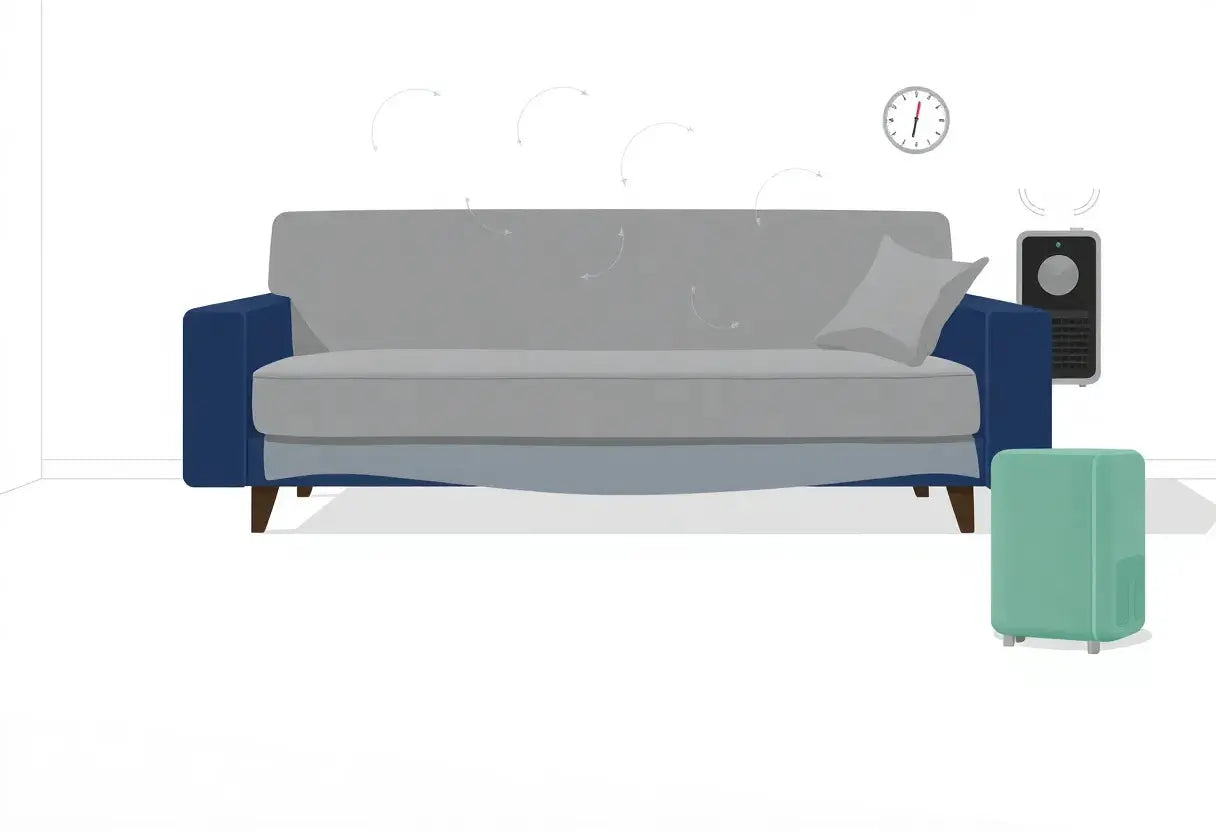
- Open windows or run your HVAC fan setting.
- Aim a box fan toward the sofa seat and back cushions to push air across the surface.
- If a cushion feels cool or slightly clammy, it is not ready.
Why this works: mold loves lingering dampness trapped between fabric layers. A breathable sofa cover helps moisture escape, but it cannot fix the problem if the cushion underneath is still damp.
Tip for families: if you clean in the evening, leave the sofa uncovered overnight with airflow. Add a washable throw as a temporary top layer if you need the couch usable.
Step 2: Reduce humidity to a mold-unfriendly range
Indoor humidity is the invisible factor that often explains that recurring musty smell.
The EPA commonly recommends keeping indoor relative humidity in the 30 to 50 percent range to reduce mold risk. If you live in a humid climate, have a basement family room, or keep windows closed during hot months, consider a dehumidifier.
Quick actions (1 minute):
- Put a small hygrometer near the sofa for a week to learn your pattern.
- If RH is regularly above 50 percent, run a dehumidifier in that room or nearby hallway.
- Use your bathroom and kitchen exhaust fans during and after showers or cooking, since that moisture migrates.
This step is key if you are researching how to stop mildew on a couch because even perfect cleaning habits struggle in consistently damp air.
Step 3: Create airflow around and inside the sofa
Couches often get pushed tight to walls for a clean look, but a tiny gap can make a big difference.
Do this weekly (2 minutes):
- Pull the sofa 3 to 6 inches away from the wall, especially if it sits against an exterior wall that runs cooler and can collect condensation.
- Make sure HVAC vents are not blocked by the sofa skirt or a large rug.
- Lift and re-seat cushions, or rotate them if your style allows.
- If you have a reclining or sectional setup, check the corners where airflow is weakest.
A well-fitted, smooth cover plus basic airflow is a strong combo, whether you use a moisture resistant couch cover or a lighter everyday slipcover.
Step 4: Fast spill protocol (save the foam, save the day)
Most couch mildew starts with one of two things: a spill that soaks in, or over-wetting during cleaning. Foam inserts hold moisture longer than you think.
The family proof spill routine (3 minutes active time):
- Blot, do not rub. Use clean towels and press firmly to pull liquid up.
- If needed, rinse lightly with a barely damp cloth (not a wet one) to remove sticky residue.
- Blot again until towels come up mostly dry.
- Dry with airflow: fan pointed at the spot, cushions separated if possible.
- Avoid soaking seams, piping, and zipper edges where moisture hides.
If the cushion insert got wet, do not trap it under a cover. That is the fastest way to create the exact conditions you are trying to avoid.
Optional for pet homes: keep a washable top layer handy for daily messes. Our Pet Hair Resistant Throws are an easy add-on, especially if you want protection without constantly removing the main cover.
Step 5: Set a wash and dry schedule you can actually stick to
A clean cover does more than look good. It removes the dust, oils, and crumbs mold can feed on. But the drying part matters just as much.
Simple schedule guidelines:
- Busy families or pets: wash every 2 to 4 weeks (or sooner if spills happen).
- Lower traffic, design-focused spaces: every 4 to 8 weeks.
- Always follow the manufacturer care label for temperature and drying guidance.
- Reinstall only when the cover is completely dry, inside and out.
The weekly 10-minute routine (put it on your calendar):
- 5 minutes: vacuum the seat seams and between cushions.
- 2 minutes: lift and adjust cushions to release trapped air pockets.
- 1 minute: check for any damp feel near armrests and the backrest.
- 2 minutes: confirm airflow gap and vents are clear.
This quick habit is often enough to prevent mold under sofa cover even in high-traffic homes, because it catches moisture early before it becomes a smell or a stain.
Once your routine is in place, the next step is choosing materials that support it. In the next section, we will break down what to look for in a breathable sofa cover and how to balance breathability with moisture resistance so your couch stays fresh and design worthy.
Choosing a Breathable, Moisture-Resistant Cover (What to Look For)
If your goal is to prevent mold under sofa cover, the fabric and fit matter just as much as your cleaning routine. A cover can either help moisture escape, or trap it right against upholstery and foam where mildew loves to start. Use this checklist to choose a cover that protects your sofa while still letting it breathe.
1) Start with breathability (especially if you have foam cushions)
A breathable sofa cover lets humid air and leftover dampness move out instead of getting sealed in. This is especially important for foam, because foam can hold moisture internally long after the surface feels dry.
What to look for
- Breathable knits or woven fabrics that allow airflow through the material
- Washable fabrics that can handle frequent cleaning without breaking down
- A texture that feels comfortable, not plasticky or sealed
What to be cautious with
- Coated or laminated “waterproof” layers: they can be great for stopping spills, but they often reduce airflow. In a humid home or if you spot-clean often, that tradeoff can increase the risk of a musty smell.
Why this matters in real life: In a humid apartment where you frequently spot-clean kid messes or pet accidents, a cover that dries fast and breathes can make it much easier to avoid the damp, trapped conditions that lead to mildew.
2) Check the fit because airflow depends on it
Fit is not just about looks. It affects how moisture moves (or does not move) around your cushions and frame.
Aim for a secure, smooth fit
- Too tight: compresses cushions and reduces airflow, which can trap moisture against foam and seams
- Too loose: bunches and creates “pockets” where dampness lingers after spills, mopping, or humid days
Quick fit check at home
- Run your hand across the seat and back. You want it smooth with minimal bunching.
- Sit down, then stand up. If the fabric shifts into folds or thick wrinkles, that is a common place for damp spots to hide.
A good fit supports your prevention routine from the previous section: when you lift cushions weekly and let the sofa air out, a well-fitted cover is easier to remove, wash, dry fully, and reinstall properly.
3) Match the material to your household (pets, kids, vintage, or high traffic)
The “best” cover is the one that fits your life without creating new problems.
Busy families and pet owners
- Prioritize durability and easy washing, because frequent washing is one of the simplest ways to reduce odor, oils, and damp buildup
- Look for strong stitching and resilient fabrics that hold up to claws, zoomies, and daily use
- If scratching is part of your reality, consider more durable options like these Anti-Scratch Couch Covers: https://frenchcovers.com/collections/anti-scratch-couch-covers
Premium or vintage sofas
- Choose gentle, non-abrasive fabrics that will not rub or snag delicate upholstery
- Pay attention to seam placement and interior texture so friction points do not wear on arms and cushion edges over time
- A smoother fit is often kinder to older fabrics and also helps reduce moisture-trapping folds
Small businesses, daycare spaces, coworking lounges
- You may prioritize easy-clean performance and durability because the sofa sees many users
- Create a simple policy: washable cover + regular inspection + consistent drying time after any cleaning
4) Moisture resistant vs. waterproof: pick the right balance for your climate and habits
People often ask which is better for how to stop mildew on a couch: waterproof or breathable. The most practical answer is usually “a balance,” based on your environment.
Moisture resistant couch cover
- Helps repel light spills and slows absorption
- Often stays more breathable than fully waterproof options
- Great for homes where humidity is a bigger issue than major spills
Waterproof cover
- Best when spills are frequent and heavy (toddlers, parties, commercial spaces)
- Can reduce airflow, so it works best when you are consistent about drying and ventilation
- In humid climates, pair waterproof protection with extra airflow habits (fans after cleaning, cushions lifted weekly, sofa pulled away from walls)
Simple decision rule
- If you deal with humidity, condensation, or frequent spot-cleaning, lean breathable first.
- If you deal with big spills often, consider waterproof, but be extra strict about drying and airflow so moisture does not get trapped underneath.
5) Your quick, non-salesy “store aisle” checklist
When comparing options, ask:
- Is it a breathable sofa cover (does it feel like fabric, not a sealed layer)?
- Can I wash it often and dry it completely without fuss?
- Will it fit smoothly without tight compression or loose bunching?
- Does it match my use case (pets, kids, vintage fabric sensitivity, heavy traffic)?
- Does the protection level (moisture resistant vs waterproof) make sense for my home’s humidity and my cleaning habits?
Up next, we will cover what to do if you already notice that musty odor: safe cleanup steps to remove mildew smells without over-wetting or ruining upholstery.
If You Already Smell Mildew: Safe Cleanup Steps (Without Ruining Upholstery)
That first musty whiff is your early warning system. The goal now is simple: remove trapped moisture, reduce spores, and clean gently so you do not push dampness deeper into seams or foam. This section will help you how to stop mildew on a couch safely, then set you up to prevent mold under sofa cover going forward.
1) Act fast: uncover, separate, and dry first
Before you reach for sprays or DIY mixes, focus on drying. EPA and CDC guidance consistently points to moisture control as the real fix, because mold keeps returning when dampness remains.
Do this right away:
- Remove the sofa cover immediately and take it to the laundry area (do not shake it in the living room).
- Pull off seat and back cushions and stand them on edge in a ventilated space.
- Create airflow: open windows if weather allows, run a fan across (not directly into) the cushions, and turn on your HVAC or a dehumidifier.
- Wait until everything feels truly dry before any deeper cleaning. If fabric feels cool or clammy, moisture is still there.
Helpful benchmark: EPA commonly recommends keeping indoor humidity around 30 to 50% to discourage mold growth. If your room is above that, drying will take longer and mildew can persist.
2) Vacuum with care (so you do not spread spores indoors)
Once surfaces are dry to the touch, vacuuming removes dust and spores that can feed future growth.
Best practice:
- Use a HEPA vacuum if possible (it helps capture finer particles).
- Vacuum the sofa frame creases, seams, and cushion edges, plus the underside and nearby floor.
- Do not beat, shake, or snap fabric indoors. That launches particles into the air and can spread odor and spores to rugs, curtains, and other soft surfaces.
Safety note: If anyone in the home has asthma, severe allergies, or is immunocompromised, consider wearing a mask and increasing ventilation during cleanup. For widespread or heavy growth, it may be safer to consult a professional.
3) Spot clean gently, and avoid over-wetting foam and seams
Over-saturating upholstery is one of the fastest ways to turn a small mildew issue into a repeat problem. Keep cleaning controlled and minimal.
A safer approach:
- Test first on a hidden area (back hem, under a cushion) for colorfastness and texture change.
- Use a lightly damp cloth with a mild upholstery-safe cleaner, then blot. Avoid pouring product directly onto the couch.
- Do not soak piping, tufting, or zipper seams. Those areas hold moisture longer.
- After spot cleaning, dry again immediately with airflow.
If the mildew smell returns after you have dried the outside well, that often suggests moisture is still trapped inside cushion foam or deep in the frame, a common real-world sign that drying has not reached the source.
4) Wash the cover correctly (and only put it back when fully dry)
Your cover can hold odor even after the couch feels better.
- Wash following the care label using the warmest water allowed for that fabric.
- Dry thoroughly. If air-drying, give it extra time so the thicker seams are not damp.
- When reinstalling, prioritize airflow. A breathable sofa cover is a smart next step because it helps reduce the humidity pockets that create that musty smell in the first place. A moisture resistant couch cover can also help with everyday spills, as long as you still dry promptly after accidents.
5) Know when replacement is the safer choice
Sometimes the kindest choice for your home and your time is not another round of cleaning.
Consider replacing cushions or components if:
- The odor persists even after full drying and repeat gentle cleaning.
- You see signs that mold has penetrated into foam (smell is strongest when you press a cushion, or discoloration appears through the fabric).
- Mildew returns quickly, which usually means moisture is living inside materials you cannot fully dry.
Targeted protection tip: mildew often starts where hands, snacks, and pet paws gather. If your armrests or specific cushions are the problem area, adding washable, easy-to-remove layers can simplify maintenance. See Armrest and Cushion Covers for focused protection in those high-contact zones: https://frenchcovers.com/collections/armrest-cushion-covers
Once the smell is handled, the next step is making sure it does not come back. In the next section, we will walk through mold prevention by scenario, with quick fixes for apartments, family homes with pets, vintage upholstery, and shared spaces.
Mold Prevention by Scenario (Quick Fixes for Common Homes and Spaces)
Different spaces trap moisture in different ways. Use the mini playbook below to prevent mold under sofa cover conditions based on what your home or workspace is actually dealing with, like coastal humidity, basement dampness, exterior-wall condensation, or HVAC being off overnight.
Apartments with poor ventilation (older buildings, small windows, exterior-wall chill)
What’s happening: Humidity lingers, and cold exterior walls can create condensation behind the sofa. That damp pocket is exactly where mildew starts.
Quick fixes
- Create an airflow gap: Pull the sofa 3 to 6 inches away from any cold exterior wall so moisture does not get trapped.
- Dehumidifier first, cover second: Aim for a comfortable indoor humidity range (many homes do best around 30 to 50 percent RH). If your apartment feels sticky, run a dehumidifier near the seating area.
- Fan-dry after any cleaning: If you spot-clean or shampoo, set a fan to blow across the sofa, not directly into the cushions. Cross-flow dries faster and helps you avoid that damp layer under the slipcover.
- Choose a breathable sofa cover: In tight apartments, breathability matters even more because your room has fewer ways to “air out” naturally.
Homes with kids and pets (daily spills, wet paws, snack crumbs)
What’s happening: Small, frequent moisture events add up. A tiny juice spill that gets covered too soon can turn into the classic musty smell.
Quick fixes
- Use a washable top layer for daily life: Add a throw or washable topper you can toss in the laundry quickly, so your main cover is not constantly taking the hit.
- Set a simple wash and fully dry schedule: Pick a cadence you can keep, like every 2 to 4 weeks, and more often during rainy seasons or if pets are on the sofa daily. The key is not just washing, but drying completely before putting it back on.
- Do a 60-second weekly check: Lift the front edge of the cover and feel for coolness or clamminess. If it feels even slightly damp, remove it and fan-dry. This is one of the easiest ways to stop mildew on a couch before you see spots.
- Prefer a moisture resistant couch cover when messes are frequent: Moisture resistance helps with accidents, but still prioritize airflow so dampness does not get sealed in.
Vintage or premium upholstery (delicate fabrics, heirloom pieces, investment sofas)
What’s happening: Over-wetting during cleaning can push moisture into foam, seams, or the frame, where it dries slowly and feeds mildew.
Quick fixes
- Minimize liquid cleaning: Blot first, use the least moisture possible, and avoid soaking cushion cores.
- Prioritize airflow as your “cleaning method”: Gentle vacuuming, lifting cushions, and letting the sofa breathe weekly often does more to prevent mold than aggressive wet cleaning.
- Go for a well-fitted breathable sofa cover: A smooth fit helps prevent bunching where moisture can sit. Breathable fabric helps protect the upholstery without creating a humidity trap.
- Do a seasonal deep-dry: Once per season, remove the cover for a few hours on a dry day and run a fan in the room. This is a low-effort habit that helps prevent mold under sofa cover issues long term.
Small businesses and coworking spaces (high traffic, cleaning crews, HVAC off-hours)
What’s happening: You get lots of bodies, occasional spills, and after-hours HVAC shutoff. That combination can raise humidity and leave upholstery damp overnight.
Quick fixes
-
Use a weekly inspection checklist: Assign a staff member to check:
- Any musty odor near seating
- Dampness under covers (especially seat fronts and arm areas)
- Spills that were “wiped” but not dried
- Control humidity during off-hours: If HVAC is reduced at night, consider a dehumidifier timer for the lounge zone, especially in coastal climates or ground-floor spaces.
- Plan cleaning so it can dry: If cushions are spot-cleaned late in the day, leave covers off and run a fan for a set drying window before closing.
- Consider waterproof where spills are common: In cafés, lobbies, or kid-heavy waiting rooms, a waterproof option can be practical. Browse Waterproof Sofa Covers when you need higher spill protection, then pair it with the airflow habits above so moisture does not get trapped underneath.
These scenario fixes build on the earlier routine and cleanup steps: control humidity, increase airflow, and never re-cover damp fabric. Next, we will pull it together with a simple wrap-up and what to do if you want protection that still looks clean and design-conscious day to day.
You have the knowledge to keep your couch fresh, safe, and mold free. The secret is simple: never let moisture linger. A fast spill response, a quick weekly airflow check, and a fabric choice that breathes with your home make all the difference. You now know exactly how to prevent mold under sofa cover, how to stop mildew on a couch with gentle, low moisture cleanup, and why a breathable sofa cover or moisture resistant couch cover is the smartest foundation for a clean home.
Your couch works hard for your family. It deserves protection that works just as hard without sacrificing beauty or comfort. Protect your couch before moisture becomes a problem choose a breathable, easy wash cover today and set your weekly 10 minute airflow routine. A small habit is all that stands between a fresh sofa and a musty surprise.
Mold Prevention FAQ: Quick Answers for Busy Homes and Beautiful Spaces
Keeping a sofa fresh is not just about a tidy room. In the article, we explain how trapped humidity, low airflow, and the wrong cover materials can create the perfect conditions for mildew, even in clean homes. Use these FAQs to choose a breathable sofa cover, manage moisture, and prevent mold under sofa cover without sacrificing comfort or style.
Q: Can a sofa cover cause mold if my home is clean? A: Yes, if the cover traps humidity and blocks airflow, mold can form even in a clean home. To prevent mold under sofa cover, follow the article’s guidance on improving ventilation and choosing a breathable sofa cover over plastic-like materials. See Why Mold Forms Under Sofa Covers and Choosing Breathable, Moisture-Resistant Slipcovers.
Q: What humidity level helps prevent mold on upholstery? A: The article recommends keeping indoor humidity around 30 to 50 percent to support airflow and help prevent mold under sofa cover. If you are often above that, add a dehumidifier and increase circulation to learn how to stop mildew on a couch before it starts. See Humidity and Ventilation Checklist.
Q: Is a waterproof couch cover better than a breathable cover for preventing mildew? A: Not always. The post explains that fully waterproof covers can trap moisture underneath, while a breathable sofa cover paired with a moisture resistant couch cover fabric helps moisture escape and reduces mildew risk. See Waterproof vs Breathable Covers and Material Guide.
Q: How often should I wash a sofa cover if I have pets or kids? A: The article suggests washing on a routine schedule and sooner after spills, accidents, or heavy shedding so dampness and odors do not linger. This is one of the simplest ways to prevent mold under sofa cover, especially in busy family rooms. See Cleaning and Care Schedule.
Q: How do I remove a musty smell from a couch without soaking it? A: Start with dry methods from the article: vacuum thoroughly, sprinkle baking soda, let it sit, then vacuum again, and boost airflow with fans. This supports how to stop mildew on a couch without adding more moisture, and it pairs well with switching to a breathable sofa cover. See Musty Odor Fixes Without Over-Wetting.