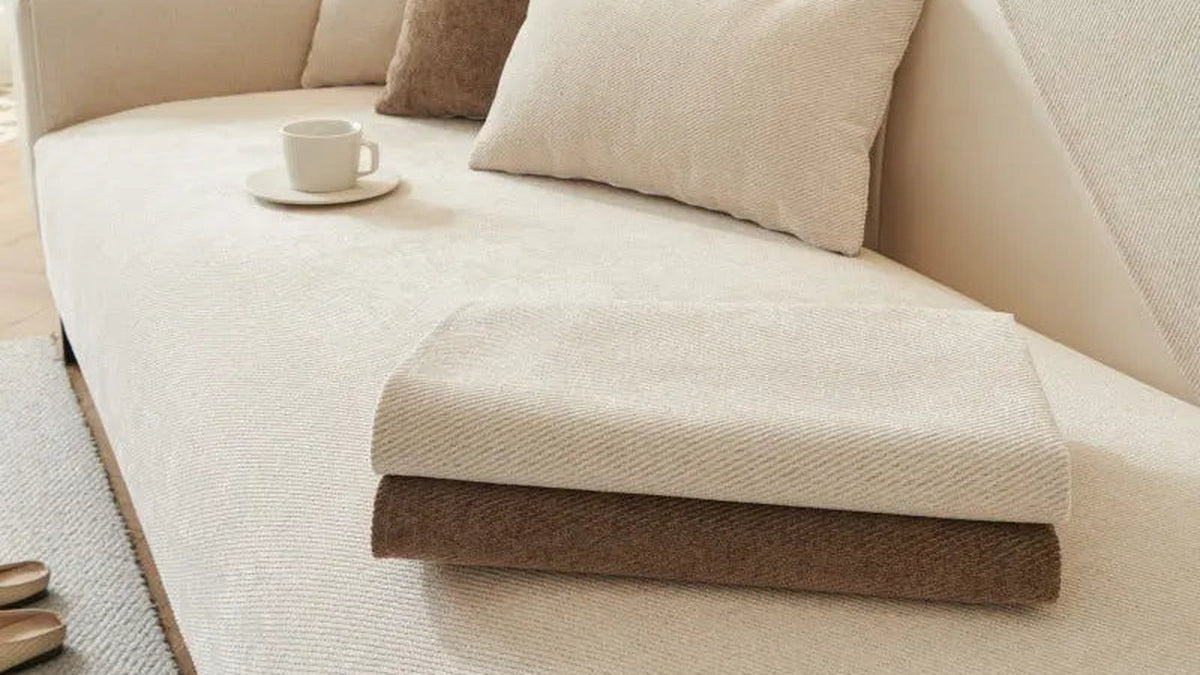
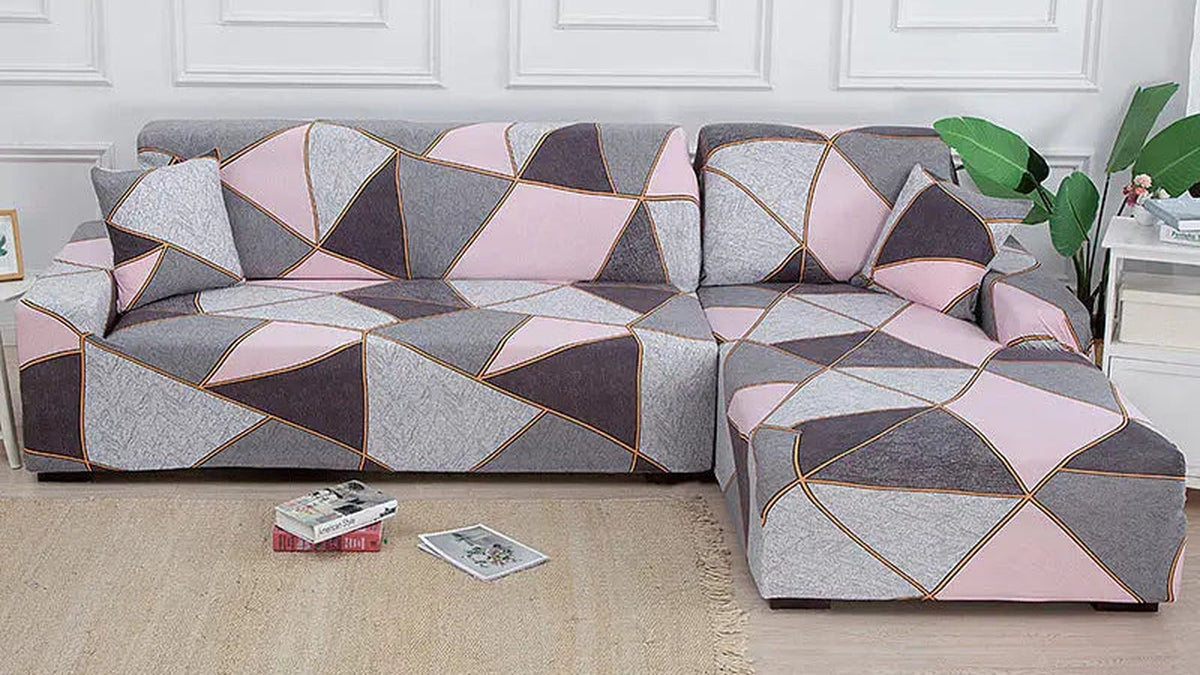
A sectional is the best seat in the house, and your dog knows it. So does the cat. Between shedding season, a muddy return from the park and claws working the corner of an armrest, an L-shaped couch absorbs more daily punishment than any other piece of furniture you own. Waterproof sectional covers exist for exactly that reason: they put a washable, liquid-blocking layer between your pets and several thousand dollars of upholstery.
The catch is that a sectional is not one sofa. It is two or three pieces pushed together, with a chaise that changes depth, a corner wedge that fits nothing, and seams that swallow fur. Waterproof sectional covers that work beautifully on a straight three-seater can slide, gap and bunch on the same couch in an L-shape. Choosing well means understanding where the damage actually happens, what "waterproof" means on a spec sheet, and how to size a cover for a couch that bends in the middle.
This guide walks through all of it: the three failure points on a sectional, the difference between waterproof and water-resistant backings, which fabrics release pet hair instead of hoarding it, how to protect armrests from claws, how to measure an L-shaped couch correctly, and how to wash a cover without destroying the layer you paid for.

Why a sectional is the hardest sofa to pet-proof
Most cover guides assume a rectangle. A sectional breaks that assumption in three places at once, and each one creates a different kind of damage. Knowing which failure point matters most in your home tells you which of the waterproof sectional covers on the market is worth your money.
Where fur, stains and claws actually land
Fur does not distribute evenly. It collects along the crease where the seat cushion meets the back cushion, and it packs into the seam between two modular sections. That second spot is the one people miss, because a vacuum nozzle cannot reach it and a lint roller skates right over it. On a sectional, that seam runs the full depth of the couch.
Liquid behaves differently again. Dog drool and the occasional accident land on the flat of the seat, then travel downhill. On a chaise section, downhill means toward the foot of the lounge, where the cushion meets the frame. If your cover stops short of that edge, the liquid finds the upholstery anyway.
Claws target vertical surfaces. Cats work the outside face of an armrest and the front corner of the chaise, because both offer resistance. Dogs damage the same areas by pushing off them when they jump down. Neither habit is stopped by a cover that only protects the seating surface, which is why armrest protection is sold as a separate piece.
The gap problem: why covers slide off modular sections
A one-piece cover stretched across two separate frames has nothing to grip in the middle. Every time a pet lands on it, the fabric drags toward the heavier section and a gap opens over the seam. Within a week the cover looks slept-in rather than fitted, and the exposed strip collects everything you were trying to block.
The fix is structural rather than cosmetic. Buy a cover per section, so each piece anchors to its own frame, and choose one with a non-slip backing or elastic straps that tuck into the crevice. Stretch designs sized by seat count, like our stretch sectional couch cover for pet homes, are built around this logic: you order a two-seat piece and a one-seat piece rather than one oversized sheet. Couches with a true corner wedge follow the same rule, with a cover ordered per section rather than one piece thrown over the whole run.
Waterproof vs water-resistant: what actually stops an accident
These two terms are used interchangeably in product listings, and they describe very different levels of protection. The distinction only becomes obvious the first time a puppy has an accident on the couch at 2am, and it is the single most useful thing to check when comparing waterproof sectional covers.
How backings work: PU, TPU and laminated layers
A water-resistant fabric relies on a surface treatment. Liquid beads on top for a short window, maybe thirty to sixty seconds, then soaks through as the treatment saturates. That is enough for a knocked-over glass you catch immediately. It is not enough for anything absorbed while you are asleep or out.
A genuinely waterproof cover has a membrane bonded to the back of the face fabric, usually a polyurethane backing or a thermoplastic polyurethane film. The face fabric can get wet; the membrane stops liquid from passing through to the cushion underneath. Quilted designs like this waterproof quilted pet cover use this construction, which is why they feel slightly heavier than a decorative throw.
Two details separate a good membrane from a bad one. The first is whether the seams are also sealed, because stitching perforates the barrier. The second is what chemistry creates the repellency, which matters for a surface your pets sleep on and your family sits on. Our breakdown of what PFAS-free waterproofing actually means covers the questions worth asking a brand before you buy.
Why a fully sealed cover can backfire
Total impermeability has a cost. A cover that blocks liquid in both directions also traps the moisture your pet's body puts into the cushion, and warm damp foam is where mildew starts. Owners who wrap a sectional in a plastic-backed sheet and leave it for a month often find a musty smell that did not exist before.
The better target is a waterproof membrane that still allows vapor to escape, paired with a habit of lifting the cover every few weeks so the cushions can air out. Breathable fabric on the face side helps too, which is why fleece, chenille and jacquard weaves are common on pet covers rather than solid vinyl. Airflow is also what makes odor control possible, since trapped moisture is what turns a lived-in couch sour.
Fur control: fabrics that release hair instead of trapping it
Waterproofing solves accidents. Even the best waterproof sectional covers do nothing for shedding, and shedding is the daily problem. The variable that matters is weave tightness, not fiber name.
Loose, high-pile fabrics behave like a brush. Every hair that lands works its way between the fibers and locks in, so a single wash never clears them and your machine's filter fills up instead. Tight, flat weaves do the opposite: hair sits on the surface where a rubber glove, a damp sponge or one pass with a lint roller lifts it in seconds. Jacquard, sateen-finish polyester and short-pile fleece all sit in that useful range.
Color choice is quieter but just as practical. Mid-tone grays, taupes and muted greens hide both light and dark fur far better than black or white, which is worth thinking about if you have a husky in the house or a black cat who favors the chaise.
Timing matters as well. Most double-coated breeds blow their coat twice a year, and volume during those weeks can be several times a normal month. The American Kennel Club's guidance on shedding explains the cycle in detail, and it is worth reading before you blame the cover. In peak season, a second cover in rotation saves you from washing the same piece every three days.
Scratch defense: armrests, corners and the chaise edge
Claw damage is mechanical, so it needs a different answer from spills. A soft cover absorbs the energy of a jump but does nothing against a deliberate scratch, because the claw simply hooks the weave and pulls a loop.
Two properties actually help against claw snags. Tightly woven fabric with no exposed loops gives a claw nothing to catch, and a slightly slick surface makes the scratching motion unsatisfying enough that most cats lose interest. Suede-finish microfiber and dense quilted polyester both work on that principle.
Coverage is the other half. Since the damage concentrates on armrests and the front corner of the chaise, a dedicated piece over those surfaces does more than a larger cover that stops at the seat line. An anti-scratch armrest cover handles exactly that zone, and several designs add storage pockets so the remote stops disappearing into the seam.
Behavior still counts. A scratching post placed within a couple of feet of the favored corner redirects most cats within a few weeks, and our our guide to cat scratch protectors goes deeper into pairing the two approaches.
Full cover, seat covers or throw? Choose the right format
Three formats compete for the same job on a sectional, and the right one depends on which failure point you are solving rather than on price. All three come in machine washable versions, so the real question is how much of the couch you want under fabric.
| Format | Covers | Washing | Best for |
|---|---|---|---|
| Full sectional cover | Seat, back, arms, sides | Whole piece, bulky load | Older or stained upholstery you want fully hidden |
| Waterproof seat cushion covers | Each cushion individually | One cushion at a time | Accidents and spills on a couch you otherwise like |
| Pet throw or protection pad | The one spot your pet uses | Light, weekly, easy | A dog with a fixed favorite corner |
Plenty of households combine two. A full cover on the chaise where the dog sleeps, plus waterproof seat cushion covers on the seats the family uses, gives heavy protection where it is needed without making the whole couch look draped.
How to measure an L-shaped sectional before you buy
Sizing is where most returns of waterproof sectional covers come from, and the mistake is nearly always the same: measuring your sectional as one long sofa. Treat it as separate pieces instead.
Start by identifying your modular sections. Push a hand into the joint between segments; if you feel two distinct frames, you need two covers. Measure each section across the back from outer arm to outer arm, or to the joint where there is no arm. Record seat depth from the front edge to the base of the back cushion, and seat height from the floor to the top of the seat cushion.
The chaise needs its own numbers, because it is usually deeper than the rest of the couch. Measure its full length from the back cushion to the front edge, not just the cushion. Covers sized by seat count work from the back width, so a chaise often counts as one or two seats depending on the brand's chart.
Buy to the larger end of a range when you land between sizes. A stretch cover pulls tight and looks tailored; one that is slightly small leaves the chaise foot exposed, which is the exact spot where liquid pools. Our our sizing guide for L-shaped couches includes a worked example with real numbers if you want to check your figures against a reference.
Washing without killing the waterproof layer
A waterproof cover is a laminate, and laminates fail from heat and chemistry rather than from use. Three habits keep one working for years.
Wash cold on a gentle cycle. Hot water softens the polyurethane bond and lets the membrane separate from the face fabric, which shows up as bubbling or a crinkly sound after a few months. Cold water cleans pet stains perfectly well, especially if you rinse the spot first.
Skip fabric softener entirely. It leaves a waxy film that clogs breathable membranes and kills water repellency on the face fabric, which is exactly the opposite of what you want. The same goes for bleach, which attacks the coating directly.
Tumble dry low or hang to dry. High heat is the fastest way to ruin a membrane. Low heat for twenty minutes followed by air drying gets a cover back on the couch the same afternoon without stressing the laminate.
Between washes, a weekly pass with a rubber glove or a slightly damp sponge pulls surface fur off in one direction. Doing that before vacuuming keeps hair out of the seams, which is where it becomes genuinely difficult to remove.
Our picks: waterproof sectional covers for pet owners
Four covers that handle the specific problems above, from full-section protection to targeted armrest defense.

Waterproof quilted - chaise friendly

Per-cushion waterproof layer

Anti-scratch armrest shield

Corner sofa cover - stretch fit
Why choose FrenchCovers?
Every cover in the range is sized by section rather than by one generic sectional measurement, which is what keeps a cover in place on a modular couch instead of drifting across the seam. Fabrics are chosen for tight weaves that release fur, and our waterproof sectional covers use bonded membranes rather than surface sprays that wash out after a few cycles. Every model listed here is machine washable on a cold cycle.
- Pet Protection Cover Waterproof Quilted CHERIE - bonded waterproof layer with a quilted face that stays put on a chaise.
- Sectional Sofa Seat Cover Waterproof Velvet Élodie - protects the cushions your family actually uses, washable one piece at a time.
- Pet Protection Cover Anti-Scratch No-Pet-Hair Liora - covers the armrest zone where claw damage concentrates.
Browse our full range of sectional and L-shaped sofa covers to match your exact configuration.
If fur and accidents are the main concern rather than a full restyle, start from the pet furniture protection collection instead.
Frequently asked questions
Are waterproof sectional covers really waterproof, or just water-resistant?
Both exist, and listings rarely make the difference clear. A water-resistant cover uses a surface treatment that beads liquid for roughly thirty to sixty seconds before it soaks through. A waterproof cover has a polyurethane membrane bonded to the back of the fabric, which blocks liquid completely for as long as it sits there. If you are protecting against overnight accidents rather than caught-in-time spills, look specifically for a bonded or laminated backing in the product description.
Will a waterproof sectional cover stop my dog's claws from snagging the fabric?
Partly. A waterproof membrane protects the cushion underneath, but the face fabric can still be snagged if it has an open weave or visible loops. Tight, flat weaves and quilted polyester resist claws far better because there is nothing for a nail to hook. For a dog that pushes off the armrest when jumping down, adding a dedicated armrest piece over the high-wear surface is more effective than upgrading the whole cover.
How many pieces do I need to cover an L-shaped sectional?
One per frame, in almost every case. Press into the joint between segments: two distinct frames means two covers. A common L-shape splits into a two or three seat section plus a chaise, so you would order those two sizes separately. Covers sized by seat count use the back width of each section, measured from outer arm to outer arm or to the joint. A single oversized cover stretched across both frames will drift and gap over the seam within days.
Can I machine wash a waterproof couch cover for pets?
Yes, with three conditions. Use cold water on a gentle cycle, because heat weakens the bond between the membrane and the face fabric. Leave out fabric softener and bleach, both of which degrade the waterproof layer and leave a film that blocks breathability. Tumble dry on low or hang to dry rather than using a hot cycle. Handled that way, a quality cover survives weekly washing for years.
Do waterproof covers get hot or sweaty to sit on?
The cheap ones do. A solid vinyl or plastic-backed sheet traps body heat and moisture, which is uncomfortable and eventually causes mildew in the cushion below. A breathable membrane blocks liquid while still letting vapor escape, and pairing it with a fleece, chenille or jacquard face fabric keeps the surface comfortable. Lifting the cover every few weeks to let the cushions air out prevents any residual damp from building up.
How do I stop a sectional cover from sliding when my dog jumps on it?
Anchor it in three ways. Choose a cover sized for that individual section rather than one spanning two frames, since a cover with nothing to grip in the middle always drags. Tuck the excess deep into the crevice between seat and back cushion, using foam grip rods if the cover includes them. Finally, look for a non-slip backing or elastic straps underneath. Together these keep a cover in place through a large dog landing on it several times a day.
Protecting a sectional comes down to matching the cover to the damage. Fur needs a tight weave that releases hair, accidents need a bonded waterproof membrane rather than a surface spray, and claw snags need armrest protection on the corners where they actually strike. Get the sizing right by treating each section as its own sofa, wash cold without softener, and a good cover will outlast several rounds of shedding season. Start with our stretch sectional couch cover for pet homes if you want the whole couch under fabric, ordered section by section so the fit stays put.