Your dog sleeps curled on the seat. Your cat uses the wings as a lookout tower and the arm fronts as a scratching post. And somehow the wingback chair, the one piece of furniture that was supposed to look elegant, is the one covered in fur. If that sounds like your living room, pet-resistant wingback chair covers are the easiest fix, as long as you pick the right fabric and use it the right way.
This guide is honest about what a cover can and cannot do. No stretch slipcover will stop a determined cat, and none of the wingback covers we sell is waterproof. What a well-chosen cover does is take the wear, the fur, and the mess, so your upholstery does not have to. Then you pull it off, wash it, and put it back.
Below, you will see why wingbacks suffer more from pets than sofas do, which fabrics suit dogs that shed and which suit cats that climb, where to add a waterproof layer, and the fitting and cleaning routine that keeps everything looking tidy.

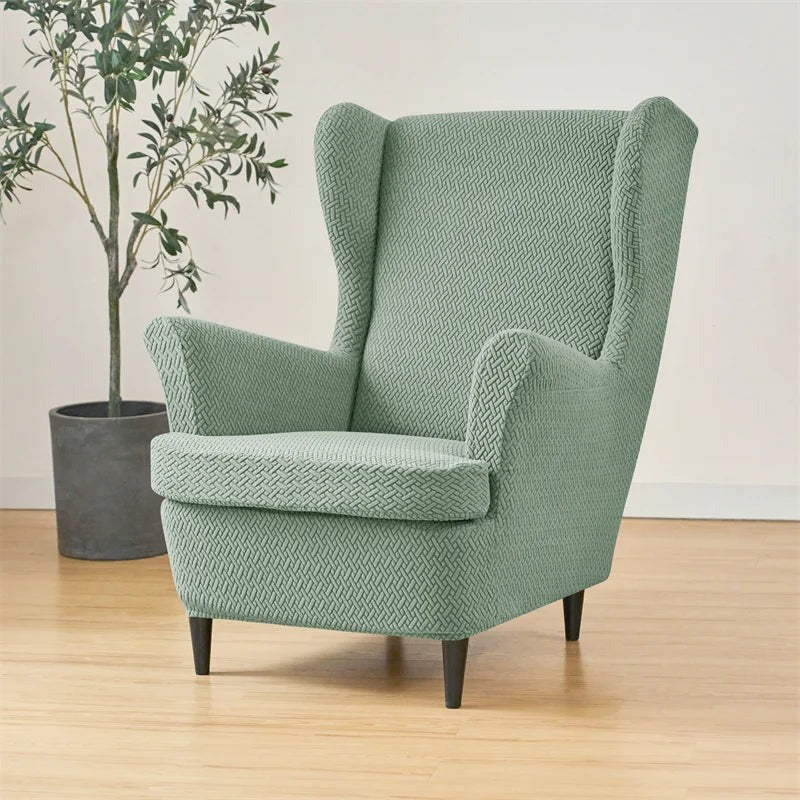
See the ARVENA jacquard wingback cover
Why wingback chairs take more pet damage than sofas
A sofa spreads your pet's attention over a long, low surface. A wingback concentrates it. The shape that makes the chair so cozy for you, tall back, deep seat, wings that wrap around your head, also makes it the favorite spot in the room for animals. Four areas usually show damage first.
- The top of the wings. Cats love height. The flat top edge of each wing is a perfect perch, and climbing up to it means digging claws into the outer back and sides.
- The arm fronts. The rolled or flat front of each arm sits at exactly the right height for a cat to stretch and scratch. It is the first place most owners notice frayed threads.
- The front edge of the seat. Dogs jump on and off from the same point every time. That edge takes the friction, the dirt from paws, and the slow flattening of the fabric.
- The seat and cushion. This is where pets sleep. It collects the most fur, the most body oil, and the occasional drool mark or accident.
Wingbacks are also hard to clean in place. The curves and deep crevices between the seat, arms, and wings trap hair that a vacuum struggles to reach. That is why covering the whole chair with something removable makes more sense here than spot cleaning ever will.
What "pet-resistant" really means for a wingback cover
"Pet-resistant" is a useful word, but it is easy to read too much into it. Here is what pet-resistant wingback chair covers realistically give you in a home with dogs and cats:
- A sacrificial layer. Fur, dirt, and claw marks land on the cover, not on the chair underneath. If a cover gets snagged after a year of hard use, you replace a cover, not a chair.
- Washability. The cover comes off in a few minutes and goes in the washer, following its care label. Upholstery cannot do that.
- Camouflage. The right color and texture hide fur between washes, so the chair looks clean even on the days it is not.
- Full coverage. A fitted wingback cover wraps the wings, arms, back, and skirt, so there is no bare strip for a cat to target.
What it does not give you: claw-proofing or waterproofing. Stretch fabrics need some give to follow the curves of a wingback, and that give is exactly what a claw can catch. We have covered the claw question in more depth in our guide to cat-resistant cover materials. The good news is that both gaps are easy to close, with the right fabric choice, a waterproof seat layer, and a little help from your pet's routine.
Choosing the right fabric for your pet
The best fabric depends on which problem you have most: fur, claws, or a pet who launches itself onto the chair ten times a day. Here is how the main options in our wingback range compare.
| Fabric | Example | Hides fur | Easy to de-fur | Best for |
|---|---|---|---|---|
| Textured jacquard (polyester-spandex) | ARVENA | Good | Good | Dogs that shed, mixed homes |
| Stretch velvet (velvet with spandex) | LIRAVO | Low in solid colors | Very good | Cats, light shedders |
| Printed stretch polyester | ELOISET | Very good | Good | Heavy shedders, busy rooms |
| Flannel with non-slip function | TIGRÉA | Fair | Good with a rubber glove | Dogs that jump on and off |
Ratings are our practical guidance based on fabric type, not lab tests. Always check the product page for the exact composition and care label.
For dogs that shed: texture and print
Short dog hairs weave themselves into fabric and stand out against a flat, solid surface. A raised texture breaks up that surface. On the ARVENA jacquard wingback chair cover, the woven relief pattern means a few stray hairs simply disappear into the texture until wash day. It is made from a high-stretch polyester and spandex blend, and the product page describes it as suitable for homes with children and pets.
If your dog sheds heavily, a busy print hides even more. The ELOISET floral wingback slipcover comes as a chair slipcover plus a separate cushion cover, so the seat, where most of the fur lands, can come off and be washed on its own. Darker prints with mixed tones are the most forgiving. For a deeper look at shedding, see what actually stops dog fur on a sofa; the same principles apply to a chair.
For cats: a smooth, dense surface
Cats are less about fur and more about claws. Fabrics with open loops or a loose knit give claws something to hook into, which is satisfying for the cat and bad for the cover. A dense, smooth face tends to give claws less to grip.
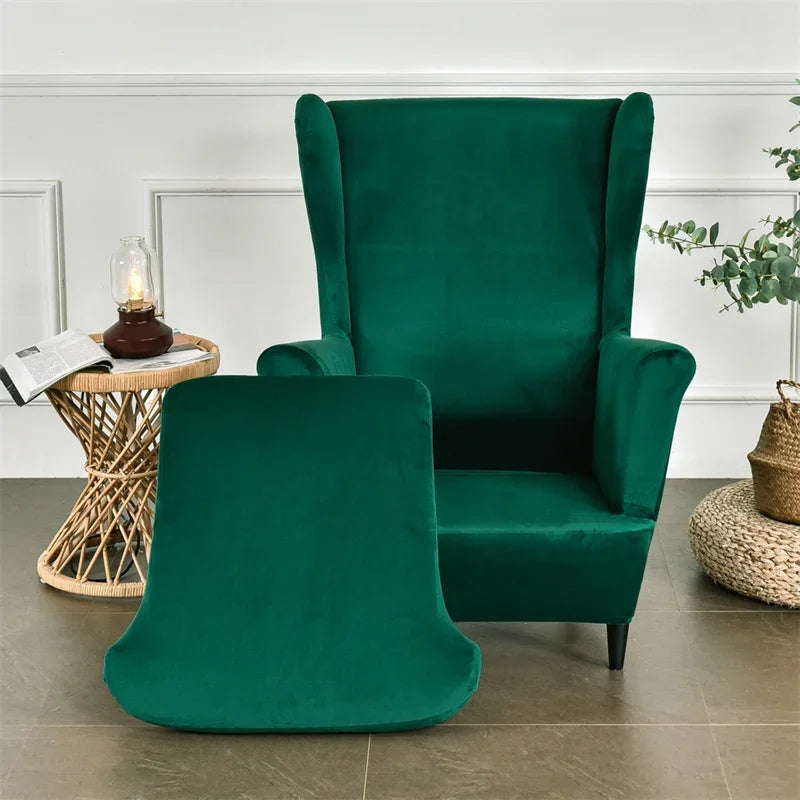
That is where stretch velvet works well. The LIRAVO velvet wingback chair cover combines a soft velvet surface with spandex for stretch, and the set includes a matching cushion cover. Velvet also has a second advantage for cat homes: hair sits on top of the short pile, so one pass with a slightly damp rubber glove clears it. The trade-off is that a solid velvet shows hair more clearly between cleanings, so pick a shade close to your cat's coat.
For jumpers and nappers: grip matters
A dog that jumps onto the chair every time you leave the room will slowly drag a loose cover toward the front edge. Look for a cover designed to stay in place. The TIGRÉA flannel wingback slipcover is described as having a non-slip function and a high-stretch fit, and it comes as a 2-piece set (chair cover plus cushion cover) or a 3-piece set that adds a footrest cover. Its soft flannel surface also makes the chair warm and inviting for a pet who likes to nap there.
Color: match the coat, not just the room
This sounds obvious, but it is the tip that makes the biggest visible difference. A black cover with a white cat, or a cream cover with a black Labrador, will look furry an hour after cleaning. Choose a color within a shade or two of your pet's coat, or a print that contains that color. Mixed homes with a light and a dark pet do best with a medium tone or a multicolor print.
Add a waterproof layer where your pet actually sleeps
Stretch wingback covers handle fur and dry dirt very well, but they are not waterproof. If your dog comes in with wet paws, drools while dreaming, or is getting older and has the occasional accident, liquid can pass through a stretch cover to the cushion underneath. Instead of searching for a waterproof wingback cover, use two layers.
- The wingback cover wraps the entire chair, including the wings and arms, and deals with fur and claws.
- A waterproof pet protection cover lies on the seat, or over the seat and down the front, exactly where your pet sleeps.
The second layer is small, inexpensive, and quick to wash on its own, which means you will actually wash it often. The TULINE waterproof pet protection cover comes in a 50 x 80 cm (about 19.7 x 31.5 in) size that suits a single chair seat, and its waterproof layer is designed to block spills, drool, and wet fur. The AURELIE waterproof chenille cover comes in a 70 x 70 cm size and adds a soft herringbone chenille texture on top of its waterproof layer, so the seat still looks cozy rather than covered in plastic.


To pick the size, measure the seat's width and depth, then add some extra length if you want the cover to drape over the front edge, where muddy paws land. Browse our pet furniture protection covers for more sizes and colors.
Fit matters even more with pets
A loose cover is a pet magnet. Baggy fabric at the wings becomes a hammock for a climbing cat, a slack skirt invites playful paws, and any wrinkle on the seat collects fur. A tight, smooth fit gives claws and teeth less to grab and keeps the cover from creeping when a dog jumps on.
That starts with choosing the right size. Wingback covers are sized from the width across the top of the wings, the back height, and the side depth, not from the seat. If you have not measured your chair yet, our wingback chair cover sizing guide walks you through it in five minutes. Then fit the cover carefully:
- Start at the top. Pull the cover over the wings and back first, then work down the arms and the front.
- Tuck deeply. Push the spare fabric into every gap between the seat, the arms, and the back. A spoon handle or a rolled magazine helps you reach the bottom. Deep tucks are what stop a cover from creeping forward.
- Secure the hem. Pull the elastic edge fully under the frame so a curious paw cannot hook it.
- Fit the cushion last. If your chair has a separate seat cushion, give it its own cover and place it back on top. A cushion that sits inside the main cover looks lumpy and traps fur in the folds.
A simple cat-proofing routine for your wingback
Even the best fabric lasts longer when your cat has a better option. Scratching is a normal, healthy behavior: cats scratch to stretch, to mark territory, and to shed the worn outer layer of their claws. As the ASPCA's advice on destructive scratching explains, the goal is not to stop your cat from scratching but to teach it where to scratch.
- Put a sturdy scratching post right next to the chair. Cats often scratch where they rest. A tall post placed beside the wingback gives them a target at the same spot.
- Make the chair less attractive. While your cat is learning, double-sided sticky tape on the arm fronts, an approach the ASPCA also suggests, discourages scratching without harming your cat. Apply it to an old towel draped over the arm rather than directly onto the cover.
- Keep claws trimmed. Shorter claws catch less fabric. Ask your vet to show you how if you have not done it before.
- Give the wings a rival perch. A cat tree near a window is more interesting than the top of a chair. The fewer climbs up the wings, the longer the cover keeps its shape.
Cleaning routine for wingback covers in pet homes
The whole point of a cover is that cleaning becomes easy. A two-step routine keeps it fresh without much effort.
Between washes. Every few days, run a lint roller or a slightly damp rubber glove over the seat, the arms, and the top of the wings. Rubbing in one direction rolls the hair into clumps you can pick off by hand. On velvet, brush along the pile. This takes about two minutes and is the step that makes the biggest visible difference.
Wash day. Remove as much fur as possible before washing, because hair in the drum ends up back on the fabric. Then follow the care label on your cover. Most care notes in our wingback range say to avoid bleach, and some, such as the VALENI floral cover, specify a gentle cold machine wash. Let the cover dry fully before refitting it, and refit while the room is quiet, so your pet does not "help".
Keep a spare. In a home with a heavy shedder, owning two covers means the chair is never bare on wash day. The pet stays off the upholstery, and you rotate the covers without stress.
Why choose French Covers for a pet-resistant wingback chair cover?
Our wingback covers are designed specifically for wingback and wing chairs, with measuring guides on the product pages so you can check the fit before you order. Many come with a matching cushion cover, several offer a footstool cover on the same listing, and you can choose between textured jacquard, stretch velvet, prints, and flannel depending on whether your challenge is fur, claws, or a pet who never stops jumping.


Pair any of them with a waterproof seat layer, and your wingback is ready for wet paws, long naps, and shedding season.
Frequently Asked Questions
Are there wingback chair covers that cats cannot scratch through?
No stretch cover is claw-proof, and you should be wary of any that promises it. Stretch fabrics need give to fit a curved chair, and that give is exactly what a claw can catch. What a good cover does is take the damage instead of your upholstery, so a snag costs you a cover, not a chair. Pair it with a scratching post next to the chair and trimmed claws, and most cats lose interest in the wings.
What is the best wingback chair cover fabric for a dog that sheds?
A textured or patterned fabric in a color close to your dog's coat. A raised jacquard such as ARVENA breaks up the surface so loose hairs do not stand out, and a busy print such as ELOISET hides them almost completely between washes. Smooth solid velvet looks rich but shows every hair, though it is also the easiest surface to clear with a damp rubber glove.
Are wingback chair covers waterproof?
The stretch wingback covers in our range are not sold as waterproof. They are washable, which handles fur, dirt, and most small spills. For drool, wet paws, or an older pet with accidents, add a waterproof pet protection cover on the seat, such as TULINE or AURELIE, on top of the wingback cover.
Will my dog pull the cover off when jumping onto the chair?
A cover that fits properly and is tucked deeply rarely moves. Choose the right size from the measuring guide, push the spare fabric well into the gaps around the seat, and pull the elastic hem fully under the frame. For dogs that launch themselves onto the seat, a cover with a non-slip function, such as TIGRÉA flannel, helps it stay put.
How often should I wash a wingback chair cover with pets in the house?
It depends on your pet, but a simple routine works for most homes: a quick lint roller or rubber glove pass every few days, and a wash whenever the cover looks dull or smells of dog. Always follow the care label: wash gently, skip the bleach, and let the cover dry fully before refitting it.
Can I cover the footstool too, since that is where my cat sleeps?
Yes. Several of our wingback listings, including ARVENA and LIRAVO, offer a matching footstool cover as a separate option, and TIGRÉA comes as a 3-piece set with a footrest cover. Measure the stool's length, width, and height and check them against the stool guide on the product page before ordering.
Pets and wingback chairs can share a living room happily. Choose pet-resistant wingback chair covers in a fabric that suits your pet, a textured jacquard or print for dogs that shed, a smooth stretch velvet for cats, a non-slip flannel for jumpers, and match the color to the coat. Add a waterproof layer on the seat, fit the cover tightly, give your cat a better place to scratch, and keep a lint roller nearby. Your chair stays protected, your pet keeps their favorite spot, and you stop apologizing to guests for the fur.
Ready to choose? Start with the ARVENA jacquard wingback chair cover for an all-rounder, or browse our full range of wingback chair covers to match your chair, your pet, and your room.