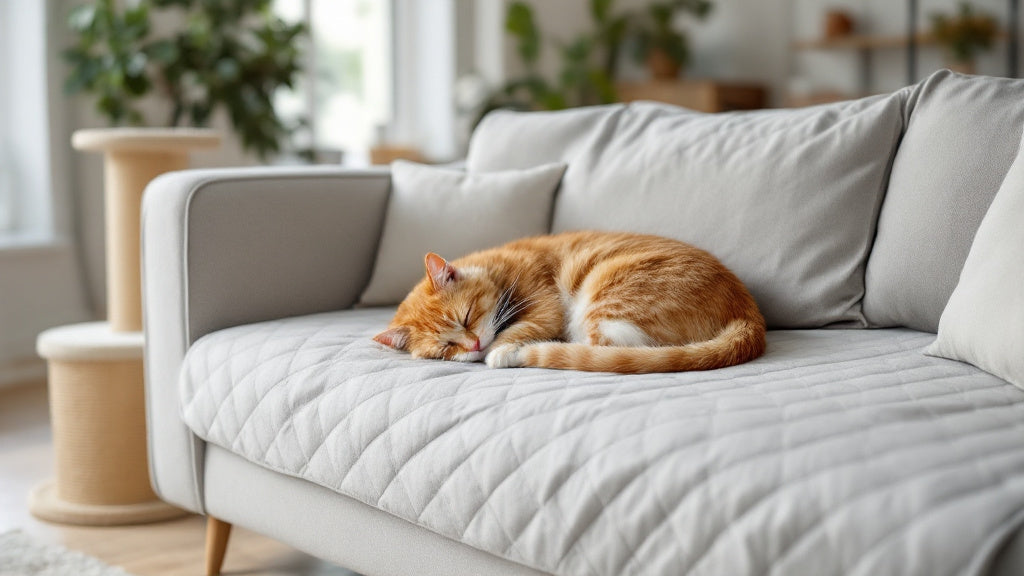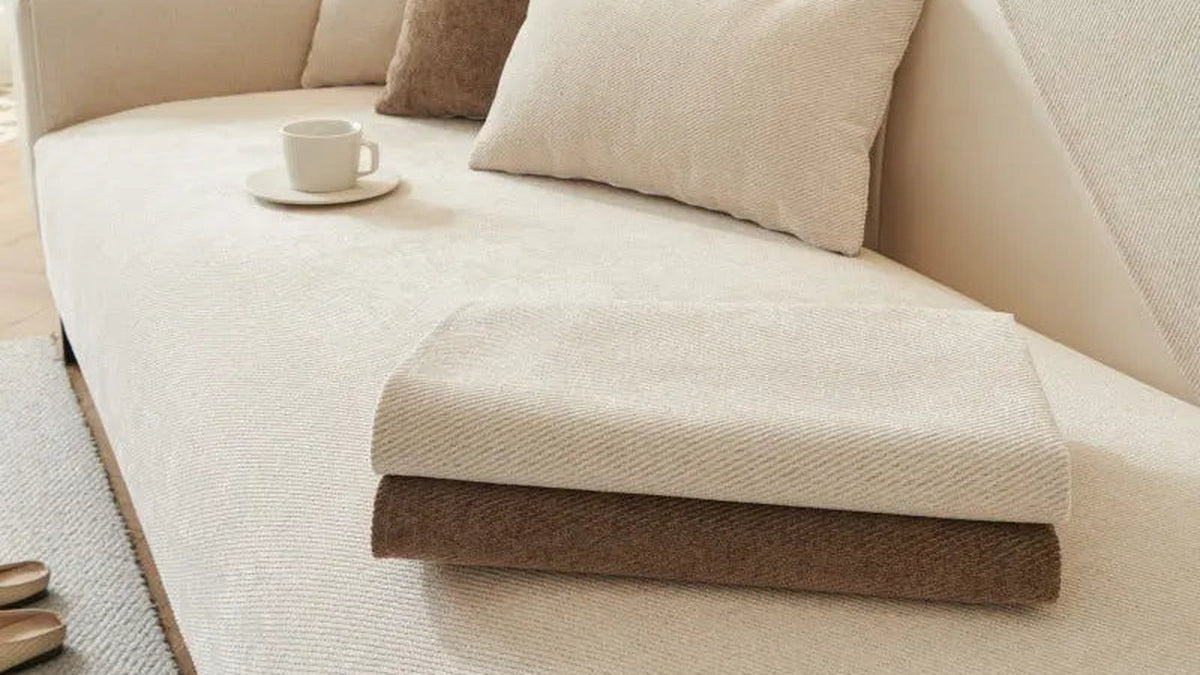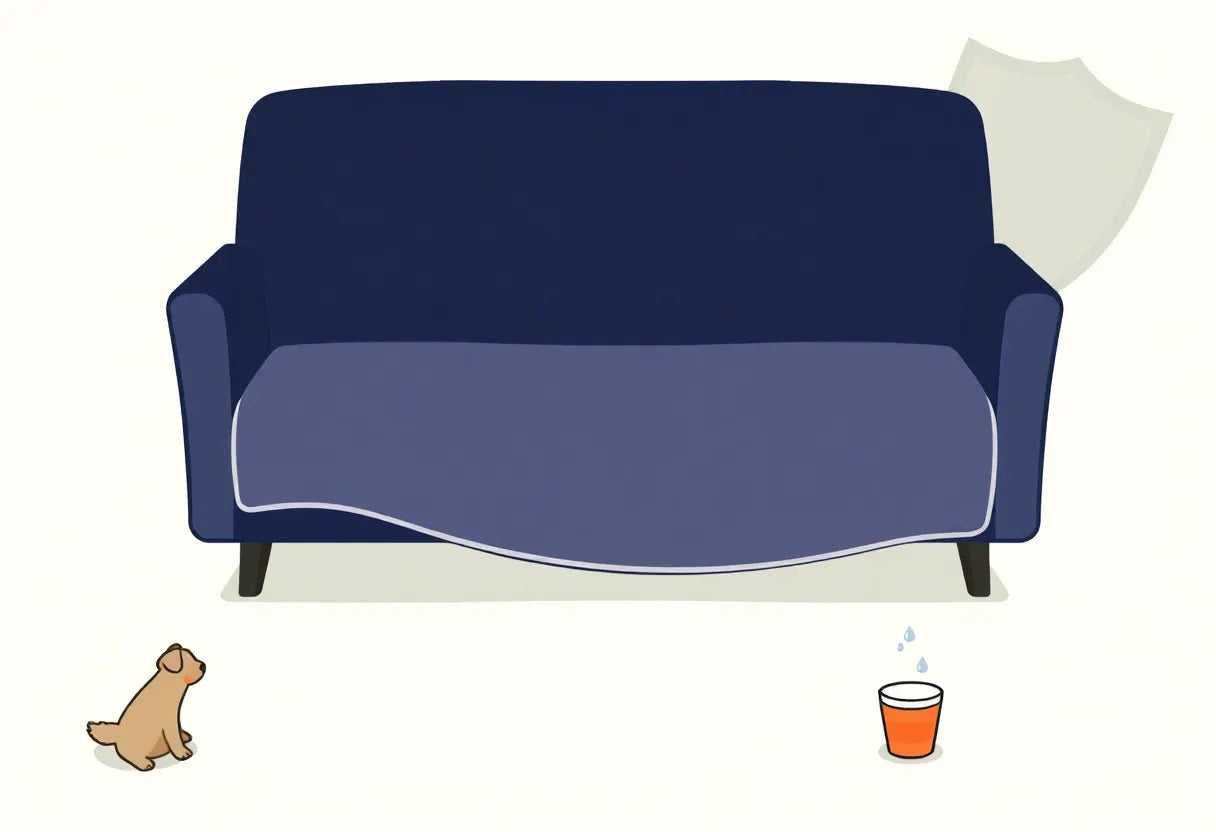
Red wine spills, muddy paws, and sticky fingers happen fast. If you love your sofa, but you also love living in your home, you need protection that feels good and looks good.
Many covers block stains, yet some bring unwanted chemicals into the space where your family relaxes. That is why a PFAS-free waterproof sofa cover matters. You get reliable spill and stain defense without the worry, plus a style that can still feel a little French chic.
In this guide, you will learn how to choose the right waterproof sofa cover for kids, pets, and high-traffic rooms. We will also cover what makes a pet friendly couch cover truly practical, and why a washable sofa cover is a must for busy days.
First, let’s look at what PFAS are and why avoiding them is a smart move for your home.
What “PFAS-Free” Really Means (and Why It Matters in a Living Room)
If you have ever shopped for a waterproof sofa cover, you have probably seen lots of confident claims: stain-proof, spill-proof, kid-proof. The fine print is where it gets tricky. Some water and stain repellency treatments rely on PFAS, and many families prefer to avoid those chemicals in high touch spaces like the living room.
PFAS, explained like you would tell a friend
PFAS is a large group of man-made chemicals that are valued because they resist water, grease, and stains. The catch is that they last a very long time.
The U.S. Environmental Protection Agency describes PFAS as “persistent in the environment” (U.S. EPA PFAS overview), and the European Environment Agency highlights similar concerns about their persistence (EEA PFAS information). In plain language: they do not break down quickly, which is why you will sometimes hear them called “forever chemicals.”
Why PFAS-free matters more on a sofa than, say, a rain jacket
A sofa is not just furniture. It is where real life happens:
- Kids snack, nap, and sprawl out, often with bare skin on the fabric
- Pets curl up, lick paws, and track in whatever the backyard served up today
- You sit for hours, night after night, during movie time or when guests come over
Because it is a high contact surface, many people feel better choosing a PFAS-free waterproof sofa cover that keeps protection focused on smart materials and construction, not chemical stain repellents.
If your goal is a cover that works with daily life, especially with pets, keep this in mind: a truly pet friendly couch cover is not only about water protection. It is also about what touches your family and what you can easily clean.
“Water-resistant” vs “waterproof”: why the labels can feel confusing
These two terms are often used loosely, but they are not the same in practice.
- Water-resistant usually means the fabric can repel small splashes for a short time. Water may bead up at first, but it can soak through if it sits, if pressure is applied (someone sits on it), or if the fabric is stretched.
- Waterproof means there is a barrier that blocks water from passing through, typically via a backing or laminated layer. This is what you want for juice boxes, pet accidents, and wet swimsuits on the couch.
A quick reality check: even with a waterproof layer, seams, stitching, and how the cover fits can affect performance. That is why two covers can both claim “waterproof” and still behave differently in your home.
If you are browsing options, start with covers designed specifically for spill blocking, like these Waterproof Sofa Covers: https://frenchcovers.com/collections/waterproof-sofa-covers
Myth-busting: PFAS-free does not mean “less protective”
PFAS-free protection is absolutely possible, but results depend on three practical factors:
-
Top fabric (the part you touch)
Tighter weaves and durable yarns help slow down liquid and resist snags from daily use. -
Backing or barrier layer (the part doing the real waterproof work)
A well-made waterproof backing is what prevents seep-through. This matters most for households that need true spill security. -
Construction details (the part that makes it reliable)
Seam quality, edge finishing, and how the cover stays in place all influence whether water finds a path through.
And for busy homes, performance also includes cleanability. A washable sofa cover is not a bonus, it is the difference between “we will deal with it later” and “problem solved tonight.”
Next, we will turn this into a simple buying checklist: the 5 features that make a PFAS-free waterproof sofa cover actually work, so you can shop with confidence and get protection that still looks chic in your living room.

The 5 Features That Make a PFAS-Free Waterproof Sofa Cover Actually Work
After you decide you want PFAS-free, the next question is practical: will it truly protect your sofa during real life? A PFAS-free waterproof sofa cover can absolutely perform, but only if the fabric, backing, and construction work together. Use this checklist like a mini buying guide, especially if you have kids, pets, or a high-traffic living room.
1) A real waterproof barrier (not just a “repellent” top fabric)
What to look for:
- A laminated membrane layer (often bonded to the underside) or a coated backing that blocks liquid from passing through.
- Product descriptions that clearly say waterproof, not only “water-resistant” or “repels.”
Why it matters:
- The waterproof layer is what stops juice, coffee, and pet accidents from soaking into cushions. A top fabric alone can slow a spill, but it often cannot fully block it.
How it affects feel and noise:
- Laminated layers tend to feel more flexible and less “crinkly.”
- Heavier coated backings can be very protective but may feel stiffer. If you hate the sound of raincoats, look closely at reviews mentioning softness and noise.
Quick at-home test: the water bead + time test
- Put the cover on a flat surface.
- Pour a teaspoon of water on top.
- Watch for 30 to 60 seconds.
- Good sign: water beads and stays on the surface.
- Then flip the fabric and check the underside.
- Good sign: the underside is still dry.
2) Grip and fit that stays put (because life moves on the couch)
What to look for:
- Elastic edges that hug the sofa shape.
- Anti-slip backing or grippy dots to prevent sliding.
- Straps or ties that anchor the cover, especially helpful on leather or smooth upholstery.
Why “stays put” matters with kids and pets:
- A cover that shifts leaves edges exposed, which is usually where sticky fingers land and where pets like to dig.
- Constant re-adjusting makes a cover feel annoying, so people stop using it. The best waterproof sofa cover is the one you actually keep on.
Quick at-home test: the sit-scoot test
- Install the cover.
- Do three normal “real life” moves: sit down, cross your legs, stand up.
- If you have a pet, invite them up and see what happens when they turn in circles.
- Good sign: you only need a quick smooth-down, not a full re-tuck.
3) Washability that fits your week (and protects the waterproof layer)
A washable sofa cover is not a bonus for families. It is the whole point.
What to look for:
- Clear instructions: machine wash cold, gentle cycle, mild detergent.
- Guidance on drying: ideally air dry or tumble dry low if allowed.
- Notes about what to avoid (often: bleach, fabric softener, high heat).
How to keep waterproof performance longer:
- Skip fabric softener. It can leave residue that reduces water beading on the surface.
- Use a mild detergent. Strong cleaners can wear down coatings over time.
- Wash when needed, but do not over-wash. Spot clean small messes first.
Quick at-home test: the blot test after washing
After the first wash:
- Put a few drops of water on the cover.
- Let it sit 30 seconds.
- Blot with a paper towel.
- Good sign: the towel lifts water easily and the fabric does not feel “soaked.”
4) Pet and kid durability (the difference between “cute” and “lasts”)
If you need a pet friendly couch cover, durability is more than waterproofing. Claws, toy corners, and daily climbing can destroy loose weaves fast.
What to look for:
- Tighter weave fabrics that resist snagging.
- Reinforced stitching at stress points (edges, corners, strap seams).
- If you know your pet scratches or “digs,” prioritize snag resistance and stronger construction.
Quick at-home test: the seam tug test
- Hold a seam with both hands.
- Give a firm, steady tug (not a violent pull).
- Good sign: stitches stay flat, no gapping, no popping sounds, no threads pulling free.
If pets are your main concern:
- Consider a cover designed specifically to resist claws and abrasion. This is one area where “generic waterproof” often disappoints.
Internal resource for scratch-prone homes: Anti-Scratch Couch Covers
https://frenchcovers.com/collections/anti-scratch-couch-covers
5) Comfort plus style (so it looks intentional, not temporary)
Protection should not make your living room feel like a camping trip. A PFAS-free waterproof sofa cover can still feel soft and look polished if you choose thoughtfully.
What to look for:
- A breathable hand-feel (not sticky or plasticky on bare legs).
- Textures that look like upholstery, such as subtle weaves, brushed finishes, or linen-like looks.
- Colors that feel designed:
- Mid tones (taupe, oatmeal, warm gray) hide daily marks.
- Heathered fabrics disguise minor lint and pet hair better than flat, shiny solids.
- If you love French chic, choose calm neutrals and let pillows or throws add personality.
Quick at-home test: the “nap comfort” check
Sit for 10 minutes in shorts or with bare arms. If you feel sweaty, sticky, or noisy with every shift, you will not love it long-term.
If these five features look solid, you are ready for the real test: what to do when a spill or muddy paw print happens right now. In the next section, we will walk through simple, fast steps for the first 60 seconds, plus quick routines for pet hair, odors, and weeknight messes.
Real-Life Scenarios: Spills, Fur, and Daily Wear (What to Do in the First 60 Seconds)
Life does not wait for you to find the stain remover. The good news is that a waterproof sofa cover (especially a PFAS-free waterproof sofa cover) gives you a crucial buffer: liquid stays on the surface longer, so you can act fast and keep the mess from sinking in.
Use these quick playbooks to handle the most common family and pet moments without panic.
1) Spills (coffee, juice, wine): blot, lift, then decide if it needs a wash
Your first 60 seconds
- Grab a clean, dry cloth or paper towel.
- Blot, do not rub. Press straight down to lift liquid up. Rubbing can push the spill outward and deeper into texture or seams.
- Work from the outside in to keep the spill from spreading.
- If the spill is sugary or colored (juice, wine), follow with a slightly damp cloth and blot again. You are lifting residue, not scrubbing fabric.
- Check underneath. One of the big benefits of a true waterproof barrier is that the sofa itself stays protected, but seams and edges still deserve a quick peek.
When to wash the cover
- Wash the same day if it is: milk, juice, wine, sauce, or anything oily or sticky.
- You can usually spot-blot and wait until laundry day if it is: plain water or a tiny coffee drip that did not leave color.
Quick reminder for waterproof fabrics: skip harsh stain sprays unless the care label says they are safe. Mild soap and water is often enough, and it helps your cover stay beautiful longer.
2) Pet hair: a 2-minute routine that keeps your sofa looking fresh
A pet friendly couch cover should make shedding feel manageable, not constant. A tight weave plus a simple routine helps hair release more easily.
Best tools (choose what you will actually use)
- Rubber brush: excellent for grabbing fine hair from textured fabrics.
- Lint roller: perfect for quick touch-ups before guests arrive.
- Slightly damp rubber glove or microfiber cloth: surprisingly effective for lifting hair into little “rolls” you can pick up.
The 2-minute routine
- Start at the top (backrest) and move down so hair falls in one direction.
- Use short, firm strokes with a rubber brush or damp glove.
- Finish with a lint roller on the seat and arms for a polished look.
If you want an extra layer that is easy to shake out between washes, you can also pair your setup with a throw designed for shedding. See: Pet Hair Resistant Throws.
Optional note: The ASPCA generally recommends regular grooming and consistent cleaning habits to reduce shedding buildup in the home, and this quick routine supports that without turning your evening into a chore.
3) Mud and paw prints: let it dry first, then clean (it feels slower but works faster)
Mud is tricky because wet mud spreads. The fastest way to keep it contained is to let it dry.
Your first 60 seconds
- Remove any clumps gently with a paper towel (no smearing).
- Let the rest dry for a few minutes if you can.
Once dry
- Brush off dried dirt with a soft brush or vacuum brush attachment.
- Spot clean with mild detergent and cool water, then blot dry.
Why this works: drying turns mud into particles you can lift off the surface. If you go in wet, you are basically painting the stain across the fabric.
4) Odors (pets, snacks, “life”): air out, then wash gently
Covers help with stains, but odors need airflow and regular resets. If someone in the family is fragrance sensitive, keep it simple.
Fast odor reset
- Pull back cushions and air out the cover for 15 to 30 minutes if possible.
- If needed, machine wash using a mild detergent (this is where a washable sofa cover earns its keep).
- Avoid heavy fragrance boosters if allergies or sensitivities are a concern.
- Dry according to the label. When in doubt, low heat or air dry is kinder to waterproof layers.
Two practical routines you can copy
Mini weeknight routine (busy parents, 5 minutes)
- 60 seconds: quick blot check for sticky spots where kids sit most
- 2 minutes: pet hair sweep with glove or rubber brush
- 2 minutes: fluff cushions, lint roll the arms, done
Hosting-ready reset (10 minutes)
- 2 minutes: lint roll and quick hair sweep
- 3 minutes: spot blot any marks, especially on seat fronts and arms
- 3 minutes: straighten the cover fit, tuck edges, smooth wrinkles
- 2 minutes: add a fresh throw or pillows for that effortless, French chic finish
With these quick saves in your pocket, you can enjoy the protection benefits of a waterproof sofa cover without the stress. Next, we will talk about the fun part: how to keep everything looking chic, from color choices to textures that hide daily life beautifully while still feeling intentional.

How to Keep It Chic: Colors, Textures, and a French-Inspired Look That Still Feels Family-Proof
A waterproof sofa cover should not read as “I gave up.” With the right color and texture choices, a PFAS-free waterproof sofa cover can look tailored, calm, and intentionally styled, even in a home with kids, pets, and snack time on the cushions.
1) Color strategy that forgives real life (without looking dull)
If your goal is “looks clean most of the time,” mid-tones and heathered textures are your best friends.
- Choose mid-tones for high traffic zones: think warm greige, oatmeal, stone, mushroom, soft taupe, or denim blue. They hide day-to-day dust, paw prints, and the faint “life happens” shadows that show up fast on bright white.
- Lean into heathered or lightly textured fabrics: a subtle mix of fibers or a woven look helps camouflage tiny marks between washes. It is a simple design trick that reads upscale, not busy.
- Save very dark solids for low lint households: charcoal and black look modern, but they can highlight light pet hair. If you love the look, pair it with a quick lint routine and a pet friendly couch cover material that releases hair easily.
Practical note: If you are shopping for a washable sofa cover, check that the color is not overly “flat.” A tiny bit of visual texture helps it keep that fresh, styled look after repeat laundry days.
2) Seasonal refresh: swap covers like you swap pillows
One of the most family-proof style habits is treating your waterproof sofa cover like a base layer you can refresh seasonally. It keeps the room feeling “new” without a full redesign.
- Spring and summer: lighter neutrals and breezy textures feel fresh and help a small space look brighter.
- Fall and winter: deeper mid-tones and warmer textures feel cozy and hide more of the mess that comes with rainy days and muddy paws.
This also helps with maintenance: instead of washing the cover the night before guests arrive, you can keep a second cover ready to go and rotate them.
3) Texture pairing: the easiest way to add depth without adding cleaning stress
French chic is often about restraint: a simple base, then a few rich textures that feel collected.
Try this low-effort formula:
- Smooth, clean-lined sofa cover (your spill and fur defender)
- Textured pillows for dimension (boucle, linen-look, soft waffle, or a subtle woven pattern)
- One throw to soften the room (choose something easy to shake out or wash)
To keep it practical:
- Pick pillow covers you can remove quickly and wash.
- Stick to 2 or 3 textures max so the look stays calm, not cluttered.
If you want an easy upgrade, start with Decorative Pillow Covers that complement your cover color: https://frenchcovers.com/collections/decorative-pillow-covers
4) Small space tips: lighter neutrals + one accent color (intentional, not fussy)
In apartments, condos, and cozy family rooms, a cover can either lighten the room or visually “shrink” it.
Use this simple rule:
- Base cover: light neutral (oatmeal, sand, pale greige) to bounce light and open the room.
- One accent color: repeat it 2 to 3 times across pillows, a throw, or art so it looks designed, not random.
Good small-space accent colors:
- Muted navy
- Olive or eucalyptus
- Terracotta
- Soft black (in small touches, like piping or one pillow)
Mini mood boards: 3 chic looks that still feel family-proof
Use these as plug-and-play guides when choosing a PFAS-free waterproof sofa cover and styling around it.
Mood board 1: Soft Neutrals (classic, bright, quietly elegant)
- Cover color: oatmeal, warm greige, or sand (mid-light tone)
- Accent colors: camel, soft black, and a hint of sage
- Materials: linen-look pillow covers, subtle woven throw, natural wood or rattan accessories
- Best for: small spaces, vintage furniture vibes, “calm home” styling
Mood board 2: Modern Charcoal (sleek, tailored, kid and pet ready)
- Cover color: charcoal or graphite with a heathered finish
- Accent colors: ivory, cognac, and muted brass
- Materials: textured knit throw, leather-look accents, simple geometric pillow pattern
- Best for: busy households that want a clean, modern look that hides everyday marks
Tip for pet homes: if you have light-shedding pets, add a mid-tone pillow (not pure white) so the contrast feels softer and hair is less obvious day to day.
Mood board 3: Coastal Linen Look (airy, relaxed, still polished)
- Cover color: flax, light taupe, or soft beige
- Accent colors: dusty blue, sea glass green, and creamy white
- Materials: linen-look pillows, cotton throw, light oak tones, ceramics
- Best for: homes that want “vacation calm” while still needing real spill protection
For extra inspiration from real homes, browsing a gallery like Houzz can help you spot color pairings you love: https://www.houzz.com/
How this connects to your cover choice
Style is not separate from function. A cover that fits well, sits smoothly, and comes in the right tone will look far more “sofa upgrade” than “temporary fix,” even when it is doing serious work as a waterproof and washable layer.
Next, we will make sure it looks tailored by getting the fit right. That starts with measuring the sofa correctly, especially if you have deep seats, wide arms, or a sectional.
Measuring and Choosing the Right Cover (So It Looks Tailored, Not Temporary)
A truly chic waterproof sofa cover does not look like an emergency solution. It looks fitted, intentional, and ready for real life. The good news: you do not need a design degree to get that tailored look. You just need the right measurements and a quick plan for how your home actually uses the sofa (kids, pets, guests, naps, all of the above).
This is especially important if you are investing in a PFAS-free waterproof sofa cover. The performance is only as good as the fit: gaps invite spills to sneak through, and excess fabric tends to bunch, shift, and look “temporary.”
Step 1: Identify your sofa type (it changes what you measure)
Before you grab the tape measure, decide which of these best matches your setup:
- Standard sofa (one piece, 2 to 4 seats)
- Sofa with separate seat and back cushions (common, and easier to tailor)
- Sectional (multiple pieces, often an L shape)
- Chaise lounge / chaise sectional (one extended seat)
If you have a sectional or chaise, treat each piece like its own “mini sofa” when measuring. This is where people most often end up with a cover that slides around or leaves a corner exposed.
Step 2: Measure the 4 numbers that control the fit
Use a soft tape measure (or a string plus a ruler). Write down measurements in inches or centimeters, but stick to one system.
What to measure:
- Seat width: the full sitting width from left edge to right edge (not just cushion width).
- Cushion depth: front edge of the cushion to where it meets the back (this is the number many people skip).
- Back height: from the seat surface up to the top of the back.
- Arm width and shape: measure the outside width of each arm, and note whether it is square, rolled, curved, or extra wide.
For a chaise, also measure:
- Chaise length: from the back to the far front edge of the extended seat.
- Chaise width: side to side across the chaise.
For a sectional, also measure:
- Each section width (left piece and right piece separately)
- Corner piece depth if you have a wedge corner
Copy and paste measurement table (template)
Use this as your notes page when you measure:
| Sofa area | What to measure | Your measurement | Notes (shape, cushions, quirks) |
|---|---|---|---|
| Seat | Total seat width (left to right) | ||
| Seat | Cushion depth (front to back) | Deep seat? Standard? | |
| Back | Back height (seat to top) | High back? Low profile? | |
| Arms | Arm width (each arm) | Square, rolled, curved, extra wide | |
| Cushions | Number of seat cushions | 1, 2, 3, or bench | |
| Cushions | Number of back cushions | Loose or attached | |
| Chaise (if any) | Chaise length | Left chaise or right chaise | |
| Chaise (if any) | Chaise width | ||
| Sectional (if any) | Left piece width | ||
| Sectional (if any) | Right piece width | ||
| Sectional (if any) | Corner depth | Wedge corner? Separate cushions? |
Step 3: Avoid the 3 most common fit mistakes
These are the mistakes that make a cover look sloppy, even if the fabric is beautiful and the waterproof layer is excellent.
-
Mistake 1: Ignoring cushion depth
If your cushions are deep, a too-short cover will creep forward. That is when spills land on exposed upholstery. Measure depth and choose accordingly. -
Mistake 2: Sizing up “just in case” with stretch fabrics
Stretch covers are forgiving, but oversizing makes extra fabric pool and wrinkle. That “baggy sheet” look is almost always from going too large. -
Mistake 3: Forgetting arm shapes
Rolled arms and curved arms need more attention. A cover that fits a square arm can pull tight and shift on a rounded arm. If your arms are a signature style feature, plan for a more tailored approach (next step).
Step 4: Decide if you need separate pieces for a cleaner look (and easier washing)
If you want a refined, upholstered feel, separate components are your best friend. They also make laundry day easier, because you can wash only what gets messy.
Choose separate pieces when:
- Your sofa has distinct seat and back cushions
- Your arms are wide, curved, or heavily used (hello, snack perch and pet lookout)
- You want a more “custom” look for entertaining
- You prefer a washable sofa cover setup where you can wash one cushion cover instead of the entire sofa cover
A very practical upgrade for busy homes is adding dedicated arm and cushion protection. It keeps the main cover looking smooth, and it targets the zones that get the most wear from kids and pets. Browse options here: Armrest and Cushion Covers.
This is also a smart move if you are shopping for a pet friendly couch cover solution: claws, drool, and daily jumping usually hit the arms and seat cushions first.
Step 5: Quick decision tree (choose based on real life, not wishful thinking)
Use this simple guide to pick your direction before you buy:
- Do you have kids, pets, or heavy daily use?
- Yes: Prioritize secure fit, easy cleaning, and targeted pieces (arms + seat cushions). Look for a cover that stays put and is truly washable.
- No: Go to question 2.
- Is your priority décor first (you want it to look like part of the room)?
- Yes: Choose a closer fit and consider separate cushion/arm pieces for a tailored finish.
- No: Go to question 3.
- Are you protecting premium or vintage upholstery?
- Yes: Choose full coverage with precise sizing, plus separate arms and cushion pieces to minimize friction and reduce how often you remove the main cover.
- No: A well-sized standard cover is usually enough.
One example for each persona (so you can picture your own plan)
-
Busy family with kids: You measure cushion depth (because the kids sprawl) and add armrest covers since spills happen on the arms during movie night. You choose a PFAS-free waterproof sofa cover plus a couple of removable cushion pieces so you can wash only what got juice on it.
-
Home décor lover: You choose a close, tidy fit and add separate cushion covers to keep lines crisp and smooth. The result is a waterproof sofa cover that reads like upholstery, not a slip-on afterthought.
-
Premium or vintage furniture owner: You measure every surface carefully, especially arm shape and back height. You choose separate components to reduce shifting and to avoid constant full removal, keeping the original fabric protected with less handling.
-
Small business or coworking space: You measure for consistent coverage across multiple seating areas and choose a modular approach. When a high-traffic seat gets messy, you swap and wash that section fast, keeping the space looking professional without downtime.
Next up: make measuring even easier with a simple checklist and answers to the most common questions
Once your measurements are in hand, the final step is choosing the right material, care routine, and setup for your lifestyle. In the next section, we will answer the top questions families and pet owners ask most, including wash care and how waterproof can still feel comfortable.

Choosing a PFAS-free waterproof sofa cover means you don’t have to choose between a healthy home and a beautiful one. You now know the difference between true waterproof protection and simple water resistance, the five features that make a cover actually work for kids and pets, and how to style it so it feels intentionally chic, not like a temporary fix. From mastering the first 60 seconds after a spill to measuring for a tailored fit, you have the tools to protect your sofa and your peace of mind without compromise.
Ready for a cleaner, calmer living room this week? Choose a PFAS-free waterproof cover that fits your life—measure your sofa today and refresh your space in minutes. A truly washable sofa cover isn’t just practical; it’s the foundation for a home that feels both lived-in and lovely. Because the best protection is the one that lets your family relax, spill, and snuggle without a second thought.
FAQs: PFAS Free Protection, Made for Real Life (and Beautiful Rooms)
Choosing a sofa cover should feel simple, safe, and stylish. Below are quick answers based on the article’s key points: why PFAS free matters for family health, what “waterproof” really means, how to keep covers looking chic, and how to choose the right fit for kids, pets, and premium furniture.
Q: Are PFAS-free sofa covers really waterproof, or only water-resistant? A: In the article, we explain that a PFAS-free waterproof sofa cover can still be truly waterproof when it uses a smart barrier layer, just without “forever chemicals.” For best results, wipe spills quickly and choose full coverage areas most at risk (seats, arms). See What “PFAS-free waterproof” actually means and Spills, kids and pets: why waterproof matters.
Q: How do I wash a waterproof sofa cover without ruining the protective layer? A: Treat your washable sofa cover gently: cold or warm wash, mild detergent, and skip bleach and fabric softeners, which can interfere with the waterproof barrier described in the article. Air dry or tumble dry low if the care label allows. See Care tips for long lasting waterproof protection and Laundry do’s and don’ts.
Q: What’s the best option for pets that scratch or shed a lot? A: The article recommends prioritizing a pet friendly couch cover with a tight weave for durability plus a waterproof sofa cover layer to block accidents from reaching upholstery. For shedding, choose smooth textures you can lint roll fast, and wash regularly since it is a washable sofa cover. See Pet friendly features to look for and Choosing fabrics for durability.
Q: Will a sofa cover look bulky or “cheap” in a stylish living room? A: Not if you follow the article’s “French chic, practical living” approach: look for tailored lines, clean seams, and a snug fit so a PFAS-free waterproof sofa cover blends into your decor instead of shouting “cover.” Stick to timeless neutrals for premium or vintage pieces. See Style tips for a chic, not bulky look and Best colors for elevated spaces.
Q: How do I measure my sofa (or sectional) to get the right fit? A: As the article notes, fit is everything for comfort and style, so measure seat width, back height, arm width, and depth, then compare to the size guide before choosing a waterproof sofa cover. For sectionals, measure each piece separately and note chaise length. See How to measure for the perfect fit and Sectional measuring checklist.