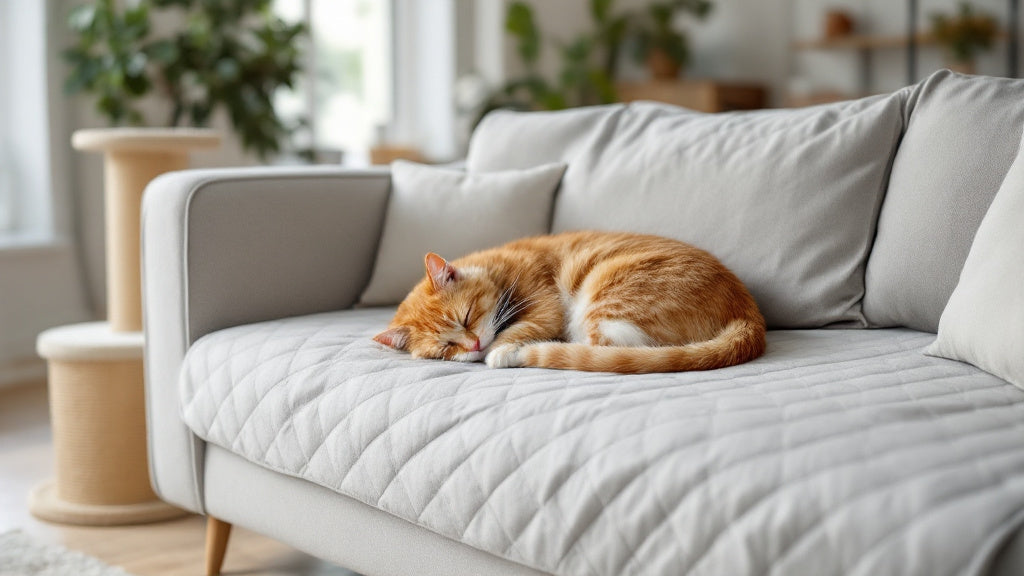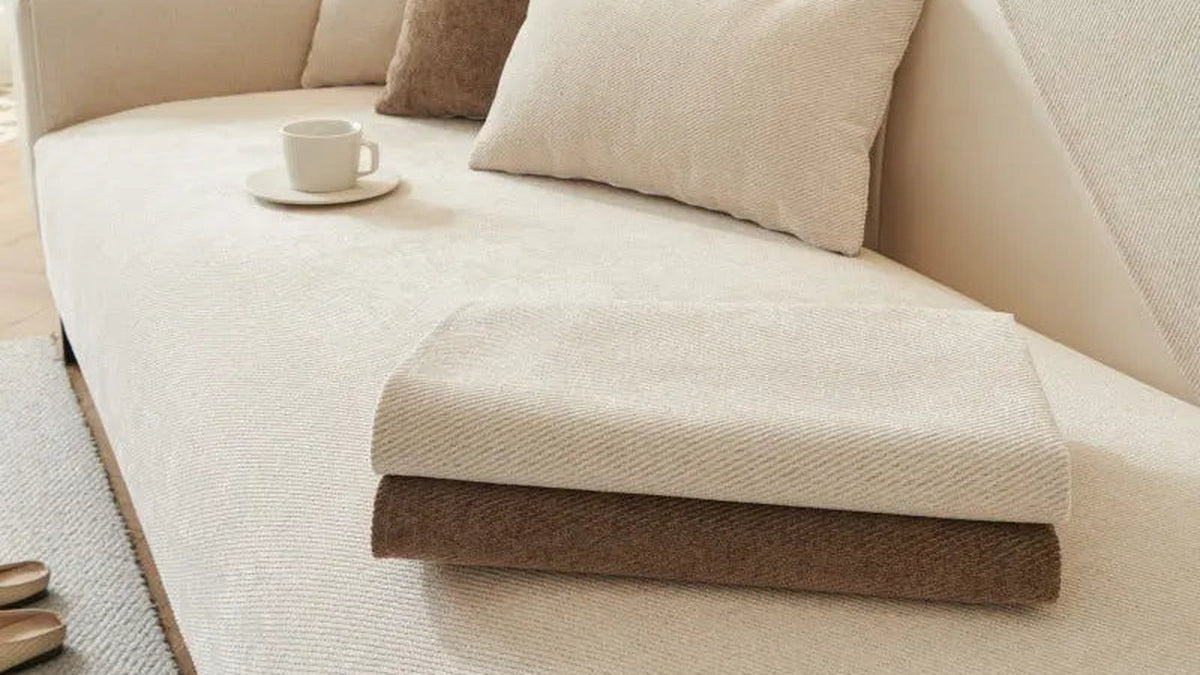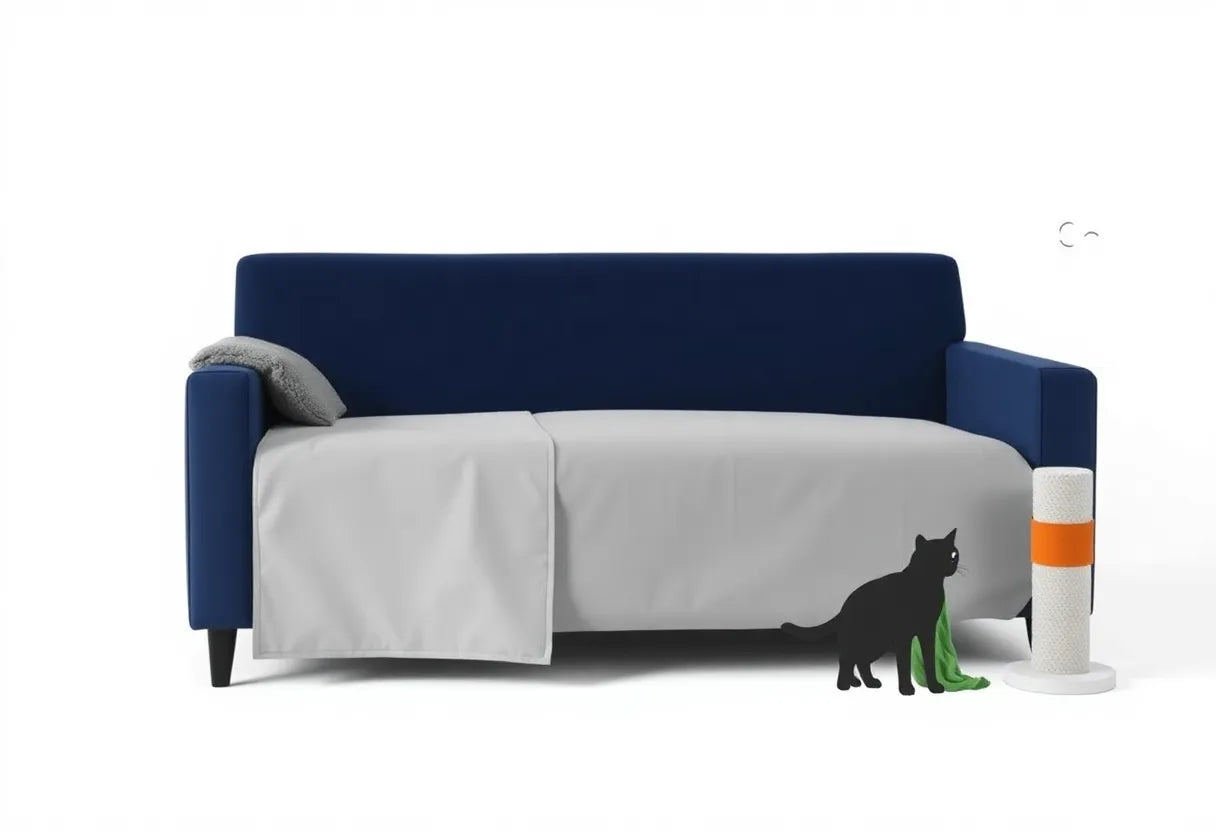
One tiny scratch can turn your dream sofa into a constant source of stress. If you share your home with a cat you know the feeling: you look away for a second, and the armrest becomes the favorite spot.
Busy families, pet owners, and even coworking spaces need a fix that is fast, stylish, and reliable. You should not have to choose between a pet-friendly home and the elegance of premium or vintage furniture.
In this FrenchCovers guide, you will learn how a cat scratch couch cover and an anti-scratch sofa cover can protect your couch while keeping it beautiful. We will also cover what to look for in a washable couch cover that fits real life.
Let’s start with why cats scratch sofas, and what actually stops it.
Why Cats Scratch Sofas (and What Protection Really Needs to Do)
Cats do not scratch your sofa to be “bad.” Scratching is a normal, healthy behavior, and most cats will keep doing it even with training. That is why the best solution is not just discipline. It is a smart mix of habit support plus the right physical protection.
Here is what is really happening, and what a cat scratch couch cover or anti-scratch sofa cover needs to handle in real homes.
Scratching is instinct, not a phase (so training alone often fails)
Most cats scratch for three practical reasons:
- Territory and scent marking: Cats have scent glands in their paws, so scratching leaves both a visual mark and a scent signal. A sofa arm is a high-traffic, high-value “message board.”
- Stretching and stress release: A good scratch comes with a full-body stretch. Cats often scratch more when routines change.
- Claw maintenance: Scratching helps remove the outer sheath of the claw, keeping nails functional.
Common triggers that make scratching flare up include new scents (new baby gear, guests, another pet), stress (schedule changes, moving furniture), and boredom (less playtime, indoor-only days). The ASPCA and Humane Society both explain scratching as a normal need and recommend offering appropriate scratch surfaces rather than punishment. (If you want to read more, see the ASPCA guide on cat scratching behavior and the Humane Society tips on destructive scratching.)
Practical takeaway: even with a scratching post, your sofa may still be tempting. So your protection must assume scratching will happen, at least sometimes.
The highest-risk zones are not random
In busy family rooms, cats usually choose places where they can grip, stretch, and “claim” a spot. The most common damage zones are:
- Arms and arm fronts: vertical surface, easy to grab when walking by
- Front corners: the classic “one favorite corner” that frays fast
- Seat edges and cushion seams: cats hook claws along edges when jumping up or turning around
If you have kids, visitors, or a coworking space setup, these areas also get extra contact from hands, bags, and denim. That added friction can make snagging worse once the fabric starts to lift.
Practical takeaway: a cover that protects only the middle of the seat often misses the real problem areas.
A true scratch-protection plan is behavior support plus physical protection
Think of this as a two-part system:
-
Support the behavior (so your cat has a better option)
- Put a vertical scratch post right next to the sofa arm your cat targets.
- Add a horizontal scratcher nearby if your cat prefers floor scratching.
- Refresh interest with catnip or a short play session in that same area.
-
Protect the furniture (so mistakes do not become damage)
- Use a pet-friendly sofa cover that adds a barrier on the high-risk zones.
- Choose a cover you can actually maintain, because life includes fur, snacks, and muddy paws. A washable couch cover is not a luxury in a real household, it is the difference between “we can keep this up” and “we gave up.”
Practical takeaway: posts help redirect the habit, but a cover prevents permanent wear while the habit shifts.
What “anti-scratch” should mean in practice (not just a label)
Many products say “anti-scratch,” but the word only matters if the cover performs well in these four areas:
- Tighter weave or dense fabric: less space for claws to catch and pull loops
- Better abrasion resistance: helps the cover take the beating instead of your upholstery
- Coverage where cats actually scratch: especially arms, corners, and seat edges
- Secure fit that does not shift: if the cover slides or bunches, cats can grab an edge and start pulling
In other words, an anti-scratch sofa cover should not just be “thick.” It should be smooth, stable, and well-fitted, so it is less rewarding to scratch and harder to snag.
If you are comparing options, start with purpose-built protection like FrenchCovers’ Anti-Scratch Couch Covers, then narrow down by the exact areas your cat targets.
Quick real-home check: are you protecting the right problem?
Ask yourself:
- Does your cat scratch when guests arrive, when you clean, or when the room smells different?
- Is the damage mostly on one arm or one corner?
- Does your current cover shift after one jump or after kids climb up?
Your answers will point directly to what you need next: fabric choice, washability, fit, and targeted coverage.
Next, we will turn this into a simple checklist so you can choose a washable cat scratch couch cover that looks elegant, fits properly, and stays put in a busy home.

What to Look for in a Washable Cat Scratch Couch Cover
A good cover does more than “hide” damage. The right cat scratch couch cover actively reduces snagging, stays smooth (so there is nothing to grab), and cleans up fast after real life happens. Use this buyer’s checklist to choose an anti-scratch sofa cover that works for busy homes and still looks beautifully put-together.
1) Fabric matters most: choose dense, claw-unfriendly textiles
If your cat can hook a claw into the fabric, the sofa becomes a satisfying scratch zone. Your goal is a surface that feels less “grippy” and resists pulls.
Look for:
- Tight, dense weaves (think smooth, structured, and resilient). These reduce snagging because claws cannot easily slip between threads.
- Durable, abrasion-resistant materials that can handle repeated contact. In upholstery terms, abrasion resistance is what helps fabric hold up to rubbing and wear over time. While brands measure this in different ways, the concept is consistent: denser fabrics generally perform better than loose, airy ones.
Avoid:
- Loose knits and open weaves that act like little loops. Those loops catch claws quickly and can start a run.
A quick at-a-glance test you can do at home:
- Run your fingertips across the fabric. If you can easily feel gaps, it is more likely claws will find them too.
- Look closely under light. If you can see spacing between threads, consider a denser option.
2) Washability: make sure “machine washable” is truly practical
A cover can be beautiful, but if it is hard to remove and clean, it will not survive weeknight chaos. For a truly washable couch cover, prioritize options that support quick routines.
Checklist for wash-friendly living:
- Easy on, easy off: If it takes 20 minutes and a workout, you will delay washing it.
- Machine-wash friendly care label: Look for clear instructions like gentle cycle, cold or warm wash, and low heat or air dry guidance. Care labels follow standard symbol systems, so you should be able to confirm the basics at a glance.
- Colorfast, everyday durability: Covers that wash well keep their tone and texture after repeated cycles.
Real-home scenario:
- If your cat naps on the armrest and the kids snack on the seat, you will want a cover that can handle both fur and spills without special treatment every time.
3) Fit and stability: a cover that shifts invites scratching
Cats often scratch edges they can grip. If the fabric bunches at the corners or slides when they jump up, it creates the perfect “pull point.”
What to look for in a stable pet-friendly sofa cover:
- Non-slip backing or grip features that help the cover stay put.
- Stretch where needed, especially around arms and seat edges, for a tailored look without wrinkles.
- Tucking tools, straps, or foam anchors (depending on the style) to keep the cover under tension.
Practical sizing tips (measure once, choose confidently):
- Measure seat width: arm to arm across the sitting area.
- Measure seat depth: front edge to back cushion.
- Note your arm shape: square, rolled, wide, or low-profile. Arms are the most scratched area in many homes, so the arm fit matters as much as the seat.
Before and after insight:
- Before: A loose cover forms ripples on the arm front. Your cat finds a ridge and scratches.
- After: A snug cover stays smooth. There is nothing to hook, so scratching becomes less rewarding.
4) Coverage strategy: protect the high-risk zones first
You do not always need to cover every inch to get great results. Start where scratching is most likely, then add targeted pieces where your cat insists.
Prioritize these areas:
- Arms and front corners: common scratch launch points.
- Seat edges: cats grip the front edge when stretching.
If your cat targets one specific spot (like the right arm only), consider adding dedicated pieces for that zone. This is where modular protection can be smarter than replacing a whole cover. Explore targeted options like Armrest and Cushion Covers to reinforce the exact areas that take the most wear.
5) Style considerations: protection that still feels like your home
The best protection does not announce itself as “pet gear.” With the right color and texture, your cover can quietly elevate the room.
Style tips that work in busy, elegant spaces:
- Textured solids hide minor marks and blend into both modern and classic rooms.
- Mid tones often disguise fur better than very dark or very light fabrics.
- Choose a finish that complements premium furniture: smooth, tailored lines feel more polished and intentional.
A well-chosen cover should make the room feel calmer, not compromised. That is the FrenchCovers approach: practical protection with a refined, home-first look.
Next, we will make sure your cover performs at its best. In the next section, you will learn setup tips that improve tension, prevent slipping, and help the cover last longer, even with daily cat leaps and family life.
Setup Tips That Make a Cover Work Better (and Last Longer)
You have already done the smart part by choosing protection. Now make it work like it should. A cat scratch couch cover (or any anti-scratch sofa cover) only performs well when it is installed with tension, paired with better scratching options, and cared for on a simple schedule that fits real family life.
1) Install for tension so claws cannot “grab and pull”
Cats love a loose edge. If they can hook a claw under fabric, they will. Your goal is a smooth, taut surface that stays put.
Use this quick setup checklist:
- Start with the center: align the cover seam or center point with the sofa center, then pull evenly to both sides.
- Smooth like you are making a bed: flatten the seat, then the back, then the arms. Keep pulling the fabric snug as you go.
- Tuck neatly in the “crack zones”: push excess fabric deep between seat cushions and the frame. This reduces bunching, which often invites scratching.
- Secure the edges: focus on the front corners, outer arm panels, and seat edge, since these are common scratch targets.
- Do a quick “cat test”: gently tug the arm area with two fingers. If you can lift a flap, your cat can too. Re-tuck and tighten.
If you are shopping for a cover that is easier to tension and re-tension after washing, explore the full range of options in our Sofa and Couch Covers collection.
2) Place scratching alternatives exactly where your cat already scratches
A pet-friendly sofa cover is step one. Step two is giving your cat a better, easier “yes” option.
A simple placement map that works in most homes:
- One vertical scratching post within 1 to 2 feet of the scratched sofa arm. If the arm is the target, place the post right beside that arm, not across the room.
- One horizontal scratcher nearby (close to the sofa front or side). Many cats have a strong preference for flat scratching surfaces.
Tip: If your cat scratches a specific corner, place the vertical post so your cat meets it first when approaching that corner. This supports the habit switch without constant correcting.
(If you are also working on training, veterinary behaviorists commonly recommend positive reinforcement: reward your cat for using the post, rather than punishing sofa scratching. It is faster and less stressful for everyone.)
3) Add a gentle deterrent during the “habit switch” window
While your cat is learning that the post is the right place, you can make the protected zone less appealing.
Try:
- Double-sided tape strips on the outside of the cover in the exact scratch zone (often the outer arm). Many cats dislike the sticky feel and move on quickly.
Important: test first in a small spot and follow your fabric care guidance. If you are unsure, skip tape and rely on tightening the fit plus better scratcher placement.
4) Keep a simple care routine (that actually happens)
A washable couch cover is only “washable” in real life if your routine is easy. Here is a practical cadence many busy homes can stick to:
-
Weekly: 10-minute reset
- Shake out crumbs and fur outdoors, or
- Vacuum the cover with an upholstery attachment (especially arms and seat edge)
-
As needed (spills, odor, heavy fur): gentle wash
- Wash on a gentle cycle when the label allows
- Use mild detergent
- Air dry for best longevity, or low heat only if the label allows
This keeps the cover looking crisp and helps your anti-scratch sofa cover last longer, since built-up fur and grit can increase friction over time.
5) For busy families: the “cover swap” workflow (no naked couch time)
If your sofa is the heart of the home, wash day can feel like a disruption. The easiest fix is having a second set.
A simple swap-and-wash system:
- Keep Cover Set B folded in a closet or bench storage.
- When Cover Set A needs washing, remove it and put Set B on immediately (2 to 3 minutes once you have the technique).
- Wash and dry Set A, then store it as the backup.
This one change prevents the classic problem: the couch sits uncovered, your cat returns to the favorite corner, and the habit snaps back.
With your cover fitted tight, scratchers placed strategically, and care made effortless, you have a protection plan that looks elegant and works in daily life. Next, we will make sure it also feels like your home by choosing a look that complements your décor, not one that screams “pet gear.”

Style Meets Protection: Choosing a Look That Feels Like You (Not a Compromise)
A good cat scratch couch cover should not read as “pet gear.” In a busy home, it should feel like a style upgrade that quietly happens to be an anti-scratch sofa cover too. The goal is simple: protect the arms and edges your cat loves, while keeping your room looking intentional and calm.
Below are practical ways to choose a look that fits your life, your furniture, and your taste.
Use covers like a low-risk style refresh (perfect for décor lovers)
If you like changing your home with the seasons, a washable couch cover is one of the easiest ways to try new colors without committing to a new sofa (or reupholstery).
- Spring and summer: light neutrals, soft linen-look textures, gentle stripes
- Autumn and winter: warmer taupes, camel, charcoal, deeper textures
- Holiday hosting: add one “statement” pillow, keep the cover classic so it still feels elegant on January 2
This approach is especially helpful when you need a pet-friendly sofa cover but do not want your living room to look like it was designed around the cat.
Preserve the “original” look for premium or vintage pieces
With heritage sofas, the best protection is often the least noticeable. Look for:
- Understated texture over bold prints: think subtle weaves that disguise minor marks and paw traffic
- Tailored lines: a neat, close fit looks more like upholstery than a cover
- Classic, quiet colors: ivory, sand, stone, greige, deep navy, or espresso depending on your room
A refined anti-scratch sofa cover should complement the silhouette of your sofa, not fight it. If your cat targets the arms, consider a full cover plus targeted reinforcement on the arms so the most visible areas stay crisp.
For small businesses and coworking spaces: professional, resilient, easy to refresh
In client-facing spaces, your cover needs to do three jobs at once: look polished, hide wear, and clean up fast.
- Choose neutral tones: charcoal, pebble gray, warm beige, or navy read professional and timeless
- Prioritize mid to darker values: they are more forgiving with scuffs and daily contact
- Keep a “reset kit” nearby: lint roller, small handheld vacuum, and a backup cover set for swap-and-wash days
This is where a truly washable couch cover pays for itself, especially after a busy week of meetings.
Pairing tips: make it look cohesive in minutes
You can make a protective cover feel designer-level with just a few simple moves:
- Match pillows to the cover’s undertone (warm with warm, cool with cool) for an instantly intentional look
- Add one throw to “finish” the sofa and reduce visible fur between washes
- Keep patterns subtle if your room already has texture (woven rugs, busy art walls, open shelving). Let the room breathe.
For fast cleanup and a layered look, pair your cover with a throw designed to resist clingy fur. See: Pet Hair Resistant Throws.
Practical styling that helps in real life (fur, traffic, and tiny accidents)
Style is not just visual. It is also how well your living room survives Tuesday.
- Darker tones for high-traffic homes: If kids, guests, and pets pile on daily, deeper shades are forgiving and still elegant.
- Mid-tones to hide fur: If your cat sheds, medium shades often camouflage hair better than stark white or very dark black.
- Textured solids to mask minor marks: A small weave or heathered look can visually soften tiny snags better than a flat, smooth finish.
When your cat tests the fabric with claws, a tighter, more durable weave helps your cat scratch couch cover stay looking fresh longer, even with regular washing.
Next, we will make this even easier with a quick decision guide so you can choose the right protection setup based on your cat’s habits, your shedding level, and your space.
Quick Decision Guide: Which Protection Option Fits Your Home Best?
You already know the goal from the introduction: protect the “favorite corner” quickly, keep your living room elegant, and make cleanup realistic for busy days. Use this mini decision tree to pick the right cat scratch couch cover or anti-scratch sofa cover setup without overthinking it.
Step 1: Where does your cat scratch most?
Answer this first, because scratch location dictates coverage and fabric.
A) Mostly the arms and front corners
- Choose an anti-scratch sofa cover with strong arm coverage and a tighter, denser fabric (less claw grab).
- Add targeted reinforcement where the paws land most: armrest protectors or separate arm pieces are ideal when one side gets attacked daily.
- Quick win: cover the exact “launch zone” first (the outer arm edge and front corner), then expand to the rest of the sofa.
B) Mostly the seat edges or cushions
- Look for a cat scratch couch cover that includes seat and cushion coverage and stays smooth and taut. Loose fabric bunching can invite scratching.
- If your cat kneads and snags, prioritize a tighter weave and a snug fit over ultra plush textures.
Step 2: Is fur and mess your bigger problem than claws?
This is where “pet-friendly” needs to mean more than cute marketing.
If shedding and spills are constant
- Go with a washable couch cover you can remove fast and wash often (think weekly, or after a muddy paw incident).
- Layer a pet-hair resistant throw on top for the fastest reset between washes. Shake it out, lint-roll once, done.
- Best for: busy families, multi-pet homes, and anyone who wants a clean look in minutes.
If scratches are the main issue
- Choose the anti-scratch sofa cover first, then add washability as a bonus. A tight, durable textile that resists snagging is your frontline defense.
Step 3: What sofa shape are you protecting?
If you have a sectional or L-shaped sofa
- Pick modular pieces so you can replace only the most-worn sections (often the corner seat or the arm near a window).
- This is also the easiest way to keep a tailored look, especially in open-plan family rooms or reception areas.
Internal link: Sectional & L-Shaped Sofa Covers
Step 4: Do you host guests or clients regularly?
If your sofa sits in a guest-ready living room, a waiting area, or a coworking space, your priorities shift slightly.
If you host guests or clients
- Choose a sleek, stable-fit pet-friendly sofa cover that stays crisp after people sit, stand, and move around.
- Prioritize:
- a secure fit (less shifting, fewer wrinkles)
- refined texture and neutral tones (professional, French-inspired calm)
- easy maintenance (washable, quick to refresh between visits)
Four fast scenario picks (simple and practical)
-
Your cat targets arms daily
Pick: anti-scratch sofa cover + add-on arm protection + tight fabric. -
Your main battle is shedding
Pick: washable couch cover + pet-hair resistant throw for rapid cleanup. -
You own a sectional and only one corner suffers
Pick: modular sectional pieces so you replace only the high-wear modules.
See options here: Sectional & L-Shaped Sofa Covers -
You need a guest-ready, polished look
Pick: a tailored cat scratch couch cover with stable fit, smooth lines, and easy washing.
Next up, we will tie this together with practical next steps so you can measure correctly, choose coverage with confidence, and protect your sofa this week without turning your home into a “pet gear” zone.

You have everything you need to turn “that one frayed corner” back into a sofa you are proud to show off. Because scratching is instinct, the real solution is not choosing between your cat and your furniture. It is a smart two-step plan: redirect the habit with scratchers where paws land, and shield the upholstery with a cat scratch couch cover or anti-scratch sofa cover that stays snug, smooth, and beautiful. You now know exactly where damage happens, what an anti-scratch fabric should feel like, and how a washable couch cover can survive real family life without looking like pet gear.
Protect your sofa this week: measure your couch, pick the coverage you need (arms, seats, or full sofa), and choose a washable anti-scratch option so you can relax without watching the corners fray. When protection looks intentional, it simply becomes part of your home’s story.
Frequently Asked Questions: Cat Scratch Protection for Sofas
Choosing the right cover should feel simple, even in a busy, pet loving home. Below are quick answers based on the guide’s core points: pairing a durable, washable layer with smart fit features to protect everyday sofas and treasured vintage pieces, while keeping your space elegant and welcoming.
Q: Do anti-scratch couch covers really stop cats from scratching? A: An anti-scratch sofa cover helps by creating a tough, less tempting surface that shields upholstery from claws, especially in your cat’s favorite spots. For best results, the article recommends combining a cat scratch couch cover with redirected scratching options. See the guide: How Anti-Scratch Covers Work and Training and Placement Tips.
Q: What fabric is best for a cat scratch couch cover? A: The article favors tightly woven, durable fabrics that resist snagging and hold up to daily life, while still looking refined in a living room or coworking space. Choose a pet-friendly sofa cover that is also a washable couch cover for easy upkeep. See: Best Fabrics for Cat Claws and Style and Color Guidance.
Q: How do I keep a sofa cover from sliding when my cat jumps up? A: Fit is everything: the guide highlights using secure tucks, snug sizing, and grippy backing or anchors so your cat scratch couch cover stays neat after zoomies. Smooth the cover into the seat and arms, then re tuck high traffic areas. See: Getting the Right Fit and Anti-Slip Setup Tips.
Q: How often should I wash a pet-friendly sofa cover? A: For most homes, the article suggests washing your washable couch cover every 1 to 2 weeks, or sooner if you notice odor, dander buildup, or muddy paw prints. Frequent light washes keep the anti-scratch sofa cover looking crisp without extra effort. See: Washing and Care Instructions and Busy Home Maintenance Routine.
Q: Will a cover damage premium or vintage upholstery? A: When chosen and fitted correctly, a pet-friendly sofa cover is designed to protect, not harm, delicate or valuable fabrics by reducing direct friction, sun exposure, and claw contact. The article recommends breathable materials and a clean base layer to avoid dust rubbing. See: Protecting Premium and Vintage Sofas and Material Safety Notes.