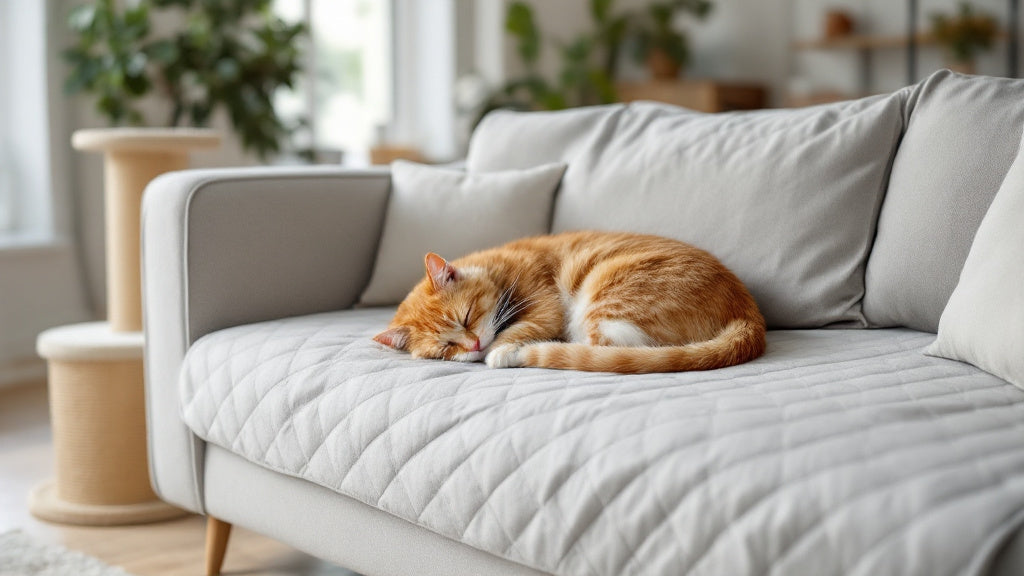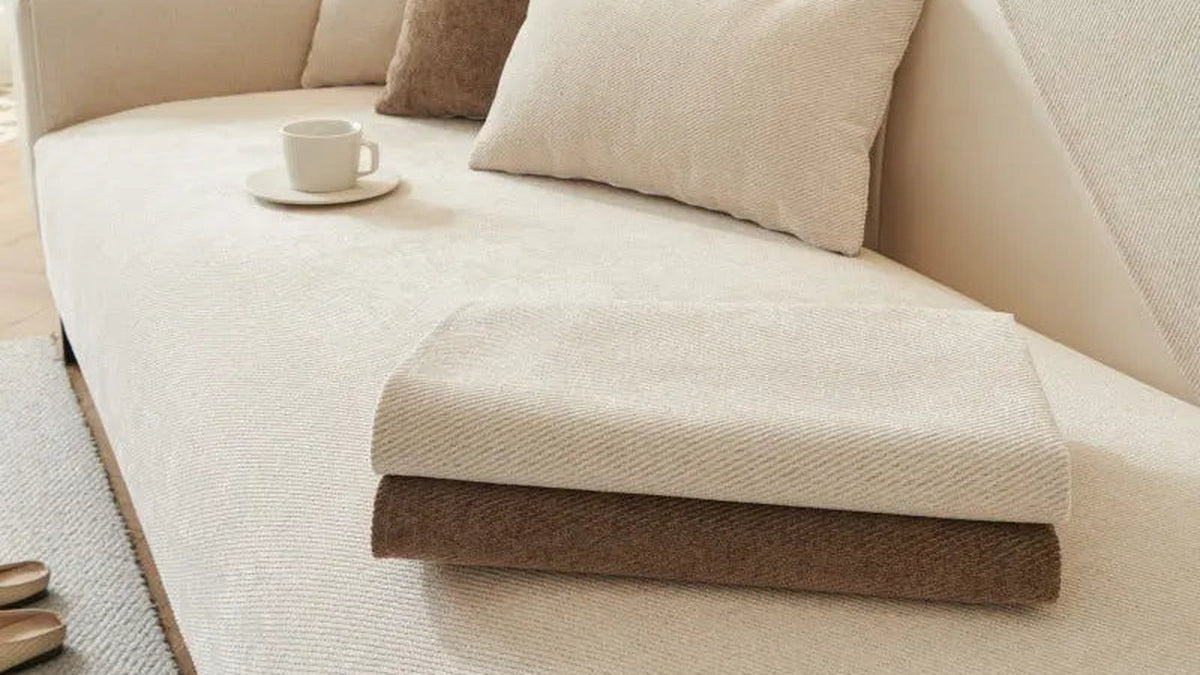
If your sofa could talk, it might beg for a break from muddy paws, snack spills, and daily life. You want a home that feels warm and stylish, but constant cleaning can make that feel impossible.
That is where a recycled rPET sofa cover helps. It is a pet friendly sofa cover that protects your cushions while keeping a soft, polished look. In this guide, you will learn how rPET covers hold up to kids and pets, how they reduce microfiber shedding, and what to look for in a washable couch cover that fits well and stays put. We will also cover why a durable sofa protector can be a smart choice for vintage or premium pieces.
First, let’s look at what recycled rPET is and why it matters for your home.
What Is rPET and Why It’s Popular for Sofa Covers
When you see rPET, think of it as a practical second life for plastic. rPET stands for recycled polyethylene terephthalate, a type of polyester made by collecting used plastic (most commonly beverage bottles), cleaning and processing it, then turning it into chips and spinning it into yarn. Textile Exchange offers clear, consumer-friendly overviews of how recycled polyester is produced and where it is commonly used in everyday textiles, including home goods. (Source: Textile Exchange guidance on recycled polyester: https://textileexchange.org/)
This matters because plastic pollution is a real, visible problem in the world our kids and pets will inherit. Organizations like UNEP consistently highlight the scale and persistence of plastic waste in the environment, which is why recycled inputs and more circular material systems are getting so much attention. (Source: UNEP resources on plastic pollution: https://www.unep.org/) The Ellen MacArthur Foundation also explains how circularity aims to keep materials in use longer rather than relying on constant new production. (Source: Ellen MacArthur Foundation resources on plastic and circularity: https://ellenmacarthurfoundation.org/)
rPET in plain English: What you are actually buying
A recycled rPET sofa cover is still a polyester sofa cover, but with an important difference: the raw material begins as recycled plastic rather than virgin petroleum-based inputs. In a busy home, that can be a satisfying choice because it pairs a familiar, hard-working fiber with a lower-impact material story.
If you are shopping for a pet friendly sofa cover that can handle real life, rPET is popular for three very down-to-earth reasons:
-
Strength you can feel
Polyester fibers are known for durability. In practical terms, that often means better resistance to everyday abrasion like kids climbing up, dogs nesting into a corner, or the constant in-and-out of family movie nights. When a cover is designed well, rPET can function as a durable sofa protector that takes the wear so your actual upholstery does not have to. -
Better bounce-back, depending on construction
Many rPET covers are made with knits or weaves that offer stretch and recovery. That helps a cover stay looking tidy instead of baggy, especially on high-contact areas like seat cushions and armrests. The key is the build: the knit structure, elastic edges, seam quality, and how the cover is shaped for your sofa. -
Easy-care performance for real households
Families usually do not need “delicate only” fabrics. They need something that can be removed quickly and washed without drama. A well-made rPET cover can be a reliable washable couch cover option because polyester tends to wash and dry more predictably than many natural fibers, particularly in the face of daily spills, pet hair, and sticky fingers.
Setting the right expectations: “Recycled” does not mean “stain-proof”
It is reassuring to know what rPET does and does not promise.
- Yes, rPET can be durable and easier to care for than many upholstery fabrics.
- No, rPET is not magic armor. It is still polyester. “Recycled” speaks to the input material, not automatic stain resistance, odor control, or zero pilling.
- What truly changes performance in your living room is construction and finish, such as:
- tighter, higher-quality knits or weaves
- stronger stitching and reinforced seams
- grippy backings or secure edges that help reduce shifting
- finishes that improve water resistance or make cleanup easier (varies by product)
So when you are comparing covers, look beyond the label. Two rPET fabrics can perform very differently depending on how they are engineered.
A quick decision cue: Is rPET the smart choice for your home?
Choose a recycled rPET sofa cover when you want:
- Durability for daily use (kids, pets, frequent sitting)
- Simpler washing and faster resets compared to fussier fabrics
- A more circular materials story than virgin polyester, supported by major sustainability organizations (UNEP, Ellen MacArthur Foundation, Textile Exchange)
If you are ready to see everyday options that fit different sofa styles and family routines, you can start here: Explore everyday sofa protection options: https://frenchcovers.com/collections/sofa-couch-covers
Next, we will get very honest about another big topic for families: microfibers. What does “anti-microfiber” realistically mean in a pet-and-kids home, and what actually reduces shedding during use and washing?

Microfibers 101: What ‘Anti-Microfiber’ Can Realistically Mean
After learning what rPET is (recycled plastic turned into strong, sofa-ready yarn), the next question many families ask is: Will a recycled rPET sofa cover shed microfibers all over my home and the planet? It is a smart question, and it deserves a clear, no panic answer.
Myth vs. reality: “Anti-microfiber” is not “zero-shed”
Let’s start with the honest truth: synthetic textiles can shed microfibers, especially from washing and everyday abrasion (think: kids climbing, pets nesting, cushion rubbing). Because rPET is still polyester, it can release fibers just like virgin polyester can. So no fabric can realistically promise “zero-shed.”
Why does this matter? The IUCN has identified synthetic textiles as a source of primary microplastics, meaning micro-sized plastic particles that enter the environment directly (often through wastewater). You can explore their broader research here: IUCN research on microplastics from textiles. Peer-reviewed research in journals like Environmental Science & Technology also summarizes how laundering and fabric construction influence microfiber release.
The helpful takeaway is this: “Anti-microfiber” should mean reduced shedding risk through better design and better care, not a magical guarantee.
What actually reduces shedding in real homes
In day-to-day family life, microfiber release tends to drop when a cover is engineered and finished well. When you are shopping for a pet friendly sofa cover that is also design-conscious, look for these practical construction cues:
- Tighter weaves or tighter knits: In general, a denser structure holds fibers more securely than a loose, airy knit.
- Higher-quality yarns: Stronger, smoother yarns are less likely to fuzz under friction from paws, denim, and cushion movement.
- Better seam finishing: Clean stitching, reinforced edges, and quality binding reduce the “weak points” where fibers can start to fray.
- A stable fit: A cover that stays put creates less rubbing. Less rubbing usually means less fuzzing over time.
This is where a durable sofa protector earns its keep: durability is not only about surviving spills, it is also about resisting the slow grind of abrasion that breaks fibers loose.
Your household microfiber-minimizing routine (simple and realistic)
You do not need a complicated system. A few small changes can meaningfully reduce shedding, especially when you treat your cover like a protective layer rather than something that must be washed weekly.
Here is a practical routine that works for busy homes:
-
Wash less often when you can
- Spot-clean small messes and lint-roll pet hair in between.
- Wash when there is odor, visible grime, or a real spill, not just because it is “laundry day.”
-
Choose cold water + gentle cycles
- Cold, gentle washes reduce fiber stress compared to hot water and heavy agitation.
- Use a mild detergent and avoid harsh cycles unless you truly need them.
-
Skip high heat when possible
- Air-dry when feasible, or tumble dry on low if the care label allows.
- High heat can contribute to wear over time, which can increase fuzzing.
-
Consider microfiber-capturing tools
- A laundry filter (installed on the machine) or a fiber-catching laundry bag can help capture released fibers before they head into wastewater.
- This can be especially helpful if you rely on a washable couch cover and expect more frequent washes due to pets or small kids.
These steps line up with widely used guidance from consumer textile care authorities: gentler wash settings and lower heat typically help extend fabric life.
How to evaluate “anti-microfiber” claims without getting tricked
If a product page is vague, use this quick checklist to read between the lines. Strong signals usually include:
- Clear, specific care instructions (not just “easy wash”)
- Fabric details that suggest substance (weight, thickness, or a description of a tighter texture)
-
Construction details you can feel or see:
- neat stitching
- reinforced seams
- elastic edges that hold shape
- lining or backing where it matters
What to be cautious about: marketing phrases like “eco-friendly” or “anti-microfiber” with no explanation of weave, finishing, or care. For a recycled rPET sofa cover to perform well long-term, material + construction + care have to work together.
A quick note for pet homes: abrasion is the hidden microfiber trigger
Even if you wash perfectly, pets can create extra wear through claws, digging, and repeated “circling” on the same cushion. If your main challenge is claws and daily friction, you may want a cover designed specifically for that kind of stress.
Need tougher protection for claws and daily abrasion?
https://frenchcovers.com/collections/anti-scratch-couch-covers
Next up: choosing the right cover for your actual life (and your sofa shape)
Now that microfiber expectations are clear, we can get practical: how do you pick the right cover for your sofa style, your kids, and your pets, without wasting money on something that slides, pills, or looks messy? In the next section, we will walk through a simple fit and function checklist you can use in minutes.
Choosing the Right Cover for Kids + Pets: A Simple Fit & Function Checklist
By now, you know why a recycled rPET sofa cover can be a smart, lower impact choice, and you have realistic expectations about microfiber shedding in real homes. Next comes the part that makes the biggest day to day difference: choosing a cover that actually fits your sofa and your routine. A truly pet friendly sofa cover is not just about the fabric. It is about measurements, construction details, and how quickly you can pull it off for a wash after juice, paw prints, or that one marker incident.
Use this simple checklist to get it right the first time.
1) Fit first: Measure once, protect daily
A cover that slides, bunches, or leaves your cushions half exposed will not feel like a solution. Grab a tape measure and note these basics before you shop.
Quick measurement table (write these down):
| What to measure | Where to measure | Why it matters |
|---|---|---|
| Seat width | Left to right across the seating area | Determines overall size range (sofa, loveseat, sectional piece) |
| Seat depth | Front edge to where seat meets back | Helps prevent loose fabric puddling or tight pulling |
| Back height | From seat seam up to top of back | Ensures the cover actually reaches and stays put |
| Arm style + height | From floor or seat to top of arm; note shape (square, rolled, low, wide) | Arms are high-wear zones and the first place covers fail to fit |
| Cushion count | Separate seat cushions and back cushions | Tells you if separate cushion pieces are worth it for a cleaner look and better hold |
Identify your sofa type:
- Standard sofa: typically 3 seats, straightforward sizing.
- Loveseat: 2 seats, needs smaller width coverage.
- Sectional: measure each section (especially chaise length and corner depth). Consider modular pieces for a more tailored finish.
Practical tip: If your household includes kids who bounce and pets who launch, prioritize designs with tuck-in sections, elastic edges, and separate cushion covers. Fit is what turns a cover into a durable sofa protector instead of a constant adjustment project.
2) Lifestyle needs: Match everyday mess to real features
The best washable couch cover is the one that matches what actually happens in your living room, not what happens in catalog photos. Pick your top two pain points and let them guide the features you prioritize.
Common family + pet challenges and what to look for:
- Juice, snacks, and sticky hands: Full seat coverage and easy removal. If you wash often, choose a cover that is designed to come off fast without complex ties.
- Markers or craft time mishaps: More coverage is better, especially on arms and seat cushions where kids lean and draw.
- Pet hair (daily): Smoother, tighter surfaces tend to let hair release more easily with a quick vacuum or brush. Texture can be cozy, but very “grabby” knits can hold onto fur longer between cleans.
- Odor and “dog couch” vibes: Look for a cover you can launder frequently without losing shape, plus secure edges so it does not shift and trap debris in folds.
- Muddy paws: Prioritize coverage on the front seat edge and arms (the usual launch pads).
If your biggest wear spots are the arms and the seat cushions, consider layering protection rather than fighting with one oversized piece. Targeted add-ons can make a huge difference, especially in busy homes. See Targeted protection for high-wear spots (arms & cushions) here: https://frenchcovers.com/collections/armrest-cushion-covers
3) Choose your priority: A simple decision flowchart
When you are torn between options, use this quick “what matters most” flow to choose confidently.
Fit & function flowchart (quick pick):
-
Do you wash weekly or more?
- Yes → Choose easy-on, easy-off construction (elastic edges, simple tuck-in design, separate cushion pieces). This is your washable couch cover lane.
- No → Go to step 2.
-
Do you have cats or dogs that dig, nest, or scratch at the sofa?
- Yes → Prioritize abrasion resistance and a secure fit (less shifting equals less rubbing and wear). If claws are your main issue, look for tougher options built for daily abrasion.
- No → Go to step 3.
-
Is style and a tailored look your top priority (hosting, design goals, photo-ready room)?
- Yes → Choose clean lines, separate cushion coverage, and colors that disguise daily lint.
- No → Prioritize maximum coverage and comfort for lounging.
A recycled rPET sofa cover can work in any of these lanes, but your “winner” is the one that fits your routine. For many families, that means a cover that installs in minutes, stays put through movie night, and comes off without a wrestling match.
4) Comfort and look: Make it feel like home, not like a compromise
Protection should still feel inviting. Texture matters for kids who sprawl out and for pets who nap like they pay rent.
Comfort and style checklist:
- Pick a hand feel you will actually lounge on: If it feels too slick or too rough, it will end up folded on a chair.
- Choose colors that forgive real life: Mid-tone neutrals, heathers, and subtle texture often hide lint and everyday dust better than very light solid colors.
- Refresh fast with soft layers: Keep a throw and a couple of pillow covers nearby so you can do a two minute “reset” before guests arrive.
Before/after styling scenario (easy win):
- Before: Bare sofa, visible pet hair on arms, cushion corners starting to look tired, constant spot cleaning.
- After: A fitted pet friendly sofa cover in a mid-tone neutral, plus matching arm and cushion protection on the high-wear zones. The room looks calmer, and cleanup becomes a quick vacuum or a planned wash day.
5) Premium or vintage furniture: Protect without rubbing or stress
If you are covering a vintage piece or a premium upholstery you want to preserve, your goal is gentle, secure contact.
What to prioritize:
- Soft inner contact: You want the cover to feel smooth where it touches the upholstery, especially on delicate fabrics.
- Secure fit that will not rub: A cover that shifts can create friction over time. A stable fit is part of being a durable sofa protector.
- Easy removal for gentle cleaning: The less tugging and wrestling required, the better for both the cover and the furniture underneath.
This is where thoughtful construction matters as much as material choice. A recycled rPET sofa cover can be an elegant, practical layer, but only when it fits well and comes off easily for care.
Once you have fit and features locked in, the next step is keeping your cover fresh without turning your week into a laundry marathon. Up next: Care & Cleaning: Keep Covers Fresh Without Living in Laundry Mode.

Care & Cleaning: Keep Covers Fresh Without Living in Laundry Mode
A recycled rPET sofa cover is designed for real life, not a perfectly staged living room. The goal is simple: keep your space feeling clean and pulled together with quick routines and smart washing habits, so your pet friendly sofa cover stays soft, secure, and good-looking for the long haul.
A realistic weekly routine (the one you will actually keep)
Think of this as maintenance, not constant laundry. Most families do best with a light reset plus spot-cleaning, then a full wash only when the cover truly needs it.
2 to 3 times per week (5 minutes):
- Lint roll or quick vacuum (upholstery attachment) across seats, arms, and where pets nap.
- Fluff and re-tuck: smooth the cover and tuck excess fabric back into creases so it stays fitted and elegant.
As needed (right away):
- Spot-clean spills fast so they do not turn into “wash the entire washable couch cover” moments.
- If odor builds up (wet dog, snack accidents), air out the room, open windows, and consider a fabric-safe deodorizing approach before jumping to a full wash.
Wash day (only when needed):
- When there is visible soiling, lingering odor, or a “sticky” feel, that is your cue. For many homes, this is every 2 to 6 weeks, depending on kids, pets, and season.
The 60-second spill response checklist (save your sofa in one minute)
The first minute is where you win. Keep a small “sofa first-aid kit” nearby (clean cloths, mild soap, a spray bottle of water).
- Blot, do not rub (press a clean cloth to lift liquid).
- Lift solids with a spoon or dull edge (do not grind crumbs in).
- Dab with cool water on a cloth, working from the outside in.
- Add a drop of mild detergent if needed, then dab again.
- Blot dry with a fresh cloth.
- Air-dry fully before anyone sits back down.
This is the easiest way to protect both your cover and the sofa underneath, especially if you are using it as a durable sofa protector for a nicer or vintage piece.
Pet hair strategy: get ahead of it (without fighting the fabric)
Pet hair is not just a cleaning issue, it is a daily comfort issue. A few small habits make a big difference.
Tools that work well:
- Rubber brush or rubber grooming glove: excellent for lifting hair from fabric without pulling fibers.
- Light mist + wipe: lightly mist water onto a cloth (not the cover) and wipe in one direction to gather hair into little rolls you can pick up.
- Vacuum attachment: best for seams, piping, and cushion edges.
Fabric choice tip (for next time you buy):
In general, tighter, smoother surfaces tend to release hair more easily than looser, fuzzy textures that grab onto it. If pet hair is your number one battle, prioritize a more structured hand feel when choosing a pet friendly sofa cover.
If claws and abrasion are part of your reality too, pairing your main cover with targeted, high-wear protection can help. See Armrest and Cushion Covers for the spots that take the most daily contact.
Washing best practices (reduce wear and microfiber shedding)
Even the best washable couch cover lasts longer when washed gently. This is also where you can reduce unnecessary fiber loss over time.
Best settings for most rPET covers:
- Cold water
- Mild detergent
- Gentle cycle
- Wash with like fabrics (avoid rough items like jeans, towels, or anything with zippers that increase abrasion)
Skip or limit these when possible:
- Fabric softener: it can leave residue and may reduce absorbency, which matters when you are cleaning up quick spills.
- High heat (hot wash or hot dryer): heat stresses elastic fibers and can shorten the life of a durable sofa protector.
For general, consumer-friendly care guidance, Good Housekeeping’s fabric care tips are a useful reference point: https://www.goodhousekeeping.com/home/cleaning/tips/a24885/how-to-do-laundry/
(Always follow your cover’s specific label instructions first.)
Family stain playbook: what to do in the first 5 minutes vs later
Here is a simple guide for the three classics: food, mud, and marker.
| Stain type | First 5 minutes | If it has already dried |
|---|---|---|
| Food (sauce, yogurt, grease) | Lift solids, blot, dab with cool water + a drop of mild detergent | Gently rehydrate with cool water, dab detergent solution, repeat blotting cycles before washing |
| Mud | Let it dry (seriously), then brush off loose dirt | Vacuum or brush thoroughly first, then spot-clean remaining marks with cool water and mild detergent |
| Marker (kids’ art moment) | Blot, do not spread; test a small hidden area first | Use a small amount of rubbing alcohol on a cloth (test first), dab carefully, then rinse with water and blot dry |
A quick safety note: with marker or any stronger cleaner, always patch test on an inconspicuous area to protect color and finish.
With cleaning under control, the next step is making sure your cover looks like it belongs in your space. Up next, we will talk about style that survives real life, including colors and textures that hide everyday wear gracefully while still feeling design-forward.
Style That Survives Real Life: Colors, Textures, and Room Pairings
A recycled rPET sofa cover should do more than block spills and paw prints. It should help your room feel pulled together on an ordinary Tuesday, even when life is loud, snacks are happening, and the dog has claimed the best seat. The good news is that a pet friendly sofa cover can look elevated and intentional if you choose color, texture, and styling like a designer and a parent at the same time.
Family-proof styling that still looks polished
If your goal is “clean enough to feel calm,” start with two practical rules:
- Pick mid-tone neutrals over very light solids. Creamy whites and pale pastels photograph beautifully, but in real life they spotlight every tiny mark. Mid-tone neutrals (oat, greige, warm taupe, soft charcoal) tend to disguise the little stuff between washes, which is exactly what you want from a washable couch cover.
- Choose texture on purpose. Subtle texture (a tight basket weave look, pebble texture, or heathered yarn effect) visually breaks up crumbs, faint smudges, and everyday lint. It is a simple way to make a durable sofa protector feel more forgiving, especially in high-use homes.
Texture also has a comfort benefit: it can feel cozier and more “designed” than flat, shiny fabric, while still being easy to care for.
Pet-friendly color matching: hide hair between cleanings
A quick styling trick with a big payoff: choose a cover color that sits close to your pet’s fur color (or the average of it, if your pet is multicolored). That way, the stray hairs that appear between your weekly vacuum and the next wash are far less visible.
- Light golden retriever? Try oat, camel, warm beige
- Black cat? Try charcoal, deep slate, espresso
- Gray tabby or husky? Try stone, greige, medium gray
This does not replace cleaning, but it helps your space look tidy longer, which is the whole point of choosing a practical recycled rPET sofa cover in the first place.
3 mini “style recipes” you can copy this weekend
Think of these like plug-and-play outfits for your sofa. Each one is designed for real life and pairs beautifully with a pet friendly sofa cover that you can remove and wash without drama.
1) Modern Minimal (clean lines, low visual clutter)
- Cover color: soft charcoal, medium gray, or greige (mid-tone)
- Texture: subtle heather or tight weave look
- Pillows: 2 solid pillows + 1 small patterned pillow (tone-on-tone works well)
- Throw: lightweight, neatly folded at one arm
- Best for: open-plan living rooms, apartments, and anyone who wants “calm but not cold”
Why it survives real life: darker mid-tones stay crisp looking in high traffic zones, which is ideal if you are relying on a washable couch cover to do heavy lifting.
2) Cozy Family (warm, inviting, kid-proof energy)
- Cover color: oatmeal, warm taupe, or stone
- Texture: visible weave or lightly ribbed texture to hide tiny marks
- Pillows: 1 durable patterned pillow (small print hides smudges) + 2 soft solids
- Throw: machine-washable knit or fleece texture for movie nights
- Best for: family rooms, play-adjacent spaces, and homes with frequent snack time
Why it survives real life: warm mid-tones + texture are a forgiving combo, helping your durable sofa protector look fresh between washes.
3) French Chic (elevated, layered, budget-friendly refresh)
- Cover color: flax, linen-look beige, soft gray, or dusty blue
- Texture: refined weave look (avoid ultra-slick finishes)
- Pillows: mix of 3 to 5 pillows in related tones, including one small stripe or toile-inspired print
- Throw: draped casually (not perfectly folded) for that lived-in elegance
- Best for: design lovers, vintage-inspired rooms, and anyone wanting a “new sofa” feeling without buying one
Why it survives real life: you can rotate accessories instead of replacing furniture. A recycled rPET sofa cover becomes the base layer that keeps your original upholstery protected while you change the styling mood.
Color palette guide (quick pick chart)
Use this as a starting point when you are stuck between “practical” and “pretty.”
Family-proof neutrals (hide marks well):
- Oat
- Greige
- Warm taupe
- Soft charcoal
Pet-hair harmonizers (match your pet’s coat):
- Camel (for golden fur)
- Stone gray (for gray fur)
- Deep slate (for black fur)
- Medium brown (for chocolate fur)
French-inspired accent tones (adds charm without chaos):
- Dusty blue
- Sage
- Muted terracotta
- Antique rose
Design tip: keep the sofa cover neutral and use accent tones in pillows and throws. It is the easiest way to refresh seasonally while keeping your core pet friendly sofa cover working hard year-round.
Seasonal swap suggestions (a refresh without a remodel)
Rotating textiles is a budget-friendly way to make your living room feel updated, especially if you are already using a washable couch cover for daily protection.
- Spring: lighter neutrals + sage or dusty blue pillows, crisp cotton throw
- Summer: slip in a coastal vibe with white and blue accents, lightweight throw, fewer pillows
- Fall: warm taupe base + terracotta or deep green accents, chunkier knit throw
- Winter: charcoal or deeper neutral base + velvet-look pillows, cozy layered throws
If you have kids or pets, keep at least one “backup set” of pillow covers so you can swap fast while the current set is in the wash.
Small business and coworking spaces: professional, tidy, high-traffic ready
If your sofa sits in a lobby, studio, or coworking lounge, the styling goal is a little different: you want “welcoming” without looking rumpled by lunchtime.
- Go darker and cleaner: charcoal, deep gray, espresso, navy
- Prioritize simple silhouettes: fewer pillows, structured shapes, minimal patterns
- Choose textures that read upscale: subtle heather, refined weave look
- Create a maintenance rhythm: quick daily vacuum or lint roll, wash only when needed
A durable sofa protector in a darker professional tone can keep shared spaces looking consistent and cared for, even with constant use.
Next up: bringing style and function together
Now that you have a clear plan for color, texture, and room pairings, the final step is making sure your cover choice actually matches your routine: how often you wash, how your pets behave on the sofa, and how much coverage you really need. In the next section, we will wrap everything up with a simple checklist and buying cues so you can choose a recycled rPET sofa cover that looks right and lives even better.

From everyday spills to cozy movie nights, a recycled rPET sofa cover proves you don’t have to choose between a lively home and a beautiful one. By choosing a pet friendly sofa cover built for real wear, you’re investing in a durable sofa protector that stands up to muddy paws, sticky fingers, and daily life while keeping your space polished and welcoming. Remember, the best washable couch cover is one that fits your routine as much as your sofa, and with the right care, it will keep your family’s favorite spot looking fresh for years.
Ready for a sofa that can handle real life this week? Browse Frenchcovers options and choose a cover that fits your routine—easy on, easy off, easy wash.
Because a home well-lived in is a home well-loved.
FAQ: Choosing a Recycled rPET Sofa Cover for Real Life (Kids, Pets, and Busy Spaces)
If your sofa needs protection that still looks polished, these quick answers pull directly from the guide’s key themes: recycled rPET performance, reduced microfiber shedding, easy care, and fit tips for family homes, pet homes, and high traffic spaces. Each response includes a practical next step so you can choose a pet friendly sofa cover and keep it working beautifully.
Q: Is rPET fabric safe and comfortable for everyday lounging?
A: Yes. As explained in the guide, a recycled rPET sofa cover is made from recycled plastic bottles that are turned into soft, durable fibers designed for daily use, so it feels comfortable while acting as a durable sofa protector. For comfort and performance tips, see rPET Fabric Benefits and Everyday Family Use.
Q: Do sofa covers stop pet hair from sticking?
A: A pet friendly sofa cover helps by creating a barrier so hair stays on the cover instead of embedding in upholstery, which the article highlights as a big win for busy pet homes. Choose a smooth, tightly woven recycled rPET sofa cover and shake or vacuum it regularly. See Pet Hair and Mess Protection and Cleaning Routine.
Q: How can I reduce microfiber shedding when I wash couch covers?
A: The guide recommends gentle washing habits to cut shedding: use cold water, a delicate cycle, and avoid harsh agitation, especially for any washable couch cover. For extra protection, wash inside out and use a microfiber catching laundry bag or filter if you have one. See Microfiber Shedding: How to Reduce It and Washing Instructions.
Q: What’s the easiest way to measure my sofa for a good fit?
A: Keep it simple like the guide suggests: measure seat width, seat depth, back height, and arm width, then compare to the sizing chart before ordering your durable sofa protector. For sectionals or vintage shapes, measure each section separately for the cleanest look. See Measuring Guide and Fit Tips for Different Sofa Styles.
Q: Are anti-scratch covers worth it for cats and active dogs?
A: They can be, but the article notes no cover is truly claw proof, so the goal is reducing visible damage and protecting the upholstery underneath. A durable sofa protector in recycled rPET with a tight weave is a smart choice, especially paired with nail trims and scratch alternatives. See Scratch Resistance for Pets and Pet Proofing Tips.