Coffee spills, muddy paws, and sticky fingers can turn a beautiful sofa into a daily stress test. If you love your home and want it to feel calm, you should not have to choose between comfort, style, and safety.
Many waterproof treatments rely on harsh chemicals that can linger in your living space. That is why more families, pet owners, and design lovers are searching for PFAS-free sofa covers that still perform like a pro.
In this guide, you will learn how PFAS-free waterproofing works, what to look for in a stain resistant sofa cover, and how to protect premium or vintage pieces without hiding their charm. You will also see when a pet proof couch cover or waterproof couch cover makes the most sense.
First, let’s break down what “PFAS-free” really means for your sofa and your home.
What “PFAS-Free” Really Means (and Why It Matters for Your Home)
When you are shopping for a stain resistant sofa cover or a waterproof couch cover, the word “waterproof” can sound like pure relief. But it is worth pausing to ask a second question: How is it made spill resistant?
PFAS in plain English: why they are called “forever chemicals”
PFAS are a large group of man-made chemicals often used to make materials resist water, grease, and stains. You will see them discussed by regulators and researchers because they tend to persist for a long time in the environment and can be difficult to break down. That long-lasting nature is why they are often nicknamed “forever chemicals.”
If you want to read the clearest definition from a trusted source, the U.S. EPA overview of PFAS is a solid starting point. For a European perspective, the European Chemicals Agency (ECHA) on PFAS explains why this chemical class is under increased scrutiny.
For families, the “why it matters at home” piece is simple: sofas are high-contact surfaces. Kids sprawl, snack, and nap there. Pets curl up, groom, and track in whatever the day brings. And indoor research has shown that household dust can be one pathway for exposure to various chemicals people use indoors. That is not a reason to panic or make medical conclusions, but it is a strong reason to choose simpler, cleaner materials where you can, especially for something that lives in the center of your home.
Myth-busting labels: “PFOA-free” is not always “PFAS-free”
Here is one of the most common points of confusion on product pages:
- PFOA-free usually means the product is made without PFOA, which is one specific PFAS chemical that has been widely phased out or restricted in many places.
- PFAS-free means the product is made without the broader class of PFAS chemicals.
So a cover can honestly claim “PFOA-free” and still use other PFAS-type treatments for water and stain repellency. If your priority is PFAS-free sofa covers, look for the words PFAS-free explicitly, not only “PFOA-free” or vague phrases like “C8-free.”
Practical tip: if a listing says “stain repellent” but does not say how (membrane, coating type, weave), it is reasonable to message the seller and ask, “Is this PFAS-free, including fluorinated stain repellents?”
How a PFAS-free cover can still resist stains and spills
The good news is that stain resistance does not have to come from PFAS. A truly family-friendly, design-respecting cover can get performance from engineering instead of chemical shortcuts. Here are the main PFAS-free pathways you will see:
-
Fabric construction and tight weaves
A denser weave creates fewer gaps for liquid and crumbs to work into. It also tends to help with pet hair release, which is a quiet win if you are looking for a pet proof couch cover that still looks tailored. -
Non-fluorinated coatings (surface protection)
Some brands use water-repellent finishes that are not fluorinated. These can help spills bead up long enough for you to blot, especially for everyday messes like coffee drips or juice splashes. This is often where a cover earns the “stain resistant sofa cover” label without relying on PFAS chemistry. -
Inner membranes or laminated barriers (true spill blocking)
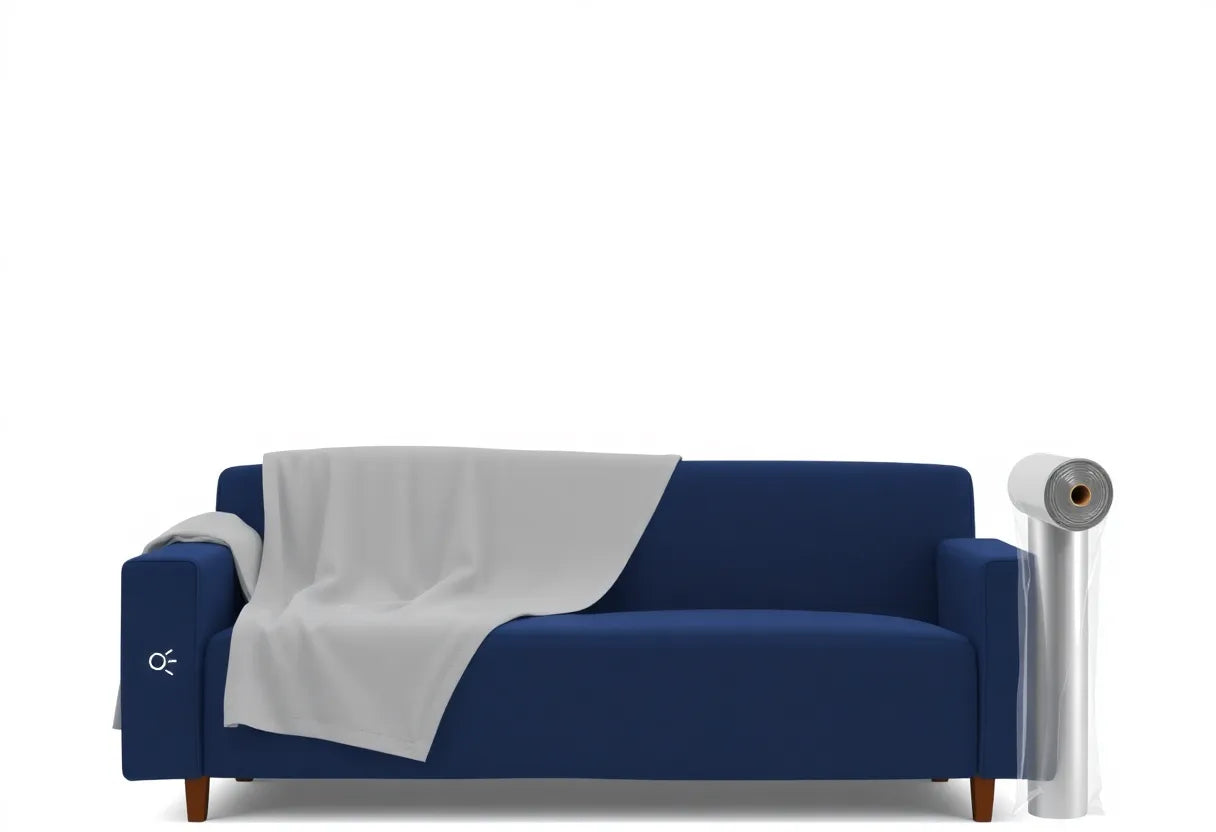
If you need a more serious waterproof couch cover for accidents, pet water bowls, or frequent snack time, the strongest approach is often a hidden barrier layer. Think of it as a protective lining that stops liquid from reaching the upholstery while the top layer keeps the look and comfort. This method is especially helpful for premium, vintage, or light-colored sofas where even one incident can be stressful. -
Smart layering (performance without the plastic feel)
Some of the best-performing covers use a soft outer textile plus a discreet inner barrier. When done well, it protects like a workhorse and still feels elegant enough for design-focused living rooms and formal sitting areas.
Why PFAS-free choices feel safer for kids and pets
Little ones and pets spend more time close to fabrics than adults do. They sit lower, play on the cushions, and often put hands (or paws) in mouths afterward. Choosing PFAS-free sofa covers is a practical way to reduce “extra” chemical complexity in one of the most used spaces in the home, without giving up on spill protection.
If you are starting your search, browsing a curated range of fits and styles can make the decision feel less overwhelming. You can explore options here: Sofa and Couch Covers.
The takeaway for this guide
“PFAS-free” is not just a feel-good label. It is a clear material choice that can pair beautifully with real performance, if you know what to look for.
Next, we will get very practical: the safest PFAS-free waterproofing methods to look for on product pages, plus a quick checklist you can use while you shop so you land on the right level of protection for spills, pets, and daily life.

The Safest PFAS-Free Waterproofing Methods for Sofa Covers (What to Look For on Product Pages)
In the introduction, we talked about the goal: real spill protection without bringing harsh chemistry into the heart of your home. Now let’s turn that into a practical shopping checklist you can use on any product page, especially when you are comparing PFAS-free sofa covers that promise both comfort and performance.
Water-Resistant vs Waterproof: The Difference That Shows Up at 7 PM
These two terms sound similar, but they behave very differently when life happens fast.
- Water-resistant typically means the fabric can repel small splashes or slow down absorption. Think: a few drops of water, light condensation from a cold drink, a quick wipe if you catch it immediately.
- Waterproof means there is a true barrier layer designed to block liquid from passing through, buying you time to blot, remove the cover, and wash before the cushion or upholstery gets involved.
Why it matters:
- Juice and coffee can stain quickly once they soak into fibers. A water-resistant top may bead at first, then slowly wet through.
- Pet accidents are higher volume and higher risk. This is where a waterproof couch cover with a proper barrier is often the difference between a normal laundry day and a deep upholstery cleanup.
If your household includes kids, pets, or frequent guests, “waterproof” is usually the safer bet. If you mainly want protection from minor splashes and daily wear, “water-resistant” can still help, especially when paired with good fabric construction and fast cleanup habits.
Safer PFAS-Free Waterproofing Approaches (What You Want to See)
A stain resistant sofa cover can be made without fluorinated chemistry. On product pages, look for these PFAS-free approaches described in plain terms.
1) Inner waterproof membrane or lamination (barrier built in)
This is one of the most reliable routes to waterproofing because the protection is not just sprayed on the surface. The cover usually has:
- A comfortable outer fabric layer for look and feel
- An inner barrier layer that stops liquid from reaching your sofa
This is a strong choice for families managing frequent spills or for anyone protecting premium cushions they would rather not replace.
2) TPU-style barriers (flexible, quiet protection)
Some covers use a flexible polymer barrier (often described as a thermoplastic layer) that helps block liquid while still allowing the cover to move naturally with the sofa. When done well, it can feel less stiff than older “plastic-feeling” waterproof materials.
If you want a waterproof couch cover that still drapes nicely, this type of construction is often worth prioritizing.
3) Non-fluorinated water-repellent coatings (surface help, not full armor)
You may also see PFAS-free water repellency described as:
- “Non-fluorinated water repellent”
- “C0 water repellent”
- “PFAS-free durable water repellency” (wording varies)
These coatings can help spills bead up for faster wiping, but they are often best viewed as repellency, not guaranteed waterproofing. They can be excellent on the right cover, especially if you are diligent about quick blotting and regular washing per care guidance (many consumer cleaning resources emphasize prompt blotting and using the care label to avoid setting stains).
Match the Cover to Your Home (So It Actually Works Day to Day)
Different households need different strengths. Here is a simple way to match features to real life.
-
Busy families (snacks, crafts, movie nights):
- Prioritize washability + fast drying
- Look for a waterproof barrier if spills are frequent
- Choose fabrics that feel soft against skin and do not trap heat
-
Pet owners (shedding, paws, occasional accidents):
- Look for hair release (tighter weaves or smoother textures tend to let hair lift off faster)
- Choose a pet proof couch cover that also mentions scratch resistance or resilient knit construction
- Waterproofing matters most if accidents are a possibility, especially on favorite nap spots
-
Premium or vintage furniture owners (protect without abrasion):
- Choose a gentle, non-abrasive fabric hand feel
- Avoid overly rough textures that can rub delicate finishes over time
- Look for a tailored fit so the cover does not shift and create friction points
If you already know you need true spill blocking, start with a curated set of options here: Waterproof Sofa Covers.
Two Simple At-Home Tests to Confirm What You Bought
Product pages can be vague. Once your cover arrives, you can do quick checks before trusting it with real life.
The water bead test (repellency check)
- Place the cover on a flat surface.
- Add a few drops of water to the top fabric.
- Watch for 30 to 60 seconds.
What you want:
- Water forms beads and stays on top long enough to wipe clean.
What it suggests if it fails:
- The surface fabric is absorbent, so you may rely more on an inner barrier (if present) and quick blotting.
The paper towel blot test (barrier check)
- Put a dry paper towel underneath the cover.
- Pour a small spoonful of water on top.
- Wait a minute, then press gently and check the towel.
What you want:
- The towel underneath stays dry, indicating a true waterproof layer.
Tip: Do this test on a seam area too. Seams are often where lower-quality “waterproof” claims break down.
Screenshot This: PFAS-Free Sofa Cover Product Page Checklist
When you are comparing PFAS-free sofa covers, these are the lines worth looking for (or asking customer support to confirm).
-
Clear PFAS-free claim
- Look specifically for “PFAS-free,” not only “PFOA-free” or “non-toxic” (those can be incomplete or undefined).
-
Fabric composition is listed
- Outer fabric material and any inner barrier layer should be stated.
-
Waterproof vs water-resistant is clearly defined
- “Waterproof membrane,” “laminated barrier,” or similar language is a good sign for accident protection.
-
Care instructions are specific
- Machine washable or easy-care guidance matters because performance depends on clean, well-maintained fabric.
-
Testing notes or performance language
- Mentions of repellency testing, barrier construction, or guidance for spills (even basic) signals the brand has thought through real use.
Quick Scenario Table (Choose Your Protection Level)
| Real-life moment | Best feature to prioritize | Why it matters |
|---|---|---|
| Kid spill (juice, cocoa, snack dip) | Waterproof barrier + easy wash care | Prevents soak-through, keeps cleanup calm and quick |
| Pet accident (surprise puddle) | True waterproof layer, strong seams | Stops liquid before it reaches cushions and odor-prone upholstery |
| Daily wear (crumbs, hair, paw dust) | Hair release texture + durable knit | Makes weekly maintenance faster and keeps the cover looking polished |
Now that you know what to look for and how to verify it at home, the next step is making sure your cover holds up to real, messy living: stains, hair, odors, and claws, without turning your sofa into a crinkly, uncomfortable compromise.
Pet- and Kid-Realistic Performance: Stains, Hair, Odors, and Claws
Once you have narrowed your options to PFAS-free sofa covers that use safer waterproofing methods, the next question is practical: will it actually hold up to your house on a normal Tuesday?
Real life is not a lab test. A truly useful stain resistant sofa cover is less about a so called miracle coating and more about how the fabric behaves in the first minute, how easily it cleans, and whether it stays comfortable and good-looking between washes.
Below are the four stress tests that matter most for families and pet owners, plus simple routines that keep performance high without turning sofa care into a second job.
1) Stains in real life: Fast blotting beats “miracle” protection
Mini-scenario: movie night spills. Someone shifts the snack tray, and a splash of soda or a drip of pizza oil lands right on the seat where everyone gathers.
What makes the difference is not whether the liquid beads perfectly for 10 minutes. It is whether you can blot fast and lift the mess before it soaks in.
Action plan (the first 60 seconds):
- Blot, do not rub. Press with a clean, dry cloth or paper towel to pull liquid up and out.
- Work from the outside in so you do not spread the stain.
- If your cover is a waterproof couch cover (with an inner barrier), you get extra breathing room because moisture is less likely to reach the upholstery underneath.
- If it is only water-resistant, speed matters even more. Liquids can eventually push through under body weight and time.
A helpful mindset for premium furniture owners: a cover is there to take the hit. Even the best fabrics perform better when you treat spills as a quick blotting task, not a “wait and see” moment.
2) Pet hair management: Choose hair-release fabric, then use a simple weekly routine
Mini-scenario: golden retriever shedding season. The sofa looks like it is wearing a second sweater, and lint rolling feels endless.
Two fabric traits usually make pet hair easier to deal with:
- Smoother textures: Hair tends to sit on top rather than weave itself in.
- Tight weaves or tighter knits: Less space for hair to anchor and tangle.
What to do at home (10 minutes, once a week):
- Shake or flap removable covers outdoors if possible.
- Vacuum with an upholstery tool along seams, piping, and cushion edges where hair collects.
- Finish with a slightly damp microfiber cloth or a rubber pet hair tool for the last stubborn layer.
If you are shopping specifically for a pet proof couch cover, look beyond marketing and focus on how the surface behaves. The easier it is to lift hair off quickly, the more likely you are to keep the sofa looking guest-ready.
For general pet hygiene routines that also reduce loose hair and odor at the source, follow guidance from a trusted animal welfare organization like the ASPCA: https://www.aspca.org/pet-care
3) Odor control basics: Breathability plus frequent washing, not heavy fragrance
Mini-scenario: rainy-day paws and “wet dog” cuddles. Everything seems clean, but the sofa develops that stale smell a day later.
Odors often build when moisture gets trapped. The goal is to keep the cover fresh without sealing in dampness.
What helps most:
- Breathable layers: Even in a waterproof couch cover, look for designs that prioritize comfort and airflow, not stiff plastic feeling.
- Washable construction: The best odor control is the kind you can throw in the wash on schedule.
- Dry it fully: Odor problems often come from putting a cover back on slightly damp, especially in humid climates.
Quick home habit:
- After any damp event (paw prints, small accident cleanup, spilled water), air-dry the area. If possible, remove the cover and hang it for an hour. If not, aim a fan toward the seat for faster drying.
This is where PFAS-free sofa covers can feel like the more family-friendly choice: you can focus on clean, breathable, washable comfort rather than relying on harsher chemical treatments to mask problems.
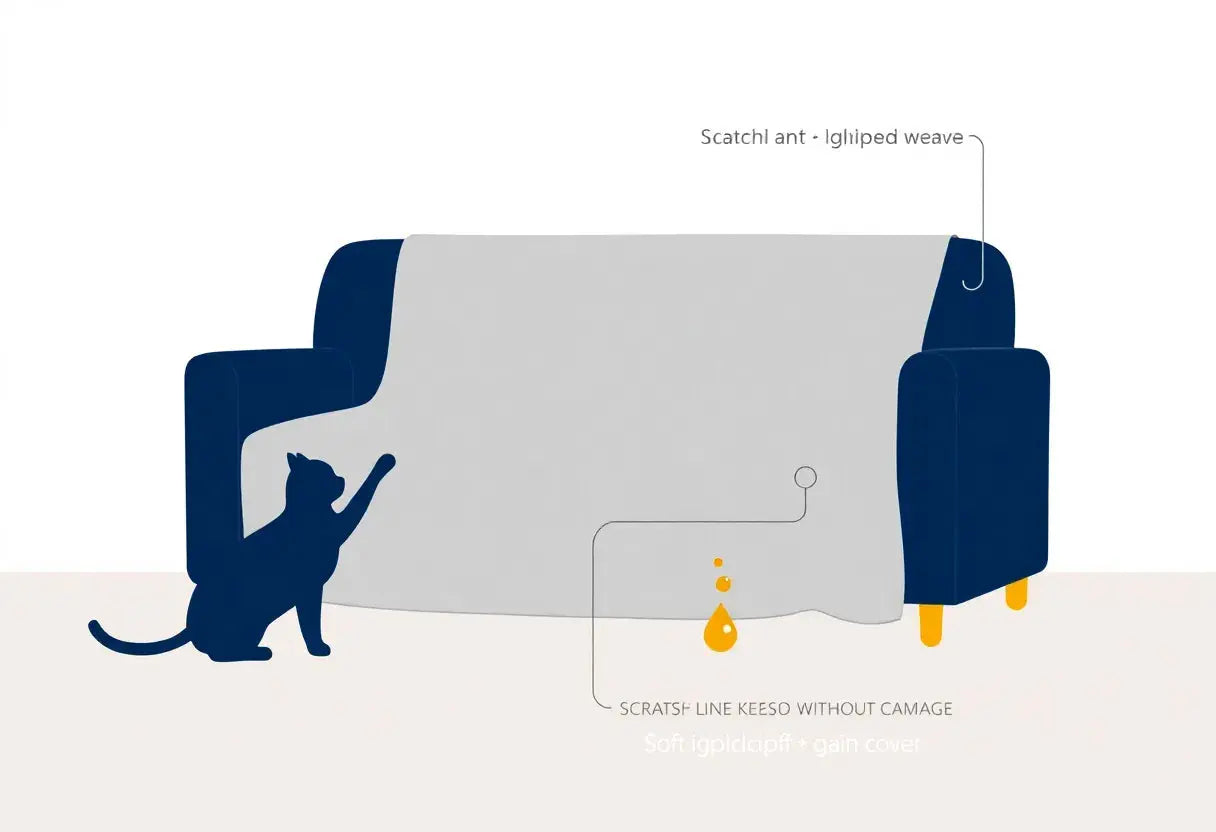
4) Scratch and snag reality: Fabric traits that help, plus targeted protection where it counts
Mini-scenario: cat jumping points on armrests. Cats tend to launch from the same spots: arm caps, front corners, and the top backrest. Even gentle pets can create repeated friction in those zones.
No fabric is truly claw-proof, but you can stack the odds in your favor with:
- Tighter knit or tighter weave: Less opportunity for claws to catch a loose loop.
- Stretch plus recovery: Fabric that flexes and returns to shape can be more forgiving when a claw grazes the surface.
- Reinforced seams and sturdy stitching: High-contact areas fail at seams before they fail in the middle.
Where to add extra protection:
- Armrests and front edges (high-launch and high-rub zones)
- Seat corners where pets pivot or dig in before lying down
- Cushion gaps where claws can hook when pets jump off
If claws are your biggest concern, it often makes sense to choose a cover designed specifically for snag resistance. You can explore options here: Anti-Scratch Couch Covers https://frenchcovers.com/collections/anti-scratch-couch-covers
Bringing it together: “Realistic performance” is a system, not a single feature
The most livable setup usually looks like this:
- A stain resistant sofa cover you can blot quickly and wash confidently
- PFAS-free sofa covers materials and treatments for peace of mind in shared family spaces
- A waterproof couch cover style when spills, accidents, or premium upholstery protection are non-negotiable
- Pet-smart choices like tighter surfaces and reinforced high-contact zones for a more truly pet proof couch cover experience
Next, we will make sure all that protection still looks beautiful. In the following section, we will cover how to choose colors, textures, and fit details so your sofa stays elevated and design-forward, not “covered up.”

Style Without Stress: How PFAS-Free Covers Can Still Look High-End
When you choose PFAS-free sofa covers, you are not signing up for a “utility look.” Today’s safer materials can still deliver that tailored, design-forward finish that makes a room feel intentional, while quietly doing the hard work of being a stain resistant sofa cover (and, for many homes, a practical waterproof couch cover and pet proof couch cover too).
Design publications like Architectural Digest often return to the same core styling principles: repeat color thoughtfully, balance texture, and prioritize proportion and fit. The good news is that sofa covers make these principles easier, because you can refresh the foundation of the room without reupholstery.
1) Choose colors that hide wear without looking “busy”
Real life shows up first on the sofa arms, seat fronts, and cushion tops. To keep things elegant and forgiving:
- Lean into mid-tones: think warm taupe, stone, camel, denim blue, olive, or soft charcoal. Mid-tones hide daily dust, minor scuffs, and small marks better than stark white or inky black.
- Pick heathered or textured weaves: a subtle crosshatch, bouclé-inspired texture, or micro-pattern helps camouflage tiny crumbs or pet hair between cleanings without shouting “pattern.”
- Use high-contrast only on accents: if you love crisp ivory, keep it for throws or pillows you can swap and wash easily, while your main cover stays practical.
Actionable “quick palette” swaps (easy seasonal upgrades):
- Spring and summer: stone or sand base + pale blue or sage accents
- Fall: warm taupe base + rust, cognac, or olive accents
- Winter: charcoal base + cream and deep navy accents
This approach pairs beautifully with PFAS-free performance because you get the reassurance of safer chemistry and the confidence that your cover will not look tired after a week of snacks, homework, and paws.
2) French-inspired styling: make it look upgraded, not “covered”
If your goal is “elevated but livable,” borrow a simple French-inspired formula: one beautiful base, then intentional layers.
- Layer a throw like a styling tool: drape it along one side or fold it across the seat back to soften the look and add dimension. Bonus: it becomes a quick barrier for high-contact zones (where kids sit, where pets curl up).
- Use pillows to create a tailored focal point: mix sizes (for example, two larger pillows plus one smaller accent) and keep the palette cohesive.
- Repeat one tone twice: if your cover is stone, repeat that tone in a pillow pattern and again in a nearby rug or curtain detail. That repetition is what makes “practical” read as “designed.”
For an easy refresh that still feels premium, swap your pillow covers seasonally instead of changing the whole room. You can explore coordinating options here: Decorative Pillow Covers.
3) Fit and finish: the difference between “slipcovered” and “tailored”
Even the most beautiful fabric can look casual if the fit is off. A PFAS-free cover can absolutely look high-end when you treat installation like a mini styling session.
A simple measuring diagram idea (do this before you buy):
- Sofa width: arm to arm across the front
- Seat depth: front edge to back cushion
- Back height: from seat to top of back
- Cushion count: single bench cushion vs multiple cushions
- Arm shape: square, rolled, or flared (helps you choose the right silhouette)
Tailored-look installation checklist (5 to 10 minutes):
- Separate cushions if possible: covers look more custom when each cushion has its own clean edge rather than a single loose drape.
- Align seams to the sofa’s lines: start centered on the back, then work outward evenly to each arm.
- Use tuck-and-smooth in sections: tuck excess fabric into seat cracks, then smooth from the center out. Repeat once after sitting on it the first time.
- Check skirt or hem placement: keep it level all the way around so it reads intentional, not slouched.
- Match silhouette to the room: sleek, minimal covers suit modern and premium spaces; softly textured covers add warmth in family rooms.
This is also where performance features matter: a cover can be a waterproof couch cover and still look refined if it has structure, good stretch recovery, and clean finishing.
4) Room-by-room use cases (so the style matches the life happening there)
Different spaces have different “risk zones.” Choose your look and protection level accordingly:
Family living room (the spill-and-snack zone)
- Go for mid-tone, textured fabric that looks polished even between washes.
- Style tip: keep a washable throw in the color family for movie nights and pet cuddles.
- Performance focus: a truly stain resistant sofa cover with easy wash care, especially if you are also using it as a pet proof couch cover.
Formal lounge or “grown-up” sitting room
- Choose a smoother weave and a tailored silhouette for a furniture showroom finish.
- Style tip: use fewer, higher-quality accents (two pillows max, one elegant throw).
- Performance focus: quiet protection that does not change the look or feel of premium upholstery underneath.
Office waiting area, studio, or coworking space
- Stick to neutrals (stone, charcoal, navy) that look consistent under heavy rotation.
- Style tip: repeat one brand-friendly accent color in pillows for a cohesive, professional look.
- Performance focus: durability and quick wipe or wash cycles, since wear is frequent and unpredictable.
This design-first approach connects back to the heart of the guide: you should not have to choose between a calm, beautiful home and the peace of mind that comes with PFAS-free sofa covers.
Next, we will make sure that high-end look lasts by covering a simple routine to keep PFAS-free protection working week after week, in under 10 minutes.
Care & Longevity: Keep PFAS-Free Protection Working (in Under 10 Minutes a Week)
PFAS-free sofa covers are designed to make life easier, not add another chore to your week. The good news is that most performance issues (lingering odors, dampness, “why is this spot suddenly soaking in?” moments) come down to simple care habits, not the cover “failing.” With a quick weekly reset plus smart washing, your stain resistant sofa cover and waterproof couch cover can keep doing their job beautifully, even in a pet and kid household.
Below is a family-friendly routine you can finish during one song, plus clear “do and don’t” guidance based on everyday fabric-care principles from the American Cleaning Institute (laundry basics) and the care symbols you see on manufacturer labels (ISO care symbols).
The weekly 10-minute reset (set a timer, truly)
-
Shake out crumbs and hair (1 minute)
- Take cushion covers or throws outside if you can. A quick shake removes grit that can grind into fibers over time, especially on premium upholstery you are trying to preserve.
-
Vacuum with an upholstery tool (3 minutes)
- Focus on seams, piping, and where kids sit or pets nap.
- For a pet proof couch cover, this step matters because hair and dander love to collect where fabric folds.
-
Spot clean fresh spills fast (3 minutes)
- Blot, do not rub. Start with a clean, dry cloth or paper towel.
- If needed, use a small amount of mild soap and cool water, then blot again.
- Pro tip for real life: keep a “sofa kit” nearby (two clean cloths, gentle soap, and a small bowl). It keeps your stain resistant sofa cover performing like it should.
-
Air-dry any damp zones (3 minutes)
- If the cover feels even slightly moist (common after pet naps, humid weather, or a small accident cleanup), pull it slightly away from the cushion and let airflow do its work.
- This is especially important for waterproof couch cover designs that use a barrier layer: they block liquid, but trapped moisture still needs a path to evaporate.
Washing best practices (so you do not wash performance away)
Always follow the care label first. When in doubt, these habits are the safest “default” for many PFAS-free sofa covers:
- Choose cold water or a gentle cycle. This helps protect stretch, shape, and any waterproof barrier layer.
- Use a mild detergent. Less is more; overdosing detergent can leave residue that attracts grime and dulls the fabric.
-
Skip harsh additives that can reduce performance.
- Bleach and strong stain removers can weaken fibers and seams.
- Fabric softeners can leave a coating that affects breathability and can make fabrics feel “grabby,” which is the opposite of what you want for easy pet-hair release.
-
Dry thoughtfully to prevent odor.
- If the label allows tumble drying, use low heat.
- If air drying is recommended, hang or lay flat with good airflow and ensure it is fully dry before putting it back on the sofa.
If your goal is a cover that looks tailored and high-end, remember: heat and harsh chemistry are the two biggest enemies of fit, finish, and long-term protection.
Quick “Do/Don’t” table for PFAS-free performance fabrics
| Do | Don’t |
|---|---|
| Blot spills immediately and work from the outside in | Rub aggressively (it can push stains deeper and roughen fibers) |
| Vacuum seams and pet “hot spots” weekly | Let hair and grit build up (it wears fabric faster) |
| Wash in cold or gentle cycles as directed | Use hot water “just to be safe” (it can stress waterproof layers and elasticity) |
| Use mild detergent and rinse well | Use bleach, heavy-duty boosters, or fabric softener unless the label specifically allows |
| Air-dry damp zones after cleaning or humid days | Put a cover back on while it is still damp (odor and mildew risk rises) |
When to replace (or rotate) your cover: the clear signs
Even the best PFAS-free sofa covers are a hardworking layer. Replace or retire a cover when you notice:
- Thinning or shiny “wear spots” in favorite seating areas or on arm tops.
- Seam stress (stitching that looks stretched, puckered, or is starting to separate).
- Persistent moisture penetration even after washing and proper drying, especially if the waterproof barrier no longer blocks liquid the way it used to.
- Fit that will not recover (slipping, bagging, or sagging that returns immediately after adjusting).
Catching these signs early helps protect the sofa underneath, especially for vintage pieces where prevention is far easier than repair.
For businesses and coworking spaces: a simple rotation system (less downtime, consistent look)
If you manage a waiting area, studio, or coworking lounge, consistency is part of the experience. A rotation plan keeps seating photo-ready without constant deep cleaning:
- Keep two sets per sofa when possible. One on the furniture, one clean and ready.
- Assign wash days by zone. Example: lobby sofa covers washed midweek, meeting room covers washed Friday.
- Spot-clean daily, wash on a schedule. This prevents “sudden” buildup that needs longer downtime.
This is also the easiest way to maintain a premium look while still getting real protection from spills, stains, and pets.
Next up: choosing your protection level with confidence
Now that you know how to keep PFAS-free waterproofing and stain resistance working week after week, the final step is making sure you are buying the right cover for your home or business in the first place. In the next section, we will pull everything together into a simple decision guide so you can choose the right PFAS-free sofa covers for your lifestyle, whether your biggest challenge is coffee spills, muddy paws, or preserving a truly special sofa.

So, a truly protective sofa cover doesn't require a compromise. You can have a stain resistant sofa cover that’s also PFAS-free, offering peace of mind for your family and pets without sacrificing style or performance. By choosing covers with smart engineering—like tight weaves and inner waterproof membranes—you get serious spill and scratch protection that’s both elegant and reassuringly safe.
Want a cleaner sofa with less worry? Explore FrenchCovers’ protective options today and choose a cover that fits your life—spills, pets, and all. Your home should be a sanctuary for living beautifully, not for managing messes.
FAQ: PFAS-Free Protection for Real Life (Kids, Pets, and Beautiful Furniture)
Choosing a sofa cover should feel simple and safe. Below are quick answers based on the article’s key takeaways: why PFAS-free waterproofing matters, how stain and pet protection works without “forever chemicals,” and how to care for covers so your space stays welcoming and refined. See the full guide here: PFAS-Free Waterproofing: The Safest Way to Get Stain- & Pet-Resistant Sofa Covers.
Q: Are PFAS-free sofa covers still stain resistant? A: Yes. The article explains that PFAS-free sofa covers can still perform as a stain resistant sofa cover by using modern, PFAS-free waterproofing that helps spills bead up so you can blot quickly. For best results, wipe spills immediately and wash as directed. Learn more: Why PFAS-free waterproofing still protects.
Q: What’s the difference between water-resistant and waterproof couch covers? A: Water-resistant helps slow absorption, while a waterproof couch cover is designed to block liquid from soaking through, which the article highlights as key for kids, pets, and shared spaces. If you need true barrier protection for accidents, choose waterproof and sealed construction. See: Waterproof vs water-resistant explained.
Q: How do I remove pet hair quickly from a sofa cover? A: The article recommends quick, low-effort routines for pet owners, starting with a lint roller or a slightly damp rubber glove to lift hair fast. For a pet proof couch cover, frequent light cleanups prevent hair from embedding and keep the fabric looking polished. See: Pet hair and daily maintenance tips.
Q: Will a protective cover damage leather or vintage upholstery? A: Not if you choose a breathable, well-fitted option and keep moisture from getting trapped, which the article flags as especially important for premium or vintage pieces. Use PFAS-free sofa covers that sit smoothly, and remove occasionally to let the upholstery air out. See: Caring for leather and vintage furniture.
Q: How often should I wash a couch cover in a home with kids or pets? A: The article emphasizes prevention plus routine care: wash every 1 to 2 weeks in busy homes, and sooner after spills or allergy flare-ups. A stain resistant sofa cover and waterproof couch cover still benefit from regular washing to keep oils, dander, and odors from building up. See: Washing and care schedule.