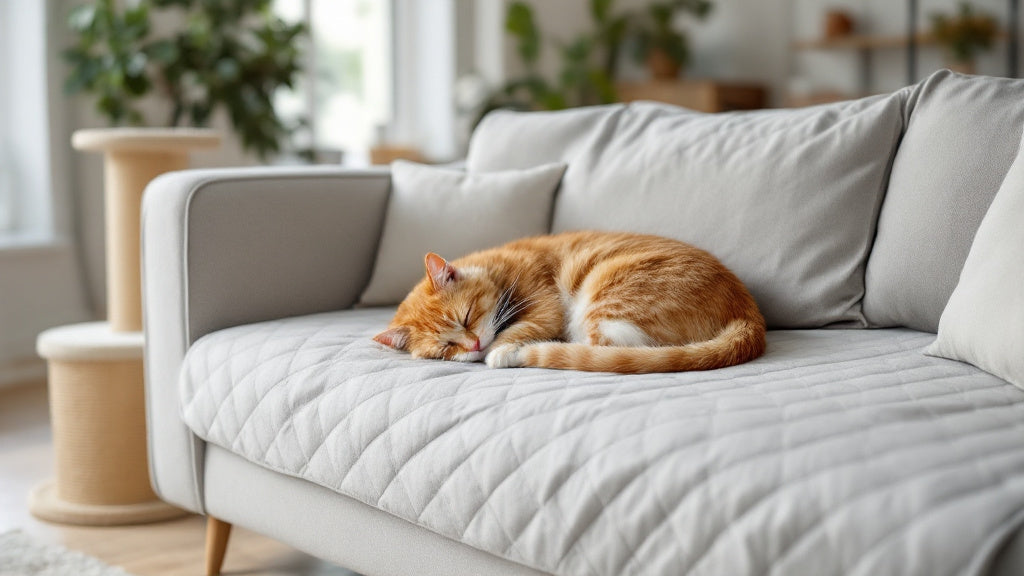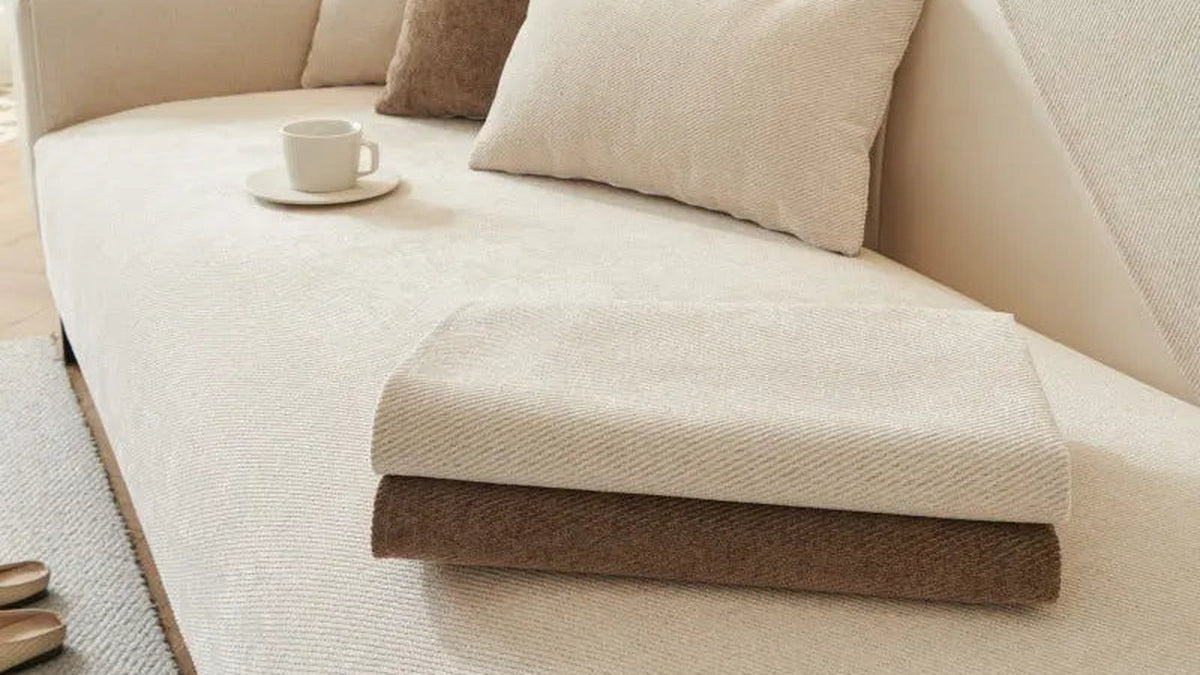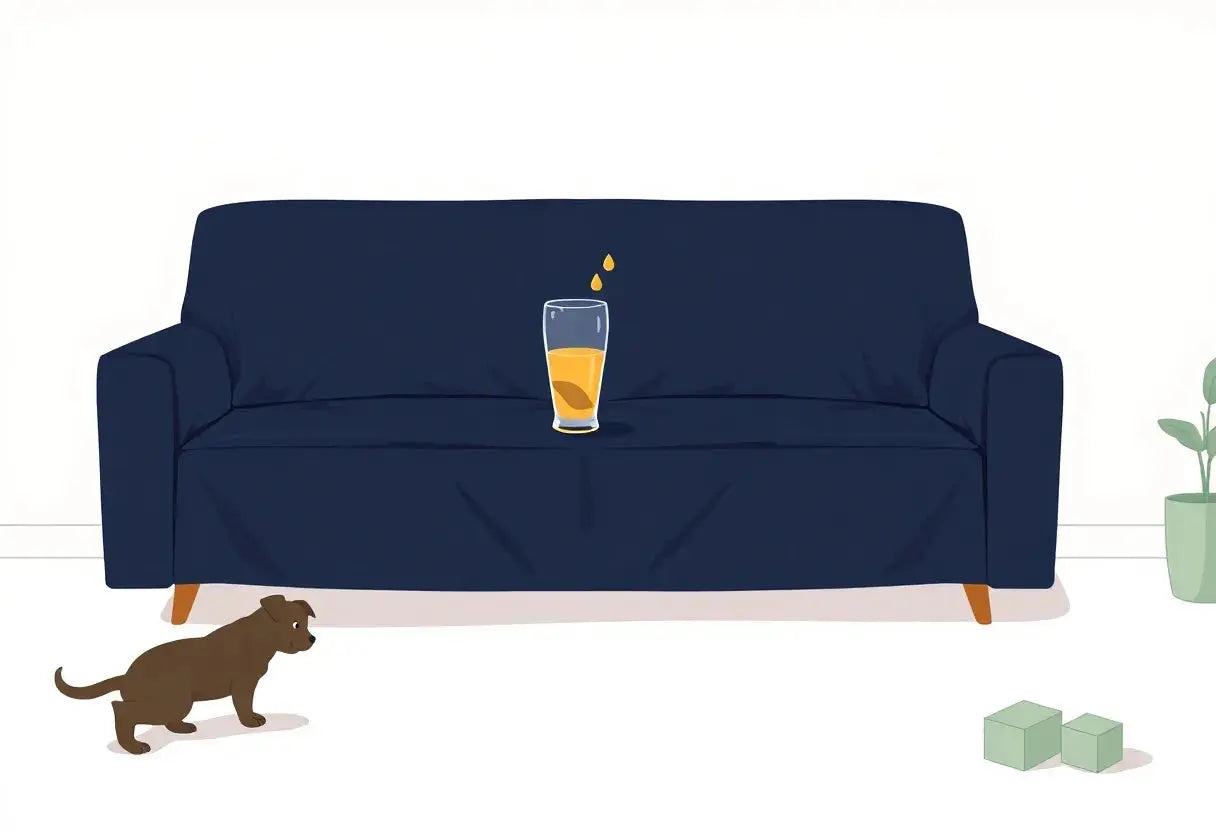
Spilled juice, muddy paws, and snack time crumbs can turn your sofa into a daily stress test. And if you have kids or pets, you may be shopping for protection fast, without bringing harsh chemicals into your home.
That is where PFAS-free sofa covers come in. The right option can look polished, feel cozy, and help you clean up in minutes. But not every “safe” cover is truly safe, and many miss the mark on fit, style, or durability.
In this guide, you will learn 7 simple things to check before you buy a non-toxic couch cover, from fabric and finishes to real-life performance. We will also highlight what to look for in a washable sofa cover and a pet-friendly couch cover that still feels French-chic.
First, let’s start with the one label detail most shoppers overlook.
What PFAS are (and why they show up in “stain-resistant” fabrics)
When you see a sofa cover advertised as “stain-resistant,” it often means one thing behind the scenes: the fabric has been treated to repel water and oil. One common group of treatments used for that job is PFAS.
PFAS in plain language
PFAS stands for per and polyfluoroalkyl substances, a very large family of human-made chemicals. The U.S. Environmental Protection Agency (EPA) explains PFAS as persistent chemicals that have been used in many consumer products for their resistance to heat, water, and stains. That “persistent” part is also why they are sometimes called “forever chemicals.”
Helpful references if you want to go deeper: U.S. EPA: PFAS explained, ATSDR/CDC: PFAS and public health information, and the OECD PFAS terminology work which clarifies just how broad the PFAS category is.
Why brands use PFAS on fabrics (and why it sells)
From a product marketing standpoint, PFAS can make it easier for brands to claim:
- “Liquid beads up”
- “Stain resistant”
- “Easy wipe clean”
- “Low maintenance”
For a busy home, that sounds perfect. Between grape juice, coffee, and muddy paws, anything that buys you a few extra seconds before a stain sets feels like a small miracle.
But here is the tradeoff: many families shopping for a non-toxic couch cover prefer to avoid unnecessary chemical finishes, especially on items that kids and pets touch all day long.
Quick myth-busting: common confusion shoppers run into
Myth 1: “Stain-resistant” automatically means PFAS.
Not always. Some fabrics resist stains because of a tight weave, textured yarns, or washable, removable layers. A washable sofa cover can also be “stain-manageable” simply because you can take it off quickly and launder it.
Myth 2: “Eco-friendly” or “green” means PFAS-free.
Those words are not specific enough. They are marketing terms, not a clear chemistry statement.
Myth 3: “PFAS-free” means stain-proof.
PFAS-free sofa covers can still perform beautifully in real homes, but it is better to think “stain resistant” as “gives you time to blot and wash,” not “nothing will ever mark this fabric.” This matters most in pet-friendly couch cover shopping, where life happens fast.
What “PFAS-free” can mean on a label (and why it matters)
Because PFAS is a big category, labeling can get tricky. “PFAS-free” generally signals that PFAS chemicals are not intentionally added to the product or its finish. Some brands may also specify “no fluorocarbon finish” or “no C6/C8.” The OECD notes the PFAS family is broad, which is exactly why vague claims can be confusing.
Why it matters at home: sofa covers are high-contact textiles. Kids nap on them, pets sprawl on them, and snack time happens there, too. Choosing PFAS-free sofa covers is a practical way to reduce exposure to a class of chemicals many consumers prefer to avoid, while still getting a stylish, protective layer for everyday life.
Also, PFAS restrictions are increasingly appearing at the state level, including policies that limit PFAS in certain textiles and consumer goods (often cited in coverage of California, New York, and Minnesota). The direction of travel is clear: more transparency, fewer PFAS-treated household items.
Set expectations: how PFAS-free covers can still protect your sofa
A PFAS-free sofa cover can still be a chic, capable shield. The performance usually comes from one or more of these:
- Fabric construction: tighter weaves and durable yarns that slow absorption
- Smart layering: removable cushion pieces that you can wash quickly
- Washability as the real superpower: if it is easy to launder, you can keep your sofa looking fresh without relying on heavy chemical repellents
If you want to start browsing styles and sizes while keeping the “PFAS-free” goal front and center, this collection is a helpful jumping-off point: Sofa and Couch Covers.
Next, we will turn this into something you can use in two minutes while shopping: a 7-point checklist to help you choose a PFAS-free, non-toxic couch cover that still works for stains, kids, and pets.

The 7-point checklist for a PFAS-free sofa cover that still works
You already know why PFAS-free sofa covers matter for a family home. Now let’s make sure the one you buy actually performs on Tuesday night spaghetti, Saturday movie snacks, and the dog who thinks your sofa is their personal throne.
Use this practical 7-point checklist while you shop, and you will quickly spot the difference between a truly non-toxic couch cover and a pretty cover that becomes a daily nuisance.
1) Look for clear “PFAS-free” language (not just “eco”)
Vague claims like “green,” “natural,” “planet-friendly,” or “stain resistant” do not tell you whether PFAS were used. For PFAS-free sofa covers, you want wording that is specific and easy to verify.
What to look for on product pages or packaging:
- “PFAS-free” or “No PFAS added”
- “Fluorocarbon-free” or “No fluorinated finishes” (helpful because many PFAS-based repellents are fluorinated)
What to be cautious with:
- “Eco finish” without details
- “Waterproof” or “oil-proof” with no explanation of how it works
Quick label reading example (what “good” can look like):
- Claim: “PFAS-free, fluorine-free water repellent finish”
- Care label: “Machine wash cold, gentle cycle. Tumble dry low. Do not bleach. Do not dry clean.”
Tip: If a brand cannot state PFAS-free clearly, ask customer service directly. A trustworthy company will answer plainly, not with marketing fog.
2) Ask how stain protection works (so you know what you are buying)
A PFAS-free cover can still resist everyday mess, just through different methods. The key is understanding the mechanism, because it affects feel, breathability, and long-term performance.
Common PFAS-free approaches:
- Tight weave fabric: Liquids sit on top longer, giving you time to blot.
- Removable and washable layers: Protection comes from easy laundering, not chemical repellents.
- Alternative finishes: Some brands use non-fluorinated treatments. Ask what it is and how it holds up after washing.
Actionable shopping question:
- “Is the stain resistance from the fabric construction (tight weave), a washable barrier, or a finish?”
If the answer is unclear, you risk ending up with a cover that looks chic but behaves like a napkin.
3) Check care instructions like a busy parent (machine washable, cold wash, keeps its shape)
A washable sofa cover is only truly practical if the care routine fits real life. If it requires special detergents, hot water only, or air drying for two days, it will not stay on your sofa for long.
Look for:
- Machine wash cold (gentler on fibers and helps reduce shrink risk)
- Simple cycles (gentle or normal)
- Clear drying guidance (tumble low or line dry)
- Notes on shrinkage or reshaping after wash
Red flags for many family homes:
- “Dry clean only”
- “Spot clean only” (not ideal for sticky kid mess or pet accidents)
- No care label shown at all
Pro tip: If frequent washing is your plan, choose texture and color that look good after many cycles, not just day one.
4) Confirm fit and coverage (gaps are where stains land)
Even the best non-toxic couch cover cannot protect what it does not cover. The most common spill zones are not the obvious ones: they are the gaps between cushions, exposed arms, and that little ledge where cups get placed.
Check coverage for:
- Seat cushions (including the front edge where feet and paws rest)
- Back cushions (where hair and crumbs collect)
- Armrests (the snack and drool hotspot)
- Skirt or base area (especially if kids wipe hands while walking past)
Simple fit examples:
- 3-seat sofa: Often works with a single fitted cover plus separate cushion pieces if available.
- Sectional or L-shaped: Usually needs sectional-specific shapes or multiple coordinated pieces for a neat look.
If you have a sectional, do not settle for “close enough.” A good fit is the difference between elegant and constantly-tugging. Browse options made for tricky layouts here: Sectional & L-Shaped Sofa Covers.
5) Prioritize kid and pet durability (snag resistance, abrasion resistance, fabric recovery)
A pet-friendly couch cover should handle claws, zoomies, and daily climbing without turning into a fuzzed-up mess.
What to look for in product descriptions:
- Abrasion resistance testing (you may see “Martindale” listed). Higher numbers generally indicate better resistance to wear in upholstery contexts.
- Snag resistance or “pet friendly” weave structure (tighter, more stable knits and weaves snag less)
- Fabric recovery or stretch (helps the cover bounce back after kids perch on the same spot)
Practical test at home once it arrives:
- Pinch the fabric and release. Does it spring back, or stay baggy?
- Lightly rub with your hand. Does it pill immediately?
6) Comfort matters (breathability and hand-feel so you keep the cover on)
The most protective cover in the world fails if it feels plasticky, noisy, or hot. For a family living room, comfort is compliance. If it is cozy, it stays on.
Look for:
- Breathable fabrics that feel soft against skin (especially important for naps and movie nights)
- A hand-feel that matches your style, from relaxed linen-like texture to smooth, tailored finishes
If you are aiming for that French-chic elegance, think “inviting and composed,” not stiff and shiny.
7) Verify colorfastness and fade resistance (sunny rooms and frequent washing)
Between laundry cycles and sunlight, color can shift faster than you expect. Covers that bleed or fade quickly end up looking tired even if the fabric is still intact.
Helpful testing terms you may see:
- “Colorfastness to washing” (helps predict how it holds up after repeated machine washes)
- “Colorfastness to light” (helps in bright rooms)
Actionable steps:
- Choose mid-tones, heathers, and textured weaves if your home gets lots of sun or you wash often.
- If you love crisp light colors, plan to wash gently and avoid harsh detergents.
With this checklist, you can shop smarter and avoid the two big disappointments: a “safe” cover that is not truly PFAS-free, or a PFAS-free cover that does not stand up to real life.
Next, let’s talk about what stain resistance without PFAS actually looks like day to day, and the simple spill routine that keeps your sofa looking polished even with kids and pets.
Stain resistance without PFAS: what to expect in real life (kids, pets, and everyday mess)
If you are choosing PFAS-free sofa covers, it helps to reset expectations in the most reassuring way possible: “stain resistant” is not the same as “stain proof.” A truly non-toxic couch cover can still perform beautifully, but the real win is that it buys you time. Think of it as a chic, practical shield that gives you a wider cleanup window so life can keep flowing.
Below are the real-life messes most families deal with and what actually works in the moment.
Real-life scenarios: what stain resistance looks like at home
1) Morning coffee (or tea) on a light sofa
- What to expect: The liquid may bead a bit or sit on the surface briefly, especially on tighter weaves, giving you a moment to react.
- Your goal: Lift it up fast before it travels into seams or cushion edges.
2) Kids’ juice, soda, or sticky snacks
- What to expect: Sugary spills can feel “fine” at first, then dry tacky and attract dirt.
- Your goal: Remove residue, not just the color, so the fabric does not start looking dull over time.
3) Ketchup or tomato sauce during movie night
- What to expect: Thicker stains can cling to the surface fibers. If you smear it, it spreads.
- Your goal: Scoop, blot, then treat gently.
4) Muddy paw prints after a quick backyard break
- What to expect: Dirt sits on top at first, then turns into a faint stain if it gets damp and ground in.
- Your goal: Let mud dry, then lift it off without pushing it deeper.
The biggest stress reducer here is choosing a washable sofa cover. Even when you do everything right, real life still happens, and being able to remove and wash the cover means the sofa itself is not the one taking the hit.
The spill playbook (fast, calm, effective)
Keep this simple routine in your back pocket. It follows common upholstery care guidance: act quickly, blot, and avoid aggressive scrubbing that can damage fibers or spread the stain.
-
Blot first, always.
Use a clean cloth or paper towel and press gently. Switch to a fresh spot as it absorbs. -
Do not rub.
Rubbing can push the spill deeper and roughen the surface, especially on textured weaves. -
Use mild soap and cool water for most everyday mess.
A small drop of gentle dish soap in cool water is often enough for juice, coffee, and general grime. Dab, then blot with plain water to remove soap. -
Handle thick spills in two steps: remove, then clean.
For ketchup or sauce: lift excess with a spoon edge first. Then blot with a lightly soapy cloth. -
Follow the fabric care instructions.
If your cover has specific guidance (cold wash, gentle cycle, line dry, etc.), treat that as your North Star. When in doubt, test any cleaner on an unseen area first.
Pet-proofing tips that actually save your sanity
A pet-friendly couch cover is less about being indestructible and more about being forgiving and easy to reset.
-
Choose textures that hide fur and minor marks.
Heathered tones, small patterns, and subtle texture can make fur and everyday lint less obvious between cleanings. -
Keep a lint roller where you sit.
One by the sofa, one by the door. It sounds too simple, but it is the fastest “company is coming” fix. -
Use throws for high-traffic pet zones.
If your dog claims one corner or your cat loves the armrest, add a small throw as a sacrificial layer you can shake out daily. -
Trim nails and add a designated cozy spot.
Regular nail trims reduce snags, and a nearby pet bed can gently redirect scratching and nesting habits.
For more pet-focused options and add-on protection that fits real homes, browse Pet Furniture Protection: https://frenchcovers.com/collections/pet-furniture-protection
The low-effort routine that keeps a cover looking “just styled”
This is the rhythm that works for busy households and still feels polished.
- Weekly: Shake out, then vacuum using a soft brush attachment (especially along seams and where crumbs collect).
- As needed: Spot-clean spills using the blot and mild soap method above.
- Monthly (or more often with heavy use): Machine wash your cover if it is a washable sofa cover. Washing is often what fully resets odor, oils, and the “dull” look that spot cleaning cannot fix.
When your cover is PFAS-free, the maintenance mindset shifts in a good way: instead of relying on heavy chemical repellency, you rely on smart fabric choice, fast response, and easy washing. It is practical, safer-feeling, and still beautifully livable.
Next, we will make sure that “livable” also looks lovely, with style checks that keep your living room French-chic (not playroom-coded), even with kids and pets in the mix.

Style checks for a “French-chic” look without making the living room feel like a playroom
You can absolutely choose PFAS-free sofa covers for peace of mind and still keep your living room feeling pulled-together, not padded. The trick is to style your non-toxic couch cover the way a designer would style an everyday sofa: with forgiving color, quiet pattern, and intentional layering.
Below is a simple mini lookbook you can use at home, whether you are shopping for a washable sofa cover that survives weekly laundry or a pet-friendly couch cover that still looks elegant when guests drop by.
1) Choose colors that forgive mess (but still feel elevated)
With kids, pets, and real life, the most “chic” choice is often the one that does not show every crumb, paw print, or fur tumbleweed.
Family-proof color rules that work:
- Mid-tones beat extremes. Very light shades show stains; very dark shades show lint and pet hair. Think sand, oat, camel, mushroom, slate, denim.
- Heathered or mélange fabric is your best friend. Mixed fibers or tonal speckling visually breaks up little marks between washes.
- Small patterns hide chaos better than big prints. Tiny checks, subtle herringbone, or micro-stripes read classic, not childish.
- Textured weaves elevate and disguise. Basketweave, matte pique, or softly ribbed textures add depth and help conceal minor wear.
Styling principle in action (texture + repetition): repeat one texture twice (sofa cover + one pillow), then keep everything else calm. That repetition feels intentional, not busy.
2) Mini lookbook: 3 French-chic palettes (for real homes)
These palettes are designed to pair beautifully with a non-toxic couch cover while staying practical for frequent washing and daily use.
Palette A: Warm neutrals (the “butter croissant” living room)
- Sofa cover: oatmeal, flax, or warm sand (mid-tone)
- Accent pillows: cream + cognac or terracotta
- Throw: soft ivory or caramel knit
- Why it works: warm neutrals feel cozy and classic, and they disguise snack dust and muddy paw prints better than stark white. Add contrast with one deeper accent (cognac) for polish.
Palette B: Soft greige (the calm, clean Paris-apartment vibe)
- Sofa cover: greige, mushroom, or taupe
- Accent pillows: off-white + charcoal line pattern
- Throw: pale gray or brushed stone
- Why it works: greige balances warm and cool tones, so it plays nicely with most flooring and wall colors. It also hides everyday smudges and looks crisp even on a washable sofa cover that gets rotated often.
Palette C: Muted blue + charcoal (the “pet hair, but make it chic” combo)
- Sofa cover: muted denim, slate blue, or deep teal-leaning blue
- Accent pillows: charcoal + soft ivory
- Throw: charcoal, ink, or a subtle stripe
- Why it works: blues and charcoals are especially forgiving in pet homes because they camouflage fur better than black and hide scuffs better than beige, a smart direction for a pet-friendly couch cover.
3) Use seasonal swaps for a refreshed room (without redecorating)
One of the simplest ways to keep your living room feeling “done” is to treat your cover like a wardrobe staple. Seasonal shifts also help you manage wear and tear: rotating covers can extend their life.
Easy seasonal plan:
- Spring/Summer: lighter mid-tones and breathable textures (oat, greige, soft stone). These brighten the room without the stress of pure white.
- Fall/Winter: deeper, grounding tones (camel, slate, charcoal, muted blue). These feel cozy and are naturally more forgiving during muddy-shoes season.
If your PFAS-free sofa covers are truly easy-care, swapping and washing becomes a rhythm, not a project.
4) Layering for polish: the 3-minute “company is coming” upgrade
A fitted, non-toxic couch cover looks best when you add one finishing layer. It is the styling equivalent of putting on simple jewelry.
Try this quick formula:
- Start with the fitted cover in a quiet solid or subtle texture.
- Add 2 to 4 pillows in a coordinated palette (repeat one color twice for that designer feel).
- Finish with one throw draped casually on the arm or folded at one end.
For an easy, coordinated look, pair your sofa cover with matching or complementary pillow covers here: Decorative Pillow Covers. It is a small detail that makes the whole room feel more refined, even when life is loud.
5) Design balance: pick one “hero,” keep the rest quiet
To avoid the “playroom” look, choose only one statement element and let everything else support it.
Choose your hero:
- Hero color: muted blue cover, then neutral pillows and a simple throw.
- Hero texture: nubby greige cover, then smooth linen-look pillows in cream and charcoal.
- Hero pattern (keep it subtle): micro-check pillows, then a solid cover and solid throw.
This uses classic interior styling principles (contrast, repetition, texture) to create a calm room that still feels lived-in, which pairs beautifully with the practical benefits you want in a washable sofa cover.
Next, we will bring it back to the practical side with quick pre-buy questions to ask before you commit, so your chic, PFAS-free choice also fits correctly, lasts through washes, and truly works for your home.
Quick pre-buy questions to ask (so you don’t waste money on the wrong cover)
You already know you want PFAS-free sofa covers that can handle real life: sticky fingers, surprise spills, and the occasional zoomies across the cushions. This section is your quick buyer checklist, so you can confirm you are getting a truly non-toxic couch cover that fits well, washes well, and still looks pulled-together.
1) “What materials are used, and are any finishes applied for repellency?”
Why it matters: Many “stain-resistant” claims come from added treatments. If you are intentionally choosing PFAS-free sofa covers, you want the brand to explain how the fabric handles messes.
Ask for clarity on:
- Fiber content: cotton, polyester, linen blends, etc.
- Construction: tight weaves and thicker textiles can buy you time on spills without relying on harsh chemistry.
- Any applied finishes or coatings: if they mention “repellent,” “stain guard,” “DWR,” or “easy-clean finish,” ask what it is and whether it is PFAS-free.
Quick rule of thumb: If a product sounds magically spill-proof but cannot explain the mechanism, pause. PFAS-free protection tends to be more honest: it helps, but it still expects you to blot and wash.
2) “Is it tested or documented as PFAS-free, and is the claim current?”
Why it matters: “PFAS-free” is sometimes used loosely. You want a current, specific claim, not vague green language.
What to look for (or request):
- A clear PFAS-free statement on the product page or packaging.
- Any testing or compliance documentation they can share.
- An updated date or note that the claim applies to the current production run (materials and suppliers can change over time).
If you are buying for a home with little ones and pets, this step is worth the extra minute. It is the difference between “sounds safe” and “is actually aligned with what we want in the living room.”
3) “What is the return or exchange process if the fit is off?”
Why it matters: Fit is the make-or-break for a cover looking chic versus looking temporary. Even the best washable sofa cover will frustrate you if it slides, bags, or leaves the arms exposed.
Confirm these details before checkout:
- Is the item returnable or exchangeable after trying on (clean, of course)?
- Is return shipping covered, and what is the timeframe?
- Are there fit helpers like sizing guides, customer photos, or support?
If you are unsure whether you need full coverage or just targeted protection, you might also consider modular options like armrest and cushion pieces. They can be easier to fit and easier to replace later:
Internal link: Armrest and Cushion Covers | https://frenchcovers.com/collections/armrest-cushion-covers
4) “How many washes can I expect before visible wear?”
Why it matters: For families, “washable” is not a bonus feature, it is the whole point. A cover that looks tired after a few laundry cycles is not saving money.
Ask directly:
- Do they give an estimated wash-life (even a range)?
- Any guidance on preventing early wear (cold wash, gentle cycle, line dry vs tumble)?
- Do they mention colorfastness or shrink resistance?
Practical tip: If you plan to wash often (pets on the sofa, kids snacking during movie night), consider buying a second set or at least extra cushion pieces. Rotating covers reduces wear and keeps your living room looking fresh with less stress.
5) “Do I need full-sofa coverage, or targeted protection (seat, armrest, cushions)?”
Why it matters: Not every household needs the same level of armor. The most elegant solution is often the one that protects the true “impact zones” without adding bulk everywhere.
Choose full-sofa coverage if:
- Your pet sleeps across the whole couch.
- Your kids treat the sofa like a snack bar and a trampoline.
- You are protecting a light-colored sofa from overall grime and oils.
Choose targeted protection if:
- The main issue is armrest wear, drool spots, or claw traffic.
- You mostly need help with seat cushions where spills happen.
- You want a lighter look while still being realistic about mess.
Targeted options can be especially smart for a pet-friendly couch cover strategy: protect the places your dog actually uses, and keep the rest of the silhouette clean and French-chic.
Phone-ready measurement checklist (save this for faster shopping)
Before you buy, take 2 minutes to measure and snap photos. Keeping this on your phone prevents the classic “almost fits” mistake.
Measure:
- Seat width: inside arm to inside arm (or full seat span on armless styles)
- Cushion depth: front edge to back edge of the seat cushion
- Arm height: floor to top of arm (and arm width if you want arm coverage)
- Optional but helpful: back height and sofa depth (front to back)
Photo checklist:
- Full front view of the sofa
- Side profile (shows arm shape and height)
- Close-up of cushions (attached vs removable)
This measurement habit connects directly to what we covered earlier: a non-toxic couch cover only works if it stays put and covers the areas where life happens.
Next up: once you have these answers and measurements, the final step is tying it all together so you can buy confidently and keep your sofa looking polished even on the messiest days.

So, there you have it. Choosing a truly PFAS-free sofa cover isn't about sacrificing style or performance—it's about making a smarter choice for your home. By focusing on clear labels, practical washability, and durable, family-friendly fabrics, you can create a chic, safe shield that stands up to real life. You deserve protection that looks elegant, feels cozy, and gives you peace of mind, all without harsh chemicals.
Want a cleaner-looking couch by next week? Measure your sofa today, then explore FrenchCovers slipcovers designed for real life—easy-care options that help you protect your space fast. Because a beautiful, lived-in home is the most elegant look of all.
PFAS-Free Sofa Cover FAQs for Chic, Family Friendly Protection
Choosing a cover should feel simple and stylish, not stressful. Below are quick answers based on the article’s 7-point checklist, so you can pick PFAS-free sofa covers and a non-toxic couch cover that still look polished, wash easily, and hold up to real life with kids and pets. For the full checklist, see PFAS-Free Sofa Covers: 7 Things to Check.
Q: What does “PFAS-free” mean for sofa covers? A: In the article’s safety checklist, PFAS-free sofa covers mean the fabric finish avoids “forever chemicals” often used for stain and water repellency. For a non-toxic couch cover, prioritize PFAS-free claims plus clear material and care details. Review the safety checkpoints in What “PFAS-free” really means.
Q: Are PFAS-free sofa covers still stain-resistant? A: Yes, the article explains you can still get everyday spill protection by choosing tight weaves, performance fabrics, and fast cleanup habits instead of PFAS coatings. Look for a washable sofa cover so you can treat stains quickly without harsh chemicals. See Stain resistance without PFAS.
Q: What fabric is best for pets: hair, claws, and accidents? A: The article recommends pet-friendly couch cover fabrics with tightly woven, claw-friendly textures that do not trap fur easily, plus machine-washable care for accidents. For a chic look, stick to durable weaves in mid tone colors that hide lint between washes. Compare options in Best fabrics for pets and kids.
Q: How do I measure my couch for the right slipcover fit? A: The article’s fit tip is to measure width, seat depth, and back height, then match your sofa shape (sofa, sectional, loveseat) to the cover style for a tailored look. A well-fitted non-toxic couch cover is safer for busy homes because it stays put and reduces bunching. Follow the steps in How to measure for the perfect fit.
Q: How often should I wash a couch cover in a home with kids and pets? A: The article suggests washing more often in high-traffic homes, typically every 2 to 4 weeks, and sooner after spills, muddy paws, or allergy flare-ups. Choosing a washable sofa cover makes this realistic and helps PFAS-free sofa covers stay fresh without heavy chemical sprays. See Care and washing frequency guide.