If you have ever walked outside to find your sofa damp, dusty, or sun-faded, you know the feeling. One windy night can turn a quick fix into a mess, especially with kids, pets, or a busy workspace to run.
Many people grab a tarp because it is cheap and fast. But the real question is cost over time. In the furniture cover vs tarp debate, the lowest price today can mean more damage and more replacing later.
In this guide, we will compare cost per year, UV exposure, and wind performance so you can choose the right outdoor sofa cover for long-term protection. You will also learn what to look for in a UV resistant furniture cover and a windproof patio sofa cover that still fits your style.
First, let’s break down what actually wears a cover out year after year.
What You’re Really Protecting Against: UV, Wind, Water, and Abrasion
Before you compare price tags in the furniture cover vs tarp debate, it helps to name the real “enemies” outside. Most covers do not fail all at once. They slowly lose the ability to protect, even if they still look mostly fine from a distance. Here is what is happening to your sofa and your outdoor sofa cover year after year.
1) UV is a slow, cumulative kind of damage (and it shows up before a cover “looks” ruined)
Sunlight does not just fade color. UV exposure breaks down fibers over time, which can lead to:
- Fading and dullness in upholstery, especially on the top back cushion line and arm tops
- Brittle fabric and stitching that starts to crack or split at stress points
- Seams that pop after a windy day because the thread has been weakened for months
This is why “it still looks fine” can be misleading. Many purpose-built outdoor fabrics and covers are made with UV-treated or solution-dyed materials designed for better UV stability (manufacturers often note this in fabric specs). Outdoor textile care guidance, like Sunbrella’s care and performance resources, also reinforces that sun exposure is a main driver of long-term wear and color change, and that protection works best when it is consistent, not occasional.
External reference: Sunbrella fabric care and performance guidance
Actionable takeaway: If your patio gets strong afternoon sun, prioritize a UV resistant furniture cover with published fabric notes (UV treatment, outdoor-rated textiles, and reinforced stitching). UV protection is not just about the fabric panel. It is also about the seams, because seams often fail first.
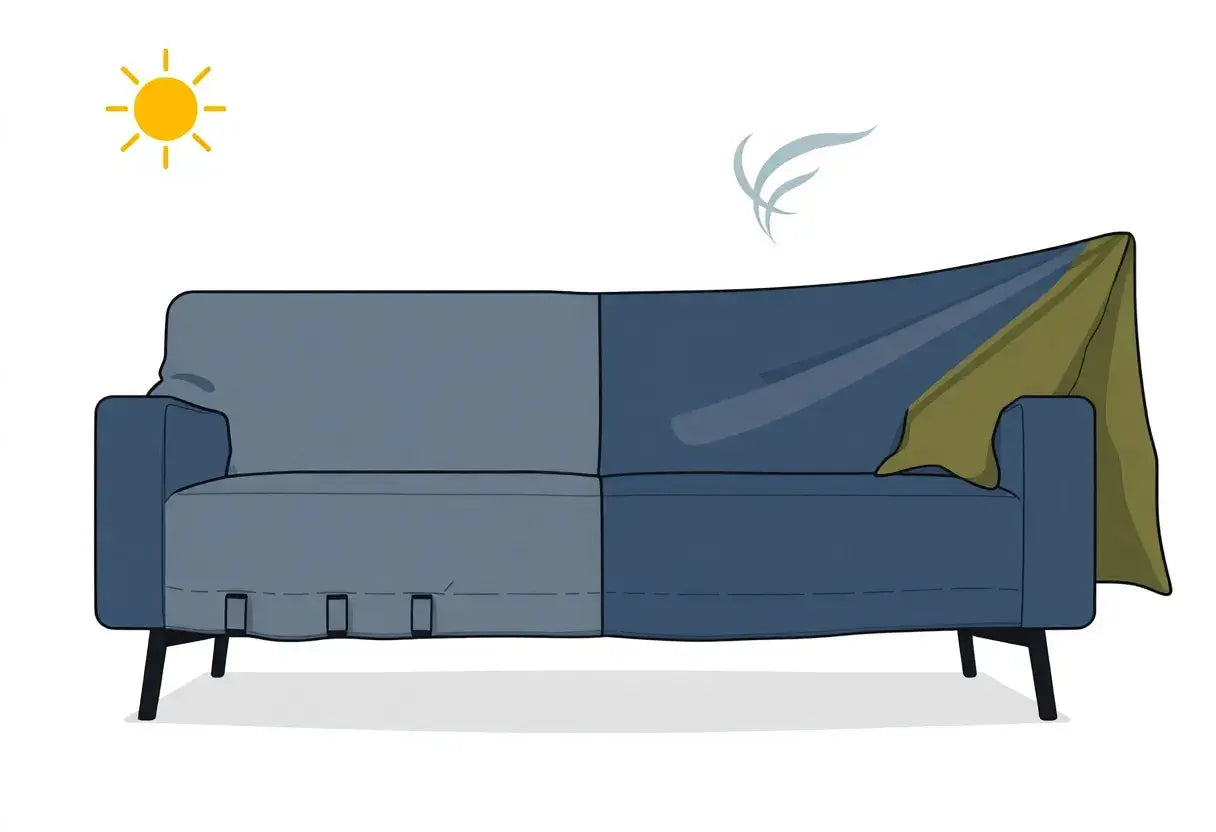
2) Wind is not just “blowing it off” It is abrasion, edge lift, and constant rubbing
Wind acts like a hand that never stops tugging. On patios, balconies, and between buildings, airflow speeds up and changes direction quickly. NOAA’s educational resources explain basic wind behavior and why gusts and turbulence happen around structures, which is exactly what makes covers flap and lift at the edges.
External reference: NOAA educational resources on wind
What that means in real life:
- Flapping creates abrasion. Every snap and flutter rubs the cover against corners and arms, wearing through coatings and fabric. That same rubbing can scuff upholstery or leave “polished” wear spots on high points.
- Edge lift leads to exposure. When the hem lifts, UV and rain hit the exact places you most want to protect: top cushions, arm caps, and the seat seam line.
- Loose material turns into a sail. Extra slack lets wind get underneath, which increases ballooning and strain on seams.
This is where a windproof patio sofa cover earns its keep: secure hems, buckle straps, and tie-down points reduce flapping, which reduces abrasion, which protects both the cover and the sofa beneath it.
Simple diagram: wind lift at the edges
Side view (wind coming from left)

Wind -> -> ->      (1) Lift starts at loose edge
                 ↑
   _________    / \     Cover balloons if air gets under
  /         \__/   \__
 /   SOFA        (2) Flapping/rubbing at arms/corners
/_____________________
   (3) Edge lift exposes cushion tops and seam lines
Actionable takeaway: If your current setup needs bungees, bricks, or constant re-tucking, that is a sign the “wind cost” is already adding up in wear and time. Look for a fitted cover system that stays snug without hard, sharp tie points.
3) Water is not the same as moisture and tarps can trap humidity
Rain protection matters, but so does what happens after the rain. A tarp can be very effective at blocking water from above, yet still create problems underneath:
- Condensation forms when warm, humid air gets trapped under a sealed layer and hits cooler surfaces at night.
- Lingering dampness can lead to musty odors and mildew risk, especially in shaded areas or humid climates.
- “Dry on top, damp underneath” is common when airflow is poor.
This is why ventilation matters. The EPA emphasizes moisture control and airflow as key steps to prevent mold problems in enclosed or damp conditions, and the same principle applies under covers.
External reference: EPA guidance on mold basics and moisture control
Actionable takeaway: If you store cushions on the sofa under a cover, choose a cover design that supports airflow (vents or breathable panels) instead of fully sealing humidity in. Water resistance plus ventilation usually beats “perfectly sealed” for everyday outdoor living.
4) The best protection is a system, not one feature
Families, pet owners, and anyone trying to keep a space looking calm and pulled-together need protection that works on busy days, not just ideal days. The most reliable long-term setup combines:
- UV resistance (fabric built for sun exposure)
- Secure fit (elastic hem, drawcord, buckle straps, or tie-down points)
- Ventilation (to reduce condensation and odor buildup)
- Durable stitching and reinforcements (because seams and corners take the stress)
If you want to explore purpose-built options designed around that system approach, start here: Outdoor furniture protection options
How this connects to the tarp vs cover decision
Now that you know what actually damages outdoor seating, the next step is to compare how a tarp and a fitted cover perform side by side in the real world. Up next, we will lay it out in a quick verdict table, including UV performance, wind behavior, ventilation, and the everyday hassle factor that impacts cost per year.

Tarp vs Fitted Cover: Side-by-Side Performance (Quick Verdict Table)
After looking at what actually breaks covers down over time (UV, wind lift, moisture, and abrasion), here is the practical takeaway: in the furniture cover vs tarp decision, tarps usually look like the bargain at checkout, but fitted covers tend to perform better where real life is toughest, gusty wind, strong sun, and daily on and off use.
Quick verdict grid (performance you can feel week to week)
| Criteria | Basic tarp (polyethylene or vinyl) | Fitted outdoor sofa cover (purpose-built) | What it means for your sofa |
|---|---|---|---|
| Upfront cost | Lowest | Moderate to higher | Tarps win today, but can cost more later if you replace often or need extra tie-down gear |
| Expected lifespan (real-world use) | Often shorter in sun and wind, especially budget tarps | Often longer due to stronger seams, better shape, and fabric intended for outdoor exposure | Fewer mid-season tears and fewer “emergency fixes” |
| UV protection | Varies widely; many prioritize waterproofing over UV stability | More likely to state UV-related fabric features and outdoor performance intent | A UV resistant furniture cover helps slow fading and fiber breakdown |
| Wind resistance | Prone to edge lift and ballooning; noisy flapping | Designed to hug the frame; many include elastic hems, buckles, and tie-downs | Less rubbing on arms and corners, fewer blow-offs |
| Ventilation and condensation | Can trap humidity if tightly wrapped; pooling and sweat under the cover is common | Often includes vents to reduce moisture buildup | Less musty odor risk and less chance of damp cushions |
| Ease of use | Fast to throw on, slower to secure properly (ropes, bungees, knots) | Usually faster day-to-day because the shape matches the sofa | Busy families actually keep it on consistently |
| Looks (home and business) | Utility look; wrinkles, exposed rope, shifting corners | Clean silhouette that reads “intentional” | Your patio or storefront looks cared for, not temporary |
If you are trying to protect a nicer outdoor setup, or you just want the space to feel calm and pulled together, a fitted outdoor sofa cover is usually the more “set it and forget it” option. A tarp is still useful in a pinch, but it tends to need babysitting when wind and sun show up.
Mini listicle: where tarps struggle (and fitted covers typically win)
-
Wind does more than blow things off
- A tarp catches air like a sail. The edges lift, the center balloons, and the fabric flaps. That flapping can cause abrasion on sofa arms and corners, and it can also wear through the tarp itself.
- A windproof patio sofa cover is not just heavier. It is usually shaped to the sofa and secured with elastic hems, buckle straps, or tie-down points to reduce movement and rubbing.
-
UV performance is not guaranteed with “waterproof”
- Many low-cost tarps are marketed around water blocking, not long-term UV stability. In strong sun, they can get brittle, crack, or fail at grommets and folds.
- Purpose-built covers are more likely to be designed as a UV resistant furniture cover, meaning the fabric choice and construction are intended to handle sun exposure longer (always check product specs and warranty language).
-
Condensation and trapped humidity can sneak up on you
- A tightly sealed tarp can hold moisture in, especially after temperature swings (warm days, cool nights). That is when you see dampness, musty smells, or mildew risk.
- Fitted covers with vent panels are designed to let the space breathe while still shedding rain, which helps reduce moisture buildup. For deeper guidance on moisture control basics, the EPA mold resources are a helpful reference: https://www.epa.gov/mold
-
Noise and daily friction add “hidden hassle”
- If a tarp snaps all night in the wind, it is not just annoying. That motion is wear.
- Fitted covers are quieter because there is less slack fabric to whip around, and less shifting means less scuffing on contact points.
-
Style matters, especially for shared spaces
- For family patios, coworking terraces, or client-facing storefronts, appearance is part of the experience. A fitted cover looks cleaner and more intentional, which signals that the furniture is cared for, not temporarily patched.
Real-world scenarios: what works best in typical households
-
Kids and pets (high traffic, frequent spills, climbing, zoomies)
- Likely pain point: cover shifting, scratching, and abrasion at corners.
- Better bet: a fitted cover with secure hems and straps so it stays in place when life happens. If scratch resistance is a priority for indoor or covered outdoor zones, see Anti-scratch protection for high-traffic homes: https://frenchcovers.com/collections/anti-scratch-couch-covers
-
Seaside or open-yard wind (gusts, sudden storms, salt air)
- Likely pain point: edge lift, ballooning, and blow-offs.
- Better bet: a windproof patio sofa cover with tie-downs and venting to reduce sail effect. For wind behavior basics, NOAA education resources are a solid background read: https://www.noaa.gov/education
-
Covered porch or partially enclosed patio (less rain, still gets sun and humidity)
- Likely pain point: trapped moisture and dulling from daily UV exposure at an angle.
- Better bet: a fitted outdoor sofa cover with vents plus clear UV intent in the fabric description. For general outdoor textile care and longevity tips, Sunbrella’s care guidance is a useful benchmark: https://www.sunbrella.com/care
This performance snapshot sets up the real decision maker: what it costs per year once you account for replacements, add-on straps, and the time spent re-securing after every windy night. Next, we will walk through a simple cost-per-year method with copy-and-paste numbers so you can pick the option that is truly cheaper long-term.
The Cost-Per-Year Method (With Simple Numbers You Can Copy)
Upfront price is the reason tarps stay popular, especially when you are juggling kids, pets, or a busy patio setup. But in the furniture cover vs tarp debate, the simplest way to choose wisely is to borrow a classic total cost of ownership (TCO) budgeting approach: compare what you actually spend for each year of reliable protection, not just what you pay on day one.
Step 1: Use this cost-per-year formula
Copy and paste this into your notes or a spreadsheet:
Cost per year = (Purchase price + Replacements + Time and maintenance cost) ÷ Years of reliable protection
This method makes an outdoor sofa cover decision feel a lot less emotional and a lot more practical.
Step 2: Define “reliable protection” (so your math is honest)
A cover counts as reliable only if it keeps doing these three jobs season after season:
-
Stays on in wind
If you are constantly re-securing it after gusts, it is not truly protecting your sofa. -
Does not trap strong odors or moisture
A cover that holds in humidity can lead to that closed-in smell and extra cleaning. -
Still blocks sun without seam tears or fabric breakdown
UV damage is sneaky. A cover can look mostly fine but fail at seams, corners, or thin spots right when you need it most. This is where a UV resistant furniture cover with clear material notes can make a measurable difference.
Step 3: Plug in realistic numbers (3 scenarios)
Prices vary by sofa size, region, and features. Use these as sample ranges, then check product pages for fabric density (often described by denier or weight), seam construction, UV treatment notes, and warranty terms.
To keep things simple, we will also include hidden costs that many households forget: add-on tie downs, mildew cleaning, and your time.
Scenario A: Budget tarp replaced yearly
- Purchase price: $15 to $40
- Add-ons (rope, bungees, clips): $10 to $25 upfront, plus occasional replacements
- Replacements: typically 1 per year (sun and wind stress adds up fast)
- Time and maintenance: 2 to 6 hours per season (re-tying after wind, wiping grime, dealing with trapped moisture)
Example math (sample):
- Tarp: $25 each year x 3 years = $75
- Add-ons: $20
- Your time: 12 hours over 3 years x $15 per hour = $180
- Total (3 years): $275
- Cost per year: $275 ÷ 3 = $92 per year
Even if you do not assign a dollar value to your time, the “reliable protection” years may still be lower if the tarp flaps, rubs corners, or slips off in a storm.
Scenario B: Midrange fitted cover lasting 2 to 4 seasons
- Purchase price: $50 to $110
- Add-ons: often minimal (many fitted designs include straps or drawcords)
- Replacements: every 2 to 4 seasons depending on sun and wind exposure
- Time and maintenance: 1 to 3 hours per season (quicker on and off, fewer rescues after wind)
Example math (sample, 3 years of use):
- Fitted cover: $80 (one cover lasts the full 3 years)
- Add-ons: $0 to $10
- Your time: 6 hours over 3 years x $15 per hour = $90
- Total (3 years): $170 to $180
- Cost per year: about $57 to $60 per year
This is where many families find the sweet spot: less fuss, fewer windy-night wakeups, and a cleaner look on the patio.
Scenario C: Premium cover for harsh sun and frequent wind
- Purchase price: $120 to $250+
- What you are paying for: stronger seams, better UV treatments, more durable fabric, and often more secure hardware
- Replacements: potentially longer intervals, especially if the cover is designed to behave like a windproof patio sofa cover with straps, hems, and venting that reduce ballooning
- Time and maintenance: often lowest because it stays put and is easier to use consistently
Example math (sample, 5 years of use):
- Premium cover: $180
- Add-ons: $0 to $10
- Your time: 5 hours total over 5 years x $15 per hour = $75
- Total (5 years): $255 to $265
- Cost per year: about $51 to $53 per year
If your sofa sits in full afternoon sun, on a rooftop, or in a “wind tunnel” side yard, this category can quietly become the best long-term value even though it costs more upfront.
Step 4: Do not forget the hidden costs (they matter most over time)
When you compare furniture cover vs tarp, these are the expenses that usually tip the scale:
- Tie-down gear for tarps: rope, bungees, clips, replacements
- Re-securing time after wind: the “run outside and fix it” routine adds up
- Cleaning mildew or odors: especially when airflow is limited
- Upholstery rescue costs: UV fading and wind abrasion can lead to professional cleaning or, in worst cases, reupholstery
If spills and sticky hands are part of daily life, you may also want to factor in how easy it is to wipe down the cover. For families who need extra moisture protection, see our Water-resistant options for spill-prone households.
Quick checklist before you buy (so your “years of protection” estimate is realistic)
On product pages, look for:
- UV treatment notes (key for a UV resistant furniture cover)
- Seam construction (reinforced stitching, binding, or seam taping)
- Fabric density or durability cues (denier, weight, abrasion-resistant weaves)
- Wind features (straps, buckles, drawcord hem, anchor loops, vents)
- Warranty terms (what is covered and for how long)
You now have a simple, repeatable way to compare options using your own numbers. Next, we will tackle the make-or-break factor that most people feel first: fit and wind, including how to stop flapping, sliding, and corner wear so your cover actually stays protective all season.

Fit and Wind: How to Stop Flapping, Sliding, and Corner Wear
If Sections 1 to 3 helped you think about UV, moisture, and cost-per-year, this is the practical part that keeps those numbers from falling apart in real life. In the furniture cover vs tarp matchup, wind is often the deciding factor because it creates three expensive problems: flapping noise, cover blow-offs, and slow abrasion that chews through corners, piping, and seams.
Use this step-by-step checklist to get a secure, calmer setup that protects your outdoor sofa cover and the sofa underneath.
Step 1: Measure the right way (so you buy the right shape, not just the right “size”)
Most wind issues start with a cover that is too loose, too tight, or the wrong silhouette. Before you shop, grab a tape measure and write down these four numbers:
-
Length (left to right)
Measure the widest point across the sofa, including arms. -
Depth (front to back)
Measure from the front edge (including cushions if they stay out) to the back. -
Back height
Measure from the floor to the top of the backrest. -
Arm height
Measure from the floor to the top of the arm (if arms are higher than the back, that matters).
Then match the cover type to the furniture type:
- Sofa vs loveseat: Similar shapes, different proportions. A “close enough” fit is where wind sneaks in.
- Sectional or L-shape: Avoid forcing a standard sofa cover to do a sectional’s job. It creates extra slack that balloons in gusts and grinds at corners.
Internal link for hard shapes and correct silhouettes: Sectionals and hard-to-fit shapes (related sizing needs)
https://frenchcovers.com/collections/sectional-l-shaped-sofa-covers
Design-conscious tip: A fitted shape also looks more intentional on a patio or balcony. It reads “kept” instead of “temporarily covered,” which matters for family spaces and client-facing patios alike.
Step 2: Check for wind features (your cover should be able to “lock in”)
A tarp is basically a flat sail unless you build a tie-down system around it. A purpose-built cover is designed to reduce lift, reduce rubbing, and stay quiet.
Wind checklist graphic: 6 features that matter
(Use this as a simple box graphic in your post or as a screenshot-style checklist.)
-
Buckle straps (at the legs or lower frame)
These keep the cover anchored to the furniture, not just cinched around it. -
Drawcord hem
Tightens the bottom edge to reduce flapping and prevent the “parachute” effect. -
Elasticized corners or tailored seams
Helps the cover hug corners so wind cannot get under the edges as easily. -
Anchor loops (for optional tie-down points)
Useful if your patio is exposed or your sofa sits on a slick surface. -
Vent panels
A key difference between a basic cover and a windproof patio sofa cover. Vents help air move through so the cover is less likely to balloon and less likely to trap moisture. This also supports the performance of a UV resistant furniture cover because fewer violent flaps means less abrasion and seam stress. -
Reinforced stress points
Look for stronger stitching where straps attach and where corners take the most tension.
For readers who want a deeper understanding of wind behavior around homes and patios, NOAA’s education resources are a good background reference: https://www.noaa.gov/education
Step 3: Use safe add-ons that reduce lift without damaging seams
Even a well-fitted outdoor sofa cover can benefit from gentle, furniture-safe helpers, especially in gusty seasons.
Good options:
-
Foam pool noodles under edges
Slide a noodle under the cover along the front edge or sides to create a soft “bumper” that reduces lift and keeps fabric from snapping against the frame. This is especially helpful on lighter sofas or elevated balcony setups. -
Soft straps or wide hook-and-loop ties
Use around the sofa base or legs to add security without creating a cutting point. -
Non-abrasive clips (smooth, wide grip)
Choose clips designed for fabric tension, not sharp hardware meant for camping tarps.
Avoid:
-
Sharp hooks, thin bungees, or wire ties
These concentrate force in one spot and can tear seams. If you have ever seen a cover fail at a strap point, it is often because the “fix” was harder on the cover than the wind was.
Why this matters in the furniture cover vs tarp conversation: tarps typically require extra cords and improvised anchoring. Each add-on is another potential wear point and another reason your “cheap” option costs more per year in replacements and frustration.
Step 4: Placement tips to prevent rubbing, moisture pockets, and corner wear
Wind damage is not just about speed. It is about repeated contact in the wrong places.
-
Keep the sofa slightly off walls when possible
Even a few inches improves airflow and reduces condensation risk. Better airflow also helps a UV resistant furniture cover do its job without trapping dampness. -
Prevent rough contact points
Do not let the cover rub against brick, stone, stucco, or railing corners. If your layout forces contact, add a soft buffer (a folded towel under the cover at that touchpoint works in a pinch) and tighten straps to reduce movement. -
Watch the “tunnel effect” on balconies
Corner balconies and long, narrow patios often funnel wind. If your sofa is placed in the corner where gusts hit and curl, a fitted cover with vents and straps usually reduces edge lift dramatically compared to a tarp that billows.
Example setup (windy corner balcony):
- Problem: Wind hits the railing, curls into the corner, and lifts the front edge repeatedly.
- Better solution: A fitted cover with a drawcord hem, buckle straps, and vent panels stays closer to the frame so the edge does not whip. Less lift equals less corner wear and fewer mid-season re-ties.
Quick “2-minute routine” for windy days (copy/paste)
- Cinch the drawcord hem snug, not crushing tight.
- Clip or buckle two straps first (diagonal corners), then the rest.
- Check that vents are not blocked by cushions or accessories.
- Confirm no fabric is rubbing on brick, railing corners, or sharp edges.
- If gusts are expected, add one foam noodle along the most lifted edge.
Where this fits in your long-term cost decision
A cover that fits and stays put protects in two ways: it blocks sun and weather, and it prevents abrasion that quietly destroys both the cover and your upholstery. That is why wind features often change the cost-per-year even if the upfront price is higher than a tarp.
Next, we will make the decision simple by matching the best option to your household and space type, from busy families with pets to premium furniture owners and coworking patios.
Which Option Should You Choose? (By Household and Space Type)
You have already seen how UV, wind lift, and moisture decide whether a cover protects or quietly creates new problems. Now let’s turn the furniture cover vs tarp debate into a quick decision you can feel confident about, based on how your home or business actually runs day to day.
Quick risk level scale (use this first)
Before picking any outdoor sofa cover, classify your space. This helps you avoid paying for features you do not need, or worse, under-buying and replacing everything after one rough season.
UV exposure
- Low: Mostly shaded (covered porch, north-facing, limited direct sun)
- Moderate: Mixed sun and shade (morning sun or afternoon sun for a few hours)
- High: Full sun (south or west-facing, little shade, reflective surfaces like light walls or glass nearby)
Wind exposure
- Low: Enclosed patio, fenced yard, minimal gusts
- Moderate: Typical backyard or open deck, occasional gusts
- High: Rooftops, corner balconies (wind tunnel effect), coastal areas, or any space where covers regularly balloon or slide
If you land in High UV or High wind, you are usually past “tarp territory” and into “purpose-built cover” territory, especially if you care about the sofa’s finish and the time you spend re-securing things.
Busy families and pet owners (kids, dogs, everyday mess)
Best fit: A fitted, easy-on cover with strong edge security
Why: Your biggest enemy is not just weather. It is friction, fur, and constant handling.
What to prioritize:
- Fast on and off: If it is a hassle, it will not get used consistently.
- Wipeable or washable surface: Muddy paws, snack spills, and sticky hands happen.
- Secure edges: Look for features that help a cover stay put so it does not shift and trap pet hair underneath. A windproof patio sofa cover with straps or a drawcord hem reduces sliding and corner rub.
- Ventilation: Helps reduce that “closed-in” smell and moisture buildup after rain or humid nights.
Mini-case: Family room with pets (patio door traffic)
- Setup: Sliding door opens to a small patio. Dog runs in and out. Cover comes off and on often.
- Risk level: UV moderate, wind moderate
- Practical pick: A fitted outdoor sofa cover with straps wins here because it stays aligned even when bumped, and you are not constantly fixing a tarp that shifted and collected fur and grit along the seams.
Tip: If you also want protection inside for daily life (fur, scratches, spills), consider a dedicated couch cover for indoor use so you are not dragging an outdoor cover through the house. See: Sofa and couch cover solutions (for indoor + daily life protection).
Home décor lovers (style-conscious patios, curated indoor nooks)
Best fit: A cleaner silhouette, neutral tones, and a cover you actually like seeing
Why: The “it looks messy” factor is real. If a tarp makes your space feel cluttered, it will end up folded in a corner, which means your sofa is uncovered when the sun hits.
What to prioritize:
- Tailored shape and drape: A fitted cover reads intentional, not temporary.
- Color and texture that blend in: Neutrals and matte finishes generally look more design-forward than shiny tarp material.
- Seasonal rotation: Instead of replacing furniture, rotate covers: lighter tones in spring and summer, deeper tones in fall and winter. It is an easy refresh that protects your investment.
Mini-case: Sunny bay window nook (indoor sun fade zone)
- Setup: A sofa or loveseat near a bright bay window that gets afternoon sun.
- Risk level: UV high, wind low
- Practical pick: A UV resistant furniture cover (even indoors, if direct sun is strong) helps reduce gradual fading and drying of fibers. In this scenario, wind is not the issue, so a tarp is unnecessary and often looks out of place.
Premium or vintage furniture owners (finish protection comes first)
Best fit: Breathable, non-abrasive contact points plus trustworthy UV performance
Why: With higher-end pieces, the replacement cost is not just the cover. It is the upholstery, the finish, and sometimes the value of the piece itself.
What to prioritize:
- Breathability and venting: Helps reduce moisture trapping and odor, especially in humid climates.
- Soft inner contact or non-abrasive panels: Wind-driven rubbing can dull finishes and wear fabric on arms and corners.
- Reliable UV resistance: A true UV resistant furniture cover matters most when your sofa sits in consistent sun. Many basic tarps focus on water blocking, but do not hold up as well to long-term UV exposure.
Decision note: If you find yourself adding bungees, clips, and foam to “make the tarp work,” you are already paying the hidden cost in time and friction. That is exactly where a fitted cover often wins on cost-per-year.
Small businesses and coworking spaces (daily use, professional appearance)
Best fit: Durable, quick to secure, and presentable even when covered
Why: Your patio or lounge area is part of your brand. A flapping tarp is noisy, looks temporary, and can turn into a daily maintenance chore for staff.
What to prioritize:
- Fast daily securing: Straps, buckles, or a snug hem so staff can cover furniture quickly at close.
- Durability for frequent handling: Reinforced seams and stress points matter more when covers are used every single day.
- Clean look: A fitted cover looks intentional and helps the space appear cared for, even when closed.
Mini-case: Rooftop coworking terrace
- Setup: Open rooftop, high gusts, furniture covered nightly.
- Risk level: UV high, wind high
- Practical pick: A fitted windproof patio sofa cover with strong tie-down features is the safer operational choice. A tarp may be cheaper upfront, but it is more likely to balloon, flap loudly, and require staff to re-secure it after wind events.
If you are still undecided, use this simple tie-breaker
Ask one question: Do you need the cover to stay put and look good while protecting the sofa for multiple seasons?
- If yes, lean toward a fitted outdoor sofa cover.
- If no, and your space is low wind and low sun, a tarp can be a short-term stopgap, but plan for more fuss and earlier replacement.
Next, we will wrap this up with a clear, action-first checklist and recommendations so you can measure, choose, and protect your sofa this week without second-guessing.

So, when it comes to the furniture cover vs tarp debate, the smartest choice isn't about the cheapest price tag today—it's about reliable, long-term protection that saves you money and hassle. A purpose-built outdoor sofa cover, designed with UV resistance and windproof security, protects your investment from silent sun damage and noisy, abrasive flapping. It’s the difference between a temporary fix and a lasting solution that keeps your space looking clean, calm, and cared for, season after season.
Ready to stop replacing covers every season? Measure your sofa today and choose a secure, UV-ready cover that stays put in the wind—so your space looks clean, calm, and protected this week.
Give your favorite spot the peace of mind it deserves, so you can simply enjoy it.
FAQ: Choosing the Right Outdoor Sofa Protection (Tarp vs Cover)
When you are balancing kids, pets, and a beautiful outdoor setup, the simplest choice is the one that protects your sofa for years, not just a season. Below are quick answers based on the article’s cost-per-year comparison, plus practical tips for UV and wind so your outdoor sofa cover stays put and your space stays design-ready.
Q: Is a tarp good enough to protect an outdoor sofa from sun damage?
A: The article explains that a tarp can block some sun, but it is not designed as a UV resistant furniture cover, so it often breaks down faster and can shift, exposing fabric. For long-term protection, the furniture cover vs tarp cost-per-year comparison typically favors a fitted outdoor sofa cover that stays aligned. See Cost-per-Year Comparison and UV Protection.
Q: How do I keep a sofa cover from blowing off in strong wind?
A: The wind section highlights that fit matters: choose a windproof patio sofa cover with secure straps, buckles, and an elastic hem, then tighten it before storms. Add tie-down points to the frame if needed and avoid loose “sheet-like” coverage that catches gusts like a sail. See Wind and Fit Tips and Choosing the Right Fit.
Q: Do furniture covers cause mold or mildew under the cover?
A: The article notes moisture is the real culprit, especially when a tarp traps condensation with little airflow. A breathable outdoor sofa cover plus dry cushions and a quick wipe-down before covering reduces mildew risk for families and hospitality spaces. See Moisture and Breathability and Care Checklist.
Q: What features should I look for in a UV-resistant outdoor sofa cover?
A: Look for UV-stable materials and coatings, colorfast fabric, and reinforced seams, since the article emphasizes UV breakdown as a top driver of early replacement. For busy homes and premium furniture, prioritize a UV resistant furniture cover that is also shaped to your sofa so it does not slide and expose edges. See UV Feature Checklist and Materials Comparison.
Q: How do I calculate cost-per-year for a tarp vs a fitted furniture cover?
A: Use the article’s method: divide the purchase price by realistic lifespan in your weather, then add replacement frequency and any damage risk from shifting or moisture. In many climates, furniture cover vs tarp math favors a durable outdoor sofa cover that lasts multiple seasons, especially with UV and wind. See Cost-per-Year Formula and Real-World Examples.