You lift the sofa cover to tidy up, and there it is: that musty smell and a few dark spots. It is a frustrating surprise, especially in a busy home with kids, pets, or a favorite vintage piece you want to keep perfect.
Mold under sofa cover often starts quietly. Trapped moisture, poor airflow, and spilled drinks can turn a cozy couch into a hidden problem. If you have ever wondered how to prevent mold on couch surfaces without giving up a clean, styled look, you are in the right place.
In this guide, you will learn the hidden causes of mold, practical anti-humidity tips for sofa care, and what to look for in the best breathable couch cover.
First, let’s break down why mold forms under covers in the first place.
Why Mold Grows Under Sofa Covers (Even in a Clean Home)
If you found mold under sofa cover fabric and thought, But we keep our house clean, you are not alone. Mold is not a cleanliness scorecard. It is a moisture problem that can happen in family homes, pet homes, and even beautifully styled living rooms.
Here is the myth-busting truth: mold only needs a few basics, and a covered couch can quietly provide all of them.
The simple recipe for mold: moisture + food + time
Mold spores are common indoors. What makes them grow is a damp, low-airflow pocket plus something to feed on.
- Moisture: even a little dampness, especially if it stays trapped.
- Organic material (food): upholstery dust, skin oils, crumbs, and pet dander build up where you cannot see them, especially in seams and cushion corners.
- Time: mold does not need one huge spill. It often starts with repeated small damp events that never fully dry.
This is why learning how to prevent mold on couch surfaces is less about harsh cleaners and more about controlling humidity and drying thoroughly. The EPA’s mold guidance emphasizes moisture control as the key prevention step, not just cleanup after the fact (EPA Mold resources). The CDC also highlights basic cleanup and safety, especially when mold keeps returning (CDC mold info).

Hidden moisture sources you might be missing
Most couch moisture problems are not dramatic. They are sneaky. Check these common culprits:
- Slow spills and invisible drink drips that soak through the cover into cushion seams.
- Wet pet paws or damp fur after rain or a bath, especially on the same favorite seat.
- Steam from cleaning (steam mops, upholstery steamers, or even very wet scrubbing) that raises moisture in fabric and foam.
- High indoor humidity, which makes fabrics dry slowly and can keep cushions slightly damp.
- Condensation near exterior walls in cooler months, especially if the sofa is pushed tight against a cold wall.
Actionable data point: Many indoor air quality resources, including ASHRAE guidance, commonly reference keeping indoor relative humidity in a moderate band (often around 30 to 50%) to reduce mold risk and improve comfort (ASHRAE resources). You will measure this in the next section with a quick test.
Low airflow: the sealed container effect
A sofa cover can protect your couch beautifully, but if airflow is blocked, moisture has nowhere to go. These setups raise risk fast:
- Tight, non-breathing covers that hold moisture close to the upholstery
- Sofa pressed directly against an exterior wall, especially if that wall gets cold
- Storage tucked behind or under the sofa (bins, extra throws, kids’ toys) that blocks air movement
- Closed rooms that stay shut up for days, like guest rooms, offices, or basements
If you are collecting anti-humidity tips for sofa care, start here: leave a small gap behind the couch and keep the area under it as open as possible. Airflow is free, and it is one of the most effective preventers.
Material matters: not all covers breathe the same
Some cover fabrics trap humidity like a raincoat. Others allow moisture to escape and dry faster.
A good rule of thumb: the best breathable couch cover is one that is designed to allow airflow and dries quickly after washing, everyday use, or a small spill. Always check manufacturer care labels for washing and drying guidance, because reinstalling a cover that feels almost dry is one of the quickest ways to create a damp pocket again.
If you are considering a breathable option for daily protection that still looks clean and design-friendly, you can browse breathable everyday protection options here.

Early warning signs (catch it before it spreads)
Mold under a cover often shows up as subtle discomfort before it becomes visible. Watch for:
- Musty odor that returns soon after cleaning or airing out
- A tacky or slightly damp feel on the cover or cushion surface
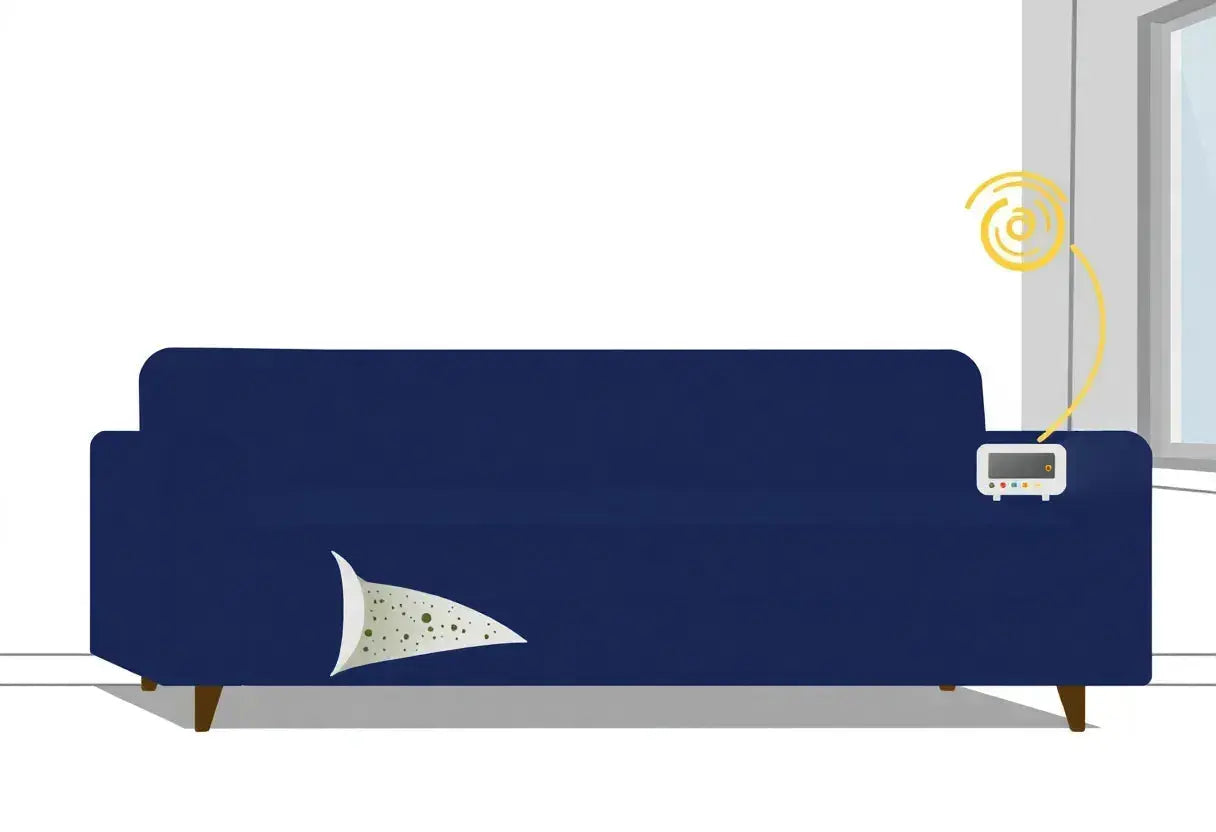
- Small black or green dots, often near seams, piping, or cushion corners
- Worsening allergies or irritation when sitting on the couch (more sneezing, itchy eyes, coughing)
If any of these sound familiar, do not panic. The next step is simply to locate the moisture source quickly so you can fix the cause, not just the symptom.
Quick checklist: Are you in a higher-risk setup?
Answer yes or no:
- Does your sofa sit against an exterior wall?
- Do you keep throws, baskets, or storage behind or under the sofa?
- Has anyone steam-cleaned nearby recently, or cleaned the cover and put it back slightly damp?
- Do pets often jump up right after being outside?
- Does the room feel stuffy, or stay closed most days?
- Have you had rainy weeks, basement dampness, or window condensation lately?
If you checked even 2 of these, it is worth doing the 10-minute diagnostic next.
In the next section, we will do a fast find the moisture test, including a simple paper towel press and a humidity check, so you can pinpoint what is actually causing the mold and stop it from coming back.
The Fast Find the Moisture Test (10 Minutes to Pinpoint the Real Cause)
If you have spotted mold under sofa cover fabric (or you are catching that musty smell early), the fastest win is to find where the moisture is coming from. Mold is usually a symptom, not the root problem. This 10-minute check helps you pinpoint whether you are dealing with a hidden spill, wall condensation, or humidity that is simply getting trapped under the cover.
Grab: a flashlight, 2 to 3 paper towels, and if you have one, a small hygrometer (many basic models cost about the same as a takeout dinner).
Step 1: Remove the cover and check these 3 high-risk zones
Take the cover off and look closely in three specific places:
-
Seat seams and cushion piping
These tiny folds catch crumbs, skin oils, pet dander, and moisture. Even dry looking fabric can hold dampness deep in the seams. -
Back cushions (especially corners and lower edges)
This is where breathability matters most. If airflow is limited, moisture lingers here first. -
The strip where the sofa touches the wall (or sits closest to it)
If your couch is against an exterior wall, that wall can run cooler than the room. When warmer indoor air meets a cooler surface, you can get condensation that feeds mildew on upholstery.
Actionable note: If you see spotting only along the wall side, your culprit is often condensation and airflow, not a spill.
Step 2: The paper towel press test (10 seconds per spot)
Some dampness is invisible until it becomes a smell or stains. Use a simple press test:
- Press a clean paper towel firmly onto any suspicious area for 10 seconds.
- Check for any moisture transfer or even a slight cool, clammy feel.
Where to test:
- Along seat seams
- Under the back cushions
- On the inner side of the cover, especially where it hugs the frame tightly
If the towel picks up dampness, treat it like an active moisture problem, even if you do not see mold yet. This is a key step in how to prevent mold on couch surfaces before it spreads.
Step 3: Smell test by section (to separate spill problems from wall problems)
Musty odor can tell you where moisture is living.
- Smell the cushions one at a time, then the sofa frame.
- If the smell is strongest on one cushion, think: spilled drink, wet hair, pet accident, or a throw blanket that dried too slowly.
- If the smell is strongest on the frame or the wall-facing side, think: condensation, trapped humidity, or a cover that is holding moisture in place.
Tip for busy households: Put cushions in separate spots for 2 minutes while you sniff. Isolating pieces makes the source obvious fast.
If pets are part of the moisture story (wet paws, accidents, or that it looked dry moment), it can help to combine better habits with tougher, washable protection. Start here for scratch- and wear-resistant protection

Step 4: Humidity check (your big picture clue)
Use a hygrometer near the sofa (not across the room), especially if the couch is against an exterior wall or in a closed-off family room.
- Aim for about 30 to 50 percent indoor humidity, adjusting for your climate and season.
- If you consistently read above 55 to 60 percent, moisture can build up under textiles and increase the risk of mold under sofa cover areas.
Simple real-life example (what many homes see):
- Before airing out: 58 percent near the sofa after a rainy week with windows closed
-
After 30 to 60 minutes of ventilation plus a fan: 48 to 50 percent
That drop is often enough to shift the room from mold-friendly to much safer, especially when paired with a best breathable couch cover that does not trap damp air.
Step 5: Habit scan (the triggers most families forget)
Finally, do a quick replay of the last 7 to 14 days. Most moisture problems trace back to one of these:
- Recent carpet cleaning or upholstery/steam cleaning nearby (fabric can stay damp longer than it feels)
- Rainy-week ventilation changes (closed windows, less air movement)
- Couch pushed tight to the wall or blocked vents behind it
- Cover washed but not fully dried before putting it back on
- Kids’ drinks near the couch (slow leaks in seams are common)
- Pet accidents or wet paws that were wiped up but soaked into stitching
These are the exact kinds of anti-humidity tips for sofa care that work because they focus on cause, not just cleanup.
What your results mean (quick decision guide)
- Damp seams or a single cushion smells off: likely a spill or localized moisture
- Wall-side dampness and higher humidity readings: likely condensation plus poor airflow
- Everything smells musty and humidity is high: likely room-level humidity trapped under the cover
Now that you know the real cause, the next step is cleaning it safely without damaging the cover or the upholstery. Up next: How to Clean Mold Safely (Cover + Upholstery) Without Damaging Your Sofa.
How to Clean Mold Safely (Cover + Upholstery) Without Damaging Your Sofa
If you found mold under sofa cover fabric during the quick moisture test, take a breath. Most small, surface spots can be handled safely at home, as long as you focus on two things: protecting your family’s air and fully drying the sofa so the mold cannot come back. The EPA and CDC both emphasize that safe cleanup is about minimizing exposure and controlling moisture, not just scrubbing stains away.
Safety-first checklist (do this before any cleaning)
Use this quick setup so you do not spread spores around the room:
- Ventilate immediately: Open windows and, if possible, run a fan that pushes air out of the room.
- Protect yourself: Wear gloves and a well-fitting mask (an N95-style mask is ideal if you have it).
- Keep kids and pets out: Close the door or use a baby gate until everything is cleaned and fully dry.
- Avoid dry brushing or shaking indoors: It can send spores into the air.
- Plan for drying time: Cleaning is only step one. Drying is the real fix.
Decision tree: What should you clean, and what should you replace or call in help?
Use this simple decision path to protect your sofa and your household.
- Is the mold area small and on the surface?
- Yes: You can usually DIY clean (continue below).
- No, it is widespread or keeps returning: Stop and consider professional help.
- Is anyone in the home very sensitive (asthma, allergies, immune issues)?
- Yes: Be extra cautious, and strongly consider professional guidance if you smell strong mustiness or see recurring growth.
- No: DIY is often fine for small spots.
- Do you smell odor coming from inside cushions or foam (not just the cover)?
- Yes: That can mean moisture is inside the padding. DIY surface cleaning may not solve it. Consider replacing inserts or bringing in a pro.
- No: Continue with cover cleaning and spot treatment.
Stop DIY and escalate if you notice:
- Large affected areas
- Repeated regrowth after cleaning and drying
- Strong odors that seem trapped inside foam
- Health symptoms that worsen when you sit on the couch
Step 1: Clean the fabric cover the right way (without damaging it)
A cover is often the easiest place to remove mold, because it is washable. But do not assume hotter is better.
-
Check the care label first.
- Wash hot only if allowed. Hot water can shrink or weaken some fabrics.
-
Pre-rinse or pre-soak if the label allows.
- If the fabric permits, use an oxygen-based bleach (color-safe) to help lift staining without the harshness of chlorine bleach.
- Use a normal cycle with thorough rinse.
-
Dry completely.
- Not almost dry. Not damp-to-the-touch. Mold returns fast when fabric holds hidden moisture.
If you routinely find dampness in the same places, consider splitting protection into smaller, faster-drying pieces. High-moisture zones like armrests and seat cushions often need the most frequent washing and the quickest turnaround. Here are targeted options that make that easier: Target the parts that trap moisture first (armrests and cushions)
Step 2: Spot-treat the upholstery (blot, do not soak)
When mold is on the sofa itself, gentle technique matters. Over-wetting upholstery is one of the most common reasons mold comes back.
-
Test first in a hidden area.
- Check for color transfer or fabric distortion.
-
Mix a mild cleaning solution.
- A small amount of mild detergent in water is usually enough for light surface growth.
-
Use minimal moisture.
- Dampen a clean cloth lightly, then blot the area.
-
Blot again with clean water (lightly) if needed.
- You want to remove residue without soaking the cushion.
-
Press-dry with clean towels.
- Apply firm pressure to pull moisture out.
Important: Avoid saturating seams and cushion corners. Those areas dry the slowest and are common starting points for mildew on upholstery.
Step 3: Drying plan (this is what prevents mold from coming back)
If you are searching for how to prevent mold on couch surfaces long-term, this is the step that makes the biggest difference.
- Separate everything: Remove the cover, pull off cushions, and unzip cushion covers if you can.
- Elevate cushions for airflow: Stand cushions on their sides or prop them up so air reaches all faces.
- Use moving air plus fresh air: Fans plus open windows if outdoor humidity is not extreme.
- Add a dehumidifier if the room runs damp: This is especially useful in basements, rainy seasons, or rooms against exterior walls.
- Give it time: Many cleaned couches regrow mold because they were put back together too soon.
This drying-first mindset also helps you choose smarter textiles later. In the next section, we will turn this into simple, repeatable routines and anti-humidity tips for sofa care that fit real family life, plus what to look for in the best breathable couch cover so moisture does not get trapped in the first place.

Anti-Humidity Habits That Prevent Mold (Low Effort, Big Impact)
Once you have cleaned and fully dried everything (from the previous section), the goal is simple: stop moisture from getting trapped again. Most cases of mold under sofa cover come back because a few everyday habits keep feeding humidity in the same hidden spots. The good news: you do not need a complicated routine. You need a repeatable one.
1) The weekly 2-minute reset (the fastest way to prevent regrowth)
Pick one day you already have a rhythm (Sunday evening, trash day, or right after vacuuming). Set a timer for 2 minutes.
Do this:
- Lift the seat cushions and back cushions.
- Shake out crumbs and pet hair (they hold moisture and give mold something to eat).
- Run your vacuum nozzle along seams and the crease where the seat meets the back.
- If weather allows, air the cover for 30 to 60 minutes (drape it over a chair or drying rack so both sides breathe).
Busy-family micro schedule example
- Weeknights: Spot-clean spills immediately (30 seconds now beats a deep clean later).
- Saturday: Quick vacuum + the 2-minute cushion lift.
- Laundry day: Wash cover only when it can fully dry the same day.
This tiny routine matters because mold prevention is mostly about cutting damp time. The longer fabric stays even slightly moist, the higher the risk of musty odor and spotting.
2) Create airflow like a designer (small changes, big payoff)
Mold loves still air, especially behind a couch that sits against an exterior wall. If you are figuring out how to prevent mold on couch surfaces long-term, airflow is one of the easiest wins.
Quick airflow fixes:
- Leave a small gap between the sofa and any exterior wall (even a couple inches helps).
- Do not block HVAC vents with the sofa, baskets, or floor pillows.
- Avoid storing items behind the couch (books, toy bins, extra blankets). They block air and can trap condensation.
If your couch has a skirted cover or a tight slipcover, airflow matters even more because moisture has fewer escape routes.
3) Control moisture at the source (simple house rules that actually work)
Most mystery mold is not a mystery. It is wet fabric, slow spills, or damp throws that got re-covered too soon.
High-impact rules (family and pet friendly):
- No wet towels on the couch. Make it a household default.
- Dry wet throws fast. If a blanket gets damp from a pet, a kid, or cleaning spray, hang it up right away.
- Clean spills immediately and blot, do not rub. Then dry the area with airflow (fan, open window, or dehumidifier).
These are practical anti-humidity tips for sofa care because they reduce the number of hours moisture sits next to foam, seams, and dust.
4) Use humidity tools that do the thinking for you
You do not need to guess. A few basic tools make prevention much easier and more consistent.
Your simplest toolkit:
-
Hygrometer: A small indoor humidity meter placed near the sofa (not hidden behind it).
Many indoor air quality guidelines commonly recommend keeping indoor relative humidity around 30 to 50% to reduce mold risk (see ASHRAE indoor air quality resources and EPA mold guidance for humidity control basics - Dehumidifier: Especially for basements, coastal homes, rainy seasons, or rooms with limited airflow.
- Exhaust fan habits: Run bathroom and kitchen fans during moisture-producing activities and for a bit after. Moist air travels, and living rooms can absorb it even if the couch is far from the shower.
If your hygrometer regularly reads above 50% near the sofa, you are not doing something wrong. Your space is simply asking for more ventilation or dehumidification support.
5) Choose textiles that dry fast and breathe (without sacrificing style)
Prevention is easier when your cover is built for real life. A tight, non-breathable fabric can trap humidity, especially if the couch sits near a cooler wall. Look for the best breathable couch cover for your home’s conditions, meaning it should:
- Allow airflow (breathable weave or knit)
- Be machine washable
- Dry efficiently
- Fit securely without sealing moisture in
Cover habits that prevent mold:
- Rotate covers seasonally if your home shifts from winter condensation to summer humidity.
- Never reinstall a cover that is almost dry. If it feels cool or slightly damp anywhere, keep drying. Slight dampness plus pressure from sitting is a common trigger for mold under sofa cover returning.
- If you struggle most with damp armrests and seat cushions, consider targeted protection that is easier to wash and fully dry (armrests and cushion covers can help reduce moisture buildup in high-contact zones): https://frenchcovers.com/collections/armrest-cushion-covers
Mini checklist for offices and coworking spaces (heavy daily use)
Shared seating collects more moisture from body heat, frequent spills, and constant use. Keep it simple and visible.
Weekly (10 minutes total)
- Remove and air covers for 30 to 60 minutes (stagger sofas if needed).
- Vacuum seams and under cushions.
- Quick odor check (musty smell means moisture is lingering).
Daily (2 minutes at closing)
- Wipe visible spills right away.
- Do a fast no damp textiles left behind scan (throws, cleaning cloths, wet umbrellas nearby).
These routines keep upholstery fresher for guests and help prevent complaints about odor or allergy-like reactions.
Next, we will tailor prevention by lifestyle, because a pet home, a vintage velvet sofa, and a busy coworking lounge do not need the exact same strategy.
Prevention for Different Lifestyles (Families, Pet Homes, Vintage Pieces, and Offices)
You already know the big truth about mold under sofa cover issues: moisture plus time plus low airflow. The easiest way to actually keep it from coming back is to match your routine to how your home or workspace really runs. Below are mini playbooks you can copy, each built around realistic habits, quick drying, and smart fabric choices.
Busy families: fast resets that fit real life
When snacks, homework, and movie nights happen on the couch, prevention has to be simple and repeatable.
Your priority zones (where moisture hides first):
- Seat cushions (crumbs and small spills sink in)
- Armrests (sticky hands, drink drips, sleeve moisture)
- Back cushion corners (low airflow)
5-minute after dinner reset (most days):
- Lift seat cushions and check for any tacky spots (even if you do not see a stain).
- Blot spills right away with a dry towel, then a barely damp cloth. Keep water minimal so you do not trap moisture.
- Flip or rotate cushions if your sofa allows it, so the same area is not always compressed under a cover.
- Air out the cover for 30 to 60 minutes when you can (open window, fan on low).
Laundry shortcut that helps you learn how to prevent mold on couch surfaces:
- Wash on a fast cycle when possible.
- Dry the cover fully before reinstalling. If it feels even slightly cool or damp, it is not ready yet.
- Keep a second washable cover or a simple throw on hand so you are not tempted to put a damp cover back on.
Seasonal note: In winter, condensation near exterior walls is common. Leave a small gap behind the sofa for airflow and do a quick wall touch test weekly: if the wall feels cool or slightly damp, increase ventilation or dehumidify the room.
Pet owners: control wet paws, accidents, and moisture-holding hair
Pets add three mold triggers at once: water (paws), organic material (dander), and trapped humidity (hair buildup under a cover).
Peak-hour strategy (the easiest win):
- Keep a washable throw on the main sitting spot during high-traffic times (after walks, rainy days, zoomies). This protects the cover and comes off fast for drying.
Daily micro-habits (2 minutes total):
- Paw towel by the door: dry paws and belly before the couch.
- Quick brush or lint roll the cover surface. Hair and dander can hold moisture close to the fabric.
- If there is an accident, remove the cover immediately and dry the area with fans before you re-cover. Re-covering too soon is a common path to mold under sofa cover regrowth.
Weekly check:
- Lift cushions and look for dampness along seams and under favorite nap spots. If you want a quick upgrade in durability and daily cleanup, consider scratch-resistant options for pet homes

Premium or vintage furniture: gentle, low-moisture protection
With delicate upholstery, the goal is to prevent mold without aggressive soaking, harsh chemicals, or heavy friction.
Your golden rules:
- Use low-moisture cleaning: blot, do not saturate.
- Control humidity consistently: aim for roughly 30 to 50% indoor humidity (a small hygrometer makes this easy to track, and aligns with common indoor air quality guidance).
- Prioritize breathable fabrics: the best breathable couch cover is one that protects from dust and skin oils while still letting moisture escape.
A simple preservation routine (weekly):
- Remove or loosen the cover for 30 minutes of airing.
- Check the wall behind the sofa and the underside edges of cushions.
- If you must spot clean, use a barely damp cloth and dry with a fan right away.
Extra-safe tip: Avoid reinstalling any cover right after steam cleaning nearby rugs or floors. That hidden room humidity often lingers longer than you think.
Small businesses and coworking spaces: a simple SOP that prevents odors and complaints
In shared spaces, mold prevention is less about one perfect clean and more about a consistent system. Musty smells can affect client perception fast, so keep it routine.
One-page Maintenance SOP (copy and assign):
Weekly (10 minutes, end of day):
- Remove or loosen covers and air out seating for 30 to 60 minutes (fans help).
- Check high risk touchpoints: seat seams, armrests, back corners.
- Quick lint roll or vacuum to remove crumbs and dust that feed mildew.
Monthly (20 minutes):
- Do the paper towel press test in two or three spots per sofa.
- Log a hygrometer reading near the couch for a week. If it trends high, add dehumidification or ventilation habits.
- Inspect the wall behind the couch for coolness or condensation marks.
If a spill happens:
- Document it, remove the cover, and start drying immediately. A same-day dry-out prevents most long-term issues.
This structure makes it much easier to standardize how to prevent mold on couch seating across multiple users and busy days.
Design lovers: polished look, breathable comfort, and seasonal rotation
You should not have to choose between a styled room and a healthy couch.
A design-aware approach that also reduces humidity risk:
- Rotate covers by season: lighter, more breathable textures for humid months; cozy layers in winter, but with planned airing.
- Choose textures that do not cling tightly to the upholstery. More airflow means less trapped moisture.
- Keep a neutral washable throw for real life moments so your main cover stays cleaner and dries faster.
Seasonal checklist (quick guide):
- Summer humidity: run a dehumidifier in the living room if humidity stays high, and air out covers more often.
- Winter condensation: pull the sofa a few inches from exterior walls and increase ventilation after showers, cooking, or rainy-day drying indoors.
These playbooks work best when paired with the right materials and fit. Next, we will pull everything together into a simple checklist for choosing and using the best breathable couch cover so protection stays easy, good-looking, and mold-resistant long term.
So, the secret to a fresh, healthy couch isn't about constant deep cleaning—it's about smart, simple habits. Remember, preventing mold under a sofa cover comes down to controlling moisture, ensuring airflow, and choosing protection that works with your life. By using our anti-humidity tips for sofa care and understanding the root causes, you can stop the cycle of musty odors and protect your furniture for the long term.
Take 2 minutes today: remove your cover, check for damp spots, and improve airflow behind your couch. If you want easier wash-and-dry maintenance going forward, explore a best breathable couch cover option that fits your daily life. Your couch should be a place of comfort, not a hidden worry. A little awareness today saves your favorite spot tomorrow.
FAQ: Mold Under a Sofa Cover, Humidity Control, and Care Tips
If you have noticed mold under sofa cover fabric or a stubborn musty smell, you are not alone. In the article, we break down the hidden causes (trapped moisture, poor airflow, and humid rooms), plus simple anti-humidity tips for sofa care and how to prevent mold on couch surfaces without sacrificing your clean, design-forward look.
Q: Can a sofa cover cause mold, or does it only reveal an existing problem? A: A cover usually reveals an existing moisture issue, but it can contribute by trapping humidity and blocking airflow, which is how mold under sofa cover spots can start. Focus on breathable materials, regular airing, and keeping the couch dry. See Hidden Causes of Mold Under a Sofa Cover and Best Breathable Couch Cover Tips.
Q: What indoor humidity level helps prevent mold on couches and upholstery? A: The article recommends keeping indoor humidity in the comfort zone, ideally around 40 to 55 percent, because higher levels fuel mold growth in cushions and under covers. Use a hygrometer and dehumidify as needed, especially in basements, coastal homes, and busy family rooms. See Anti-Humidity Tips for Sofa.
Q: How do I remove musty smells from a couch after cleaning mold? A: After you clean and fully dry the area, the article suggests boosting airflow (fans, open windows) and deodorizing gently to remove lingering musty odor trapped in cushions. Wash or air out the cover separately so moisture does not return and restart mold under sofa cover growth. See Cleaning and Drying Steps and How to Prevent Mold on Couch Long Term.
Q: Is it safe to use vinegar or bleach on sofa fabric and covers? A: Vinegar can be fabric-friendly for some materials, but the article stresses spot-testing first and avoiding soaking, since leftover moisture is a key cause of mold under sofa cover. Bleach can damage many upholstery fabrics and discolor premium or vintage pieces, so use manufacturer care labels and choose gentler options when possible. See What Not to Do When Treating Mold and Fabric Care Notes.
Q: How often should I wash or air out a couch cover to prevent moisture buildup? A: The article recommends a simple routine: air out the cover weekly in humid seasons or high-traffic spaces, and wash on a regular schedule based on pets, kids, or commercial use. This helps prevent trapped humidity, supports how to prevent mold on couch surfaces, and keeps your setup fresh. See Maintenance Routine and Schedule and Best Breathable Couch Cover Guidance.