You bought a cover to protect your sectional, and six months later it looks tired: the seat fabric has crept forward, the chaise wrinkles every time someone stretches out, and the corner seam has shifted half a cushion to the left. If that sounds familiar, the problem is usually not the fabric alone. It is the type of cover.
In the debate of stretch vs fitted sectional sofa covers, the two styles wear out in very different places, and knowing where helps you pick the one that will still look neat next year.
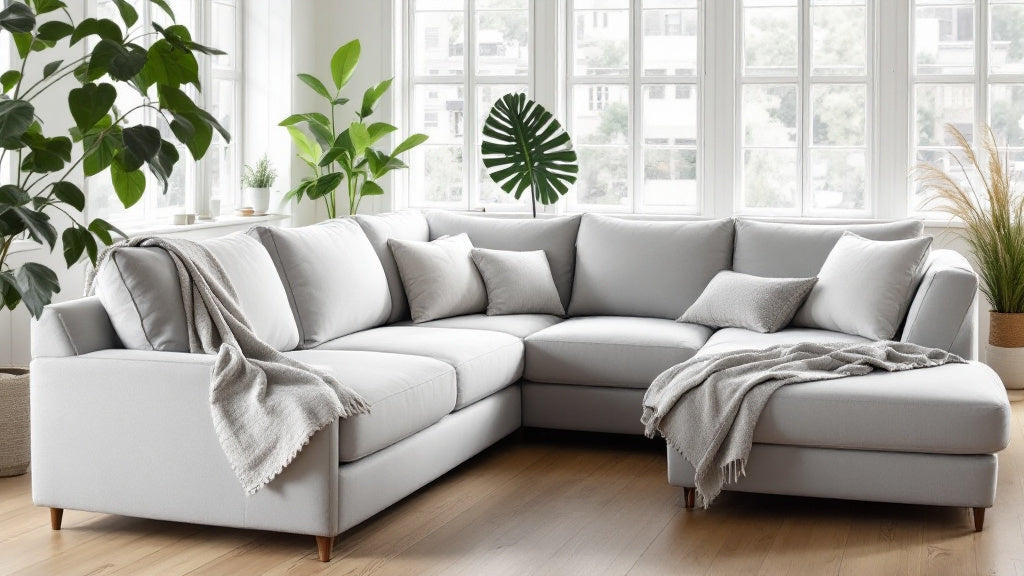
A one-piece stretch cover wraps the whole sectional in a single elastic shell. Fitted covers come in pieces, one for each seat cushion, backrest or chaise, and grip each part separately. Both can last for years, but only when they match the way your sectional is built and the way your household uses it.
In this guide, we look at where sectional covers actually fail, compare both styles side by side, share simple care habits that add months of life to any cover, and help you choose based on pets, kids and the shape of your sofa. By the end, you will know which style deserves your money and how to keep it looking sharp.

What "stretch" and "fitted" actually mean on a sectional
Before comparing durability, it helps to be precise, because the two words get mixed up in product listings. Almost every modern slipcover contains some stretch, usually a polyester and spandex blend. The real difference is how the cover is constructed and how it holds onto the sofa.
One-piece stretch covers
A one-piece stretch cover is sized by seating length and pulled over each section of the sectional like a fitted sheet. The elastic hem wraps under the base, and the excess fabric is pushed into the gaps between the seat and the backrest. On an L-shaped sofa, you typically buy one cover per section, for example one for the long side and one for the chaise. A one-piece stretch sectional cover like LUMIERA comes in four seating ranges, from 90 to 140 cm up to 235 to 300 cm, so each part of the L gets its own snug shell.
The appeal is obvious. One cover hides everything: arms, backrest, seat and front panel. It disguises worn upholstery, faded spots and old stains in one go, and it installs in about ten minutes once you know the trick.
Fitted piece-by-piece covers
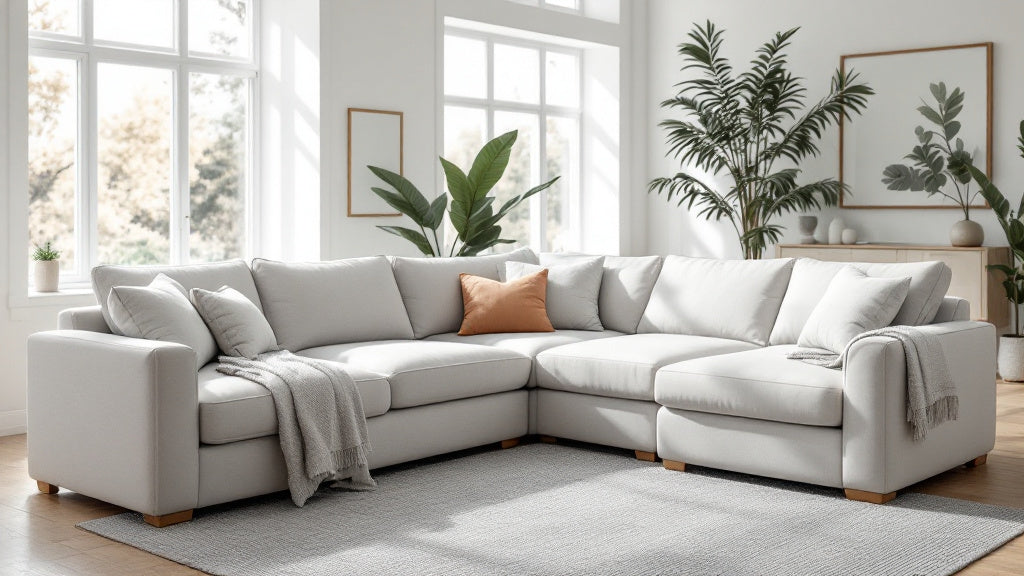
Fitted covers take the opposite approach. Instead of one big shell, you get a separate cover for each cushion: seat covers sized by width and length, backrest covers, and often a wide size for the chaise. Each one wraps its cushion on all sides, much like a box spring cover, and stays put through its own elastic edge. Fitted sectional seat covers like ELISÉE are a good example: the seat sizes run from 65 to 85 cm wide, and a 2XL size of 90 to 110 cm by 160 to 190 cm is designed for chaise cushions.
Fitted covers leave the sofa frame and arms visible, so they suit sectionals whose base is still in good shape. In exchange, each piece moves with its own cushion, which turns out to matter a lot over time.
Where sectional covers wear out first
Now that the two styles are clear, let us look at the weak spots. A sectional is not one sofa but several pieces pushed together, and that design creates stress points a regular couch does not have. Here is where wear shows up first, whatever cover you choose.
- The front edge of the seats. Every time someone sits down, legs rub the front of the cushion. This is where pilling and thinning appear first.
- The chaise. People lie on it, put their feet up and shift around for hours. The fabric is pulled lengthwise far more than on a regular seat.
- The corner junction. On a one-piece cover, the place where two sections meet is where fabric bunches, pulls and eventually slips out of the crease.
- The elastic hem. Elastic loses its grip slowly, especially after hot washes and hot dryer cycles. Once it relaxes, the whole cover starts to drift.
- The armrests. Elbows, cups of coffee and pets jumping over the arm all add friction in the same small zone.
Here is the key insight: a one-piece stretch cover spreads tension across the whole section, so a stretched-out seat area pulls the arms and backrest out of shape too. A fitted cover isolates the damage. If one seat cushion gets heavy use, only that cover ages faster, and you can replace it alone. Pet owners also know that claws target specific spots, which is why it pays to read which cover fabrics resist cat claws before buying either style.
Stretch vs fitted sectional sofa covers: a side-by-side durability comparison
With those weak spots in mind, here is how the two styles compare on the points that decide whether a cover still looks good after a year of daily use.
| Criteria | One-piece stretch cover | Fitted piece-by-piece covers |
|---|---|---|
| Coverage | Whole section: arms, back, seat, front | Cushions only, frame stays visible |
| Cushion shift | Fabric creeps out of creases with daily use | Each cover moves with its cushion, very little creep |
| Corner and chaise | Bunching where sections meet | Clean lines, dedicated chaise sizes |
| Elastic stress | One long hem holds everything | Load split across several small hems |
| Replacing a worn area | Replace the full section cover | Replace one cushion cover |
| Hides damaged upholstery | Yes, including arms and base | Only on the cushions |
| Installation | About 10 minutes per section, tucking needed | Quick per piece, more pieces to handle |
| Washing | Large, bulky loads | Wash only the dirty pieces |
The pattern is clear. On pure staying power, fitted covers usually win on a sectional, because they never have to bridge a corner or hold an entire section with one elastic edge. A stretch cover wins on coverage and on hiding an old frame. The fabric itself also plays a part. Thicker weaves such as jacquard resist pilling and hide wrinkles better than thin, smooth knits, and both styles exist in heavier fabrics.
It also helps to understand how spandex (elastane) fibers stretch and recover. That stretch is what lets a cover hug the cushions, and it is also the part of the fabric most sensitive to heat. When a cover "loses its shape", it is usually the elastane giving up, not the polyester.
How to make any sectional cover last longer
Whichever style you choose, a few habits make a measurable difference in how long it keeps its fit. Most of them take less than a minute.
Washing and drying
- Wash cold on a gentle cycle. Warm water speeds up the loss of elastic recovery. Use a mild detergent and skip fabric softener, which coats fibers and can weaken stretch over time.
- Air dry whenever possible. High dryer heat is the fastest way to relax elastic hems. If you must use the dryer, choose the lowest setting and take the cover out while it is still slightly damp.
- Put the cover back on while slightly damp. The fabric relaxes a little and settles more smoothly over the cushions as it finishes drying.
- Wash fitted pieces in rotation. With piece-by-piece covers, you can wash the seat covers that get dirty and leave the backrest covers alone, which reduces wear on the pieces that do not need it.
Daily habits that reduce wear
- Use tuck-in foam sticks or a rolled towel in the seat creases of a one-piece stretch cover. They hold the extra fabric in place so it does not creep forward each time someone sits.
- Rotate cushions every few weeks if your sectional allows it. Spreading the wear across all seats keeps both the cushions and the covers aging at the same pace.
- Smooth the cover once a day. A quick pass with your hands to re-tuck the fabric takes ten seconds and prevents permanent wrinkles from setting in.
- Add a throw where pets sleep. A washable throw on the dog's favorite corner absorbs claws, fur and drool, so the cover underneath stays fresh much longer.
Fit matters as much as care. A cover that is too loose shifts constantly, and one that is too small strains its seams. Measure every section before you order with our sectional sofa cover sizing guide, and note the cushion thickness if you are leaning toward fitted covers.
Which one fits your household?
Durability is not only about fabric and seams. Choosing between stretch vs fitted sectional sofa covers also depends on how your family actually uses the sectional. Here is how the choice usually plays out.
- Pets that jump on and off all day: fitted covers stay in place better under repeated jumps, and a damaged piece is cheap to replace. If claws also attack the arms, add armrest covers or a throw.
- Young kids and frequent spills: fitted covers let you pull off one seat cover after a juice accident instead of stripping the whole section.
- An old sectional with worn arms or a faded base: a one-piece stretch cover is the better pick, because it hides everything that fitted covers leave visible.
- Renters and frequent movers: a stretch cover adapts to a wide range of sofa lengths, so it has a better chance of fitting your next sofa too.
- Modular sectionals you rearrange often: fitted covers follow each module wherever it goes, with no need to re-tuck a large shell across a new layout.
- A sectional with a deep chaise: fitted covers with a dedicated chaise size avoid the stretched, wrinkled look that a one-piece cover often gets on a long lounge seat. If you go the one-piece route, read how to fit a cover on a sectional with a chaise first.
Many households end up with a hybrid: fitted covers on the seat cushions, where wear is highest, and a throw or armrest covers for the rest. It costs less than replacing a full stretch cover every time the seats start to look tired.
Why choose French Covers for your sectional?
At French Covers, we carry both styles, because the right answer really does depend on your sofa. Our sectional and corner covers are sized by seating length so each section of your L-shape gets its own snug fit, and our fitted seat and cushion covers come in widths and lengths that include dedicated chaise sizes.
Every listing shows the exact measurement ranges in centimeters, so you can compare them with your tape measure before ordering. All of them are removable for washing, and the fabric choices range from smooth stretch polyester to thick jacquard and knit textures that hide wear well. Here are four pieces worth a look if durability is your top priority.

ELISÉE - fitted seat covers with a chaise size

Céleste - thick jacquard cushion covers

LUMIERA - one-piece stretch for each section

VIVETTE - thick knit, 360° coverage
- Sofa Cushion Cover Jacquard Thick Céleste - a thickened jacquard weave that keeps cushions looking neat, from a small single up to a large four-seat size of 165 to 195 cm.
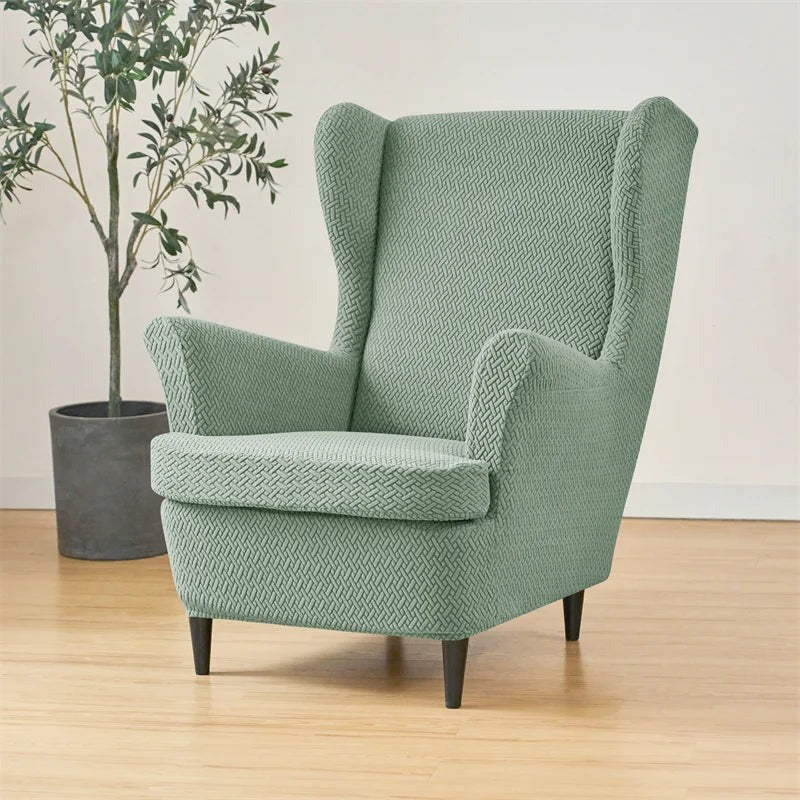
- Stretch Sofa Covers Thick Knit VIVETTE - a thick knit stretch fabric with elastic edging, for a one-piece cover that feels sturdier than thin spandex.
Prefer to browse by style? Explore our fitted sofa seat covers for piece-by-piece protection.
Or compare one-piece options in our stretch sofa covers collection.
Frequently asked questions
How long does a stretch sectional cover usually last?
It depends far more on use and care than on the calendar. A stretch cover on a sectional that gets daily family use and hot dryer cycles will lose its grip much faster than one that is washed cold and air dried. Watch the elastic hem and the seat creases: when the cover no longer stays tucked even after you re-tuck it, the elastane has relaxed and it is time to replace it.
Can I mix a stretch cover with fitted seat cushion covers?
Yes, and it often works well. Some owners keep a one-piece stretch cover on the frame and add fitted covers on the seat cushions, which take the most wear. Others keep the original upholstery on the arms and only cover the cushions. Just pick colors and textures that look intentional together, such as two shades of the same gray.
Why does my stretch sectional cover keep slipping off the seats?
The most common causes are a cover that is one size too large, shallow seat creases that cannot hold the extra fabric, and an elastic hem that has relaxed after hot washes. Push tuck-in foam sticks or a rolled towel deep into the creases, check that the hem sits fully under the base, and measure again if the problem started from day one.
Are fitted sectional cushion covers harder to put on?
Not really, but there are more pieces. Each cover slips over its cushion in a minute or two, starting with the corners farthest from you and working the elastic edge underneath. For seat cushions that are attached to the frame, look for fitted covers designed to wrap the seat in place rather than a removable cushion.
Should I buy one size up if I am between sizes?
For one-piece stretch covers, usually not. Stretch fabric is designed to be pulled slightly taut, and a cover that is too big wrinkles and slides. For fitted cushion covers, check the cushion thickness range too: if your cushion sits near the top of the range for length but is very thick, the next size can be the safer choice.
Can I put a sectional cover in the dryer?
You can on a low heat setting, but air drying is better for long-term fit. Heat is what wears out the elastic edges and the spandex in the fabric fastest. If you are short on time, tumble on low for a short cycle, then finish drying the cover directly on the sofa so it settles into shape.
So, which one holds up over time? For most sectionals that see daily use, fitted piece-by-piece covers keep their shape longer, because each piece follows its own cushion and a worn area can be replaced on its own. A one-piece stretch cover is the better choice when the frame itself needs hiding or when you want a quick transformation of an old sofa.
Whichever side of the stretch vs fitted sectional sofa covers question you land on, wash cold, dry gently and measure carefully, and your cover will look good for far longer. Ready to compare sizes and fabrics? Start with our full range of sectional and L-shaped covers.