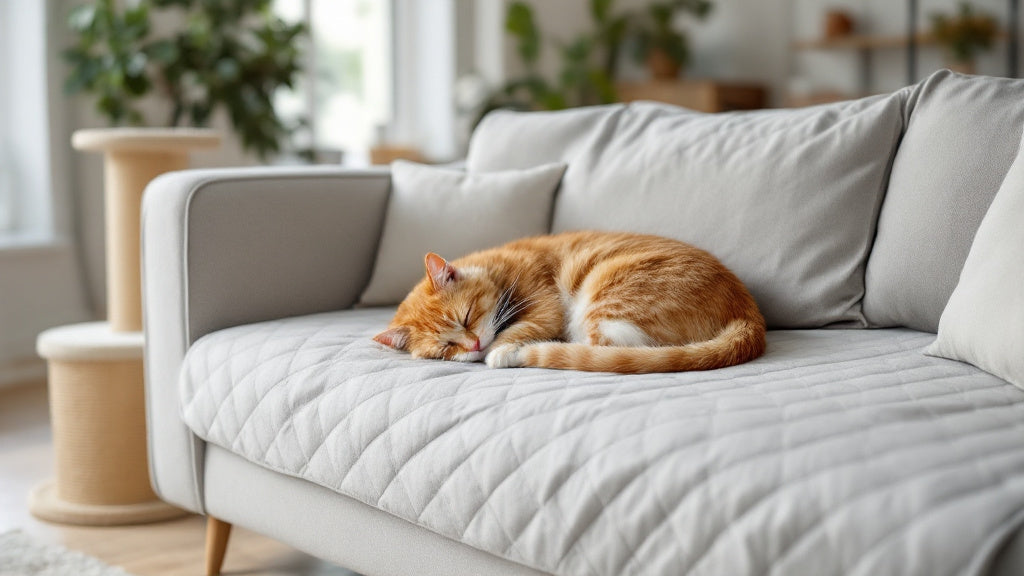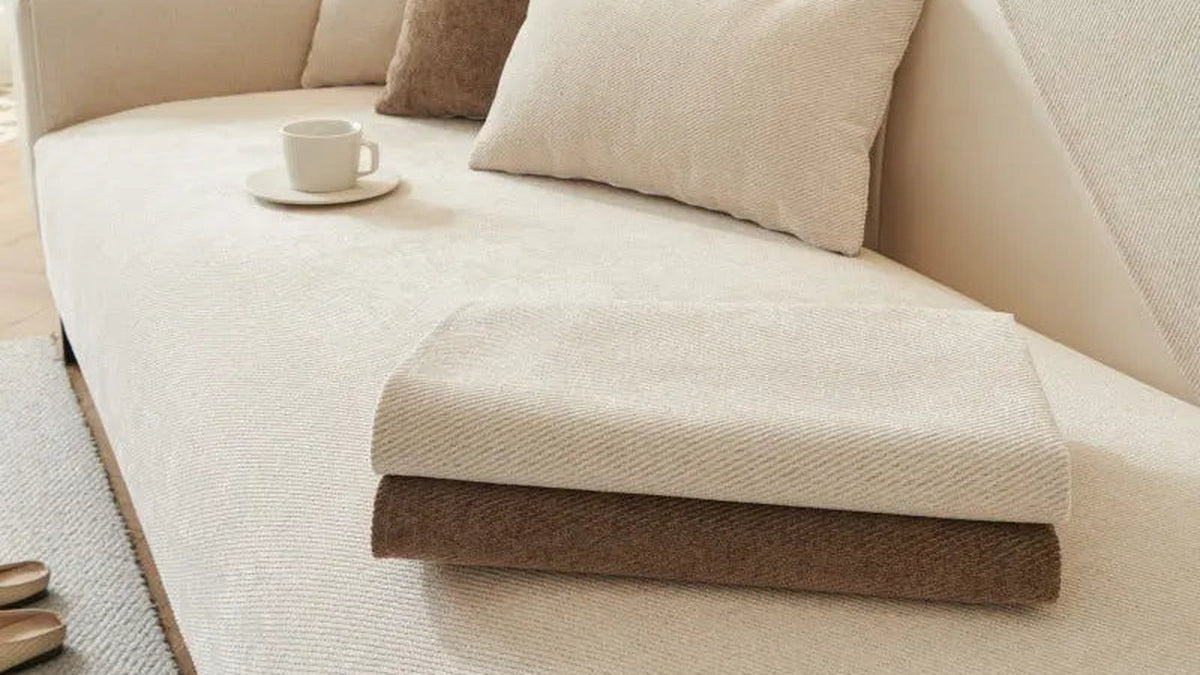
Spills, pet hair, and sticky fingers happen fast. Yet many “stain resistant” covers hide a not so cozy secret: PFAS and other harsh finishes that can linger in your home.
If you are protecting a favorite vintage sofa or outfitting a busy family room, you should not have to choose between style, easy care, and peace of mind. Sadly, greenwashing in textiles makes it hard to know what is truly safe, and what is just clever marketing.
In this guide, you will learn how to spot PFAS-free sofa covers and choose non-toxic couch covers that look chic, feel comfortable, and stand up to real life. We will also share what to look for in washable slipcovers, so cleaning is simple.
Let’s start by decoding the labels and claims you will see while shopping.
What PFAS Are (in plain English) and Why They Show Up in Sofa Covers
PFAS are a big family of man-made chemicals that help materials resist water, oil, and stains. Think: the kind of “nothing sticks to this” performance you see in raincoats, nonstick cookware, and yes, some home textiles.
You may also hear PFAS called “forever chemicals.” That nickname comes from the fact that many PFAS are very persistent, meaning they do not break down easily in the environment. Consumer agencies like the EPA overview of PFAS and the ECHA PFAS information both summarize this persistence as a key reason regulators and researchers pay close attention to PFAS in everyday products.
For a living room that is meant to feel cozy and family-safe, it makes sense that shoppers are increasingly asking for PFAS-free sofa covers and non-toxic couch covers, especially when kids, pets, and snack time all meet on the same cushions.
Where PFAS can hide in sofa covers (and why it is not always obvious)
PFAS are not usually the fabric itself. They are most often used as a finish or coating added to the textile to create “repel and release” performance. In sofa and couch covers, the most common places PFAS may show up include:
- Stain-guard finishes marketed to resist ketchup, coffee, and oily foods
- Water-repellent coatings that cause spills to bead up
- “Easy-clean” or “performance” treatments designed to prevent liquids from soaking in quickly
Here is the tricky part: product pages do not always say “PFAS.” Instead, you might see vague, confidence-boosting phrasing like “advanced stain resistance” or “protective barrier.” This is exactly where greenwashing in textiles can start to blur the line between truly safer materials and marketing sparkle.
Why shoppers care more now (healthy home mindset meets real scrutiny)
If you have ever tried to keep a light sofa looking fresh with toddlers or pets, you already understand the appeal of stain resistance. But today, many households are also thinking bigger than spills. They are asking:
- What finishes are used in the fabrics we touch every day?
- Do those finishes end up in household dust?
- Can I get easy care without extra chemical treatments?
This shift is not just a trend. PFAS are under increasing scrutiny across consumer products, and public agencies continue to update guidance and research summaries. That growing attention has made “PFAS-free” a meaningful shopping requirement for many families, as well as for design lovers who want a chic home that also feels calm and clean.
Myth-busting: stain-resistant does not automatically mean PFAS
It is important (and reassuring) to know this: not every stain-resistant cover is PFAS-treated.
Some brands achieve practical, everyday protection through smart construction instead of heavy finishing, such as:
- Tighter weaves that slow absorption and resist snagging
- Darker or mid-tone colors and textured fabrics that camouflage small marks
- Washable slipcovers you can simply toss in the laundry, which often reduces the need for “forever clean” coatings in the first place
The problem is that vague language can make it hard to tell which approach a product uses. If a listing promises miracle-level stain proofing but offers zero detail on the finish, that is your cue to pause and investigate.
If you want an easy-care option that is designed for real life (without complicated claims), you can browse everyday protection styles here: Shop easy-care everyday protection.
Quick reference box (for readers who like receipts)
- EPA overview of PFAS
- ECHA PFAS information
- Peer-reviewed reviews on PFAS uses in textiles (common finding: PFAS have been widely used for oil and water repellency finishes, including in fabric treatments).
Now that you know what PFAS are and where they might appear, the next step is protecting yourself from marketing fog. Up next: an anti-greenwashing checklist of common claims that should make you pause before you click “Add to Cart.”

Anti-Greenwashing Checklist: 10 Claims That Should Make You Pause
You now know why PFAS can show up in “easy clean” textiles. Next comes the practical part: spotting greenwashing in textiles before it lands in your cart (and your living room).
These 10 common product page claims come up again and again across major marketplaces. They are not automatically “bad” but each one should trigger a quick pause and one follow-up question. The FTC’s Green Guides make a simple point: environmental claims should be clear, specific, and backed by proof, not vibes. Here is your scannable checklist. (Helpful reference: FTC Green Guides (environmental marketing).)
1) “Eco-friendly” with no proof
Why it’s a red flag: “Eco-friendly” is so broad it can mean almost anything, including nothing.
What to do instead: Ask for specific certifications or a full materials disclosure (fiber content, finishes, and where applicable, compliance statements).
A safer sign: The listing clearly states what is improved (example: “no fluorinated water-repellent finish” plus documentation).
2) “Non-toxic” without a standard
Why it’s a red flag: “Non-toxic” is not a regulated textile label by itself. One brand may mean “no heavy metals,” another may mean “no odor.”
What to do instead: Ask what “non-toxic” is based on: which testing standard, which substances were screened, and whether it includes PFAS screening.
Tie-in to your goal: If you are shopping for non-toxic couch covers, you want specificity, not just reassurance.
3) “Stain-proof” or “forever clean”
Why it’s a red flag: In home textiles, “miracle” stain claims often rely on heavy chemical finishing. Sometimes that is where PFAS enters the picture.
What to do instead: Ask: Is any stain or water-repellent finish applied? If yes, what chemistry is it and is it fluorine-free?
Practical alternative: Choose washable slipcovers you can launder regularly. In many real homes, washability beats a mystery coating.
4) “PFC-free” vs “PFAS-free” (wording matters)
Why it’s a red flag: “PFC-free” is often used loosely. Some sellers use it to mean “no older long-chain chemicals,” not “no PFAS at all.”
What to do instead: Look for the more direct statement: PFAS-free sofa covers, plus a written confirmation from the seller.
Quick script to copy/paste: “Can you confirm this cover is PFAS-free (no fluorinated compounds) and that no fluorinated stain or water-repellent finish is used?”
5) Hidden treatments: “advanced repellency,” “nano-coating,” “performance finish”
Why it’s a red flag: These phrases can be a clue that an extra treatment was applied, but the product page does not say what it is.
What to do instead: Ask for the finish name and the safety/compliance info. If they cannot explain it simply, that is information in itself.
Family-friendly mindset: If toddlers nap on it and pets lick paws after lounging, you deserve clarity.
6) Missing care info (or oddly vague wash instructions)
Why it’s a red flag: If the listing does not clearly say how to wash it, it may be because the “performance” depends on a delicate coating that can degrade, shed, or stop working after a few cycles.
What to do instead: Prefer listings that state wash temperature, cycle, and drying guidance in plain language.
What good looks like: “Machine wash cold, gentle cycle, mild detergent, line dry” (or similarly specific directions).
7) No fiber content listed
Why it’s a red flag: If a product page will not tell you what the fabric is (polyester, cotton blend, etc.), it is hard to judge comfort, durability, pilling, and wash performance.
What to do instead: Only consider covers with clear fabric composition and basic construction details.
Why it matters: Fiber content impacts everything busy households care about, from pet hair cling to how well a cover survives repeated washing.
8) No supplier transparency (or evasive answers)
Why it’s a red flag: A reliable seller can answer basic questions consistently: fiber content, finishes, and what “PFAS-free” means for that product.
What to do instead: Send one message with 2 to 3 direct questions. If answers are vague, copy-pasted, or contradictory, move on.
Your time saver: A brand that can confidently support its materials will not make you chase information.
9) Overuse of badges and icons
Why it’s a red flag: Some “certified” icons are self-made graphics, not traceable standards. A page full of badges can be theater.
What to do instead: Look for traceable, third-party standards with a name you can verify, and check what the certification actually covers (material, dyes, facility, etc.).
Reminder: Even real certifications vary in scope. “Certified” should always come with details.
10) Price too good for the promise
Why it’s a red flag: “Luxury performance + eco + stain-proof” at a rock-bottom price is often a mismatch. Something usually gives, such as fabric quality, labor transparency, or the use of heavy finishing chemistry.
What to do instead: Compare listings by what they clearly disclose: fiber content, washability, fit features, and finish details. Choose the most transparent option, not the loudest.
Quick next step (pet homes)
If your main challenge is claws, snagging, and high-wear zones, start with durability-first options here: Need extra durability for pets? Start here.
Where this guide goes next
Once you know the red-flag claims to question, shopping gets calmer. In the next section, we will flip this checklist into a positive plan: the labels to look for, the testing language that actually helps, and three simple questions you can copy/paste to confirm truly PFAS-free sofa covers and genuinely non-toxic couch covers (without falling for greenwashing in textiles).
What to Look For Instead: Labels, Testing, and Questions to Ask Before You Buy
After you have spotted the greenwashing in textiles, the next step is simple: replace vague promises with proof you can actually use. Here is a practical, step-by-step framework for choosing PFAS-free sofa covers and truly non-toxic couch covers, without losing that polished, French-chic look.
Step 1: Ask these 3 direct questions (copy, paste, send)
Use this exact script in a product Q and A, live chat, or email. A trustworthy brand will answer clearly, not dodge.
- Is this product PFAS-free?
- Are any water-repellent or stain-repellent finishes applied (before or after sewing)?
- Can you share relevant test results or compliance statements (and what they cover)?
What good answers look like:
- “Yes, PFAS-free” plus a specific statement about finishes (example: “no fluorinated finishes, no stain guard coating”).
- A document you can read, such as a current certification scope, a restricted substances list, or third-party test summary.
What to watch for:
- “PFC-free” language without clarifying PFAS. Some sellers use older wording that can confuse shoppers.
- “Proprietary finish” or “advanced repellency” with no details. That is often where hidden treatments live.
Step 2: Choose clarity in materials and care, not mystery performance
A clean product listing should make it easy to picture the fabric on your sofa and in your washing machine.
Look for:
- Fiber content, spelled out (example: cotton, polyester, or a blend). If it is missing, treat that as a quality red flag.
- Dye info, if available (example: low-impact dyes or a certified dye standard). Not every listing will include it, but transparency is a good sign.
- Wash instructions you can follow weekly. If your home has kids, pets, or a busy living room, you want care guidance that fits real life. A cover that can handle regular washing is often a healthier, more practical choice than one that relies on chemical repellency.
Quick rule for family rooms: if the care label seems delicate, the cover will feel delicate in your routine too.
Step 3: Understand certifications, and check what they do and do not prove
Certifications can help, but only when you confirm the scope. This matters because a label might apply to one part of the supply chain, one material, or one chemical category, not automatically everything shoppers worry about.
Start with the official pages so you can verify what each standard covers:
- OEKO-TEX (scope and product classes): https://www.oeko-tex.com/en/
- GOTS (organic fiber plus processing requirements): https://global-standard.org/
- bluesign (chemical input control for textiles, where applicable): https://www.bluesign.com/en
How to use certifications wisely:
- Check the product type and certificate scope. A standard may apply to fabric, not the finished cover with trims, elastics, or coatings.
- Confirm whether PFAS are addressed. Some programs restrict certain substances, but PFAS language and testing expectations can vary by standard, product category, and region.
- Prefer traceable proof over icons. A real certification should be searchable or backed by a certificate number or clear compliance statement.
Short note (because it is important): Certifications vary by product and region. Always confirm whether PFAS are included in the coverage for the exact item you are buying.
Step 4: Prioritize washability over coatings (for most homes)
For many households, the most dependable “stain strategy” is not a coating. It is a routine.
Why washable slipcovers win in real life:
- You remove the mess instead of trying to repel it.
- You avoid relying on performance finishes that may be unclear, wear off unevenly, or raise comfort questions for sensitive households.
- You can keep a fresh look with simple, repeatable care.
A practical approach:
- Keep two sets if your budget allows (one on the sofa, one clean and ready). It is the calmest solution for pets, toddlers, and surprise guests.
- Choose a fabric that can handle the wash temperature you will realistically use.
Step 5: Don’t ignore fit and construction, because longevity is a health choice too
Even the best non-toxic couch covers will frustrate you if they slide, bunch, or stretch out quickly. Better construction means less shifting, less abrasion, and longer life.
Look for:
- Elastic edges that hug the frame without constant re-tucking.
- Separate cushion covers so you can wash the highest-contact pieces more often and replace parts without redoing everything.
- Anti-slip features (like grips or smart seaming) to reduce movement, especially in high-traffic family rooms.
If your sofa has tricky proportions, modular pieces can make the difference between “almost fits” and “looks tailored.” Dial in the fit on high-touch zones like arms and cushions here: Dial in fit with modular pieces.
With these questions, labels, and fit checks, you can shop confidently and avoid the most common traps. Next, we will pull it all together and choose a PFAS-free cover that still feels French-chic, works with your décor, and stands up to spills, pet naps, and everyday life.

Choosing a PFAS-Free Cover That Still Looks French-Chic (and Handles Real Life)
You already know why PFAS can sneak into “performance” textiles, and how greenwashing in textiles blurs the truth. Now comes the fun part: choosing PFAS-free sofa covers and non-toxic couch covers that still feel polished, cozy, and very livable.
Think French-chic, not fussy. The goal is effortless elegance that forgives real life.
For busy families: hide the mess, wash with confidence
If your living room is a snack zone, choose covers that make crumbs and smudges practically disappear.
What works best
- Mid-tone colors (oatmeal, warm gray, taupe, stone blue): they hide small stains better than bright white, but still look airy and elevated.
- Textured weaves (subtle waffle, basketweave, heathered yarns): texture camouflages the “little stuff” between washes.
- True machine washability: pick washable slipcovers designed to handle frequent laundering without losing shape.
Mini scenario: toddler + juice spill routine (real-world)
- Lift off cushion covers or the main cover as soon as you can.
- Blot, don’t rub (paper towel or clean cloth).
- Run a cold or cool wash on gentle with mild detergent (hotter is not always better for stains or fabric longevity).
- Air dry if the care label suggests it, then pop it back on before bedtime.
This is where PFAS-free sofa covers shine: instead of relying on mystery stain coatings, you rely on a simple system you can repeat weekly without worry.
If you want extra water protection: choose products that clearly explain their material approach rather than vague “advanced repellency” language. Explore options here: Explore water protection options (review material details).
For pet owners: tighter weaves, smarter colors, faster swaps
Pets bring love, naps, and the occasional “why is the sofa wet.”
What to prioritize
- Tighter weaves to reduce snagging from claws and to limit hair getting embedded. (Loose weaves can catch, fuzz, and look tired faster.)
- Color matching to fur: if your dog is beige, a warm sand cover makes shedding look far less dramatic than charcoal black.
- A spare set: keep a second set of washable slipcovers ready so you can swap immediately while one set is in the wash.
Mini scenario: cat scratching hotspots
Cats often target the same zones: outer arms, front corners, and the seat edge where they launch.
Try this simple plan:
- Use a tight-weave cover as your daily driver.
- Add cushion-specific covers to the most-used seats so wear is localized and easy to replace.
- Place a scratch post beside the favorite corner, then cover that corner snugly so the fabric does not “tent” (loose fabric is more tempting to claw).
If you need tougher options tailored to claws, start with tighter constructions designed for snag resistance. (This connects back to the earlier greenwashing checklist: “pet-proof” should still come with clear fabric details, not just a bold claim.)
For décor lovers: build a two-cover wardrobe (like a capsule closet)
If you love styling, the easiest way to refresh a room is not a new sofa. It is a new look for the same sofa.
The two-cover wardrobe
- Base cover: a neutral (ivory, flax, greige) with a classic texture. This is your everyday, always-elegant layer.
- Accent cover: a seasonal tone or pattern (soft terracotta for autumn, muted sage for spring, deep navy for winter).
This strategy keeps your living room feeling curated and intentional, while still staying aligned with non-toxic couch covers you feel good about having close to kids and pets.
For premium or vintage pieces: protect gently, fit precisely
If your sofa is heirloom quality (or just emotionally priceless), the best protection is not “tight and stiff.” It is smooth, well-fitted, and breathable.
Look for
- Gentle, well-fitted covers that do not pull aggressively at seams.
- Cushion-specific pieces so the cover moves with the sofa, not against it.
- Breathable fabrics to avoid trapping heat and moisture against delicate upholstery.
Measure carefully (this matters more than people think)
A good fit is 50 percent beauty, 50 percent protection. When a cover is too small, it strains seams. When it is too big, it rubs and shifts.
Reference our simple in-house measuring diagram:
- Seat width (left to right)
- Back height (seat to top)
- Arm width (outer edge to inner edge)
- Cushion dimensions (width, depth, thickness)
If you are between sizes, prioritize the size that allows a smooth lay without over-stretching, then use cushion covers to perfect the finish.
For small businesses and coworking spaces: consistent, professional, washable
In shared spaces, a sofa cover is part of your brand. It needs to look calm, clean, and consistent across multiple seats.
What works best
- Commercial-feeling neutrals (charcoal, stone, camel, navy) that look intentional, not “hotel white.”
- Consistent fits across seating so the space looks uniform in photos and in person.
- Simple laundering schedule that staff can actually follow.
Mini scenario: coworking weekly reset checklist
- Monday: lint roll and spot-check arms and seat fronts (the high-touch zones).
- Midweek: quick vacuum or shake-out.
- Friday close: wash covers on gentle, air dry if recommended, reinstall for Monday morning.
This is why washability beats “forever clean” marketing. A repeatable routine keeps the space fresh without leaning on questionable finishes.
With your style and household needs clear, the next step is keeping your covers looking beautiful with minimal effort. In the next section, we will build a quick care plan you can actually stick to, even on the busiest weeks.
Quick Care Plan: Keep Your Living Room Cleaner With Less Effort
One of the quiet advantages of choosing PFAS-free sofa covers and non-toxic couch covers is that your “clean plan” can rely on simple habits and regular washing, not mystery coatings. That matters because greenwashing in textiles often pushes the idea that you need heavy-duty chemical finishes to stay tidy. In real family life, the most reliable system is a light routine you can actually keep.
Below is a low-effort playbook inspired by general fabric-care best practices (the kind you will see from reputable cleaning guidance like Good Housekeeping and the universal logic behind textile care labels: gentler cycles, correct water temp, and treating stains early).
The 5-minute daily reset (set a timer, truly)
Do this once a day, ideally right after dinner or before bedtime.
- Lint roll the “hot zones”: armrests, seat front edge, and the spot where heads lean for movie night. This keeps dust, crumbs, and pet hair from working into the weave.
- Quick shake and smooth: a fast shake (or brisk hand sweep) lifts crumbs and keeps the cover looking tailored, not rumpled.
- Spot-check high-touch areas: look for fresh smudges from hands, paw prints, or snack drips. Catching them early usually means a simple wipe or mild soap, not a big wash day.
Tip for busy households: keep a lint roller in a side table drawer. If it is within reach, it happens.
Weekly routine: wash, dry, and “reset the fit”
If your cover is marketed as one of those practical, washable slipcovers, weekly laundering is your best friend. It is also a cleaner alternative to relying on stain-repellent chemistry.
- Wash on gentle, as directed: follow the care label for water temperature and cycle. Gentle agitation helps protect seams and elastic.
- Use mild detergent: skip boosters and harsh additives unless the label says they are safe for the fabric.
- Air-dry if recommended: many covers hold their shape best when air-dried or dried on low. High heat can shrink fibers or stress elastics, which changes the fit.
- Rotate cushions: swap cushion positions or flip them (if your sofa allows) so wear stays even. This keeps the whole setup looking polished and extends the life of the cover.
Family-friendly shortcut: pick one consistent “laundry day” for covers so it becomes automatic, like sheets and towels.
Stain handling that protects the fabric (and your nerves)
Spills happen fast. Your first 60 seconds matter most.
- Blot first, do not rub: blotting lifts liquid without grinding it deeper.
- Work from the outside in: this helps prevent a ring.
- Use mild detergent and cool water: a small amount is usually enough for everyday stains.
- Avoid harsh solvents unless the care label allows: stronger chemicals can discolor fabric, weaken fibers, or leave residues you do not want on a family couch.
If you chose non-toxic couch covers for peace of mind, keep the stain routine aligned: simple soap, simple rinse, then wash normally if needed.
Pet strategy: protect the favorite spot, not the whole sofa
Most pets pick a “throne.” Instead of washing the entire cover constantly:
- Place a washable throw on the favorite pet spot and launder it more often than the main cover.
- This creates an easy top layer for hair, drool, and muddy paws, while your main cover stays in great shape.
If you want a chic, coordinated option that still feels effortless, you can add an easy washable top layer here: https://frenchcovers.com/collections/throws-blankets
When to replace a cover (because fit is part of protection)
Even the prettiest cover loses its magic if it no longer sits correctly. Replace when you notice:
- Persistent stretching or bagging that will not smooth back into place after washing
- Thinning at edges (especially along armrests and seat front edge)
- Seams that no longer sit flat or corners that constantly pop off
A good fit is not just aesthetic. It helps the cover stay put, reduces friction wear, and keeps spills and grit from sneaking underneath.
How this connects to what comes next
Care is the “keep it beautiful” half of the plan. The other half is choosing the right material and construction upfront so washing is easy and the fit stays crisp. In the next section, we will bring it all together so you can shop with confidence and avoid the common traps that make covers look tired too quickly.

So, there you have it: a clear path to a chic, healthy living room free from greenwashing and "forever chemicals." You now know how to spot vague claims, ask the right questions, and choose truly PFAS-free sofa covers and non-toxic couch covers that prioritize smart design over mystery coatings. The secret to effortless style isn't a miracle finish—it's a well-fitted, genuinely washable slipcover and a simple care routine built for real life.
Ready to upgrade your living room the simple way? Measure your sofa today, then choose a washable, well-fitted cover designed for real life—so you can stop worrying about spills and start enjoying your space this week.
True peace of mind comes not from a chemical barrier, but from knowing exactly what you're bringing home.
FAQ: PFAS-Free Sofa Covers, Without the Greenwashing
Choosing PFAS-free sofa covers should feel simple, not like decoding a label in the laundry room. Below are quick, practical answers pulled from our anti greenwashing buying guide, so you can confidently choose non-toxic couch covers that stay chic, family friendly, and easy to care for.
Q: How can I tell if a sofa cover is truly PFAS-free? A: In the guide, we recommend asking for written proof: a clear PFAS-free statement plus recent third party test results, not just vague “eco” claims. Also avoid stain and water repellent finishes, which are common sources of greenwashing in textiles. See How to Spot Greenwashing in Textiles and What to Ask a Brand.
Q: Is "PFC-free" the same thing as "PFAS-free"? A: Not always. Our article explains that “PFC-free” can be used inconsistently, so it is safer to look specifically for PFAS-free sofa covers with documentation naming PFAS and confirming none are used or detected. For label tips, read PFAS vs PFC: What Labels Really Mean.
Q: Do I need stain-resistant treatments if I can machine-wash my sofa cover? A: Often, no. The guide highlights that washable slipcovers can be the healthier, simpler alternative to chemical stain resistance, especially for busy families and pet owners choosing non-toxic couch covers. Prioritize tight weaves and washability over “forever clean” finishes. See Washable Slipcovers: The Low Toxin Shortcut and Care Tips.
Q: What fabrics work best for pet hair and frequent washing? A: We recommend durable, tightly woven fabrics that release hair easily and hold up to repeated laundering, making them ideal washable slipcovers for daily life. Avoid fuzzy, high pile textures if shedding is your main issue. See Best Fabrics for Pets and Kids and Laundry and Longevity.
Q: Will a sofa cover damage leather, velvet, or vintage upholstery? A: It should not, if you choose the right fit and backing. Our guide suggests using breathable, non abrasive, PFAS-free sofa covers and avoiding sticky grips that can mark delicate leather or crush velvet pile, especially on premium or vintage pieces. See Covers for Leather, Velvet, and Vintage and Fit and Installation.