One spilled juice, one muddy paw, or one surprise guest can turn your beautiful sectional into a stress point. If you have kids, pets, or a busy space, you know the worry that comes with stains, scratches, and daily wear.
The right sectional sofa slipcover solves that without hiding your style. In this guide, you will learn how to choose a tailored L-shaped sofa cover that looks polished, feels comfortable, and stands up to real life. We will also cover how to measure a sectional sofa for a slipcover, so the fit is neat and secure, plus what to look for in a washable sofa cover for easy care.
First, let’s start with the simple measurements that make everything else fall into place.
Know Your Sectional: L-Shape Types, Pieces, and What You’re Measuring
Before you pull out a tape measure, take a quick pause and “read” your sofa the way a slipcover does. A sectional sofa slipcover is not one flat rectangle of fabric. It is a fit system that has to follow your sectional’s direction, corners, and depth so your L-shaped sofa cover looks intentional, not improvised.
If you get this first step right, the measuring in the next section becomes faster, clearer, and far less likely to lead to bunching, twisting, or constant re-tucking.
1) Identify your L-shape layout (the part most people mix up)
Most L-shaped sectionals fall into one of these setups:
- Left-facing chaise: When you are standing in front of the sofa, the chaise extension is on your left.
- Right-facing chaise: When you are standing in front of the sofa, the chaise extension is on your right.
- Corner wedge sectional: Two sofa sections meet at a corner seat (often a “pie” wedge). This creates a true corner that can change how fabric tension behaves.
- Modular sectional: Separate pieces that connect (or float close together). These are wonderfully flexible, but each piece may need its own cover approach.
Quick visual tip (no diagram needed): Stand facing your sectional like a guest would. If the “long lounging part” is to your left, it is left-facing. If it is to your right, it is right-facing. This one detail affects where seams land and how a tailored cover is shaped.
2) Spot the parts that change the fit (what you are really measuring)
When people search how to measure a sectional sofa for a slipcover, they often focus only on the “length of the sofa.” For an L-shape, the fit is usually decided by a few specific features:
- Chaise length: This is the dimension that determines whether the cover stays smooth along the lounge portion or pops off at the corner.
- Seat depth: Deep seats are cozy, but they can cause “ballooning” fabric if a cover is not sized with depth in mind.
-
Arm style and size
- Square arms usually measure wider and create crisp corners that need enough fabric to wrap cleanly.
- Rolled arms add curve and bulk, so ignoring arm width can make a cover feel tight or pull forward.
- Back height and headrests: High backs, attached headrests, or recliner-style backs need to be noted upfront so the cover does not fight the silhouette.
- Cushion count and cushion style: Loose seat cushions, attached seat cushions, or a mix will change how you measure and whether you may want separate cushion protection for a more secure finish.
Common measuring mistakes we see (and how to avoid them):
- Measuring with cushions removed: It feels easier, but it creates numbers that do not match the sofa you actually sit on.
- Ignoring arm width: The arms often determine whether an L-shaped sofa cover can wrap and tuck neatly.
- Mixing “inside” vs “outside” measurements: Measuring the inside seating area one time and the outer edge the next creates confusing results and an uneven fit plan.
In the next section, we will walk through a simple method that separates “outer edge” measurements from “inside seat” measurements so you always know which number you are recording and why.
3) Decide the look you want: snug and tailored vs relaxed and draped
Your measuring approach should match your goal:
-
Snug, tailored look (the polished, premium finish)
Best when you want your sectional sofa slipcover to feel like it belongs there, with smooth lines and minimal shifting. This is ideal for vintage or high-end upholstery you want to protect without visually “hiding” the piece. -
Relaxed, drape or throw style
More forgiving and casual. It can work well for quick changes, but it typically needs more re-adjusting in busy homes.
If you have kids, pets, or frequent guests, the tailored direction usually saves time day to day because a closer fit tends to move less after sitting, stretching out, or hopping up with a snack.
If you are browsing styles while you plan measurements, start here: Sectional & L-Shaped Sofa Covers. Seeing cover types side by side makes it easier to picture which look you are measuring toward, including options that prioritize easy care and a washable sofa cover routine.
4) Quick “Before You Measure” checklist (2 minutes that prevents 2 hours of frustration)
Use this mini checklist before you start measuring:
- Remove pillows, throws, and pets’ blankets (keep seat and back cushions in place).
- Push the sectional into its final position (against the wall, centered on the rug, etc.). A few inches can change how you measure the outer edges.
- Note any recliners, attached headrests, or unusual features that affect height and shape.
- Count your seat cushions and back cushions, and note whether any are attached.
- Decide now: tailored vs relaxed fit goal, so you measure accordingly.
Once you have your sectional type and key features noted, you are ready for the numbers that matter. Next up, we will go step by step through the exact measurements to capture, plus a simple routine that busy households can finish in about 10 minutes.

Measure Once: A Step-by-Step Measuring Method That Prevents Returns
If the introduction felt a little too familiar (spills, paws, surprise guests), this is the moment where calm returns. A well-fitted sectional sofa slipcover does not just look nicer, it behaves better. It shifts less, wrinkles less, and feels more “tailored” day to day, which is exactly what busy households want from an L-shaped sofa cover.
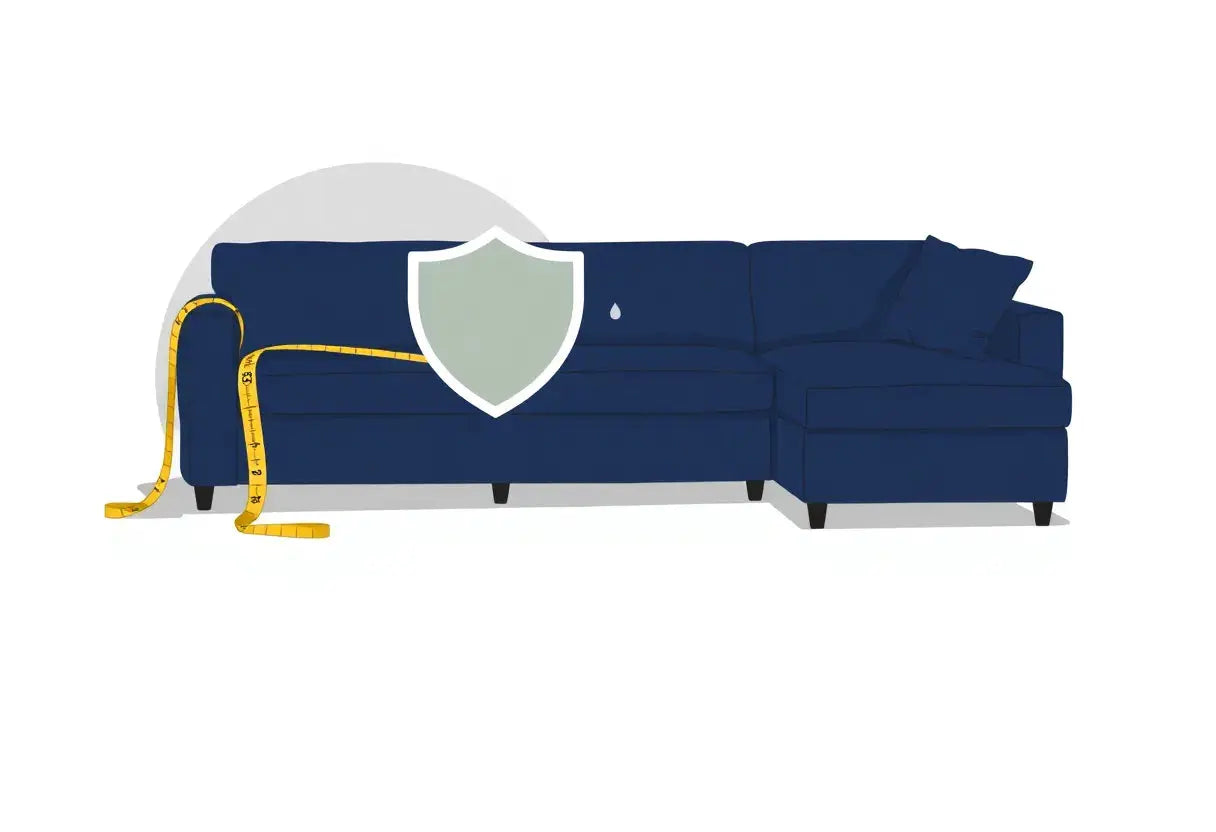
Below is a simple, repeatable method for how to measure a sectional sofa for a slipcover, using the same measurement types you will see across most slipcover sizing charts.
Tools (and why they matter)
- Soft measuring tape (fabric tape measures follow curves and arms better than rigid rulers)
- Notepad or notes app (label measurements clearly, left vs right matters)
- Phone camera (quick photos prevent mix-ups later)
- Optional: Painter’s tape to mark start and end points if your sectional is large
Step 1: Confirm you are measuring the sectional in its “real life” position
Before you measure, do what your room does every day:
- Push the sectional into its final spot (against walls, rugs, coffee table spacing)
- Put seat cushions back in place (removed cushions change depths and heights)
- Note any fixed features (attached headrests, recliners, or built-in consoles)
This keeps your measurements honest and your final fit more secure.
Step 2: Capture the core measurements (copy-friendly list)
Most L-shaped sofa cover systems rely on a handful of consistent dimensions. Measure in inches or centimeters, just stay consistent.
-
Overall width (end to end, outside edge to outside edge)
Measure across the longest straight run of the sectional, from the outermost left edge to the outermost right edge. -
Chaise length (outside edge)
Starting at the back corner where the chaise begins, measure to the front edge of the chaise (the part your legs extend onto). -
Seat depth (inside seating area)
Measure from the front edge of the seat cushion back to where the cushion meets the backrest.
This matters for deep-seat sectionals where covers can “balloon” if the depth is off. -
Back height
Measure from the seat surface (on top of the cushion) up to the top of the backrest. -
Arm height and arm width (each side)
- Arm height: floor to top of arm
-
Arm width: outside of arm to inside edge where it meets the seat
Rolled or wide arms often need this to avoid tight seams and pulling.
-
Cushion dimensions (if you use separate cushion covers)
For each cushion, measure:- Width (side to side)
- Depth (front to back)
- Thickness (height)
If you want that neat, upholstered look, cushion sizing is where it’s won or lost.
After you measure cushions, you may want targeted protection for the highest-wear zones (especially arms and favorite seats). See Armrest and Cushion Covers here: https://frenchcovers.com/collections/armrest-cushion-covers
Step 3: Know when to measure the outer edges vs the inside seating area
This is a common source of returns, so it is worth a quick rule:
-
Measure outer edges (outside outline) when you are choosing the main sectional sofa slipcover.
Think of tracing the silhouette of the sofa from the outside. This helps the cover wrap the full structure, including arms and the chaise shape. -
Measure inside seating area for comfort-fit details like seat depth, back height (from cushion), and cushion sizing.
This is what affects whether the cover feels smooth and stay-put where people actually sit.
If your notes show a great outer width but a very deep seat, that is a helpful clue for selecting a stretch range that will still look tailored.
Step 4: Use a fit tolerance rule that keeps the look polished
Slipcovers generally fit best when your measurements land comfortably within the product’s stated range. Here is a practical rule of thumb used across many slipcover sizing approaches:
-
If you are between sizes, do not guess. Choose based on stretch direction and the tightest measurement.
For most sectionals, the “tightest” point is often arm width, back height, or chaise front corners. -
Slightly under the max range often looks more tailored than slightly over.
A snug fit tends to reduce shifting when kids climb up, dogs jump down, or everyone piles in for movie night. -
Too small looks strained. Too large looks loose.
Too small can expose upholstery and pull at seams. Too large can puddle, wrinkle, and slide, which defeats the purpose of a calm, secure fit.
This is also why a washable sofa cover is such a practical choice: when the fit is right, you can remove and launder it without fighting to “make it work” again afterward.
Step 5: The “measure in 10 minutes” routine (busy-family friendly)
Set a timer, divide tasks, and you can do this quickly even on a weekday.
Minute 1 to 2: Prep
- Clear throws and extra pillows
- Put cushions back where they belong
Minute 3 to 6: Big structure measurements
- Overall width (outer edge to outer edge)
- Chaise length (outer edge)
- Back height
- Arm height and width (left and right)
Minute 7 to 9: Comfort zone measurements
- Seat depth (inside seating area)
- Any unusual features (extra-wide arms, curved back, wedge corner)
Minute 10: Photo checklist (so you match measurements to the right piece)
Take quick photos of:
- Full sectional from the front
- The chaise side (showing left-facing or right-facing)
- Close-up of each arm
- A shot showing cushion count and shape
Add your measurement notes directly into the photo album or filename. It is a small step that prevents ordering the right size for the wrong orientation.
A simple measurement table template (copy and fill)
Use this format in your notes app:
- Overall width (outside): _____
- Chaise length (outside): _____
- Seat depth (inside): _____
- Back height (from seat cushion): _____
- Left arm height: _____ | Left arm width: _____
- Right arm height: _____ | Right arm width: _____
- Cushions: count _____
- Cushion 1: W_____ D_____ T_____
- Cushion 2: W_____ D_____ T_____ (repeat)
When you are ready to shop with confidence, start with our Sectional & L-Shaped Sofa Covers collection: https://frenchcovers.com/collections/sectional-l-shaped-sofa-covers
Next, we will make sure your cover fits your life as beautifully as it fits your sofa, including what to look for in a washable sofa cover that can handle kids, pets, spills, and style.
Pick the Right Fabric for Your Life: Pets, Kids, Spills, and Style
Once you have your measurements, fabric is the decision that makes your sectional sofa slipcover feel effortless day to day. The right material keeps an L-shaped sofa cover looking smooth, staying in place, and cleaning up quickly, even when life gets lively.
Below is a practical way to choose based on your home, your habits, and how often you truly want to do laundry.
A quick “best for” matrix (real life edition)
Use this as a shortcut when comparing options:
| Your reality | What to prioritize in fabric | Why it matters |
|---|---|---|
| Cats or dogs that shed | Tighter weave, smoother surface, darker or mid-tone colors | Hair releases more easily from smooth, dense fabrics and is less visible on forgiving colors |
| Pets that scratch or dig | Dense knit or tightly woven texture, snag resistance, reinforced seams | Better at resisting pulls and surface wear in high-contact zones (arms, chaise edge) |
| Toddlers, snacks, spills | Water resistant or waterproof layer, easy wipe surface, high wash tolerance | Faster cleanup and fewer deep stains, especially on chaise lounges where kids sprawl |
| Entertaining often | Texture that looks tailored, wrinkle resistance, secure grip backing | Holds a polished look between gatherings with minimal fuss |
| Coworking or waiting room traffic | Durable, easy-care, frequent-wash friendly fabric | Better for repeated sitting and regular maintenance schedules |
If pet claws are your daily challenge, start with purpose-built protection like our Anti-Scratch Couch Covers. They are designed for real wear in the exact places a sectional takes the most abuse.
Fabric features explained in plain English (so you can shop confidently)
When you are choosing a washable sofa cover, these four features usually matter more than the product name:
1) Stretch vs non-stretch
- Stretch fabrics (often spandex blends) are forgiving, which is helpful if your measurements land between sizes or your cushions are slightly irregular. They tend to look more tailored on modern sectionals and help reduce shifting.
- Non-stretch fabrics look structured and can feel more “designer,” but they require more precise sizing. If your sectional has wide arms, deep seats, or a chunky chaise, a non-stretch cover can bunch unless the fit is exact.
Practical tip: If you are still learning how to measure a sectional sofa for a slipcover, stretch fabric is usually the safer first choice because it tolerates minor measuring errors.
2) Weave density (the quiet difference between “nice” and “hardwearing”)
- A denser weave or knit generally resists pilling, holds up to frequent sitting, and is less likely to snag.
- A looser weave can feel soft and cozy but may catch on claws, belt buckles, or toy corners.
A quick test when you receive a swatch or cover: hold it up to light. If you can easily see through it, it may be less durable for pets or heavy use.
3) Texture (comfort and style in one decision)
- Smooth knits are great for shedding households because fur lifts off more easily.
- Textured “linen-look” weaves add instant elegance to a basic sectional and hide minor wrinkles.
- Velvet-look finishes elevate a room beautifully and feel luxurious, but they may show pressure marks and can hold onto lint more than smooth weaves.
4) Grip backing and “stay put” details
If your current cover slides every time someone sits down, look for grip backing or a fabric with natural traction. This matters especially on leather sectionals or very deep seats where air can get trapped and cause that puffed “ballooning” effect.
Good fabric choice here makes the next step (installation) dramatically easier, which we will cover in the next section.
Pets, kids, and spills: choose by protection level and wash frequency
Ask yourself two questions:
- Do I need wipeable protection, or is machine washing enough?
- How often will I realistically wash it? Weekly, monthly, “when company comes”?
General guidance for busy homes:
- If spills are frequent, prioritize water resistance or waterproofing so liquids do not immediately soak into the upholstery.
- If shedding is constant, prioritize smooth, dense fabric so you can quick-vacuum and move on.
- If you wash often, choose materials that tolerate repeat cycles and look good after air drying.
Care label basics to look for (good signs for a washable sofa cover):
- Cold wash
- Gentle cycle
- Mild detergent
- Air dry when possible (often helps preserve stretch and texture)
For general laundry best practices, the American Cleaning Institute is a reliable reference point for care basics: https://www.cleaninginstitute.org/
Style guidance for décor lovers (light, color, and the French touch)
A sectional is a big visual anchor. The right cover can make the whole room feel calmer and more intentional.
Choose color based on room light
- Bright rooms: You can confidently use deeper tones (navy, espresso, charcoal) without making the space feel heavy.
- Low-light rooms: Softer neutrals (sand, cream, greige) help bounce light and feel airy.
Use texture to elevate without redecorating
- A linen-look fabric brings relaxed elegance that feels naturally refined.
- A velvet-look finish can make even a family room feel a bit more “salon” without losing comfort.
Try seasonal swaps
Many families keep one “daily driver” cover for high-traffic months and a lighter, dressier option for spring and summer entertaining. It is a simple way to refresh the room without buying new furniture.
Premium or vintage upholstery: protect it gently
If you are covering heirloom or premium upholstery, the goal is protection without unintended side effects.
- Choose breathable fabrics for long-term use, especially in warm climates or sunny rooms.
- Be cautious with highly saturated dyes on light upholstery. Color transfer is uncommon with quality textiles, but it is worth being careful.
- Always test in an unseen area first (back corner or under a cushion) before committing, especially if your sofa is light-colored or delicate.
With your fabric selected, you are ready for the step that makes everything look tailored: installing your L-shaped sofa cover so it stays put with minimal tucking and readjusting.

Installation That Stays Put: A No-Fuss Method for a Smooth, Tailored Look
You already did the careful part: how to measure a sectional sofa for a slipcover so sizing is on your side. Now comes the moment that makes a sectional sofa slipcover look polished instead of “temporary.” The goal is simple: even tension, clean lines, and secure tucks that hold up to movie nights, kids climbing in, and pets circling before they settle.
The Corner-First Install Flow (the easiest way to get a tailored look)
Use this install order for any L-shaped sofa cover, whether it is a left-facing or right-facing chaise.
-
Start at the inside corner (the “L” joint)
- Find the seam or center point of the cover and align it to the sectional’s corner where the two sections meet.
- This anchors your slipcover so everything else falls into place.
-
Pull evenly across the back and seats
- Work from the corner outward on both sides, smoothing with flat palms.
- Aim for gentle, consistent tension rather than yanking one side tight (that is what causes diagonal wrinkles later).
-
Tuck excess fabric into the main “grip zones”
Focus on these high-hold areas first:- Between back cushions and the backrest
- Between seat cushions and the frame
- Along the inner corner where the two sections meet
-
Secure the seams, then refine
- Once the major tucks are in, go back and align seams along the edges and corners.
- Smooth again from the corner outward. Think “Parisian tailoring”: clean, calm, and intentional.
-
Finish the arms and chaise last
- Arms: Pull down, smooth front to back, then tuck at the base where the arm meets the seat.
- Chaise: Smooth from the chaise back toward the foot, then tuck at the foot edge and inner side where it meets the corner.
Photo tip (from the outline): take a quick before and after photo from the same angle. If the “after” still shows rippling on the seat, it usually needs deeper tucks at the seat creases, not more pulling.
Anti-Slip Tips That Actually Work (especially for deep seats)
Deep seats are wonderful for lounging, but they can create air pockets that make fabric puff up after you sit. Here is how to prevent the classic “ballooning” effect.
-
Use foam tucks or rollers in strategic spots
Place them where movement starts:- Along the seat crease (where seat meets back)
- At the inside corner of the L
- At the chaise edge near the foot
-
Tuck vertically, then horizontally
For deep seats, push fabric down into the crease first, then tuck it “back” toward the frame. This locks fabric under pressure rather than leaving it floating. -
Reset tension after the first sit
After one person sits and stands, do a 20-second smooth and tuck pass. That first compression shows you exactly where the cover wants to shift.
If your household has frequent spills or you want extra peace of mind, consider a more protective layer designed for mess-prone zones. Our Waterproof Sofa Covers can be a smart choice in family rooms and pet areas: https://frenchcovers.com/collections/waterproof-sofa-covers
Fix in 60 Seconds: Quick Troubleshooting for Common Fit Problems
Keep this list handy the first week. Most issues are solved with one targeted tuck, not a full reinstall.
Problem: Wrinkles across the seat
- Likely cause: uneven pull from one side or shallow tucks at the seat crease
- 60-second fix: smooth from the inside corner outward, then re-tuck deeper between seat and back cushions
Problem: Cover shifts after sitting
- Likely cause: not enough “anchor points” in the main grip zones
- 60-second fix: add foam tucks at the seat crease and inner corner, then tuck the extra fabric at the base of the arms
Problem: Chaise corners keep popping out
- Likely cause: the chaise foot edge needs a stronger lock
- 60-second fix: pull fabric snug toward the chaise foot, tuck firmly underneath the front edge, then add a foam tuck on the inside chaise seam
Problem: Pet “digging spot” creates a loose patch
- Likely cause: repeated pawing lifts fabric from the same tuck point
- 60-second fix: re-tuck and reinforce that area with a foam roll; if digging is frequent, add a quick pet-friendly routine (more on this below)
Problem: Puffy “air bubble” on deep seats
- Likely cause: fabric is spanning the seat instead of being pressed into the creases
- 60-second fix: stand up, push fabric down into the seat crease, insert foam tucks, then smooth outward
Before and after photo suggestion: capture one photo of the “bubble,” then the same angle after the crease tuck plus foam. It makes the improvement obvious and helps you repeat the method on the other side of the sectional.
A Maintenance Routine for Busy Weeks (and a cover that stays beautiful)
A washable sofa cover is only “easy-care” if the routine fits real life. Here is a simple cadence that works well for families, pet owners, and high-traffic spaces:
-
Daily or every other day (30 seconds):
Shake or sweep crumbs and fur off the seats, then smooth the main sitting area. -
Weekly (2 minutes):
Quick vacuum pass using an upholstery attachment, especially along seams and tucks where debris collects. -
Wash schedule that feels realistic:
- Homes with kids or pets: every 2 to 4 weeks, or sooner after a spill
- Lower-traffic rooms: every 4 to 8 weeks
Always follow the care label, and when possible, choose gentle washing habits (cold water and mild detergent are common best practices). For general laundry guidance, the American Cleaning Institute is a reliable reference: https://www.cleaninginstitute.org/
Small habit that protects premium upholstery: before reinstalling, make sure the cover is fully dry so moisture does not linger against the sofa fabric.
With your L-shaped sofa cover installed smoothly and secured where it matters, you will spend less time adjusting and more time enjoying your space. Next, we will zoom out and help you decide when a slipcover is truly the best option, and when another solution makes more sense for your sectional, budget, and lifestyle.
When a Slipcover Is (and Isn’t) the Best Choice: Cost, Longevity, and Use Cases
A sectional is an investment, and protecting it should feel like a smart decision, not a compromise. If you have been weighing a sectional sofa slipcover against reupholstery or replacing the whole piece, here is a practical, family-friendly way to choose with confidence.
Slipcover vs Reupholstery vs Buying New: What Changes in Real Life
Think in terms of three things: time, disruption, and flexibility. The “best” option is the one that fits your household rhythm and your sofa’s future.
1) Sectional sofa slipcover (fast refresh, flexible protection)
- Time-to-refresh: Often same day. Measure, choose, install.
- Mess factor: Low. No dust, no staples, no strong odors.
- Flexibility: High. You can switch colors seasonally, remove it for guests, or replace just the cover if life gets messy again.
- Best for: Ongoing protection and style upgrades without committing permanently.
- Extra win: If you choose a washable sofa cover, spills and pet hair become a laundry task, not a furniture crisis.
2) Reupholstery (beautiful, but a renovation-level project)
- Time-to-refresh: Typically longer and less predictable since it involves labor and scheduling.
- Mess factor: Medium to high, depending on whether work happens at home and how the old fabric is removed.
- Flexibility: Low. Once you commit to a fabric, changing your mind is not simple.
- Best for: A beloved premium or vintage sectional with excellent bones that you want to restore long-term.
3) Buying a new sectional (the clean slate option)
- Time-to-refresh: Can be quick if in stock, but delivery windows and setup vary.
- Mess factor: Medium. Moving, packaging, possible assembly, plus disposing of the old one.
- Flexibility: Medium. You get a new look, but protection still matters on day one.
- Best for: Frames that sag, seats that no longer support, or layouts that no longer fit your room.
If your current sectional is structurally sound, an L-shaped sofa cover is often the most gentle, reversible way to protect the original upholstery while keeping your options open.
When an L-Shaped Sofa Cover Is the Best Choice (Mini Scenarios)
Here are the situations where a slipcover tends to feel like a small miracle.
You live in a rental or move often
Landlords love “no damage,” and families love “no stress.” A fitted L-shaped sofa cover helps you keep the sofa looking consistent even if the room changes. When it is time to move, the cover goes with you.
You have kids, pets, or both and the sofa is the command center
Between snack time, movie night, and weekend naps, your sectional sees constant use. A sectional sofa slipcover gives you a protective layer you can remove and clean, especially if it is a washable sofa cover you can toss in on a gentle cycle.
Practical longevity logic: the cover absorbs the daily wear so your original upholstery does not have to. That is the simplest cost-benefit story there is.
You like seasonal décor changes without storing extra furniture
A slipcover is the easiest way to go lighter in spring, richer in winter, or more formal for entertaining. It is the “French-inspired” approach to a refreshed salon: change the textile, keep the beautiful foundation.
You run a high-traffic space (coworking lounge, waiting area, boutique reception)
In public-facing spaces, appearance and hygiene matter. A slipcover lets you refresh the look quickly between seasons or events, and a washable option makes routine cleaning realistic.
- Coworking scenario: Monday morning coffee plus all-day laptop traffic leads to visible wear on arms and chaise edges. A cover can be rotated or replaced without taking the whole seating area offline.
- Boutique reception scenario: You want a polished, welcoming look, but you also need practical upkeep. Covers allow regular washing and a consistent brand-ready appearance.
If you are still in the measuring stage, this is where accuracy pays off: knowing how to measure a sectional sofa for a slipcover helps you get the tailored look that feels intentional, not temporary.
When a Slipcover Might Not Be Ideal (and What to Do Instead)
Slipcovers are wonderfully practical, but not magical. These are the cases where you may need a different plan or a very specific cover design.
Complex built-in recliners or attached mechanisms
If your sectional has integrated recliners, consoles, or moving headrests, a standard cover can bunch or block function. Look for compatible, piece-specific designs or consider professional solutions if the mechanics must remain fully accessible.
Fragile trims or embellishments that snag easily
Delicate fringe, loose nailhead details, or ornate wood accents can catch fabric and accelerate wear. If those details are precious, you may prefer targeted protection (like separate arm covers) or a more tailored approach.
Very unusual silhouettes without modular cover options
Extra-curved backs, asymmetrical shapes, or highly sculptural arms can make a one-piece slipcover look forced. In those cases, mixing modular pieces (seat, back, chaise, arm covers) often looks more refined and stays in place better.
How to Extend Slipcover Lifespan (So It Protects for Years)
A cover lasts longer when you treat it like a protective system, not a single layer of fabric.
- Rotate covers if you can: If you own two, alternate them. It gives each one “rest time” between washes and reduces constant stress on the same seams.
- Spot-treat fast: The sooner you address spills, the less scrubbing you need later. Quick action protects both the cover and the upholstery underneath.
- Keep pet nails trimmed: Shorter nails reduce snags and pulling, especially on arms and the chaise edge where cats and dogs tend to perch.
- Reinforce high-wear zones: Arms, front seat edges, and the chaise corner take the most friction. Consider adding separate arm covers or cushion covers so you can replace the hardest-working parts first.
- Wash with intention: Choose a washable sofa cover and follow gentle-care habits (cooler water, mild detergent, avoid excessive heat when possible). For general laundry best practices, the American Cleaning Institute is a helpful reference: https://www.cleaninginstitute.org/
If you are ready to explore styles that suit both busy households and premium interiors, browse Sofa and Couch Covers here: https://frenchcovers.com/collections/sofa-couch-covers
Next, we will bring it all together with practical selection tips and a clear path to choosing the right cover with the right fit for your specific sectional.

You have the measurements, you know your fabric, and you have seen exactly how a well-chosen sectional sofa slipcover transforms a room from a source of stress into a space of calm. This guide was built to show you that protecting your L-shaped sofa cover doesn’t mean sacrificing your style. By learning how to measure a sectional sofa for a slipcover correctly, you have already solved the most common frustration. You now have the power to choose a washable sofa cover that handles everything from muddy paws to spontaneous dinner parties, all while keeping that French-inspired elegance you love.
The only step left is the most rewarding one. Ready to stop adjusting your cover every day? Measure your sectional today and choose a secure, easy-care fit from our Sectional & L-Shaped Sofa Covers—so your living room stays clean, calm, and guest-ready this week. Let your home be a sanctuary, not a chore list.
Frequently Asked Questions: Measuring and Choosing the Right Sectional Slipcover
A well-fitted cover is the secret to keeping an L-shaped sectional looking polished, protected, and guest-ready for years. Below are quick answers pulled from our guide, focusing on the simple measurement steps, common sectional shapes, and how to choose a washable sofa cover that suits family life, pets, and premium interiors.
Q: Why does measuring matter so much for an L-shaped sectional? A: As the article explains, sectionals have multiple seating runs and a corner, so a few inches off can cause sagging or shifting. Use the guide’s “measure once” approach to get a snug sectional sofa slipcover that stays elegant even in busy homes. See the steps in How to Measure a Sectional Sofa for a Slipcover.
Q: How do I figure out if I need a left-facing or right-facing L-shaped sofa cover? A: Our article recommends standing in front of the sofa and noting which side the chaise or longer section extends to. That simple orientation check helps you order the correct L-shaped sofa cover and avoid a twisted fit. Review the diagram tips in Sectional Orientation: Left vs Right.
Q: What measurements do I need for a sectional sofa slipcover? A: The guide highlights measuring each section separately, including the long side, short side, and the corner depth for clean coverage. This is the fastest way to answer how to measure a sectional sofa for a slipcover without guesswork. Follow the checklist in Measurement Checklist.
Q: My sectional has separate cushions. Should I measure cushions too? A: Yes, the article notes cushion size affects how tailored your sectional sofa slipcover looks and how well it stays in place. Measuring seat and back cushion width and depth helps you avoid bunching, especially on the corner seat. See Cushion Measuring Tips.
Q: Are these covers actually practical for kids and pets? A: Absolutely, the post emphasizes choosing a washable sofa cover to handle spills, fur, and everyday life while keeping a refined look. A well-fitted L-shaped sofa cover also reduces shifting when everyone piles in for movie night. Learn more in Choosing a Washable Sofa Cover.
Q: How tight should a sectional slipcover fit? A: The article recommends a snug, smooth fit that follows the sofa’s lines without pulling at seams or riding up at the corner. If it feels overly stretched, recheck the key spans in your how to measure a sectional sofa for a slipcover notes. Compare fit examples in Getting the Right Fit.
Q: Can I use one cover for the whole sectional, or do I need multiple pieces? A: Our guide explains that many L-shaped layouts fit best with a sectional sofa slipcover solution designed for sectionals, sometimes in coordinated pieces for the long side, short side, and corner. This improves alignment and keeps the look more tailored. See options in Single vs Multi-Piece Sectional Coverage.
Q: Will a slipcover damage or cheapen the look of a premium or vintage sectional? A: The article is clear that the right L-shaped sofa cover protects original upholstery from sun, wear, and stains while preserving a polished, curated appearance. Choosing the correct size and a washable sofa cover fabric helps it look intentional, not temporary. Read Protecting Premium and Vintage Upholstery.
Q: What if I am between sizes after measuring? A: The guide suggests double-checking your longest spans first and prioritizing the corner and chaise run for an L-shaped sectional. When in doubt, follow the article’s measuring notes so the sectional sofa slipcover sits smoothly rather than overstretched. Revisit Sizing Guidance.
Q: Do these tips apply to sectional sofas in coworking spaces or rentals? A: Yes, the article calls out high-traffic settings where a washable sofa cover makes maintenance easy and keeps seating presentable for guests. A properly measured L-shaped sofa cover also helps withstand frequent use without constant readjusting. See Slipcovers for High-Traffic Spaces.