Spills happen fast. One juice box tip, one muddy paw, and your sofa suddenly feels off limits. For busy families, pet owners, and anyone who loves a beautiful living room, the stress is real. You want strong protection, but not the “forever chemicals” vibe that can come with old school treatments.
That is why PFAS free waterproofing is the outdoor trend coming home. In this post, you will learn how a PFAS-free waterproof sofa cover can help keep premium and vintage pieces looking chic, while adding a safer, practical layer for daily life. We will also cover what to look for in waterproof sofa covers, including options that work as a non toxic sofa cover and a pet friendly couch cover.
First, let’s break down what PFAS are and why going PFAS free matters.
What “PFAS-Free Waterproofing” Really Means (and Why It’s Everywhere)
If you have been shopping for waterproof sofa covers lately, you have probably noticed a new phrase popping up everywhere: PFAS-free. It sounds reassuring (and it can be), but it also gets used loosely. Let’s translate the trend into plain English so you know exactly what you are bringing into your living room.
PFAS, explained simply: what are “forever chemicals”?
PFAS is short for per and polyfluoroalkyl substances, a large family of chemicals that have been used for decades to make products resist water, stains, and grease. You will often hear them called “forever chemicals” because many PFAS do not break down easily and can persist in the environment over time. For a clear overview, the U.S. EPA PFAS page is a helpful, plain-language reference: https://www.epa.gov/pfas. The European Chemicals Agency (ECHA) also explains why PFAS are a major focus in current regulation and research: https://echa.europa.eu/hot-topics/perfluoroalkyl-chemicals-pfas.
In other words: PFAS are not one single ingredient. It is a broad category, and that is one reason the conversation can feel confusing.
Why PFAS-free waterproofing is suddenly trending (hint: the outdoors started it)
Outdoor and performance brands have been under pressure to keep jackets, tents, and hiking pants water resistant while moving away from older fluorinated treatments. The result is a wave of innovation that is now influencing home textiles too, including waterproof sofa covers.
What is replacing the old approach?
- Alternative DWR finishes (Durable Water Repellent): Newer water-repellent treatments that aim to be effective without relying on long-lasting fluorinated chemistry.
- Smarter fabric construction: Tight weaves, layered builds, and backing materials that help block moisture, rather than depending only on a chemical finish to make water bead up.
You will see major outdoor brands and large retailers highlight these shifts on their sustainability pages and product announcements, often using language like “PFAS-free water repellency” or “fluorine-free finishes.” The key takeaway for your home: the industry is proving you can still get practical spill protection while reducing reliance on persistent fluorinated chemicals.
Myth-busting: PFAS-free does not always mean “chemical-free”
Here is the most important clarification for shopping confidently:
- PFAS-free typically means the product is made without PFAS-based (fluorinated) finishes or treatments.
- It does not automatically mean the product is “100% chemical-free.”
Most high-performing water resistance involves some form of finish, coating, membrane, or backing. The difference is what those materials are and how they are designed. A PFAS-free waterproof sofa cover is often about choosing fewer persistent fluorinated chemicals, not pretending the laws of physics do not exist.
A practical tip while you shop: look for brands that explain how the waterproofing works (tight weave, TPU backing, laminated layer, etc.) instead of vague claims like “miracle waterproof technology.”
Why it matters more at home than people think
Sofa covers are not like a rain jacket you wear occasionally. They live where your family lives:
- Kids snack, nap, and lounge with skin directly against the fabric.
- Pets curl up, shed, and track in whatever the day brings.
- Guests sit close, and spills happen fast.
So when shoppers ask for a non toxic sofa cover or a pet friendly couch cover, they are not being dramatic. They are trying to balance real protection with more peace of mind in high-contact spaces.
If you want to start exploring options designed for everyday spills, look here: Waterproof Sofa Covers. Next, we will get very practical about what to look for in a PFAS-free approach, including how fabrics behave in real life when coffee tips, juice splashes, or muddy paws land on your cushions.

The Real-Life Test: Spills, Pets, and Busy Days (What to Look for in a PFAS-Free Approach)
You already know why PFAS free matters from the section above. Now let’s make it practical: the best PFAS-free waterproof sofa cover is the one that performs beautifully when life happens fast, then cleans up without drama. Use the quick scenarios below as your “real living room” checklist when comparing waterproof sofa covers, especially if you are also shopping for a non toxic sofa cover that feels comfortable for everyday lounging.
1) Prioritize function first: spills, wipe-downs, and washability
Your baseline needs in a busy home:
- Water resistance you can count on for spills, so liquid beads up long enough to react.
- Quick wipe-down that does not require special sprays or a full wash every time.
- Machine washable construction for kid messes and pet accidents.
- Breathable, soft hand-feel, so it does not feel sticky or plasticky during movie night.
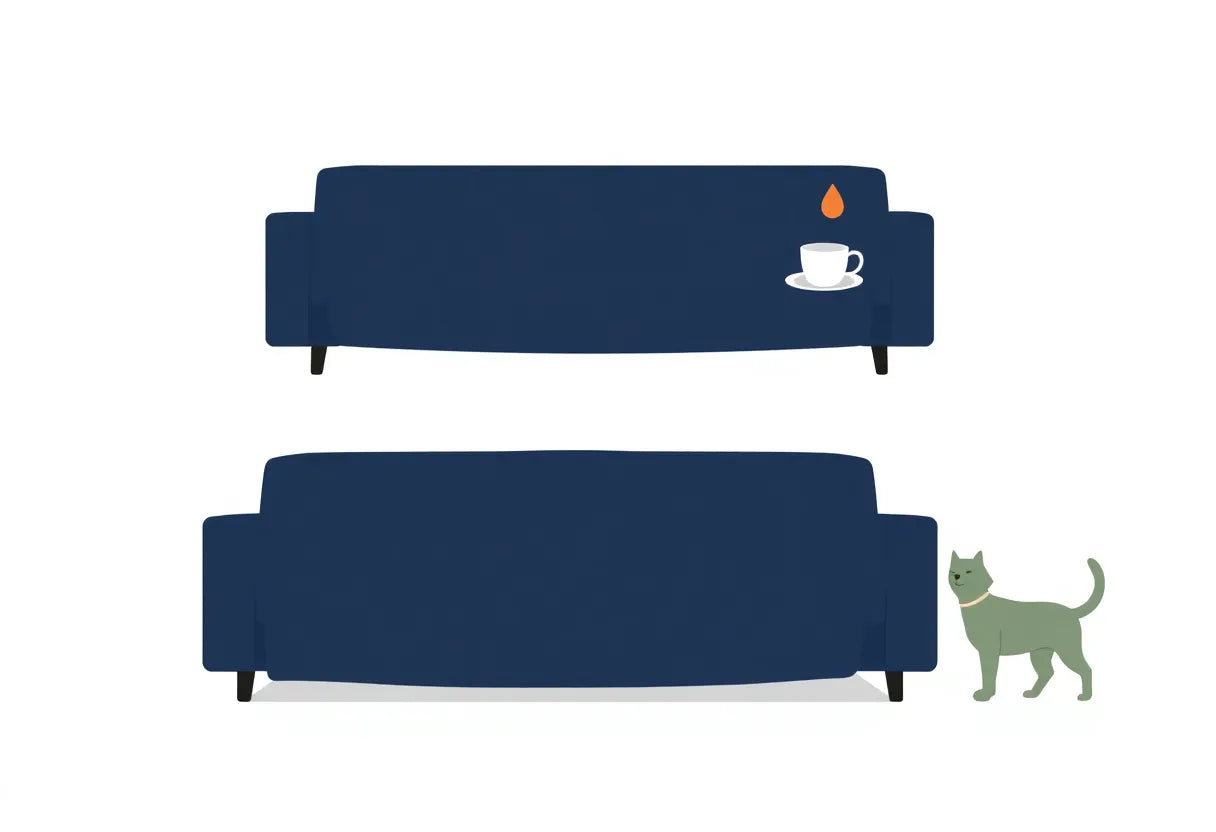
Scenario: the coffee spill (the “morning rush” test)
What happens: A mug tips over on the seat cushion.
What to do (and what a good cover should do):
- Blot first, do not rub. Use a clean cloth or paper towel to lift the liquid.
- Wipe with a damp cloth (water only is often enough for fresh spills).
- Let it air-dry if the care label recommends it.
Expected outcome: On a well-made PFAS-free approach, the coffee should not immediately soak through. You should be able to blot and wipe before it reaches your upholstery.
Scenario: toddler juice spill (the “sugar and color” test)
What happens: Juice splashes and spreads, then gets tacky.
Quick cleaning steps:
- Blot quickly.
- Wipe with a cloth dampened with cool water and a small amount of mild detergent if allowed by the label.
- If there is still a mark, plan a wash cycle soon rather than scrubbing aggressively.
Expected outcome: The surface cleans up without grinding stain into the weave. This is where “machine washable” stops being a nice-to-have and becomes your sanity saver.
Care note: Textile care labels are designed to tell you the safest washing method for that specific product. In the U.S., brands must provide these instructions under the FTC Care Labeling Rule (overview available on the FTC website). In real life, this means: if the label says cold wash or low heat, it is not a suggestion. It is how you keep the cover performing and fitting correctly.
2) Focus on fabric behavior: smart construction over “mystery coatings”
When you want waterproofing without relying on fluorinated finishes, pay attention to how the fabric is built, not just how the listing describes it.
Look for signs of performance that can come from construction, such as:
- Tight weaves that naturally slow liquid penetration.
- Layered builds (for example, a comfortable face fabric paired with an inner water-resistant layer).
- Coatings or laminations described in plain language, without vague miracle claims.
A good PFAS-free waterproof strategy often looks like this in practice: the top feels like a real fabric (matte, cozy, living-room friendly), while the inner layer helps block moisture. That combination is what keeps the cover protective without making your sofa feel like outdoor gear.
3) Check practical details: fit, coverage, and care rules
A cover can be technically waterproof, but if it slides around or leaves your arms exposed, it will not feel like protection. Before you buy, confirm three things:
Fit (so it stays put)
- Look for features like elastic edges, straps, separate cushion pieces, or grippy backing.
- If you have energetic kids or a dog that launches onto the sofa like it is an Olympic sport, secure fit matters as much as water resistance.
Coverage (where messes really land)
- Seats are obvious, but most homes need arm coverage too because arms collect skin oils, snack crumbs, and paw prints.
- If you love a tailored look, consider multi-piece sets so high-use zones stay smooth and intentional.
Care (wash temperature and drying rules)
- Scan the care label before committing. Many covers last longer when washed gentle and cool, then air-dried or tumble dried low if permitted.
- Avoid harsh bleach or high heat unless the label explicitly allows it, since those can reduce performance and affect sizing.
4) Pet angle: snag resistance and easy hair removal (the “fur and claws” test)
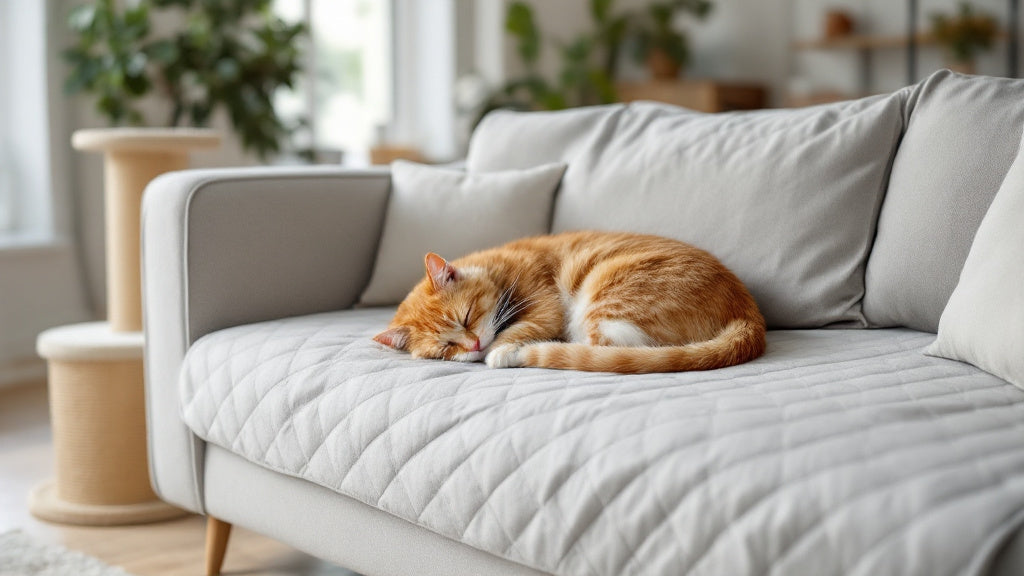
If you are shopping for a pet friendly couch cover, focus on two everyday realities: claws and fur.
Scenario: muddy paw prints (the “coming in from outside” test)
What happens: A dog hops up after the yard and leaves damp mud marks.
Quick cleaning steps:
- Let thick mud dry slightly, then lift what you can with a paper towel.
- Use a damp cloth to wipe the remaining marks.
- If the cover starts to look dingy, toss it in the wash following the label.
Expected outcome: Mud should wipe off without permanently discoloring the surface, and the cover should not hold onto odor.
For claws and daily wear:
- Choose snag-resistant textures (tighter knits or dense weaves tend to behave better than loose, open weaves).
- Look for surfaces that allow pet hair to brush off easily rather than trapping it in fuzzy textures.
If scratch protection is a top concern, pairing waterproof performance with a tougher surface is often the sweet spot. You can explore options designed specifically for claw-prone households here: Anti-Scratch Couch Covers.
A simple “buying guide” recap before we move to style
When comparing waterproof sofa covers with a PFAS-free mindset, ask yourself:
- Will this handle a coffee spill and a juice spill without panic cleaning?
- Is the protection coming from smart fabric construction, not just a vague finish?
- Will it stay in place, cover the areas we actually use, and wash easily?
- Will it resist snags and release pet hair without a battle?
Next, we will make sure all this practicality still looks elegant. In the following section, we will talk about colors, textures, and French-chic finishing touches so your sofa stays protected and guest-ready without looking like it belongs on a campsite.
Style Without the “Outdoor Gear” Look: Colors, Textures, and French-Chic Finishing Touches
By now, you know protection can be practical and feel safer. The next worry is totally understandable: will a PFAS-free waterproof sofa cover make your living room look like a campsite?
Good news. Today’s best waterproof sofa covers can look intentional, tailored, and very home friendly, especially when you choose color, texture, and finishing details with the same care you use for the rest of your décor.
1) Make protection look intentional with a neutral base (then layer like a stylist)
If you want a cover to blend in (not shout “utility”), start with a neutral that works year round and then use pillows and throws for seasonal personality.
Reliable base shades that read elevated, not sporty:
- Sand and stone: soft, airy, great for brightening a family room
- Taupe: the French classic, warm and forgiving
- Charcoal: polished and modern, hides everyday smudges well
The styling formula (works in any home):
- Pick a neutral cover as your foundation (this is where a PFAS-free waterproof sofa cover earns its keep).
- Add 2 to 4 pillow covers in a seasonal accent (sage in spring, terracotta in fall, deep blue in winter).
- Finish with one throw for texture, not just color.
This approach keeps your sofa ready for real life spills while letting your style change without replacing the cover.
2) Texture matters more than you think (matte and woven beats shiny every time)
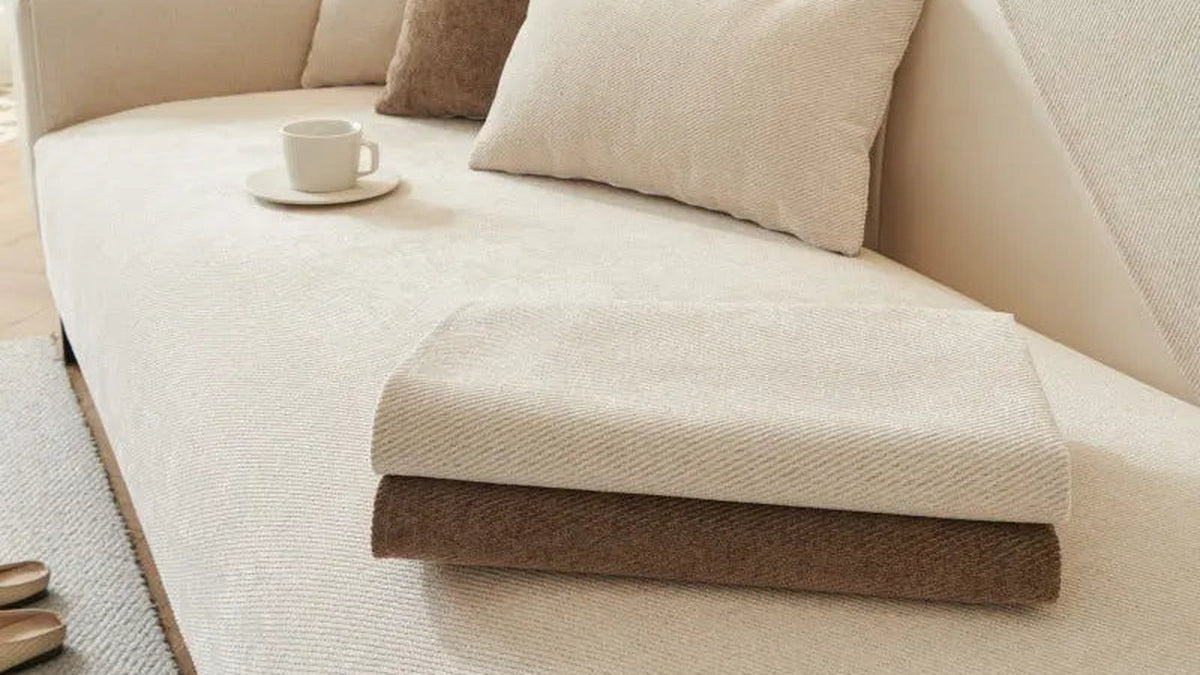
Many people associate waterproof with a slick shine. But for a living-room look, matte finishes and woven textures tend to read more like upholstery and less like rain gear.
When you’re shopping, look for language like:
- “woven look”
- “textured”
- “matte finish”
- “tailored fit”
These details help a non toxic sofa cover feel like part of your décor, not a temporary fix you cannot wait to remove before guests arrive.
3) Three mini mood boards you can copy at home (quick inspiration, no guesswork)
Use these as plug-and-play starting points.
Mood Board A: Minimal French Neutral
- Cover color: stone or taupe
- Texture: matte, lightly woven
- Pillows: cream plus black pinstripe or small check
- Throw: oatmeal knit
- Overall effect: calm, curated, and timeless (perfect for premium or vintage silhouettes)
Mood Board B: Coastal Light
- Cover color: sand
- Texture: linen-like weave
- Pillows: white plus dusty blue
- Throw: lightweight stripe
- Overall effect: bright, fresh, and family friendly without feeling childish
Mood Board C: Modern Dark
- Cover color: charcoal
- Texture: matte with subtle structure
- Pillows: warm tan, ivory, and one deep green accent
- Throw: bouclé or chunky weave
- Overall effect: sleek and confident, great for homes with pets because it hides everyday marks
4) Room-by-room ideas (because your sofa does different work in different spaces)
Family room (busy, lovable, unpredictable)
- Choose a forgiving neutral (taupe and charcoal are champions here).
- Prioritize washable construction so your waterproof sofa covers keep up with snack time and movie night.
- If you have pets, pick textures that release hair easily for a truly pet friendly couch cover feel.
Formal living room (tailored and guest-ready)
- Look for a more fitted silhouette and a crisp, consistent color.
- Keep accessories minimal: two elegant pillows and one refined throw.
- A PFAS-free waterproof sofa cover here is like insurance you do not have to hide.
Office or coworking space (clean lines and consistent palette)
- Stick to one core color across seating for a professional look (charcoal or stone are easy wins).
- Use matching pillows (same fabric, same tone) to keep things cohesive.
- Practical bonus: wipe downs are faster, and the space stays “ready for clients” with less effort.
5) Small upgrades that keep the look crisp (and extend cover life)
High-contact zones take the most abuse: armrests, seat cushions, and the “favorite spot” where everyone lands. Adding targeted protection here helps your cover look smoother longer and can reduce visible wear.
Two easy upgrades:
- Arm coverage for daily friction (kids climbing up, dogs perching, elbows during family chats)
- Extra cushion protection for spills and crumbs in the deepest seams
If you want to reinforce those areas without redoing the entire setup, take a look at Armrest and Cushion Covers: https://frenchcovers.com/collections/armrest-cushion-covers
Quick checklist: match cover color to your wall and floor undertones
Use this fast guide before you click “buy”:
- Warm walls (cream, beige, warm white) + warm wood floors (oak, honey): choose sand or taupe
- Cool walls (bright white, soft gray) + cool floors (ash, gray tile): choose stone or charcoal
- Mixed undertones (common in open layouts): choose taupe as the safest bridge neutral
- If your room already has strong pattern (rug or wallpaper): keep the cover solid and matte
Next up, we will make sure your beautiful, spill-ready setup stays that way with simple routines that protect the waterproof performance and help one cover last longer.

Care, Longevity, and Waste Reduction: Make One Cover Last Longer
A PFAS-free waterproof sofa cover is designed for real life, but the secret to keeping it looking crisp (and staying truly spill-ready) is simple maintenance. Think of it like caring for a favorite raincoat: gentle habits protect the finish, the fit, and the feel. The payoff is big: your waterproof sofa covers stay effective longer, your sofa stays protected longer, and you delay costly reupholstery or replacement.
Below is an easy, family-proof routine you can actually stick with.
Step 1: The weekly 5-minute routine (the “no drama” reset)
Do this once a week, or anytime the couch has had a busy weekend.
-
Shake out and lift debris
- Remove cushions (if your setup allows) and shake out crumbs, grit, and pet hair.
- Quick tip for pet homes: a vacuum upholstery tool before shaking helps prevent fur from floating around the room.
-
Fast spot-clean within the first 10 minutes
- For spills, blot first (do not rub), then wipe with a clean damp cloth.
- Use a small amount of mild soap if needed, then wipe again with plain water.
- This is especially helpful if you want your cover to function like a non toxic sofa cover in daily life: quick, minimal-product cleaning beats heavy chemical stain removers.
-
Dry the surface
- Air-dry or pat dry with a towel so moisture does not sit in seams or piping.
Why this matters: grit and crumbs act like tiny abrasives. Removing them weekly helps your pet friendly couch cover resist wear where paws and feet land most often.
Step 2: Wash on a schedule that matches your household (not your ideals)
Machine-washability is one of the biggest lifestyle wins of modern waterproof sofa covers. The trick is choosing a rhythm based on traffic:
- Homes with pets or young kids: wash every 2 to 4 weeks
- Adult households, light use: wash every 4 to 8 weeks
- High-traffic spaces (coworking, rentals, offices): consider every 2 to 3 weeks, plus quick weekly resets
If you are unsure, start with monthly and adjust based on odors, visible dirt, or allergy season.
Step 3: Protect the waterproof performance (gentle products, gentle heat)
Waterproofing is not only about the fabric, it is also about the finish and construction. To help a PFAS-free waterproof sofa cover keep performing:
-
Use mild detergent
- Avoid bleach and harsh stain fighters unless the care label says they are safe.
-
Skip fabric softener
- Softeners can leave a residue that affects absorbency and the way the surface sheds liquid.
-
Mind the heat
- High heat can damage coatings, shrink certain fabrics, or distort the tailored look.
- If the label warns against it, avoid hot water, high-heat drying, and aggressive ironing.
Practical reminder: care labels exist for a reason. If you want a general refresher on following wash instructions, check the FTC guidance on care labeling when you publish this post (the site is referenced in the outline).
Step 4: Air-dry when possible (and do a quick shape check)
Air-drying is kinder to most finishes and helps preserve fit.
- Hang or lay flat where air can circulate.
- While the cover is still slightly damp, smooth seams and corners back into shape.
- Refit it once it is fully dry for the neatest, most “French-chic” look.
Step 5: Rotate high-wear pieces to even out aging
If your setup includes separate seat and arm components, rotate them occasionally:
- Swap left and right arm covers (if symmetrical).
- Rotate seat cushion covers front-to-back.
- Move the most-used seat cover to a less-used cushion once a month.
This one habit helps prevent the “favorite seat fade” and extends the life of your waterproof sofa covers in a way that is invisible but effective.
Step 6: “Guest-ready in 15 minutes” checklist (keep this in your back pocket)
When the doorbell rings sooner than expected:
- Shake out crumbs and fur (2 minutes)
- Lint roll or vacuum the seat and arms (5 minutes)
- Spot-wipe any marks (5 minutes)
- Fluff pillows, add a throw, smooth the cover lines (3 minutes)
You get a clean, welcoming living room without panic cleaning, and your cover stays in better shape because you are handling messes early.
The sustainability win: protect the sofa, not just the surface
Extending the life of a cover and the sofa underneath is one of the most practical ways to reduce waste at home. When a well-cared-for cover prevents staining, fiber breakdown, and daily wear on upholstery, you are far more likely to keep a beloved family sofa (or a premium or vintage piece) in service longer, instead of replacing it.
If you are ready to choose a cover built for busy life and long-term use, explore Sofa and Couch Covers and match your care routine to the right style and fit.
Next up, we will make this even easier with a quick buyer checklist so you can choose a safer, stylish waterproof cover in 5 minutes.
Quick Buyer Checklist: Choosing a Safer, Stylish Waterproof Cover in 5 Minutes
You have already done the “why” work in the earlier sections: you want protection that fits real life, and you want a smarter, PFAS-free direction that feels good in a family home. Now let’s make the “what to buy” part simple. Use this 5 minute checklist to narrow down the right PFAS-free waterproof sofa cover and avoid the most common fit and fabric regrets.
1) Start with your number one priority (choose one)
Pick your top goal first, then let it guide every feature decision.
- Spill protection first: prioritize true water resistance, easy wipe downs, and clear care instructions. This is where many waterproof sofa covers shine for daily messes.
- Pet resistance first: look for tighter weaves, hair friendly textures, and materials that resist snags. If you are juggling paws, fur, and the occasional “zoomies,” you are shopping for a pet friendly couch cover as much as a waterproof one.
- Aesthetics first: focus on matte, woven looking finishes and tailored silhouettes so it reads like décor, not outdoor gear.
Quick rule: if you try to optimize for everything at once, you usually end up unhappy with fit. Choose the priority, then “good enough” the rest.
2) Measure before you buy (no guessing)
Most “this doesn’t fit” problems come from skipping measurements. Grab a tape measure and note these three numbers:
- Seat width: left to right across the sitting area
- Arm height: floor to top of arm (or seat to top of arm if the brand uses that)
- Cushion depth: front edge of cushion to the back where it meets the sofa
Simple measuring diagram idea (easy to recreate at home)
Sketch a quick rectangle for your sofa and add three arrows:
- a horizontal arrow across the seat labeled Seat width
- a vertical arrow up the arm labeled Arm height
- a front to back arrow on one cushion labeled Cushion depth
Add one extra note on your sketch: “Sectional chaise?” because that changes what you need dramatically.
If you have an L shape, a chaise, or modular pieces, shop sectionals specifically so coverage and proportions make sense. See: Sectional & L-Shaped Sofa Covers | https://frenchcovers.com/collections/sectional-l-shaped-sofa-covers
3) Look for clear claims in plain language (and skip “miracle coating” vibes)
When you are choosing a non toxic sofa cover or a PFAS-free waterproof sofa cover, clarity matters. Look for product pages that explain:
- What makes it waterproof: tight weave, backing, laminate, coating, or layered construction
- How to clean it: wipe, machine wash, cold or warm, air dry or low heat
- What “PFAS-free” means for that product: straightforward, not buzzwords
Green flag wording feels specific, like “water repellent finish” plus care instructions. Red flag wording sounds magical but vague, like “permanent stain proof technology” with no explanation.
4) Pick the right build for your lifestyle (multi-piece vs simple silhouette)
This is the comfort and sanity step.
- Multi-piece sets (great for busy homes): easier to replace, rotate, or wash just the parts that take the most abuse (typically seat and arms). If you have kids plus pets, this is often the most practical route for waterproof sofa covers.
- Simpler silhouettes (great for quick style refreshes): one piece looks clean fast, fewer parts to manage, ideal for low clutter living rooms or “company might stop by” households.
If your goal is a cover that functions like a non toxic sofa cover and still looks pulled together, a tailored look plus a washable routine is usually the sweet spot.
5) Plan accessories for the high use zones (it saves your cover and your sofa)
Most wear happens in the same places every day: the arm your family leans on, the seat where the dog naps, the cushion the kids claim.
Before you check out, ask:
- Do we need arm protection where hands, snacks, and pet paws land?
- Do we need extra cushion coverage for the favorite seat?
- Would add ons help us wash less often by protecting only the “hot spots”?
This is a simple way to extend the life of your main cover while keeping your living room looking calm and intentional.
Four quick persona examples (so you can choose confidently)
1) Family with a dog (spills + paws priority)
You want a PFAS-free waterproof sofa cover that wipes quickly and does not trap fur. Choose a tighter weave or smoother texture that releases hair easily, and consider multi-piece coverage so you can wash the dog’s favorite seat cushion without stripping the whole sofa. Add arm protection for the “treat hand” side of the couch.
2) Décor enthusiast (style priority)
You want waterproof protection without the shiny, plastic look. Focus on matte finishes and woven textures in neutrals like sand, stone, or charcoal, then style with pillows and a throw. Choose a clean silhouette for a tailored effect, and make sure the product description explains waterproofing in plain language, not hype.
3) Vintage sofa owner (preservation priority)
You want protection that feels reassuring for heirloom upholstery. Measure carefully (older sofas vary a lot), and avoid anything that feels overly stiff or traps heat. Look for breathable construction and clear wash instructions, then protect the highest contact zones with add ons so you do less full-cover washing. A good non toxic sofa cover choice here is one with transparent materials and care guidance, not mystery finishes.
4) Coworking manager (durability + easy reset priority)
You need consistent appearance across multiple seating areas and quick cleanup between users. Choose darker, forgiving colors and a build that is easy to remove and wash on a schedule. Prioritize clear waterproof performance details and durability claims that sound practical. If you have sectionals in shared spaces, shop sectional specific sizing for a neater fit: Sectional & L-Shaped Sofa Covers
Next, we will wrap everything up with the key takeaways and a simple path to choosing waterproof protection that fits your home, your style, and your comfort level about materials.

You want a sofa that survives coffee spills, muddy paws, and snack time without looking like it belongs on a campsite. Choosing a PFAS-free waterproof sofa cover gives you that peace of mind. You get real protection from a non toxic sofa cover that cleans up fast, stays in place, and resists fur and claws. It is a smarter choice for busy homes that refuse to compromise on style or safety. Your sofa can be the cozy, beautiful heart of your family room, not a source of stress.
Ready to protect your sofa without sacrificing style? Choose a washable, spill-ready cover today so your living room stays guest-ready all week, no panic cleaning. Your sofa does not have to hide to stay safe. Let it shine, protected and beautiful, one peaceful evening at a time.
FAQ: PFAS-Free Waterproof Sofa Covers for Real Life (and Real Messes)
From snack time spills to muddy paws, the article explains how the outdoor-inspired move toward PFAS-free waterproofing helps keep waterproof sofa covers stylish, safer, and built to last. Here are the quick, practical answers busy households, décor lovers, and furniture owners need.
Q: What does PFAS-free mean for waterproof sofa covers?
A: In the article, PFAS-free means the waterproofing is made without “forever chemicals,” so your PFAS-free waterproof sofa cover supports a more non toxic sofa cover choice for family spaces. It is the same outdoor-driven performance idea, just with safer chemistry. See PFAS-Free Waterproofing Explained.
Q: Are PFAS-free waterproof covers still effective against spills and stains?
A: Yes, the article highlights that modern PFAS-free finishes can still repel everyday spills while keeping the look more “sofa stylish” than plasticky. For best results, blot quickly and rinse according to care instructions to maintain the water barrier on your waterproof sofa covers. See Stylish, Safer, Built to Last.
Q: How do I choose a pet-friendly couch cover that won’t snag or trap hair?
A: The article recommends prioritizing durable, tightly woven fabrics and smooth surfaces that resist claw snags and release fur more easily, key for a truly pet friendly couch cover. Pair that with a PFAS-free waterproof sofa cover finish for drool, accidents, and muddy paws. See Pet Ready Fabric Tips.
Q: How often should I wash a waterproof sofa cover in a home with kids or pets?
A: The article’s practical approach is to wash on a routine that matches real life: weekly to biweekly for heavy use, and immediately after big spills or accidents. Overwashing can reduce performance, so spot clean when possible to help your waterproof sofa covers last longer. See Care and Longevity Guide.
Q: Will a waterproof cover damage or trap moisture on premium or vintage upholstery?
A: The article notes that “built to last” protection should also be breathable, especially for premium or vintage pieces, so moisture does not get sealed in. Choose a non toxic sofa cover that is PFAS-free and designed for airflow, and remove it periodically to let the upholstery breathe. See Protecting Premium and Vintage Upholstery.