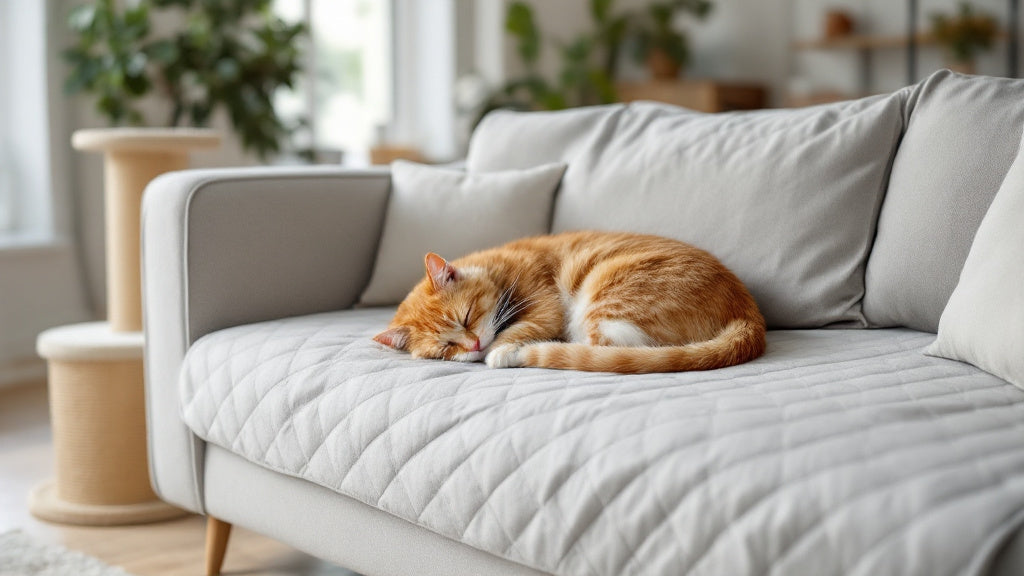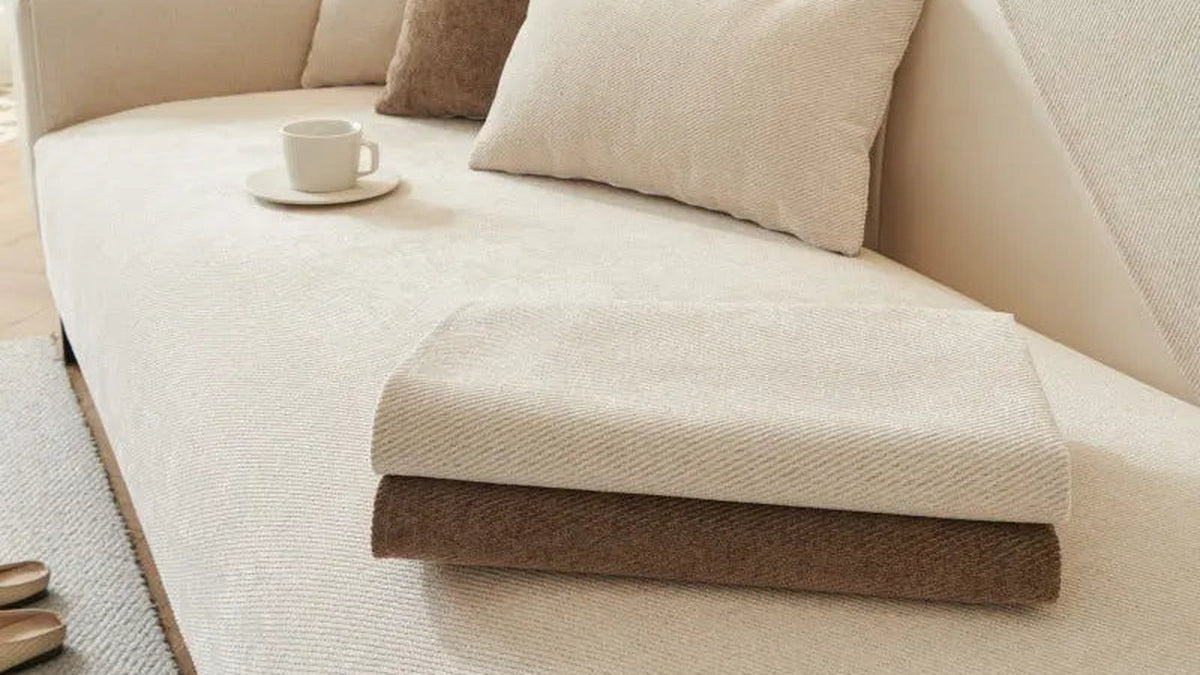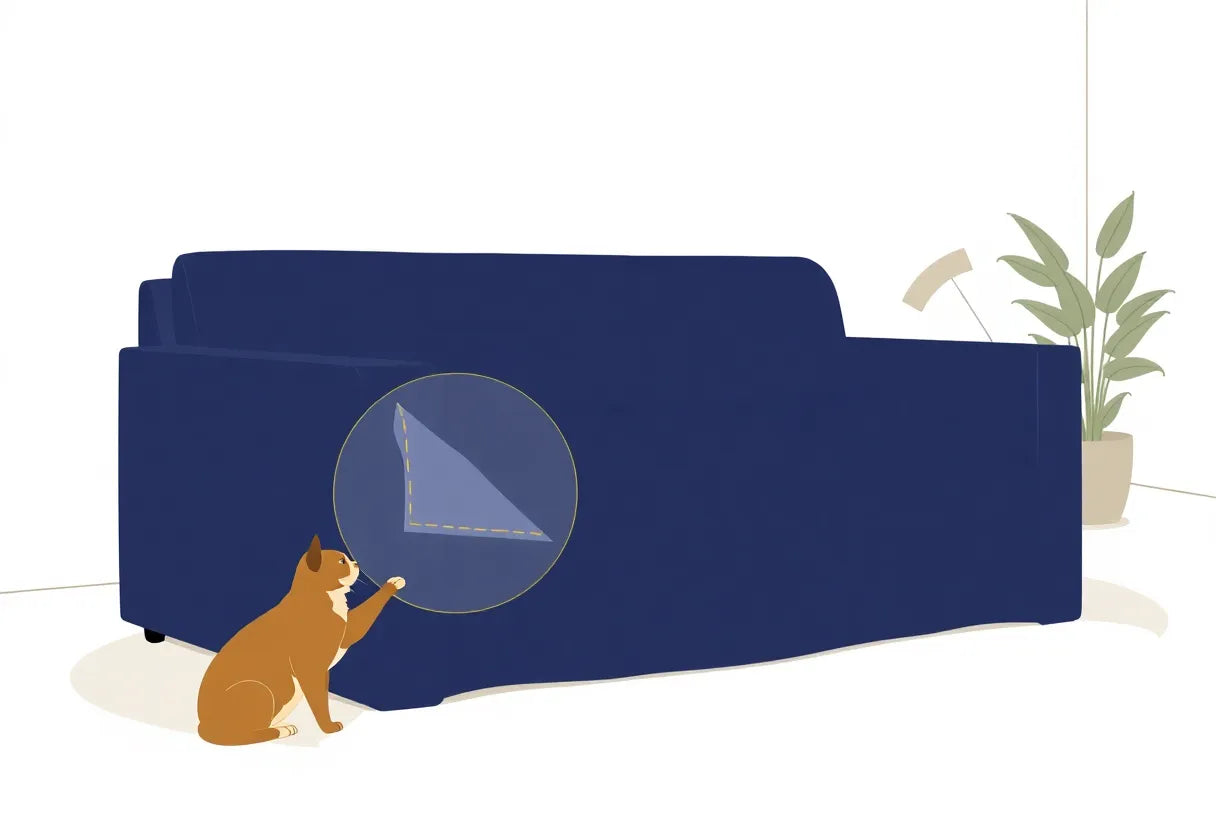
That cozy couch is where movie nights happen, pets nap, and snacks spill. But what if your “stain resistant” cover also brings unwanted chemicals into your home?
Busy families, pet owners, and style lovers need protection that is easy to live with and safe to relax on. Yet many covers still use PFAS, even when labels sound clean and comforting.
This guide helps you shop smarter. You will learn the 7 essential questions to ask brands so you can choose PFAS-free sofa covers and non-toxic couch covers that look chic, feel great, and hold up to real life. We will also touch on pet-friendly sofa covers and washable slipcovers that fit your routine.
Ready to protect your space with confidence? Let’s start with the first question you should ask every brand.
Quick PFAS Basics (Without the Chemistry Lesson)
Before you start firing off smart questions to brands, it helps to know what PFAS are in plain, everyday terms and why they show up in so many “easy-clean” textiles.
What are PFAS, and why do they show up in sofa covers?
PFAS (per and polyfluoroalkyl substances) are a large group of manmade chemicals often used to make products resist water, oil, and stains. That is exactly why they have been popular in “stain resistant” fabric finishes for years, including on furniture textiles and some protective covers.
The U.S. Environmental Protection Agency explains PFAS are widely used and persistent in the environment, which is why they are often nicknamed “forever chemicals.” Source: U.S. EPA PFAS overview: https://www.epa.gov/pfas
For a busy home, you can see the appeal. A spill beads up. Mud wipes off. Life feels easier. The downside is that consumers are increasingly trying to reduce unnecessary PFAS exposure indoors, especially in places where kids lounge, pets curl up, and everyone snacks.
If you are shopping for PFAS-free sofa covers or non-toxic couch covers, the key is understanding that “stain resistant” can be achieved in more than one way. PFAS is only one approach, not the only one.
Myth-busting: “PFAS-free” is not always as simple as it sounds
Here is where brands can sound reassuring, while still being a little unclear.
Myth 1: “PFAS-free” always means zero PFAS anywhere, ever.
In practice, “PFAS-free” can be used in a few different ways. When you are comparing non-toxic couch covers, ask what the claim refers to:
- PFAS-free finish: No PFAS-based stain or water repellent treatment was applied to the fabric. This is often what shoppers mean, but not every label spells it out.
- PFAS-free product: The finished cover (fabric, backing, threads, labels) is intended to be made without PFAS. Better, but you still want to know how the brand verifies it.
- PFAS-free supply chain goal: The brand is also working to reduce PFAS risk across dyes, processing aids, and upstream materials. This is the most thorough approach, but it is also the hardest to prove without clear documentation and testing.
Consumer agencies, such as state environmental and health resources (for example, Minnesota Pollution Control Agency guidance), commonly encourage shoppers to look for specifics, not just feel-good phrases. Environmental health nonprofits like EWG also push for plain-language transparency that tells you what was used and what was not.
Myth 2: If it is “water-resistant,” it must have PFAS.
Not necessarily. Some performance comes from fabric choice and structure, not chemical treatments. For example:
- Tighter weaves can help reduce snagging and slow liquid soak-in.
- Certain fibers naturally handle daily wear better than others.
- A removable design that you can wash quickly can matter more than any coating when you live with kids or pets.
This is especially relevant if you want pet-friendly sofa covers. Claws, hair, and repeat washing are often the real test, not just a single spilled glass of juice.
Set expectations: You can still get great performance without PFAS
Choosing PFAS-free sofa covers does not mean choosing a precious, high-maintenance living room. It simply shifts the strategy from “chemical shield” to “smart, livable protection.”
Here is what to look for instead, especially if washable slipcovers are part of your routine:
- Washability first: Machine-washable covers let you reset the sofa after sticky fingers, pet smells, or everyday dust. In real life, being able to wash and re-fit quickly is a form of stain control.
- Color and pattern that forgives: Medium tones, textured neutrals, and subtle patterns can hide daily life beautifully while still feeling elevated and French-chic.
- Construction details that help: A secure fit, full coverage where spills happen most, and fabrics that hold up to frequent laundering.
If you want to start browsing with these points in mind, you can explore our core options here: Shop Sofa and Couch Covers | https://frenchcovers.com/collections/sofa-couch-covers
Next, we will turn this into a simple buyer checklist: the 7 essential questions to ask any brand so you can separate truly PFAS-free and non-toxic couch covers from vague marketing and half-answers.

The 7 Essential Questions to Ask Any Brand About PFAS-Free Sofa Covers
You now know why PFAS chemicals often show up in “stain resistant” textiles. Next comes the part that actually protects your home: asking better questions than a product page headline.
Use the checklist below when you shop online, message customer support, or compare brands side by side. The goal is simple: find PFAS-free sofa covers and non-toxic couch covers that perform through snack spills, pet pileups, and real family life, without relying on mystery finishes.
Q1: Is the cover PFAS-free by design or just “PFAS not intentionally added”?
These phrases are not the same.
- “PFAS-free” (ideal) suggests the brand is intentionally avoiding PFAS in materials and finishes.
- “PFAS not intentionally added” can still allow PFAS to appear through contamination in the supply chain, recycled inputs, or unknown treatments upstream.
What to ask (copy and paste):
- “Is this product PFAS-free, including any stain or water-repellent finishes?”
- “Do you use any fluorinated chemistry at any stage (fabric, backing, coatings, sewing treatments)?”
What a good answer sounds like:
- Clear wording about no PFAS used in finishes plus a willingness to share proof (see Q2).
Q2: Do you have third-party testing? What was tested and how recent is it?
For PFAS-free sofa covers, trust is lovely but testing is better. Ask for independent lab testing and make sure you understand what the lab looked for.
What to ask:
- “Do you have third-party lab reports for PFAS? Please share the test date.”
- “Was it a targeted PFAS list (which compounds?) or a broader screening?”
What to look for in a real report:
- A recent report date (materials and suppliers change).
- A clear sample description (fabric or finished cover, and which colorway).
- A target list (which PFAS were included). If the brand cannot name what was tested, you are not really getting proof.
Tip: If a brand says “tested,” but cannot share even a summary (date, lab name, what was tested), treat it as a soft claim and keep shopping.
Q3: What makes it stain resistant without chemical finishes?
Here is the chic truth: performance does not have to come from chemical coatings. Many pet-friendly sofa covers and family-proof setups succeed because of smarter fabric choices and smarter routines.
Ask what the performance comes from:
- Fiber type: Some fibers naturally handle wear and repeated washing better than others.
- Weave and texture: A tighter weave can help reduce snagging and slow down liquid penetration long enough for you to blot.
- Removable and washable design: The most practical “stain strategy” for busy homes is often simple: take it off, wash it, put it back on.
What to ask:
- “Is stain resistance achieved through the fabric structure and washability, or through a stain-repellent finish?”
- “If there is a finish, what is it called and what chemicals are in it?”
This matters because “stain resistant” can be code for added treatments. If you are shopping for non-toxic couch covers, you want the brand to explain performance in plain language, not marketing poetry.
Q4: What dyes, coatings, or laminations are used?
Even when the top fabric is lovely, the back side can hide extra layers.
Watch for:
- Coatings (to add water resistance or stiffness)
- Laminations or bonded backings (sometimes used for “waterproof” claims)
- Anti-slip layers (which can be helpful, but should be explained)
What to ask:
- “Are there any coatings, laminations, or bonded layers on the fabric?”
- “What is the backing made of, and is it tested for safety as well?”
Transparency is the goal. A trustworthy brand can tell you what is in the product, not just what it does.
Q5: What certifications do you carry and what do they actually cover?
Certifications can be helpful, but only if you understand the scope.
Two examples you will often see:
- OEKO-TEX®: generally focuses on testing for harmful substances, but the exact scope depends on the specific standard and whether it applies to the fabric, components, or finished item. Always ask what level and what product it covers. Reference: OEKO-TEX® official program information.
- bluesign®: focuses on safer, more responsible textile production systems and inputs. It can be a strong sign of process control, but again, ask what part of the product is included. Reference: bluesign® system overview.
What to ask:
- “Which certification applies here and is it for the raw fabric, the dye process, or the finished cover?”
- “Can you share a certificate number or a link to the listing in the certification directory?”
Good to know: A certification may not automatically mean “PFAS-free.” Use certifications as one piece of the puzzle, then confirm with Q1 and Q2.
Q6: How should it be washed to keep performance (and does washing change repellency)?
Wash care is where real life happens. If a cover cannot survive your routine, it will not stay on the sofa long, no matter how beautiful it looks.
What to ask:
- “What temperature should I wash it at?”
- “Should I avoid fabric softeners, bleach, or certain detergents?”
- “How often can it be washed before the texture, fit, or color changes?”
- “If the product relies on repellency, does that fade after washing?”
Why this is key:
- The most family-friendly solution is usually washable slipcovers that hold shape and color after repeated cycles.
- If a brand depends on a treatment for repellency, frequent washing can reduce that effect. Brands should say so clearly, not after the purchase.
Q7: What is your warranty or return policy if it pills, slips, or fades?
A strong policy often signals confidence in materials and construction. It also protects you when real life shows up fast: dog zoomies, kid forts, or daily coworking use.
What to ask:
- “What issues are covered (pilling, seam failures, fading, loss of elasticity, slipping)?”
- “How long is the coverage, and what proof do you need?”
- “Are there fit guarantees or exchange options if sizing is tricky?”
Practical tip for pet homes: slipping and snagging are common complaints. If your household needs extra toughness, it can help to focus on purpose-built options like these Pet-Proof Options: Anti-Scratch Couch Covers: https://frenchcovers.com/collections/anti-scratch-couch-covers
Quick Buyer Checklist (Save This)
Before you buy, confirm you have:
- A clear PFAS answer (not just “not intentionally added”)
- Recent third-party testing details (what was tested, when)
- A performance explanation that does not rely on mystery finishes
- Transparency on dyes, coatings, and backings
- Certifications with clear scope (fabric vs finished product)
- Wash instructions that match your weekly reality
- A warranty or return policy that protects your purchase
Next up, we will talk about how to get real-world performance without PFAS: what to choose instead for kids, pets, vintage sofas, and high-traffic spaces, plus how to build a spill-friendly setup that still looks effortlessly French-chic.
Performance Without PFAS: What to Choose Instead (Kids, Pets, and Real-Life Spills)
If the introduction made you pause at the words “stain resistant,” this section is the reassuring part: you can absolutely get real-life performance without leaning on chemical finishes. The best PFAS-free sofa covers and non-toxic couch covers win through smart fabric choices, thoughtful construction, and an easy routine you will actually keep up with.
Below is a simple selection framework you can use while shopping, plus a few spill scenarios so you know what “easy-care” should look like in your home, not just in a product description.
The Performance Triangle: Fabric, Construction, Care
When a brand cannot rely on a PFAS coating to repel everything, performance usually comes from three places:
- Fabric structure (weave tightness): Tighter weaves generally resist snags, slow down liquid absorption, and shed crumbs and hair more easily.
- Durability cues (abrasion resistance): Some brands disclose testing like Martindale (common in EU/UK) or Wyzenbeek (common in the US). Higher numbers typically indicate better resistance to rubbing and wear, which matters for seat cushions and armrests. If the brand shares these numbers, it is a transparency green flag.
- Care design (removable and washable): With washable slipcovers, you are not betting everything on “repellency.” You are choosing a system that resets back to clean.
Keep this mindset: for safer, PFAS-free performance, you want a cover that looks good on day 20, not just day 1.
Choose Your Scenario: What Matters Most for Your Household
1) Busy families: washable first, then forgiving color
If you have kids, the winning formula is simple: removable, machine-washable covers with colors and patterns that do not show every fingerprint.
What to prioritize:
- True removability: Can you take it off in under 5 minutes without wrestling? If yes, you will actually wash it.
- Machine wash guidance that is specific: Look for clear temps, drying instructions, and whether to wash inside out.
- Family-proof visuals: Medium to darker tones, heathered textures, or subtle patterns that camouflage daily marks.
Quick “real-life” test:
- If a brand only says “spot clean” but markets it for families, that is a mismatch. For most households, washable slipcovers are the difference between calm and constant worry.
2) Pet owners: tight weave, snag resistance, and smart layering
For truly pet-friendly sofa covers, think less “waterproof miracle” and more “durable surface plus easy reset.”
What to prioritize:
- Tight weave or textured weaves that resist pulling: This helps with claws and reduces the chance of loops snagging.
- A secure fit: Sliding covers create friction points that can attract hair and make the sofa feel messy faster.
- Layered protection in high-contact zones: Use your main cover, then add a washable throw on the seat where your pet always lands.
A practical upgrade: protect the spots that get hit hardest.
- Add targeted protection on the areas that take the most abuse (armrests, seat cushions, the pet’s favorite corner). Here is a helpful option to browse: Add Targeted Protection: Armrest and Cushion Covers.
3) Premium or vintage sofas: soft hand-feel, secure fit, non-abrasive fabric
If your sofa is a prized piece, performance means “protect without harming.”
What to prioritize:
- Soft, non-abrasive fabric: You want protection that feels gentle against original upholstery.
- Secure fit that does not shift: A moving cover can trap grit, and trapped grit plus movement can act like sandpaper over time.
- Smooth underside and clean routine: Shake out, vacuum, and wash regularly so dust does not get ground in.
Small habit, big payoff:
- Vacuum the cover seams and cushion edges weekly if you have pets or live in a dusty area. This reduces grit buildup that can stress delicate fabrics underneath.
4) Small businesses and coworking spaces: durability plus fast swaps
For waiting rooms, studios, and shared spaces, the goal is simple: look polished every day, even when traffic is high.
What to prioritize:
- Durable material and clear abrasion info if available: If the brand shares Martindale or Wyzenbeek results, use them to compare options.
- Extra set strategy: Keep a second set on hand so you can swap immediately and wash later.
- Brand-aligned colors: Choose shades that match your space and hide wear, like mid-tone neutrals, charcoal, or a classic pattern that feels intentional.
Operational tip:
- Create a simple care cadence: quick vacuum daily, spot-clean as needed, full wash weekly or biweekly depending on traffic.
Two Spill Scenarios: What “Easy-Care” Should Actually Look Like
These are the moments that separate a good cover from a stressful one.
Scenario A: Red wine during movie night
- Blot, do not rub with a clean cloth or paper towel.
- Cold water dab from the outside of the stain toward the center.
- If the cover is washable: remove and wash promptly following the brand’s instructions (often cold or warm, gentle cycle).
- Air dry or low heat depending on the label. High heat can set stains in many fabrics.
Scenario B: Muddy paws after a rainy walk
- Let mud dry completely (sounds counterintuitive, but it prevents spreading).
- Brush or vacuum dried mud off the surface.
- Spot-clean remaining marks with mild detergent and water.
- If you see a “shadow,” wash the cover and re-fit.
This is why PFAS-free sofa covers that are designed to be washed are so family-friendly: you are not relying on a coating to stay perfect. You are relying on a plan.
Mini Checklist: What to look for on a product page (and what to ask)
- Is it clearly described as machine washable with specific settings?
- What is the fabric structure like: does it mention a tight weave or durability features?
- Do they disclose durability testing like Martindale or Wyzenbeek (if available)?
- Does the cover have fit features that reduce shifting (elastic edges, ties, separate cushion pieces)?
- Is the brand transparent about performance coming from fabric and design, not mystery finishes?
This performance-first approach sets you up for the next step: learning to spot marketing that sounds clean but does not answer the important questions. Up next, we will walk through red flags in “non-toxic” marketing and what to ask next so you can shop with confidence, not guesswork.

Red Flags in “Non-Toxic” Marketing (And What to Ask Next)
By now, you know what good answers look like: clear materials, clear testing, clear care instructions. This section is about protecting your time and your family by spotting the “sounds nice” claims that do not actually confirm PFAS-free sofa covers or truly non-toxic couch covers.
Think of it like this: if a brand cannot explain what is on the fabric, how it is finished, and how it behaves after washing, the safest move is to pause and ask better questions.
Red flag 1: Vague labels like “eco-friendly,” “green,” or “chemical-free”
These phrases can be marketing shorthand, not proof. The FTC’s Green Guides specifically warn against broad, unqualified environmental claims because they are easy to misunderstand and hard to verify. In plain terms, “eco-friendly” is not a test result.
Ask next (copy and paste):
- “When you say ‘eco-friendly,’ what exactly do you mean? Please list which chemicals are excluded.”
- “Is the finished cover PFAS-free, or is it only the base fabric?”
- “Do you have a recent third-party test report for PFAS, and what PFAS were included in the test panel?”
What a trustworthy answer sounds like:
- A brand defines the claim (for example, “no fluorinated stain repellents, no PFAS-based finishes”), and can back it up with documentation.
Red flag 2: No clear answers on finishes, coatings, or stain repellents
Many unwanted chemicals show up in the “performance layer,” not the fiber itself. If a brand dodges questions about stain resistance, water repellency, or “easy-clean technology,” it is a sign they may rely on a coating they do not want to discuss.
Ask next:
- “What makes it stain resistant: the weave and fiber, or a topical finish?”
- “Is there any coating, laminate, backing, or spray applied after weaving or sewing?”
- “If it repels liquids, what chemistry creates that effect?”
Why this matters for families and pets:
- Pet-friendly sofa covers often need to handle muddy paws and snack spills, but performance can come from smart construction and easy washing, not mystery treatments.
Practical tip:
- If you want an extra layer in the highest-contact spots (where pets curl up or kids snack), use a removable throw you can wash often. This keeps your main cover simpler and reduces the temptation to choose aggressive stain repellents. Browse Pet-Friendly Layers: Pet Hair Resistant Throws | https://frenchcovers.com/collections/pet-hair-resistant-throws
Red flag 3: Certifications shown, but the scope is unclear
A logo on a product page is not the same as a certification that applies to your exact item. Sometimes certifications cover only the fabric mill, or only a raw material, not the finished cover with its dye, thread, elastic, backing, and any added finishes.
Ask next:
- “Which part is certified: the fabric, the dye, or the finished sofa cover?”
- “Can you share the certificate number and the name of the certified company?”
- “Where can I verify it in the certification body’s official directory?”
Action step:
- If a brand provides a certificate number, take one minute to verify it in the certifier’s public directory. This is one of the fastest ways to separate solid brands from pretty screenshots.
Red flag 4: No wash-care guidance (where claims often fall apart)
Wash instructions are not just about convenience. They are a reality check. If a brand promises durability and “non-toxic” peace of mind but cannot explain how washing affects performance, that is a gap.
Ask next:
- “Are these washable slipcovers truly machine washable? What temperature and cycle?”
- “What detergent should we use or avoid?”
- “Does washing reduce repellency or cause the finish to shed or wear off?”
- “How many wash cycles have you tested, and what changes after 10 or 20 washes?”
What a reassuring answer sounds like:
- Clear settings (cold or warm, gentle cycle), drying guidance, and honest expectations about long-term wear, especially for busy households that wash often.
Quick due diligence checklist (save this)
If you only have 60 seconds, ask:
- “Is the finished cover PFAS-free, and do you have third-party testing to support it?”
- “What finishes or coatings are applied, if any?”
- “Which certifications apply to the finished product, and can I verify them?”
- “How do I wash it without breaking the performance promise?”
If the answers are vague, defensive, or missing, you have your answer.
Next up, we will make this easy: a simple decision path to choose a PFAS-free cover that still looks French-chic, fits your lifestyle, and feels effortless in real life.
A Simple Decision Path: Pick a PFAS-Free Cover That Still Looks French-Chic
By now, you know what to ask brands and what to avoid when “non-toxic” is just marketing. Next comes the fun part: choosing PFAS-free sofa covers that suit your home, your people, and your routine, without giving up that effortless, French-chic polish.
Use this simple decision path as your shortcut from research mode to confident purchase.
Step 1: Choose your top priority (start here, not with color)
Pick the lane that matches real life in your home. The right “priority first” choice makes everything else easier, including keeping your cover looking beautiful.
-
Health-first home (baby, allergies, sensitivities)
- Your focus: transparent materials and finishes, plus easy washing.
- Look for: PFAS-free sofa covers and non-toxic couch covers that rely on fabric and construction instead of chemical repellents.
- Practical win: you can keep the sofa fresh through routine washing, not re-spraying.
-
Pet-proof living (shedding, zoomies, nails)
- Your focus: durability and snag resistance.
- Look for: pet-friendly sofa covers in tighter weaves and textures that do not show every hair or paw mark.
- Practical win: fewer pulls and less “lived-in” shine on high-contact spots.
-
Budget refresh (renters, seasonal updates, quick style lift)
- Your focus: the fastest upgrade with the least stress.
- Look for: washable slipcovers in forgiving colors that hide daily life and can handle frequent laundry.
- Practical win: you refresh the room without replacing the sofa.
-
Heritage care (premium or vintage upholstery you want to preserve)
- Your focus: gentle contact with the original fabric and a stable fit.
- Look for: soft hand-feel fabrics, good coverage, and a secure hold so grit does not rub between cover and upholstery.
- Practical win: protection without turning a beautiful piece into a “covered up” eyesore.
Step 2: Match fabric texture and color to your lifestyle (French-chic, but realistic)
Color is not just style. It is also maintenance. Texture is not just pretty. It helps disguise wear.
Here are three mini style scenarios that stay elegant while hiding everyday life.
Coastal Neutral (bright, airy, quietly luxurious)
Best for: light-filled homes, relaxed elegance, “clean look” lovers
- Palette: warm ivory, oatmeal, sand, soft stone
- Texture trick: choose a nubby or woven texture. It helps disguise small wrinkles and minor marks better than a flat, slick surface.
- Reality check: if you have kids or dogs, keep the light sofa look but add a slightly deeper neutral (oatmeal or flax) instead of pure white. It reads chic, but panics less over snacks.
Parisian Monochrome (tailored, modern, always in style)
Best for: design-forward homes, apartments, professional spaces
- Palette: cream, charcoal, soft black, muted gray
- Texture trick: matte textures feel sophisticated and minimize shiny wear spots.
- Wear-hiding tip: mid-gray and charcoal are excellent for disguising denim rub, daily sitting zones, and pet hair that loves to “float” onto dark or light extremes.
Warm Minimalist (soft, calm, family-friendly)
Best for: busy families, open-plan living, cozy but polished rooms
- Palette: camel, taupe, clay, warm gray
- Texture trick: a subtle weave or heathered look helps camouflage crumbs or tiny marks between washes.
- Why it works: medium warm tones are often the sweet spot for real life. They feel elevated and forgiving at the same time.
Step 3: Confirm fit and function (the checklist that prevents regret)
Even the safest, prettiest cover will annoy you if it slides, bunches, or leaves the wrong areas exposed. Before you commit, double-check these four fit points:
-
Cushion coverage
- Are seat and back cushions fully covered?
- If cushions are removable, does the cover stay smooth when people sit and stand repeatedly?
-
Arm coverage
- Arms take the most abuse from hands, heads, snacks, and pets.
- If your household leans on the arms (most do), prioritize full arm coverage or add targeted protection.
-
Anti-slip features
- Look for secure tucking design, straps, grips, or structured shaping that keeps the cover in place.
- Pro tip for households with pets: less sliding means less claw-catching during jump-ups.
-
Wash routine that matches your week
- Can you wash it as often as life requires?
- Choose washable slipcovers you can realistically clean on a normal schedule, especially if your goal is a safer home without chemical stain barriers.
If you want the French-chic look with minimal fuss, “easy to remove and re-fit” matters almost as much as color.
Step 4: Make it look designed (not “we gave up and covered it”)
A cover should feel intentional. The simplest way to elevate PFAS-free sofa covers is to style them like a finished room, not a temporary fix.
-
Add pillows to echo your palette
- Example: coastal neutral cover + striped pillow + one textured boucle-style pillow.
- Example: monochrome cover + one graphic black-and-cream pillow + one solid velvet-like texture for depth.
-
Use one throw strategically
- Place it where life happens most (pet nap corner, snack seat, armrest zone).
- It adds dimension and gives you a quick “swap layer” between full washes.
To keep it cohesive, you can build your soft layers around your cover: Complete the Look: Decorative Pillow Covers | https://frenchcovers.com/collections/decorative-pillow-covers
Next up, we will bring it all together so you can shop fast and confidently with a final recap and the most useful quick-check reminders.

You now have the knowledge to look past vague labels and confidently choose PFAS-free sofa covers that protect your family and your style. Remember, true safety comes from clear answers about finishes and third-party testing, while real performance comes from washable slipcovers and smart fabric choices that handle pets, kids, and daily life. You don’t have to choose between a chic home and a non-toxic one. You can have both, starting with a cover that fits your routine and your values. Ready to protect your living room the safer, simpler way? Explore FrenchCovers’ easy-care options today and choose a look you can live with—this week’s refresh starts with a cover you can wash tomorrow. Because the most beautiful room is one you can truly live in.
FAQ: Choosing PFAS-Free Sofa Covers With Confidence
Picking PFAS-free sofa covers can feel like decoding labels, but our guide breaks it down into seven smart questions to ask brands so your living room stays chic, practical, and safer for the people and pets who lounge there daily. Below are quick, family-friendly answers rooted in the article’s key checkpoints: clear claims, meaningful certifications, care routines, and real-world performance.
Q: Are PFAS-free sofa covers still stain resistant?
A: Yes, many PFAS-free sofa covers can still handle everyday spills by using smart weaves, tighter constructions, and removable, washable slipcovers rather than chemical “forever” finishes. In the article, we recommend asking brands what makes the fabric stain resistant and how it performs after washing. See Stain resistance without PFAS and Care and washing guidance.
Q: What does “PFAS not intentionally added” actually mean?
A: It means the brand did not add PFAS as a treatment, but it does not automatically guarantee the finished product is PFAS-free due to possible contamination in the supply chain. Our article advises asking for proof, like testing details or a clear PFAS policy, especially when shopping for non-toxic couch covers. See How to read PFAS claims and Questions to ask brands.
Q: Which certifications matter most when shopping for non-toxic couch covers?
A: The article’s takeaway is to prioritize certifications that check for harmful substances in finished textiles, not just fibers, and to confirm what the certification actually covers. If you are choosing non-toxic couch covers for kids, pets, or shared spaces, ask brands to share certification names plus the scope and latest dates. See Certifications and what they mean and Brand transparency checklist.
Q: How can I keep my couch cover looking new if I wash it often?
A: Follow the care routine we highlight: wash gently, avoid harsh boosters, and air dry or use low heat to protect texture and fit over time, especially for washable slipcovers. Rotating covers and spot cleaning quickly also helps preserve color and structure while keeping your space guest-ready. See Washing and care tips and Fit and fabric selection.
Q: What’s the best PFAS-free option for pets that scratch or shed?
A: Choose pet-friendly sofa covers with tightly woven, durable fabrics that resist snags, and look for removable, washable slipcovers so fur and muddy paw prints are easy to manage. The article recommends asking brands about abrasion performance and how the fabric behaves after repeated laundering, not just how it looks on day one. See Pet and family performance questions and Choosing durable fabrics.