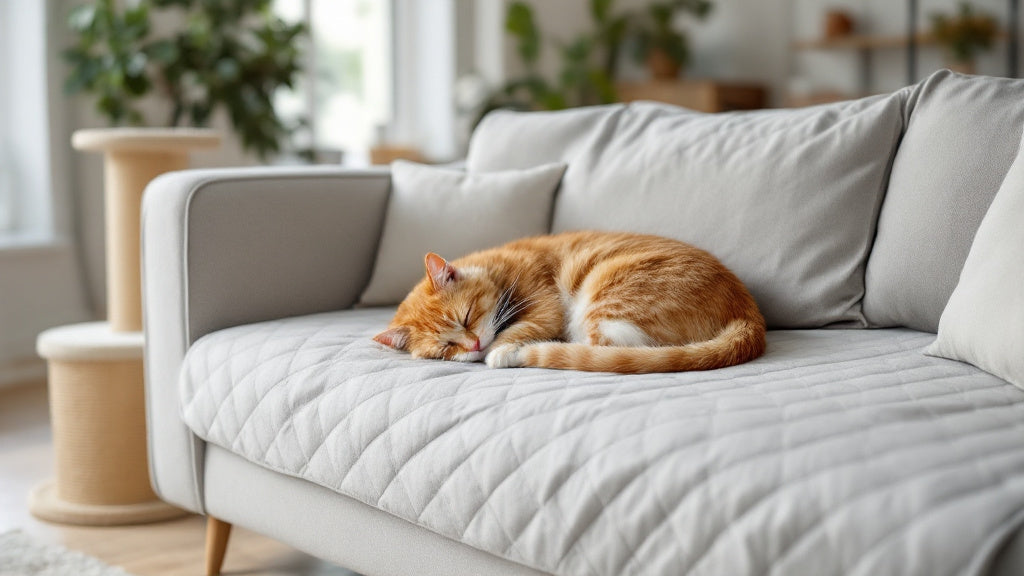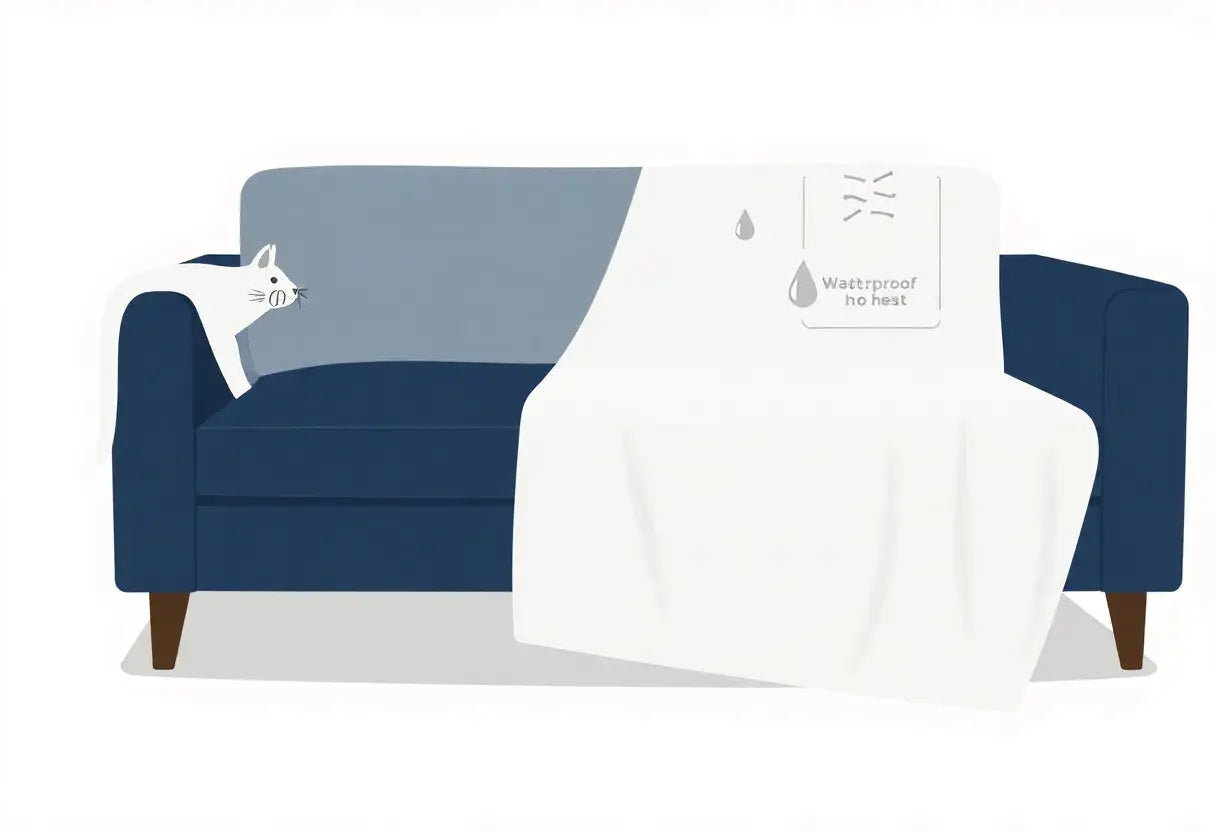
A spilled juice box, muddy paws, or a surprise nap on the sofa can turn a calm day into a cleanup race. If you are juggling kids, pets, and real life, you need protection that works fast, looks great, and feels safe for your home.
Many waterproof sofa covers rely on harsh chemicals, and that can be a deal breaker for family spaces. The good news: a PFAS free waterproof sofa cover can help block leaks and stains without compromising on style.
In this post, you will learn 7 simple checks to choose waterproof sofa covers that are chic, durable, and easy to wipe clean. We will also cover what to look for in a non toxic couch cover and a pet friendly sofa cover, especially for premium or vintage pieces.
First, let’s start with the one label that matters most.
Check #1: Confirm What “PFAS Free” Really Means (and what to ask)
If you are shopping for a PFAS-free waterproof sofa cover, start here. The phrase “PFAS-free” can be used responsibly, or it can be used loosely, and the difference matters when the cover will live in the heart of your family room.
PFAS (often called “forever chemicals”) are a large group of chemicals that have been used to make products resist stains, oil, and water. For a plain-language overview of what PFAS are and why they are a growing concern, see the U.S. EPA’s PFAS basics page: https://www.epa.gov/pfas. For additional regulatory context, ECHA’s PFAS overview is also helpful: https://echa.europa.eu/hot-topics/perfluoroalkyl-chemicals-pfas. You may also notice more brands reformulating because policies are tightening in some regions, including updates from Washington State on PFAS in consumer products (check the most relevant PFAS page at time of purchase): https://ecology.wa.gov/
What to look for on the product page (clear, plain-language claims)
When you are comparing waterproof sofa covers, scan for wording that is specific enough to be meaningful. Good signs include:
- “PFAS-free”
- “No fluorocarbon finish” or “fluorocarbon-free”
- “No C6/C8 chemistry” (these are types of PFAS often referenced in textile finishes)
What to be cautious with:
- “Eco,” “green,” “clean,” or “natural” with no explanation
- “Safe for families” without any supporting details
- “Stain-resistant” as a headline claim with no mention of how that stain resistance is achieved
A quick rule of thumb: if a brand is truly avoiding PFAS, they can usually say so in simple terms, and they can usually explain their approach without hiding behind marketing phrases.
The buyer checklist: what to ask before you buy
You do not need a chemistry degree to ask smart questions. If you are trying to choose a non-toxic couch cover that still performs like a busy-household essential, copy and paste one of these questions into chat support or email:
- Can you confirm the fabric and finish are PFAS-free (no fluorinated or fluorocarbon treatments)?
- Do you have a product spec sheet, compliance statement, or supplier declaration that confirms PFAS-free?
- If the cover is described as stain-resistant or easy-clean, what technology creates that effect (membrane, coating, or finish)?
- “Is PFAS-free true for the whole product, or only for the outer fabric?” (Helpful when you want a genuinely pet-friendly sofa cover that is safe feeling and practical, not just a pretty top layer.)
Even a short written declaration from the supplier is better than silence. If a brand cannot provide any documentation or clarity, that is useful information for your decision.
Red flags that deserve a pause (especially for easy-clean claims)
Many families search for waterproofing and stain protection because life is messy. Totally fair. But some of the most tempting phrases can be the least informative.
Be extra careful if you see:
- “Stain-repellent” with no material explanation
- “Permanent stain guard”
- “Advanced easy-clean finish” with zero detail
- “Waterproof and stainproof” but no mention of construction or care instructions
Those phrases do not automatically mean PFAS are present, but they do mean you should ask follow-up questions. A reputable brand will explain whether the waterproofing comes from a built-in layer, a coating, or a finish, and that takes us directly to Check #2.
Practical next step: shortlist only the covers that pass Check #1
Once you have confirmed the PFAS-free claim in plain language and you have at least basic proof, you can confidently move on to style, fit, and daily-life performance.
If you are ready to browse options while keeping these questions in mind, you can start here: Explore waterproof options.

Next up: Check #2, where we compare waterproofing methods (membrane vs coating) so you can choose protection that feels comfortable for everyday lounging, not stiff or plasticky.
Check #2: Verify Waterproofing Method (membrane vs. coating) for comfort and safety
In Check #1, you narrowed in on the words that matter most: PFAS-free and clear material disclosure. Now comes the practical question busy households care about even more: how is the cover actually waterproofed? The method affects everything from how it feels during movie night to how long it stays protective after repeated washes.
When you are shopping for waterproof sofa covers, you will usually see one of two approaches.
Option A: Membrane or lamination (often the comfy, durable choice)
A laminated build typically means the fabric has a thin waterproof layer bonded to it. A very common PFAS-free example is:
- Polyester + TPU membrane (TPU stands for thermoplastic polyurethane)
Why families tend to like this approach:
- Water blocking without heavy surface treatments: The waterproofing lives in the layer, not just on top of the fabric. That can align nicely with the goal of a non-toxic couch cover, because you are not relying on mystery spray finishes to repel spills.
- Smoother, more consistent performance over time: With normal use, a membrane can hold up better than a topical finish that slowly rubs away where you sit most.
- Often more comfortable than “slick” finishes: Many laminated fabrics feel more like upholstery and less like a raincoat, which matters if this is your main lounging spot.
What to look for on the product page or spec details:
- Phrases like “TPU backing,” “TPU membrane,” “laminated,” “bonded waterproof layer,” or a clearly stated construction like “polyester outer + TPU inner.”
- Care info that acknowledges lamination (more on this below).
Option B: Topical coating (can work, but scrutinize the details)
A topical coating is a finish applied to the surface of the fabric to repel water. Sometimes brands call this “waterproof coating,” “water-repellent treatment,” or “protective finish.”
Potential drawbacks to watch for:
- Wear and cracking: On high-flex areas like seat cushions, some coatings can crack or thin out over time, especially if the cover is frequently washed, tumble dried, or stretched tight.
- Breathability and comfort issues: Coatings can reduce airflow, making the sofa feel warmer. They can also create that “sticky” or “noisy” sensation that families often regret after the first week.
- Vague chemistry: If the listing is unclear about what is used, it is harder to feel confident you are choosing a truly family-comfortable PFAS-free waterproof sofa cover.
If a coating is used, ask for:
- Clear material wording (example: “polyester with TPU coating” or “PU coating”).
- Straightforward care guidance that tells you how to keep the waterproofing intact.
A quick at-home waterproof check (takes 30 seconds)
Once your cover arrives, do a small test before committing to a full install:
-
Drop test: Place a few drops of water on the top surface.
- Good sign: water beads up and stays on top long enough to wipe away.
- Not ideal: water spreads quickly and begins soaking in immediately.
-
Feel test: After the water test, run your hand across the fabric.
- Watch for a surface that feels sticky, overly slick, or loud when you shift. Those clues can indicate a heavier coating that may be less breathable for daily sitting.
If you have pets, do this test in a spot where your dog usually curls up or where your cat likes to perch. Those are the zones that get the real-life stress test first for any pet-friendly sofa cover.
Read the care label like a durability forecast (especially for laminated covers)
Waterproofing is only as good as the care routine it can survive. Laminated or membrane-backed fabrics often come with specific limits, such as:
- Cold or warm wash only (hot water can stress adhesives)
- No high heat tumble dry (heat can contribute to delamination over time)
- Air dry or low heat recommendations
You do not need perfection, just clarity. A trustworthy waterproof cover should tell you what it can handle, because real homes wash covers often.
One more reality check for pet homes: waterproof is not the same as scratch-proof
A membrane can stop liquids, but claws and snagging are a different challenge. If your household includes daily zoomies, digging, or corner scratching, it is smart to think about scratch protection as the next layer of defense. For that, take a look at these options: For homes with pets and daily messes, consider scratch-focused protection too.
Next up in Check #3, we will focus on something many guides ignore: how the fabric feels in everyday life, because the best waterproof sofa cover is the one your family actually wants to sit on.
Check #3: Choose a Fabric That Feels Good (because you sit on it every day)
After you have confirmed PFAS free claims (Check #1) and you understand how the waterproofing is built (Check #2), the next question is wonderfully simple: will you actually enjoy living on it?
Even the best PFAS-free waterproof sofa cover will end up folded in a closet if it feels stiff, sounds crinkly, or turns family movie night into a sweaty situation. For most homes, comfort is what makes waterproof sofa covers “stick” long-term.
Your 60-second comfort test (do this before you commit)
Use this quick sensory checklist to spot a cover that is both protective and pleasant:
- Touch (hand-feel): Does it feel soft and textile-like, or does it feel like a rain jacket? If your sofa is the main seating spot, choose fabrics that feel woven, brushed, or quilted rather than slick.
- Sound (noise level): Give it a scrunch in your hands. If it crackles or squeaks now, it will be noticeable every time someone shifts positions.
- Temperature (breathability): Sit on it for a minute. If it immediately feels hot or sticky, it is likely trapping heat. Breathability matters, especially for kids who lounge, nap, and sprawl.
- Slide (stay-put factor): Rub your palm across it. Ultra-smooth surfaces can make you feel like you are sliding off the seat, and they tend to look messy faster.
This is also where a “safe-feeling” choice matters emotionally, not just practically. Many families shopping for a non-toxic couch cover want something that feels calm and homey, not clinical or plasticky.
Breathability is the secret to keeping the cover on your couch
A cover can be fully waterproof and still be uncomfortable if it traps heat. In real life, that means it gets kicked off during naps, pulled aside during playtime, and constantly readjusted. The best approach is to look for a waterproof build that still allows a comfortable surface feel, so you get protection without turning your sofa into a sealed tent.
If you already loved the idea of a PFAS-free waterproof sofa cover for spills, this is the step that ensures it works for everyday living, not just emergencies.
French-chic, family-proof style: pick texture and tones that forgive real life
For a pulled-together look that survives crumbs and fur, focus on two things: finish and color strategy.
1) Choose finishes that look elevated even when life is messy
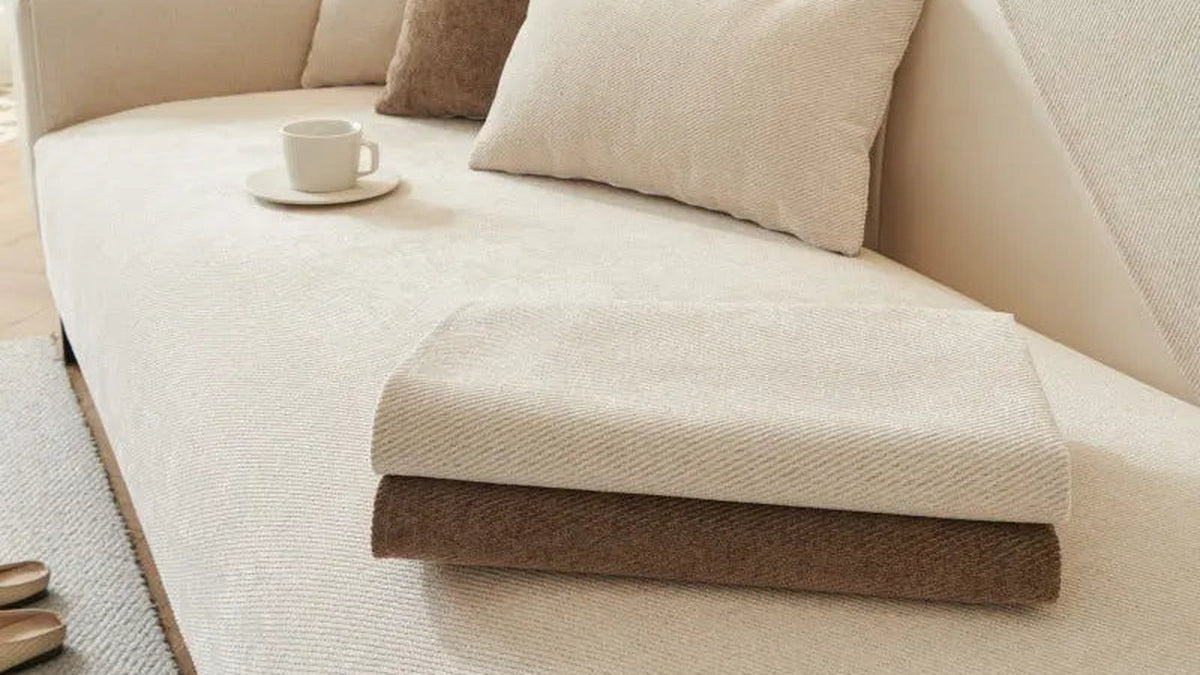
- Textured weaves read more “designer” and help camouflage light lint and pet hair better than shiny surfaces. They also give that quietly elegant, French-calm feeling.
- Quilted or matte fabrics tend to look softer and more tailored, and they photograph beautifully even in a busy family room.
2) Use color like a practical styling tool
For high-traffic homes, these tones are consistently forgiving:
- Matte neutrals: sand, stone, greige, and charcoal
- Darker seat areas: a smart choice for households with kids, since the seat takes the most spills, snack dust, and little shoe prints
If you need a true pet-friendly sofa cover, texture and tone do a lot of the heavy lifting: they help hide hair between cleanings and keep the sofa looking intentional instead of constantly “in progress.”
A simple styling trick that also speeds up cleaning
Want the sofa to look finished without committing to a full re-cover every time something happens? Add small, easy-swap layers like pillow covers. They refresh the look instantly, and you can toss them in the wash faster than removing the full cover.
Explore decorative pillow covers here: https://frenchcovers.com/collections/decorative-pillow-covers
Next up, we will make sure your beautiful, comfy choice stays in place: Check #4 is all about getting the fit right so you are not readjusting corners all day.

Check #4 Nail the Fit: measure once, save hours of readjusting
You can buy the most beautiful PFAS-free waterproof sofa cover on the planet, but if it shifts every time someone flops down with a snack, it will not feel chic or calm. Fit is what turns waterproof sofa covers from a temporary patch into a tidy, family-friendly solution you can actually live with.
A simple 4-step measuring list (do this before you fall in love with a color)
Grab a tape measure and jot these down in inches or centimeters:
-
Seat width
Measure left to right across the seating area, from the inside edge of one arm to the inside edge of the other.
Why it matters: too small leaves exposed corners where spills and pet paws land first. -
Seat depth
Measure front edge of the seat to the back cushion or backrest (where your back actually sits).
Why it matters: too short rides forward and bunches; too long creates folds that trap crumbs. -
Back height
Measure from the top of the seat (not the floor) up to the top of the backrest.
Why it matters: high backs can pull covers tight and cause slipping, especially when kids climb and dogs launch. -
Arm shape and arm size
Note whether your arms are square, rounded, wide, slim, pillow-top, or rolled, and measure the arm height and width if possible.
Why it matters: arms are the first place a “one-size” cover loses its grip, and the first place claws, drool, and sticky fingers show up.
If you want your non-toxic couch cover to look tailored (not like a beach towel tossed over the sofa), these four measurements are the difference.
Common fit problems (and how to avoid them)
Real homes have real sofa shapes. Here are the usual surprise culprits:
- Wide arms: Covers often stop short or pop off when someone leans. Look for generous arm panels plus elastic edges or straps to anchor the sides.
- High backs: A cover may look fine at first, then slowly slide down as people sit and stand. Choose a design with grippy backing and secure attachment points.
- T-cushions (where the cushion wraps around the front of the arm): One-piece styles can bunch around the “T” and expose corners. Consider separate cushion pieces for a cleaner, more secure fit.
- Loose back cushions: If the back cushions move, a single drape-style cover often shifts with them. Multi-piece sets help everything stay aligned.
This is especially important if you are shopping for a pet-friendly sofa cover. Pets do not just sit, they dig, spin, and jump. A cover that slides becomes a daily annoyance.
Fit features that actually keep a cover in place
When you are comparing waterproof sofa covers, look for at least one (ideally two or three) of these practical details:
- Grippy or anti-slip backing to reduce skating on leather or smooth upholstery
- Elastic edges that hug the frame instead of floating above it
- Straps or ties that secure under the seat or around the back
- Separate cushion pieces (seat and back) for less bunching and better corner coverage
These features matter even more with laminated, spill-blocking materials (like many PFAS-free waterproof sofa cover designs), because a slick underside without grip can shift faster than a soft woven throw.
Sectionals and chaises: confirm the piece count (so checkout is not a shock)
This is where many buyers get surprised. A sectional or chaise often needs multiple pieces, for example:
- one piece for the main seat run
- one piece for the chaise portion
- additional pieces for separate seat cushions or back cushions
Before buying, map your sofa like a simple puzzle: How many seating zones and cushions do you have? Then match that to the product description. It saves you the frustration of a half-covered chaise or a right side that never stays tucked.
Quick sanity check before you buy
Ask yourself: Can I install it in under 5 minutes and have it still look neat after movie night? If the answer is no, you will spend more time tugging than enjoying the protection.
Next up, we will make sure your beautiful, well-fitting cover is also truly practical in daily life: washing, drying, and what “easy clean” really means when the mess is sauce, slime, or pet accidents.
Check #5: Make sure it’s truly family-proof: washability, drying time, and stain reality
By the time you have chosen a comfortable fabric and nailed the fit, there is one make-or-break question left for real life: will you actually keep this cover on your sofa once the first messy week hits?
The best PFAS-free waterproof sofa cover is not just protective. It is practical. It comes off quickly, washes without special treatment, dries on your schedule, and goes back on without turning into a full body workout. That is what makes waterproof sofa covers feel effortless in a busy, family home.
1) “Easy clean” only counts if you can remove and reinstall it fast
Before you buy, picture a Tuesday night spill or a dog who jumps up with wet paws. If removing the cover takes 20 minutes (or requires untying a dozen straps), it will not feel like a solution.
Practical signs it will be truly family-proof:
- Fewer pieces to remove, or clearly labeled multi-piece sections (so you are not guessing which cushion goes where).
- Simple fasteners (elastic edges, straps that stay put, or separate cushion covers that zip on and off).
- A shape that does not require constant re-tucking after every movie night.
A quick home habit that helps: take one photo of the sofa once the cover is perfectly installed. When you are reinstalling after laundry, that photo becomes your 60-second reference.
2) Confirm the care rules before buying (especially heat)
Many waterproof sofa covers get their performance from a waterproof layer (often a membrane). That layer can be sensitive to high heat, and heat is where “easy care” turns into frustration.
Check the product care info for:
- Water temperature limits: Look for a normal, household-friendly wash range. If it requires overly delicate handling, it will not keep up with family life.
- Tumble-dry guidance: High heat can damage waterproof layers and may lead to peeling or separation over time (often described as delamination).
- Ironing and harsh cleaners: If the instructions warn against heat, bleach, or strong stain removers, plan your routine accordingly.
If you are shopping for a non-toxic couch cover, this step matters even more. A cover that relies on gentle, PFAS-free construction (instead of heavy chemical “stain-proof” finishes) often performs best when you follow the heat rules.
3) Set expectations: waterproof buys time, it does not replace quick wipe-ups
A pet-friendly sofa cover that is genuinely waterproof can block liquid from soaking into your upholstery, which is exactly what you want for juice, water bowls, and everyday accidents. But even the best cover cannot magically prevent residue or odor if spills sit too long.
Use this simple “stain reality” guide:
- Water-based spills (water, juice, seltzer): Waterproof helps a lot. Blot or wipe promptly, then you are usually done.
- Sauces, oils, and butter: These can leave residue on the surface even if nothing soaks through. Wipe quickly with mild soap and water, then wash when you can.
- Pet accidents: Waterproof can protect the sofa, but you still need fast cleanup to prevent smell. Blot, rinse the surface area if the care label allows, then launder as soon as possible.
Think of waterproofing as your safety net, not your permission slip to ignore a spill until bedtime.
4) A simple cleaning routine checklist (low effort, high payoff)
Keep this family-proof routine in your back pocket:
- Immediate moment (30 to 60 seconds): Blot or wipe. Do not rub spills deeper into texture.
- Quick reset (2 minutes): Mild soap and a damp cloth for sticky spots (ketchup, chocolate, paw prints).
- Laundry day: Wash on the recommended cycle and temperature. Close zippers, shake out crumbs and hair first, and avoid high heat if the label warns against it.
- Reinstall right away: Putting it back on while it is fully dry and the cushions are in place prevents sagging and bunching.
5) Time-saving tip for peak chaos hours: keep a backup layer
If your household has predictable “mess windows” (after school snacks, weekend movie nights, rainy dog walks), consider one of these strategies:
- A second cover you can swap on immediately while the other is in the wash.
- A washable throw or topper that takes the first hit, especially on the seat area where spills and paws land most.
This is the little luxury that makes a chic living room feel possible, even with kids and pets.
Up next, we will go beyond spills and talk durability: what to look for in seams, weave, and construction so your cover holds up to claws, climbing, and daily wear, not just water.

Check #6: Look for pet and kid durability details (not just “waterproof”)
By now, you have done the smart, safety-first homework: you are looking for a PFAS-free waterproof sofa cover that can handle spills without bringing questionable chemicals into the heart of your home. But here is the real-life twist: many families discover that the first failure is not leakage, it is wear.
Waterproofing protects against liquids. Durability protects against living.
If you have pets: assume nails, claws, and zoomies will test the seams first
A truly pet-friendly sofa cover needs to stand up to the most common pet damage pattern: tension at corners, then pulling at seams, then snagging on the weave.
Scenario: the cat-corner problem
Your cat uses the sofa corner as a launching pad. Even if the fabric is waterproof, a loose weave can snag, and weak stitching can pop right where the cover is stretched tight.
What to look for (quick durability signals):
- Tight weave: In plain terms, the threads look closely packed with minimal gaps. Tight weave usually means fewer snag opportunities and better resistance to “one claw, one loop, one pull.”
- Reinforced seams: Look for strong, tidy stitching and extra reinforcement at high-stress zones (edges, corners, and any place that hugs the arms). “Tight weave + reinforced seams” is one of the simplest, most reliable durability clues when shopping online.
- Seam strength where pets climb: Pets do not scratch the center politely. They climb at the edges, hook with paws, and pull fabric sideways. That sideways stress is what breaks weak seams.
If pets are a daily reality in your home, it can also be worth narrowing your search to covers designed specifically to resist scratching. Here is a helpful collection to explore: anti-scratch couch covers.
If you have kids: focus on edge coverage and grip (sliding is the hidden problem)
With kids, “waterproof” tends to be the easy part. The daily challenge is movement: bouncing, climbing, fort-building, snack sessions that somehow end on the armrest.
Scenario: the slip-and-bunch situation
A cover that slides can bunch under little legs, expose the exact cushion corner you were trying to protect, and create constant discomfort. It can even become a safety annoyance if it shifts when kids climb up.
What to prioritize for kid-heavy seating:
- Edge coverage that stays put: You want the cover to wrap vulnerable areas (seat front edge, arms, and corners) so spills and sticky fingers do not reach the upholstery during the chaos moment.
- Grip features: Look for grippy backing, elastic edges, straps, or multi-piece designs that anchor to the cushions. These features matter as much as waterproofing because they keep protection in the right place, all day.
This connects directly to Check #4 (fit) and Check #5 (washability): the best waterproof sofa covers are the ones you do not have to fix every time someone sits down.
If you rotate covers seasonally: choose colors and textures that forgive real life
If you love a little French-chic refresh as the seasons change, you can absolutely rotate covers, just pick wisely so your sofa still looks “effortless” on the busiest Tuesday.
Scenario: dog hair on a pale, flat fabric
Light colors can look dreamy, but on smoother, flatter fabrics, pet hair and lint often show up fast (especially on cream or bright beige). Then you are lint-rolling more than lounging.
More forgiving choices for family homes:
- Textures that camouflage: Subtle woven texture or quilting tends to hide small marks, crumbs, and hair better than ultra-smooth fabric.
- Mid-tone neutrals: Think sand, greige, stone, or soft charcoal for that calm, pulled-together look that does not spotlight every speck.
- Avoid “every-mark magnifiers”: Very light solid colors and very flat finishes can be higher maintenance when you have pets and kids in rotation.
When your cover is both durable and easy on the eyes, it supports the whole goal of a non-toxic couch cover choice: peace of mind without making your living room feel precious or stressful.
Quick mini checklist before you buy
- Does the product description mention tight weave and reinforced seams (not only “waterproof”)?
- Do you see grip features or fit details that prevent sliding?
- Is the color and texture realistic for your home’s hair, lint, and snack level?
Next up, once you have the practical protection handled, we will make it beautiful: Check #7 is all about chic design choices that upgrade the room without sacrificing family-friendly function.
Check #7: Make it chic: small design choices that upgrade the whole room
By now, you have done the practical work: you have vetted the label, the waterproofing method, the fit, and the wash routine. This last check is the fun part, and it matters more than most families expect. The right PFAS-free waterproof sofa cover should not look like a compromise. It should look like you planned it.
Think of this as the French-chic secret: calm foundation, a few intentional details, and the whole room feels pulled together even when real life is happening.
1) Use the “base + accents” approach (so you can refresh without replacing)
Let your waterproof sofa cover be the “base” that stays timeless, then change the mood with small, easy swaps.
- Base: choose a calm, classic cover color and texture that you can live with daily (and that works with pet hair and crumbs).
- Accents: rotate 2 to 4 pillow covers or add a throw to shift the season or the vibe in minutes.
This is especially helpful if you are choosing a non-toxic couch cover for the main seating area and want it to stay in place for the long haul. You get stability and safety, plus a quick style reset whenever you need it. If you want an easy upgrade path, start with decorative pillow covers you can change out fast: https://frenchcovers.com/collections/decorative-pillow-covers
2) Balance practicality and elegance with texture and tailoring
Families and pet owners need performance, but performance can still look polished. When you are comparing waterproof sofa covers, look for style signals that also do practical work:
- Quilted textures: they feel elevated and help disguise tiny daily “evidence” like lint, paw prints, and the occasional snack crumb.
- Tailored lines (clean edges, neat seams): they read more like upholstery and less like a temporary cover.
- Muted tones (stone, sand, charcoal, greige): they are forgiving in high traffic homes and still feel calm and premium.
For a pet-friendly sofa cover, texture is your ally. A slightly textured or quilted surface often looks better between washes because it does not spotlight every little mark the way a flat, slick fabric can.
3) Make it look intentional fast: match your cover to one other element
When you are busy, “cohesive” needs to be simple. Use this quick rule: match the cover tone to just one other element in the room so the whole space feels designed.
Pick one:
- Rug
- Curtains
- One major artwork tone (background color is usually easiest)
This trick is perfect for homes with kids and pets because your sofa becomes a calm anchor. Your room looks finished even if there is a toy basket nearby.
3 quick French-inspired style formulas you can copy today
Use these as plug and play starting points with a PFAS-free waterproof sofa cover:
-
Neutral cover + warm accents
- Cover: sand, oatmeal, or soft beige
- Accents: terracotta, camel, warm tan, or muted blush pillows
- Why it works: hides everyday mess well and feels welcoming, not sterile
-
Charcoal cover + light pillows
- Cover: charcoal or deep gray
- Accents: cream or ivory pillows, plus a light throw
- Why it works: very forgiving for pets and kids, and the contrast looks tailored
-
Greige cover + natural wood tones
- Cover: greige (a beige-gray blend)
- Accents: linen look pillows, warm oak or walnut nearby (tray, side table, frames)
- Why it works: quiet luxury energy, especially nice for premium or vintage pieces you want to protect without hiding
If you have made it to Check #7, you are not just buying protection. You are designing a living room that can handle spills, paws, and movie nights while still feeling like home.
Next up, we will wrap everything into a simple final recap and help you choose the best next step for your space.
You have just walked through seven essential checks to find a PFAS-free waterproof sofa cover that delivers real protection without compromising your family’s health or your home’s style. From decoding chemical claims and choosing breathable, comfortable fabrics to nailing the fit, confirming washability, and selecting fabrics that resist claws and hide everyday messes, you are now equipped to make a confident, informed choice.
Think of this as more than just a purchase. It is about reclaiming your living room as a place of calm, not constant cleanup. A non-toxic couch cover that is both chic and practical means fewer worries during snack time, more cuddles with your pet-friendly sofa cover, and a space that feels intentionally beautiful, not just protected. You have the knowledge. Now, take the next step and bring that peace of mind home.
Ready for a safer, stress-free living room? Browse FrenchCovers’ waterproof sofa covers options and pick a look that fits your home this week, before the next spill happens. Because a home that welcomes real life deserves protection that feels just as good as it looks.
FAQ: Chic, Safe, Easy Clean Sofa Protection
Choosing waterproof sofa covers should feel simple, not stressful. Below are quick answers pulled from our PFAS Free checklist so you can protect kids, pets, and beautiful upholstery with a PFAS-free waterproof sofa cover that stays stylish and practical.
Q: What does PFAS-free mean for a waterproof sofa cover? A: In the article, PFAS free means the waterproofing is achieved without “forever chemicals,” making it a smarter choice for a non-toxic couch cover in busy family spaces. Look for clear material and safety details, not vague claims. See our checklist tips in What PFAS Free Really Means.
Q: Are PFAS-free waterproof couch covers still effective against spills and pet accidents? A: Yes, our guide explains that a PFAS-free waterproof sofa cover can still block spills when it uses a waterproof barrier layer and sealed construction. For pet owners, prioritize a pet-friendly sofa cover with a grippy backing and easy wipe surface. Review Check the Waterproof Barrier and Construction and Pet and Kid Proof Priorities.
Q: What’s the difference between water-resistant and waterproof sofa covers? A: Water resistant buys you time, but our article notes it may soak through under puddles or accidents, while waterproof sofa covers include a true barrier designed to stop liquid. If you need real protection for pets or kids, choose waterproof and confirm the lining. See Water Resistant vs Waterproof.
Q: How do I measure my couch to choose the right cover size and shape? A: We recommend measuring seat width, seat depth, back height, and arm width, then matching your sofa type (standard, sectional, chaise) so the cover stays tidy and chic. For premium or vintage pieces, double check arm shape and cushion count for the best fit. Use Fit and Measuring Guide and Choosing the Right Shape.
Q: How do I wash and dry a waterproof sofa cover without damaging the waterproof layer? A: The article advises gentle care: cold wash, mild detergent, and avoiding high heat to protect the waterproof membrane on your PFAS-free waterproof sofa cover. Air dry or tumble dry low, and skip fabric softener if the label warns against it. Follow Care and Cleaning Tips for best results.