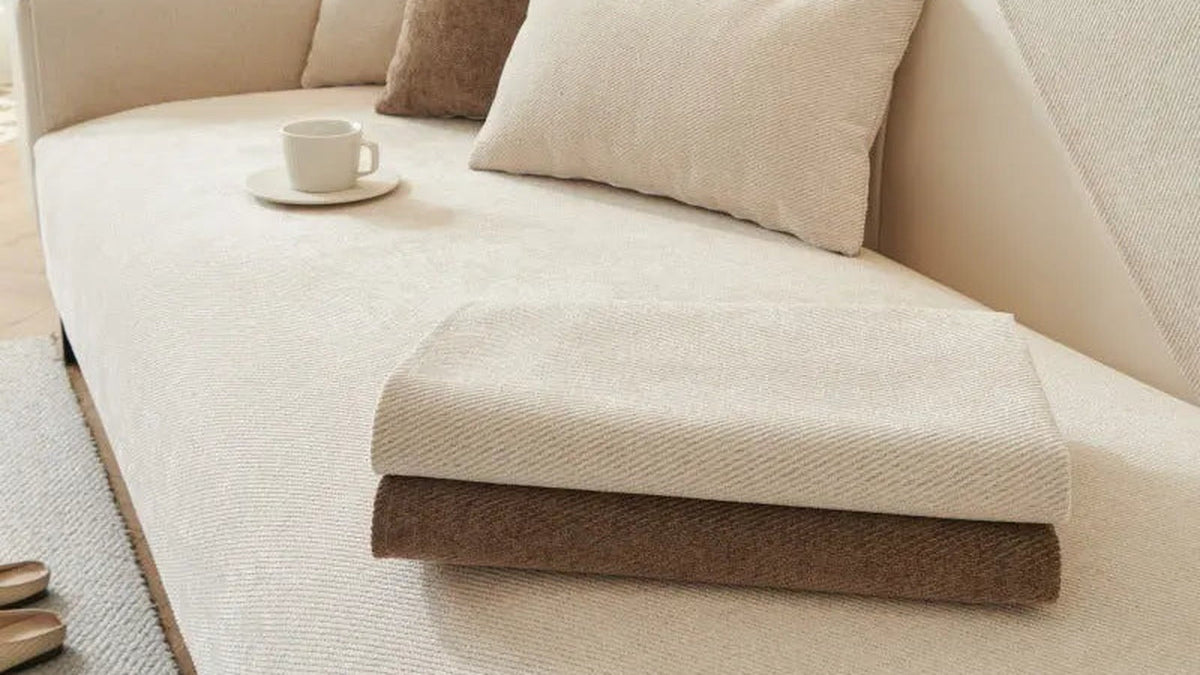
You finally found the perfect L-shaped couch for movie night: deep seats, a cozy corner, and a recliner at each end. Then the dog, the snacks and the kids moved in, and now you want to protect it. Here is the catch. Most reclining sectional covers sold online are really standard L-shaped sofa covers, and a one-piece cover stretched over a sectional with recliners can lock the footrests shut, bunch up at the hinges, or tear the first time someone kicks back. This guide walks you through what to check before you buy: how to map your sectional, how to measure each seat, which cover style fits your layout, and the small fit details that decide whether a cover looks tailored or sloppy after a week.

Why reclining sectional covers are different from regular L-shaped sofa covers
A fixed sectional is a static shape. A cover only needs to hug the back, the arms and the seat cushions, so one large stretch piece with an elastic hem works well. A reclining sectional is a moving machine. Every recliner seat has a footrest that swings out, a back that tilts, and a gap between the seat and the footrest where fabric gets pulled in.
That is why the best reclining sectional covers are built around the mechanism, not just the silhouette. A cover that ignores the footrest might look fine in a product photo, then fail the first evening someone leans back. Before comparing colors or textures, it helps to understand two things: how the cover is split, and what actually moves when you recline.
One-piece covers vs seat-by-seat sets
A one-piece L-shaped sofa cover wraps the whole frame in a single stretch shell. It is quick to install and often the most budget-friendly option. On a non-reclining couch with a chaise, it is a great choice, and a stretch L-shaped cover such as LUNÉAIRE is designed for exactly that kind of modular or chaise layout.
A seat-by-seat set is different. Each recliner gets its own backrest cover, seat cover and footrest cover, and the fixed seats, the corner wedge and any console get separate pieces too. Because each module is dressed on its own, every footrest can open without dragging the neighboring seat cover along. For a sectional with two or three recliners, seat-by-seat covers are the format to look for. Most reclining sectional covers worth buying use this approach, even when they are sold as one bundled pack.
What moves when you recline
When you lean back, three zones shift at once. The backrest tilts and stretches the fabric across the top. The footrest rises and pulls on anything tucked under the seat front. And the gap between seat and footrest opens, which can swallow loose fabric.
A good cover keeps the footrest section separate, uses elastic or ties under the frame, and leaves the lever or the power button reachable. If a listing never mentions the footrest, assume it was not designed for one.
Map your sectional before you shop
With the mechanics in mind, the next step takes five minutes and saves most returns. Grab your phone, stand in front of the couch, and write down every module from left to right. Sectionals that look identical in photos can be built from very different pieces, and the cover has to match yours piece for piece.
Count recliners, wedges, consoles and chaises
- Recliner seats: note how many seats recline and whether they sit at the ends, in the middle, or both.
- Fixed seats: armless seats that do not move usually take a simple seat and back cover.
- Corner wedge: the square or curved piece where the L turns. It needs its own cover, often sold as a single corner piece.
- Consoles: a cup holder console needs a cover with openings for the holders, or a separate console sleeve.
- Chaise: a chaise end changes the shape completely and rarely mixes well with recliner-specific sets.
A common five-seat layout, for example, is recliner, armless seat, corner wedge, armless seat, recliner. That map tells you right away that you need two recliner seat covers, two fixed seat covers and one corner cover, or a pre-packed set built for that exact configuration.
Power vs manual recliners
Manual recliners use a lever or a pull tab on the outer arm. Power recliners use a button panel, often on the inside of the arm or the side of the seat, plus a cord running to a wall outlet. Either way, check that the cover leaves the control accessible. On power models, also make sure nothing tucks into the motor area under the seat, and route the cord out through the back before you fit the backrest piece. Fabric caught in a moving mechanism is the fastest way to ruin a cover.
How to measure a reclining sectional for a cover
Once your map is done, measuring is straightforward because you measure module by module instead of the whole L. Use a soft tape measure and note both inches and centimeters, since many size charts list one or the other.
- Seat width of each recliner: measure from the outside of one arm to the outside of the other, or to the seam where it joins the next module.
- Backrest height: from the seat cushion to the top of the back.
- Seat depth: from the front edge to where the cushion meets the back.
- Footrest length: fully extend it and measure from the seat edge to the end.
- Corner wedge: measure both sides of the corner along the back.
- Overall length of each side of the L: useful for one-piece covers and for checking that a set adds up.
Write the numbers on your map next to each module. When you compare reclining sectional covers later, you can check each piece against its own size range instead of guessing from the overall length. Stretch covers forgive a little, but not a lot. If your measurement falls at the very edge of a size range, the fit will either be tight on the recliner backs or loose on the arms. For more detail on side lengths and chaise layouts, our sectional sofa cover sizing guide covers the non-reclining side of the equation step by step.
Cover types compared: which fits your layout?
Now that you know your modules and measurements, here is how the main formats of reclining sectional covers compare with a classic L-shaped sofa cover. Use the table to narrow your options before you look at colors.
| Cover type | Best for | Footrests | Watch out for |
|---|---|---|---|
| Modular recliner set (per seat + corner) | L-shaped reclining sectionals with a corner wedge | Open freely, each seat is dressed separately | Counting pieces correctly for your layout |
| Split recliner sofa set (2 or 3 seats) | Straight recliner sofas, or one side of an L | Open freely | Does not include a corner piece |
| Console loveseat set | Two recliners with a center console and cup holders | Open freely | Console width and arm shape must match |
| One-piece L-shaped stretch cover | Fixed sectionals and chaise layouts | Not designed for moving footrests | Bunching and strain if used on recliners |
If your sectional is a true reclining L with a corner, a modular set is the safest bet. The VELYSSE modular velvet set is sold as a 7-piece set for a five-seat layout, as a single corner piece, or as a single recliner seat, so you can complete a configuration that does not match a standard pack.
If one side of your L is a straight run of two or three recliners, a split recliner cover like CAMBRAI dresses each seat separately in a soft velours.
For a console section with cup holders, the LIVARA console loveseat cover is made for a two-seat recliner loveseat with a middle console, with a listed sofa width of about 79 to 94 inches (2000 to 2400 mm).
Fabric, grip and fit details that matter
Choosing the right format solves the shape problem. Fabric and grip decide how the cover feels and how well it stays put after a month of daily reclining.
Stretch velvet vs jacquard
Stretch velvet has a soft, plush hand and a subtle sheen that looks close to upholstery. It is forgiving on curved backs and rounded arms, and pet hair tends to sit on the surface where a lint roller picks it up easily. Jacquard, with its woven grid or textured pattern, has a firmer feel and does a good job of hiding small creases, crumbs and the occasional paw print. Both work well on recliners as long as the fabric contains enough spandex or elastane to stretch with the backrest. Thin, non-stretch fabrics are the ones to avoid: they look neat when the seat is upright, then pull tight and wrinkle the moment the back tilts.
If you have pets, look at the weave as well as the fabric name. Tight, low-pile surfaces resist claws better than loose loops. For homes where spills and accidents are the main worry, our guide to waterproof sectional covers for pet owners explains when a waterproof layer makes sense and when breathability matters more.
Elastic bands, tuck-in strips and anti-slip
- Elastic bottom band: grips under the frame so the cover does not ride up when the footrest moves.
- Tuck-in strips or foam sticks: push into the crease between seat and back to anchor the fabric.
- Separate footrest panel: the single most important detail on a recliner cover.
- Side pockets: handy for remotes, but make sure they do not block the lever.
Leather and faux leather recliners are slippery, so they need the most grip. Adding a few extra foam tuck sticks or a thin non-slip mat under the seat cover is a simple fix that keeps everything aligned.
Installing and living with your cover
Even the right set can look wrong if it goes on in the wrong order. Reclining sectional covers have more pieces than a standard slipcover, so plan about 20 to 30 minutes for the first fitting. A few minutes of care during installation pays off every time someone reclines.
Step-by-step fitting
- Unplug power recliners and close every footrest.
- Start with the corner wedge, since it sets the alignment for both sides of the L.
- Fit each backrest cover, then each seat cover, pushing the tuck-in strips deep into the crease.
- Open each footrest and fit its panel, then secure elastic bands or ties under the frame.
- Close and reopen every recliner two or three times and adjust any fabric that catches.
- Plug power models back in and test the buttons with the cover on.
Washing and care
Between washes, a lint roller or a slightly damp rubber glove lifts pet hair from velvet and jacquard in seconds. A quick shake outdoors releases dust and crumbs. For deeper cleaning, always follow the care label on your cover. The upholstery underneath has its own rules too, and it helps to know how upholstery cleaning codes work before you spot-clean the sofa itself. Make sure each piece is completely dry before refitting it, since damp fabric under a cover can trap moisture.
Why choose French Covers?
We design and select reclining sectional covers around the details that make a cover work in real living rooms: separate recliner panels, corner pieces you can buy on their own, and stretch fabrics that move with the mechanism instead of fighting it. Whether your couch is a five-seat reclining L or a straight recliner sofa with a console, you can build the right combination instead of forcing one size onto every layout.
VELYSSE - modular velvet for reclining L-sectionals

CAMBRAI - split velours for 2 or 3 recliners

LIVARA - jacquard for console loveseats

LUNÉAIRE - stretch L-cover for fixed chaise layouts
- Recliner Sofa Cover Velvet Stretchable VELYSSE - sold as a full set, a single corner or a single recliner seat, so you can match any module count.
- Recliner Sofa Cover Stretchable Velours CAMBRAI - seat-by-seat velours coverage for two or three recliners in a row.
- Recliner Sofa Cover Jacquard Pattern LIVARA - a textured jacquard set designed around a center console.
Browse our recliner sofa covers to compare every option for reclining seats.
Frequently Asked Questions
Can I use a regular L-shaped sofa cover on a reclining sectional?
You can, but only if you never plan to recline. A one-piece L-shaped cover stretches across the seat front and footrest, so opening a recliner either pulls the whole cover out of place or strains the seams. If your sectional has even one recliner, choose a seat-by-seat set with a separate footrest panel for that seat, and keep one-piece covers for fixed or chaise layouts.
Do recliner sofa covers work on power recliners?
Most stretch recliner covers fit power and manual models alike, since the frame shape is similar. The difference is access. Before fitting, unplug the sofa, route the cord out through the back, and check where the button panel sits. If the panel is on the inside of the arm, make sure the cover leaves it reachable. Never tuck fabric into the motor area under the seat.
How many pieces do I need for a 5-seat reclining sectional?
It depends on the layout, which is why mapping matters. A typical five-seat L with two recliners, two armless seats and a corner wedge needs covers for each backrest, seat and footrest, plus the corner. Pre-packed sets often bundle these as seven pieces. If your layout is different, combine single corner and single recliner pieces to complete the configuration.
Will a cover stop the footrest from opening?
A well-designed recliner cover will not, because the footrest has its own panel that moves with it. Problems usually come from one-piece covers or from tucking the seat cover too far down the front. After installation, open and close each recliner two or three times. If the fabric catches, loosen the elastic or re-seat the tuck-in strips until the motion is smooth.
How do I keep a sectional cover from slipping on leather?
Leather and faux leather are smooth, so stretch fabric slides more easily. Push foam tuck sticks deep into every crease between seat and backrest, tighten the elastic bands under the frame, and consider a thin non-slip mat under each seat cover. A cover with a grippy backing or an anti-slip bottom band also makes a noticeable difference on leather.
Can I wash reclining sectional covers in the machine?
Many stretch covers are easy to wash, but care instructions vary by fabric, so always check the label on your specific cover before washing. Washing pieces separately is easier than washing a full one-piece cover. Let every piece dry completely before refitting it, and refit while the fabric is fully dry to keep the stretch fit even.
The right reclining sectional covers start with a simple map of your couch: count the recliners, the corner and any console, then measure each module. Choose a seat-by-seat set wherever a footrest moves, keep one-piece L-shaped covers for fixed sections, and check grip and control access before the first movie night. When you are ready to compare layouts, explore our sectional and L-shaped sofa covers and build the combination that fits your living room.